Multi-currency & travel: How to budget for a working holiday abroad
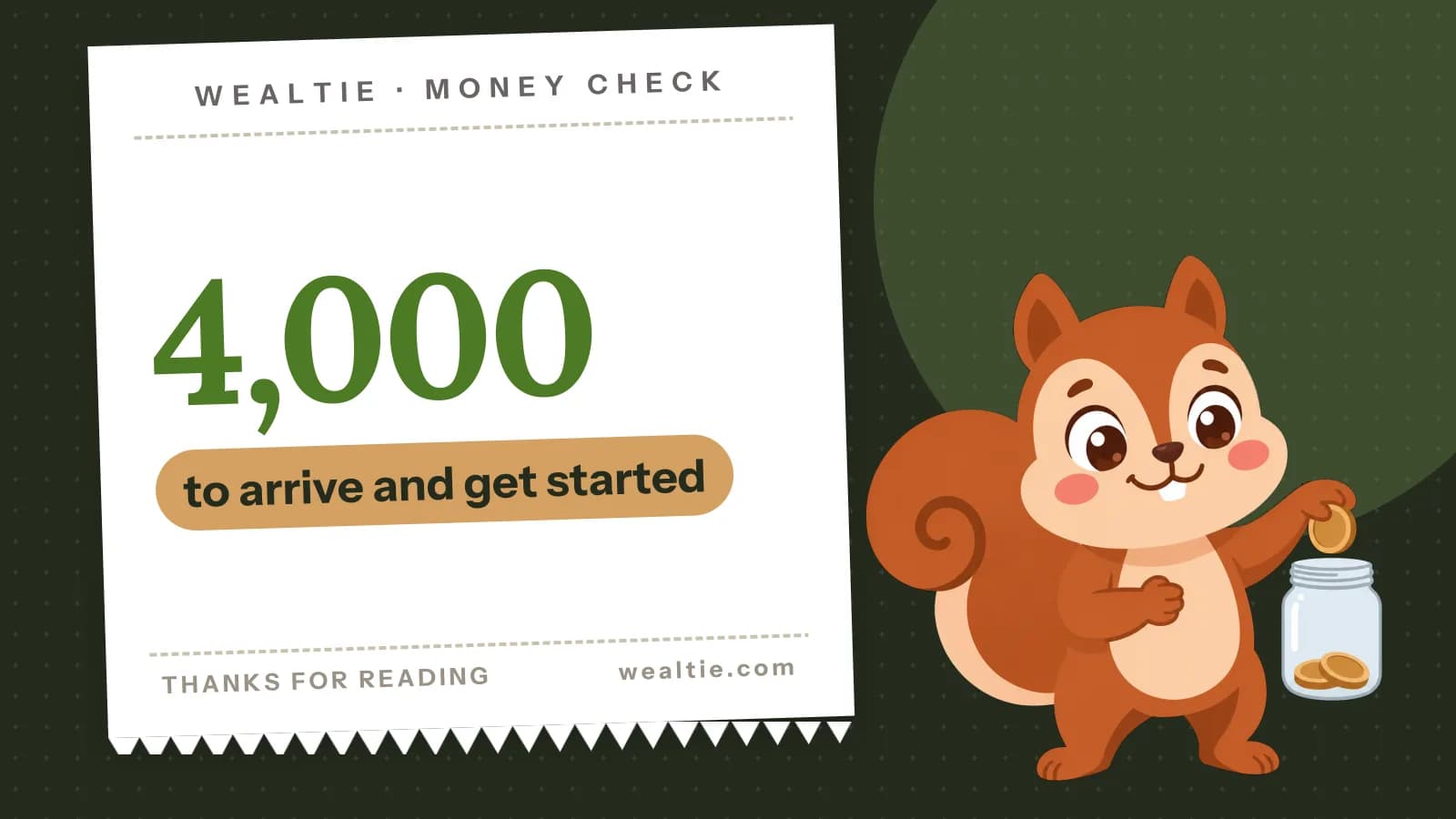
To budget for a working holiday abroad, save enough to cover the visa, flights and your first months before you find work, then budget in the local currency once you're earning. In a worked example, arriving with about 4,000 covers setup costs and two months of living while you look for a job.
 By Wealtie Team · 3 min read
Key takeaways
- A budget for a working holiday needs savings to cover arrival costs and the time before your first pay.
- In a worked example, about 4,000 covers setup and two months of living.
- Some visas require proof of savings, so check the amount before you apply.
- Budget in the local currency once you're earning, and decide early what you're saving for.
How do you budget for a working holiday?
Plan for two stages: getting there and getting started, then living on what you earn. A working holiday lets you live and work in another country for a set time, usually on a special visa for younger travellers. It's a great way to travel for longer and fund it as you go. But you'll need savings to cover the gap between arriving and receiving your first pay.
Visa rules, age limits and requirements vary by country, so check official sources before you plan.
How much money do you need to arrive?
Here's a worked example in round numbers that work in any currency:
| Cost | Amount |
|---|---|
| Two months of living costs | 2,000 |
| Flights | 900 |
| Visa and insurance | 600 |
| Rental deposit and setup | 500 |
| Total | 4,000 |
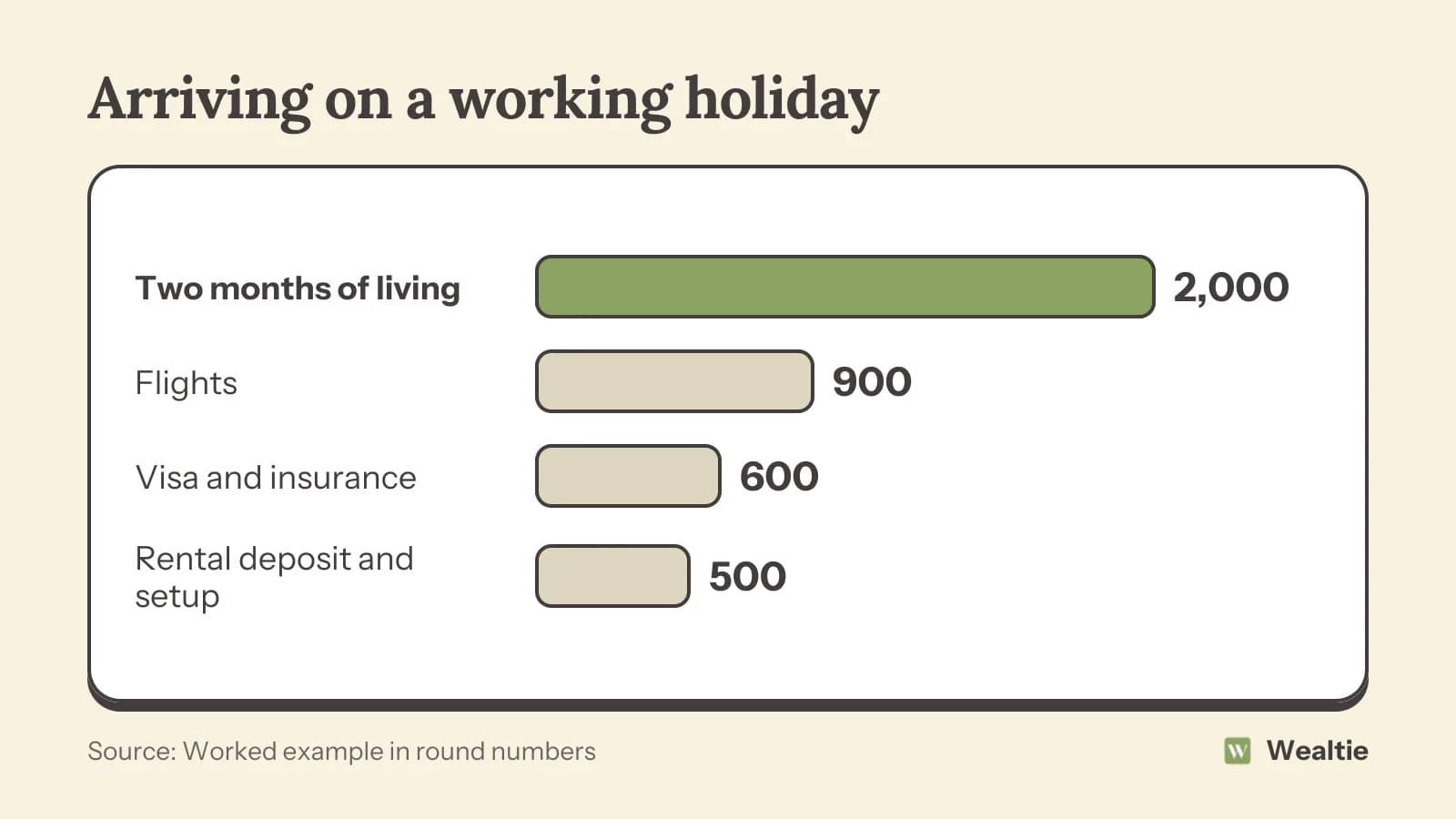
Your own figures depend on the country, the city and how quickly you find work. Big cities usually cost more to live in but may have more jobs. Some visas require proof of a minimum amount of savings, so check that figure early and treat it as your starting target. Arriving with a little more than the minimum gives you room if finding work or a room takes longer than planned.
What setup costs should you plan for?
Arriving in a new country brings costs beyond rent:
- A rental deposit and the first month's rent
- A local SIM card and phone plan
- Transport passes
- Household basics, like bedding and kitchen items
- Work clothes or safety gear, depending on the job
- Fees for a local bank account or tax registration, where they apply
Staying in a hostel for the first week or two while you find somewhere to live is common, and gives you time to see neighbourhoods before committing. Second-hand shops, local selling groups and travellers leaving the country are good sources of cheap household items.
How do you find work quickly?
Prepare before you go. Update your CV to suit the local style, research industries that hire working holiday visitors, like hospitality, farming, tourism and retail, and get any certificates you might need. Arriving at a busy time of year, like the start of a harvest or tourist season, can help. The faster you find work, the less of your savings you use.
How do you budget once you're earning?
Switch to the local currency. Work out your weekly or monthly pay after tax, then build a simple budget for rent, food, transport and fun. Many working holiday jobs pay weekly, so a weekly budget often fits best. Shared housing with other working holiday visitors is often the cheapest way to live, and a good way to hear about jobs.
Saving while you're there
Decide early what you're saving for: more travel at the end, a trip home, or money to bring back. Setting aside a fixed amount from each pay, like 200 a week, builds a fund quickly. Many people work hard for a few months and then travel on their savings.
Taxes and paperwork
Working holiday visitors usually pay tax in the country where they work. You may need to register for a tax number and file a return when you leave, which can sometimes bring a refund. Keep payslips and records.
How do you handle money in two countries?
You may need to pay bills at home, like a phone contract or loan, while earning abroad. Sending money home can involve fees and exchange rates, so compare options. How to send money abroad cheaply and should you get a foreign currency account cover the details.
Insurance
Many working holiday visas require health insurance for your stay. Even where they don't, it's essential, since medical care can be expensive. Check that it covers work-related injuries if your job involves physical work. Is travel insurance worth it covers what to look for.
How do you save before you go?
Divide your target by the months before you leave. A 4,000 target saved over a year is about 335 a month. Selling things you won't need and picking up extra work before you go both help, and booking flights early lowers the biggest single cost. The gap year budget and the moving abroad budget cover related plans.
How do you track a working holiday in Wealtie?
Add an account in your home currency and one in the local currency, so spending and income are recorded in the money you used, with totals converted into your display currency. Log pay in the income tracker and costs in your expense categories, so you can see how much you're saving each month.
Questions people ask
In a worked example, about 4,000 covers flights, visa, insurance, setup and two months of living while you find work.
Some do. Check the official requirements for your destination and treat that amount as your starting target.
Set aside a fixed amount from each pay, budget in the local currency and decide early what you're saving for.
Usually, in the country where you work. Register for a tax number and keep payslips, since you may get a refund when you leave.
This article is general information, not financial, tax or legal advice. Your situation is your own; check the numbers that apply to you before you act on them.