Multi-currency & travel: How to make a moving abroad budget, from visas to the first month
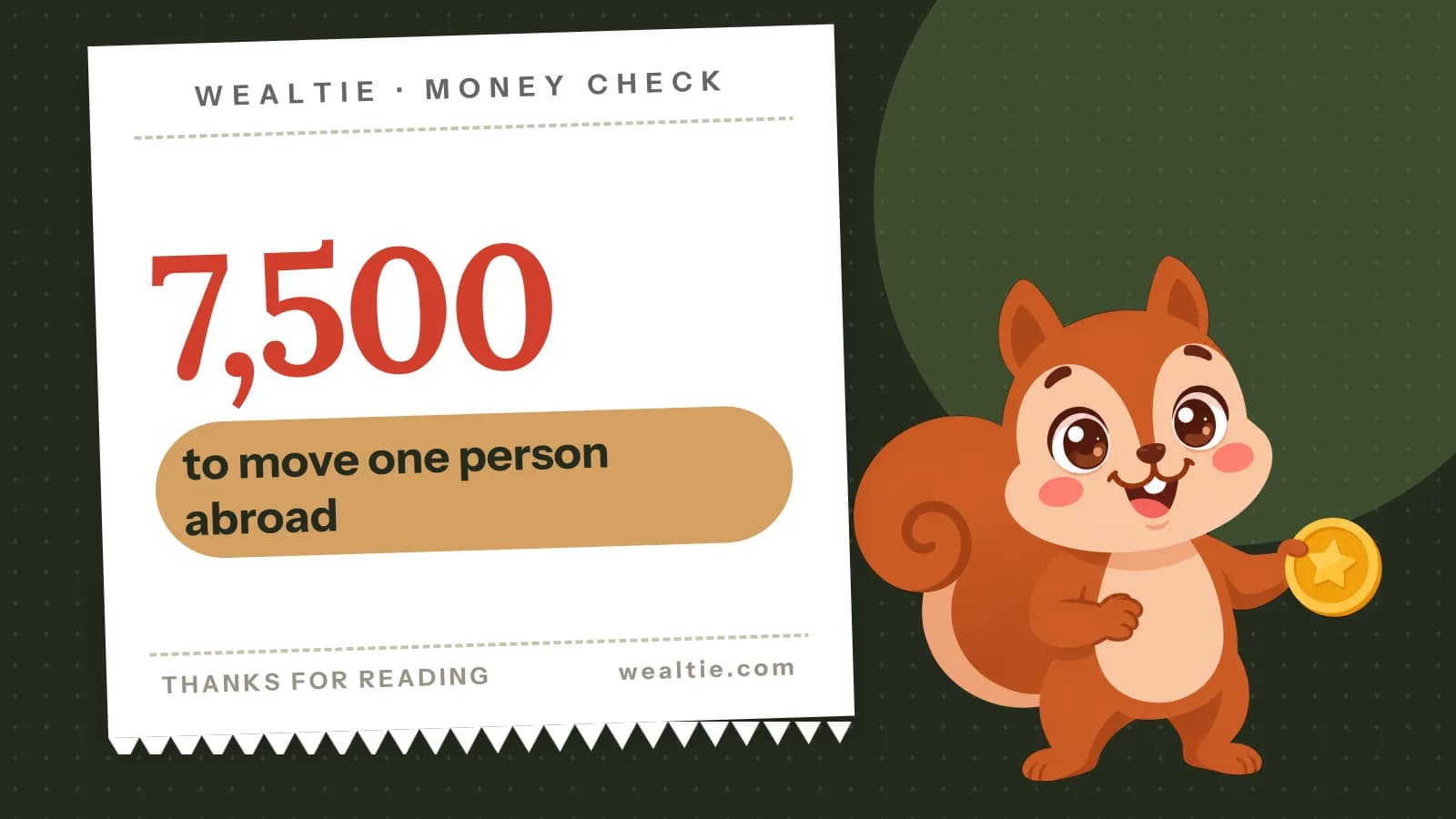
A moving abroad budget covers visas and paperwork, flights, shipping or storing belongings, a deposit and first rent, and a buffer for the first months. In a worked example, moving one person abroad costs about 7,500.
 By Wealtie Team · 3 min read
Key takeaways
- A moving abroad budget needs to cover visas, flights, shipping, a deposit and first rent, and a buffer for the first months.
- In a worked example, moving one person abroad costs about 7,500.
- The buffer matters most, since a new job, bank account and paperwork can take weeks to sort out.
- Hold money in the new currency as well as your home one, so you're not forced to convert at a bad time.
How do you make a moving abroad budget?
List every cost of the move, from paperwork to the first months in the new country, and add a buffer bigger than you think you'll need. Moving abroad has more unknowns than moving within a country: visas, bank accounts, new prices and sometimes a gap before you're paid.
What does moving abroad cost?
Here's a worked example for one person, in round numbers that work in any currency:
| Cost | Amount |
|---|---|
| Visa, documents, translations, medical checks | 800 |
| Flights | 500 |
| Shipping some belongings, storing the rest | 1,200 |
| Deposit and first month's rent | 2,000 |
| Buffer for the first months | 3,000 |
| Total | 7,500 |
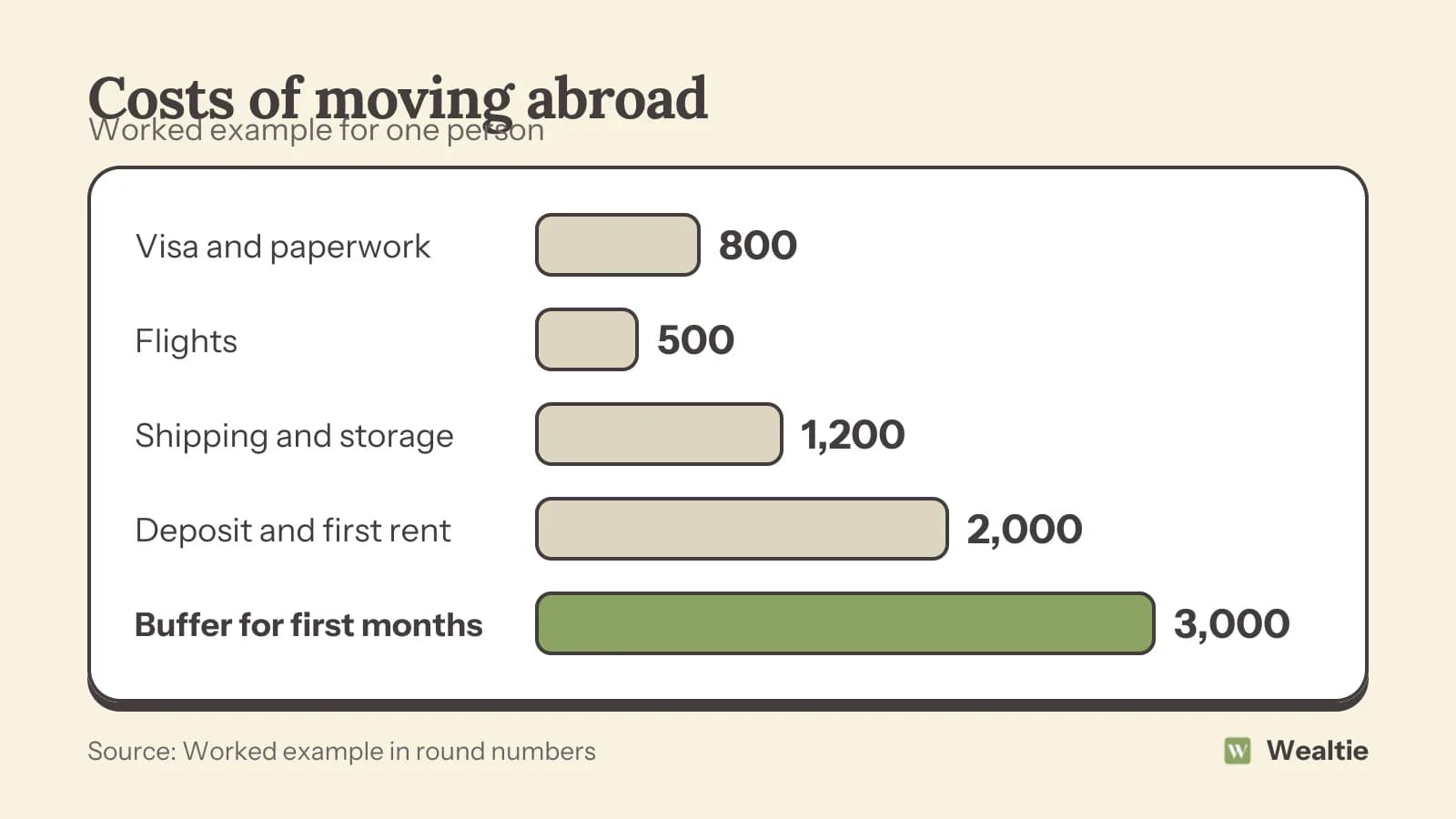
Your figures depend heavily on the country, your visa type, how much you take and whether you have a job lined up. Moving as a family, or shipping furniture, can increase the total a lot. If an employer is moving you, ask what they'll cover before you accept.
Which costs come first?
Visa and paperwork costs often come months before the move. Look up the official requirements for your visa type on government sites, including fees, documents and any proof of funds you need to show. Some visas require evidence of a certain amount of savings, which sets a minimum for your buffer. These rules often need the money to sit in your account for a set period, so plan ahead.
Book flights once your visa's approved, or choose a refundable fare if you need to book earlier.
Should you ship your belongings?
Only what's worth the cost. Shipping furniture across borders can cost more than buying second-hand in your new country. Many people take only what fits in a few suitcases, plus a few boxes of things they can't replace, and sell or store the rest.
Get quotes from several movers, and check what's included, like insurance and customs handling. Selling what you leave behind, like furniture and electronics, can raise money for the move. Check customs rules for what you bring, since some items attract duties or aren't allowed.
Why is the buffer so important?
Because things take time to set up. Opening a local bank account, getting a tax number, finding a flat and waiting for your first payslip can all take weeks. During that time, you're paying for temporary accommodation, food and transport in a new place with new prices.
A buffer of two or three months of living costs in the new country gives you room. In this example, 3,000 covers two months at 1,500. Temporary accommodation for the first few weeks often costs more per night than a long-term rental, so include it. If you're moving without a job, plan for longer.
How do you handle money in two currencies?
Keep money in both your home and new currencies during the move. Converting everything at once means you're exposed to the rate on that day. Converting in stages, as you need it, spreads the risk. An account that holds the new currency can help you build up money in it before you go. Tell your home bank you're moving, so your cards aren't blocked for unusual activity.
Use a card with low foreign fees for the first weeks, before your local account's open. Foreign transaction fees explains what to look for.
What ongoing costs change?
Almost everything: rent, food, transport, healthcare and taxes. Research typical costs in your new city before you go, and plan a temporary budget for the first three months. After that, you'll have real numbers. Budgeting as an expat covers living across two countries for the long term.
Pension contributions at home may stop when you leave, so check what happens to your pension and whether you can keep paying in. Check your other obligations at home too. You might still have a phone contract, subscriptions, or tax responsibilities that continue after you leave.
What should you sort out before you leave?
Close or update accounts you won't need, cancel subscriptions, tell your bank you're moving, and keep copies of important documents. Find out how healthcare works in the new country and whether you need private cover until you're registered.
How do you track a move abroad in Wealtie?
Add accounts in each currency you'll use, and log moving costs in a Moving category. Each account keeps its own currency, and totals are converted into a display currency at each day's rate, so you can see the whole move in one figure. The multi-currency budget app covers 68 currencies on the Free plan, and your expense categories show where the money went.
Questions people ask
It varies widely by country and how much you take. A worked example for one person comes to about 7,500, including visas, flights, shipping, a deposit and a buffer.
Enough for the move itself plus two or three months of living costs in the new country, or more if you don't have a job lined up. Some visas set a minimum amount of savings.
Often not, since shipping can cost more than buying second-hand in your new country. Take what you can't replace and sell or store the rest.
Keep money in both currencies and convert in stages as you need it, instead of all at once.
This article is general information, not financial, tax or legal advice. Your situation is your own; check the numbers that apply to you before you act on them.