Multi-currency & travel: How to plan a gap year budget you can live on
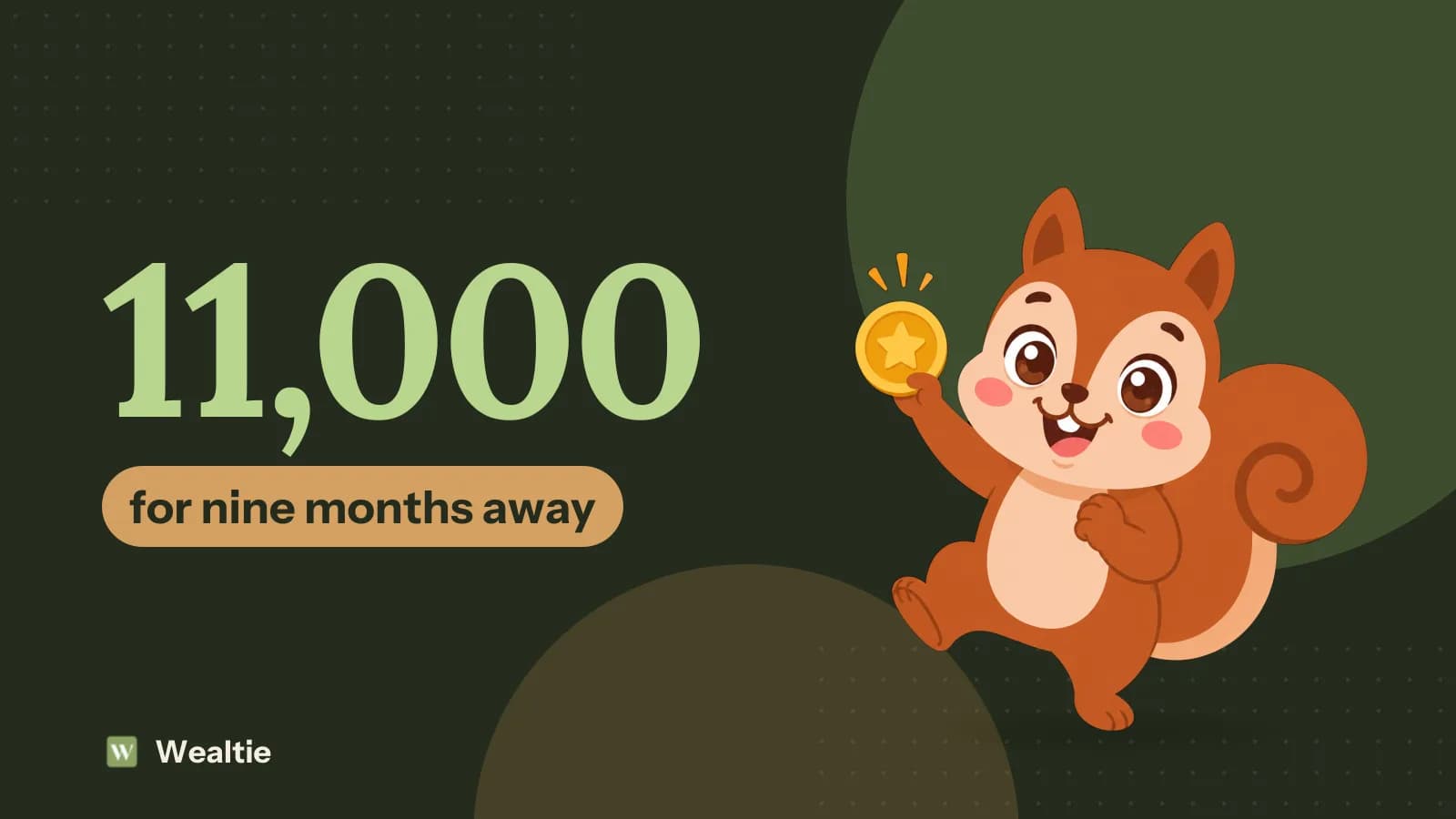
A gap year budget works best when you split the year into parts: travel, a monthly living cost for each place, one-off costs before you go, and a buffer for coming home. In a worked example, nine months away comes to about 11,000.
 By Wealtie Team · 3 min read
Key takeaways
- Split a gap year budget into one-off costs before you go, living costs for each place, travel between places, and a buffer for coming home.
- In a worked example, nine months away comes to about 11,000.
- Living costs vary hugely between countries, so price each stop separately instead of using one average.
- A buffer for the first month back covers rent, a deposit or job hunting before income restarts.
How do you plan a gap year budget?
Break it into parts and price each one. A single figure for "the year" usually turns out wrong, because costs differ so much between countries and between months. Splitting it up also shows you where the money goes and which parts you can change.
The same method works for a career break or a sabbatical, with an extra line for anything still running at home, like rent or a mortgage.
What goes into a gap year budget?
Here's a worked example for nine months away, in round numbers that work in any currency:
| Part | Amount |
|---|---|
| Before you go: flights out, insurance, visas, vaccinations, gear | 1,500 |
| Living costs: three months at 600, three at 800, three at 1,000 | 7,200 |
| Travel between places | 1,300 |
| Buffer for coming home | 1,000 |
| Total | 11,000 |
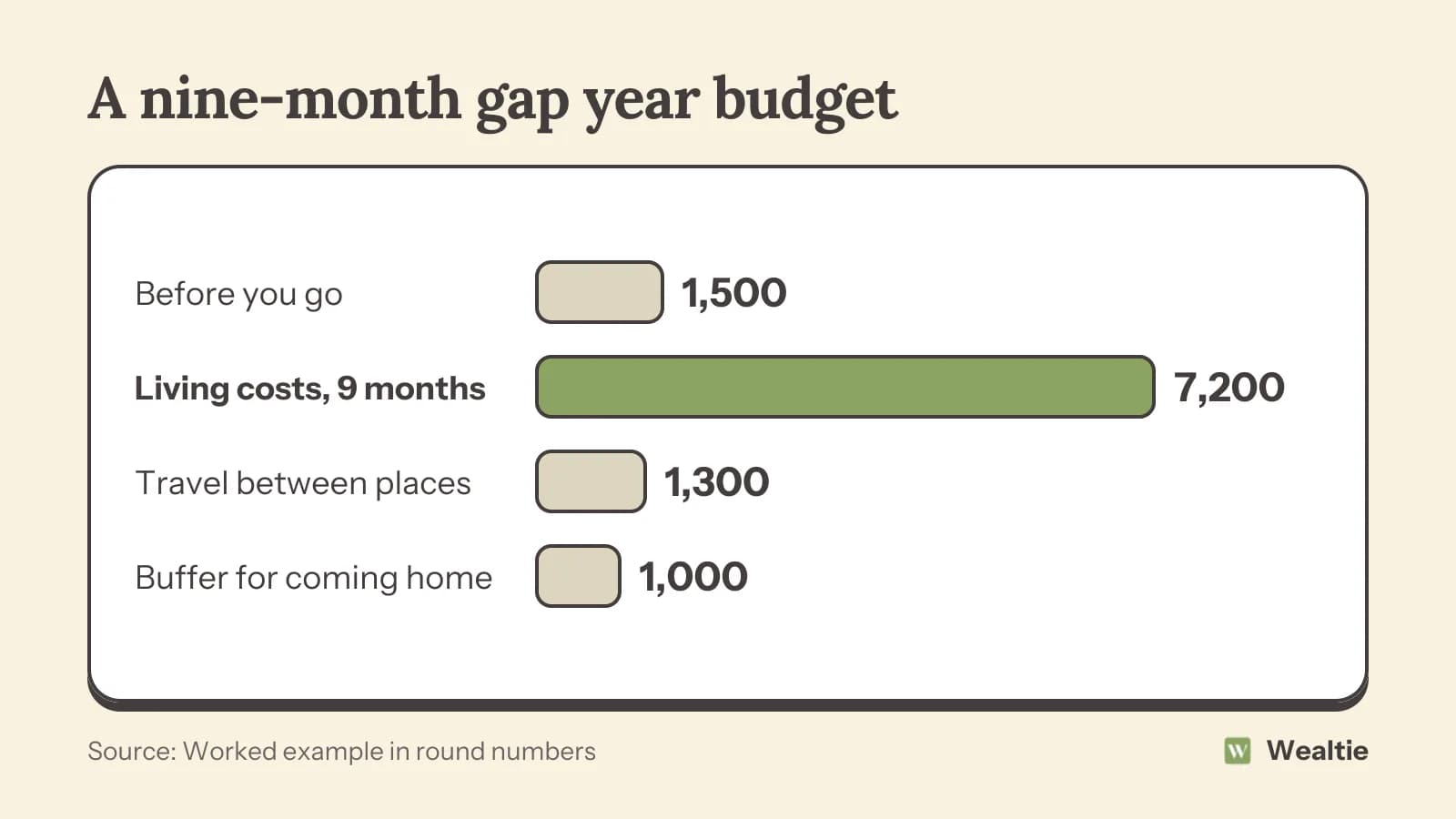
The living costs line is the biggest, and the one to research most carefully. Look up typical prices for accommodation, food and local transport in each place, ideally from recent travellers and local sources, and work out a monthly figure for each stop.
Why price each country separately?
Because the differences are large. A month somewhere cheap can cost a fraction of a month somewhere expensive, so the order and length of your stops change the total a lot. Spending longer in cheaper places and shorter visits to expensive ones stretches the same money further.
Seasons matter too, since high season can push accommodation prices up a lot in some places, so check when you'll be in each one. Keep a little room in each stop's budget. Your first week anywhere tends to cost more while you work out where to shop and how to get around.
What one-off costs should you plan for?
The ones before you leave and the ones that come up along the way:
- Travel insurance for the whole trip, checked for what it covers
- Visas and any entry fees
- Vaccinations and a basic medical kit
- A good bag, shoes and anything else you'd need to buy
- Phone plans or local SIM cards
- Storage for your things at home, if you're giving up a flat
Check entry rules and visa requirements on official government sites for each country, since they change and the cost of getting them wrong can be high.
Why do you need a buffer for coming home?
Because income doesn't restart the day you land. You might need a deposit and first month's rent, a few weeks to find work, and new clothes for interviews. A buffer of a month or two of home living costs means you don't come back straight into debt.
If you're keeping a home while you're away, include the costs that keep running, like rent, a mortgage, insurance and subscriptions, or arrange to pause or reduce them.
How much should you save, and how fast?
Divide the total by the months until you leave. 11,000 saved over 18 months is about 611 a month. That's a lot for most people, so many combine saving with working along the way, if their visa allows it, or shorten the trip.
Keep the gap year fund separate from everyday money, and move the monthly amount on payday. Pay yourself first explains why payday works best.
Can you work during a gap year?
Sometimes, depending on the country and your visa. Working holiday schemes, volunteering in exchange for accommodation, and remote work can all reduce what you need to save. Check the rules carefully before you take any work, since working without the right permission can lead to serious problems.
How do you manage money while you're away?
Use a card with low foreign fees, carry a small amount of cash in a separate place, and check your spending every few days against the budget for that stop. Foreign transaction fees covers what cards charge, and how much cash to travel with helps with cash.
Keep a second card and some emergency money somewhere other than your wallet, and check your balance each week against the plan for each stop.
How do you track a gap year in Wealtie?
Add your gap year fund as its own account and log spending in each place in the currency you paid. Each account keeps its own currency, and totals are converted into your display currency at each day's rate, so you can see the whole year in the money you think in. The multi-currency budget app covers 68 currencies on the Free plan, and your expense categories show where the money went.
Questions people ask
It varies hugely by destination and length. A worked example of nine months away comes to about 11,000, including living costs, travel, one-off costs and a buffer for coming home.
Price each part of the year and add a buffer for coming home, then divide by the months until you leave. 11,000 over 18 months is about 611 a month.
Sometimes, if your visa allows it. Check the rules for each country before taking any work.
Travel insurance, visas, vaccinations, storage at home, and a buffer for the first month back before income restarts.
This article is general information, not financial, tax or legal advice. Your situation is your own; check the numbers that apply to you before you act on them.