Multi-currency & travel: How to plan a cruise budget, including the costs on board
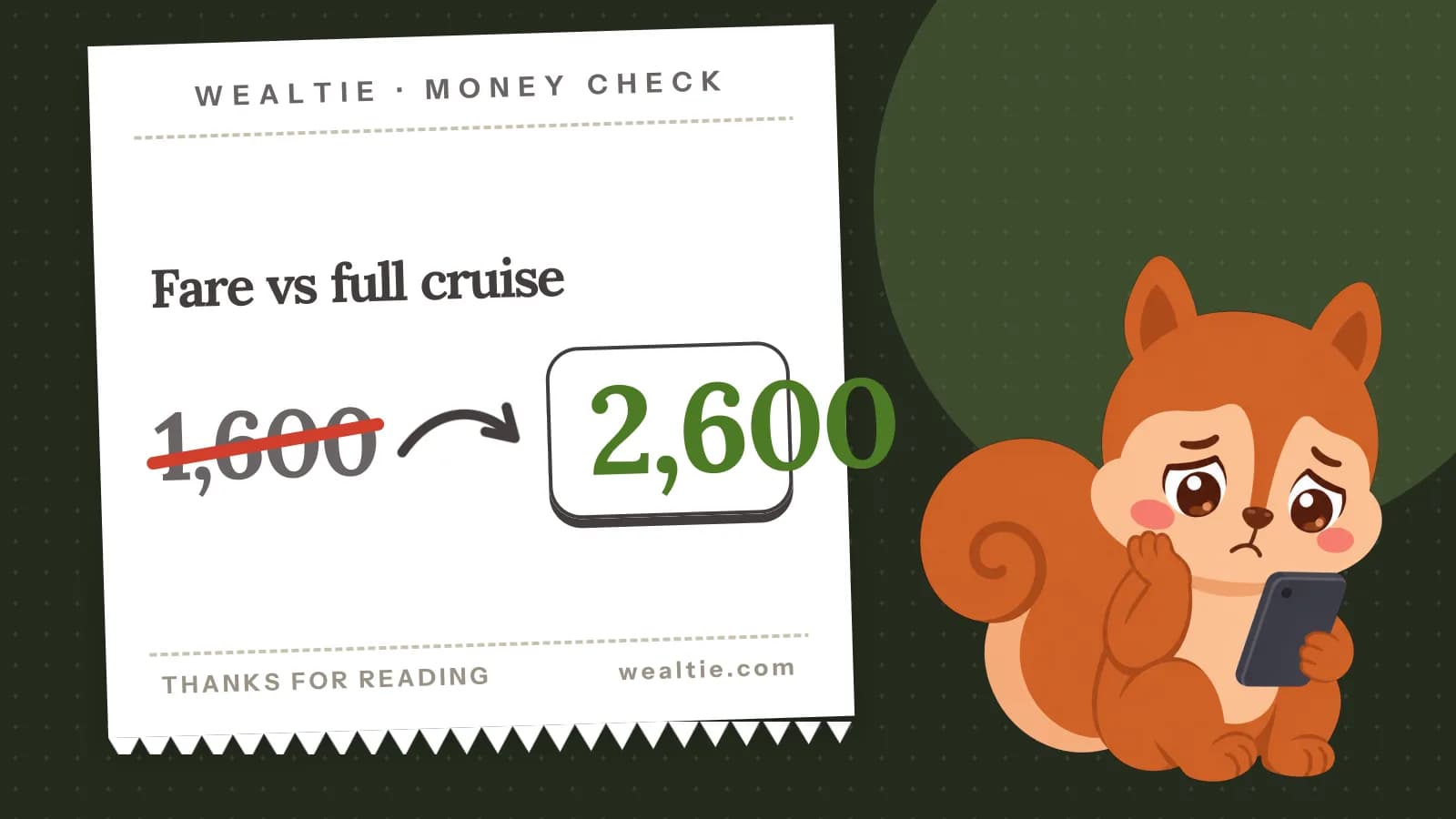
A cruise budget needs to cover far more than the fare, with travel to the port, gratuities, drinks, excursions and on-board extras often adding a lot. In a worked example, a week-long cruise for two with a 1,600 fare costs about 2,600 in total.
 By Wealtie Team · 3 min read
Key takeaways
- A cruise budget covers the fare, travel to the port, gratuities, drinks, excursions and extras.
- In a worked example, a week-long cruise for two with a 1,600 fare costs about 2,600 in total.
- Gratuities and drinks are the costs most often missed when planning.
- Setting a daily on-board spending limit keeps the final bill from surprising you.
How do you plan a cruise budget?
Start with the fare, then add every cost outside it. A cruise can look like great value, since the fare usually includes your cabin, most meals and entertainment, and you see several places without repacking. But many costs aren't included, and they're often charged to an on-board account you settle at the end. A cruise budget that includes all of them means the final bill holds no surprises.
What does a cruise fare include?
It varies between cruise lines and fares, so read what's included before you book. Usually included are your cabin, meals in the main restaurants and buffet, basic drinks like water and tea, entertainment and pools. Often not included are:
- Travel to and from the port
- Gratuities or service charges
- Alcoholic drinks, soft drinks and speciality coffee
- Shore excursions
- Speciality restaurants
- Wi-Fi
- Spa treatments
- Photos and souvenirs
Some fares bundle drinks, Wi-Fi or gratuities. Compare the full price of each option, not just the headline fare.
What does a cruise cost in total?
Here's a worked example for two people on a week-long cruise, in round numbers that work in any currency:
| Cost | Amount |
|---|---|
| Fare | 1,600 |
| Travel to the port | 250 |
| Excursions | 300 |
| Drinks | 200 |
| Gratuities | 150 |
| Other extras, like Wi-Fi or photos | 100 |
| Total | 2,600 |
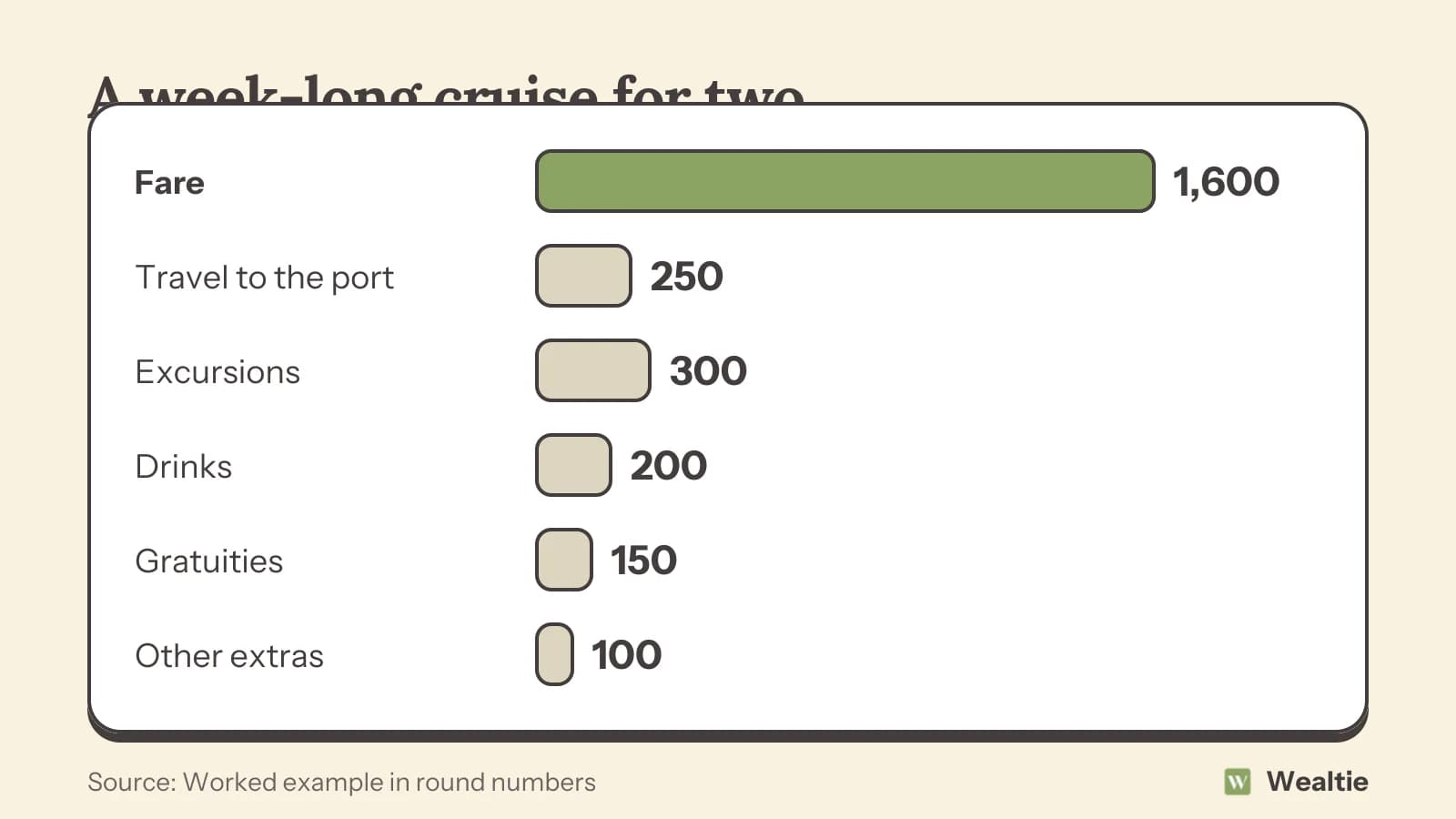
In this example, the extras add 1,000 to the fare. Your own figures depend on the cruise line, the route and how you like to spend your days.
How do gratuities work on a cruise?
Many cruise lines add a daily service charge per person to your on-board account, which is shared among the crew. Some include it in the fare, while others let you adjust it. Check how it works before you sail, and include it in your budget from the start. How much to tip covers tipping customs more generally.
How do you save on excursions?
Plan them. Excursions booked through the cruise line are convenient and wait for you if they run late, but they can be expensive. In many ports, you can explore on your own on foot, by public transport or with a local tour booked in advance, for much less. Leave plenty of time to get back to the ship, since it won't wait for independent travellers.
Some ports are best enjoyed by walking around, visiting a market or finding a beach.
Choosing which ports to pay for
You don't need an excursion in every port. Choose one or two that matter most to you, and keep the other days low-cost. Sea days and quiet port days are part of the holiday too.
How do you keep on-board spending under control?
Set a daily limit. On-board purchases are charged to your cabin card, so it's easy to lose track. Decide what you'll spend each day on drinks and extras, like 70 a day, and check your account in the app or at the desk every day or two. Over a week, 70 a day comes to 490, which shows whether a drinks package would be better value.
Are drinks packages worth it?
Only if you'd drink enough to beat the price. Count what you'd normally drink in a day, price it at the ship's rates and compare it with the package. Some lines require everyone in the cabin to buy the package if one person does, which can change the maths.
How do you save on getting to the port?
Book travel early, and compare options. Flying in the day before avoids the risk of missing the ship, but adds a hotel night. A port you can drive or take a train to can save a lot on flights. If you're flying, look at the whole trip cost, including transfers to the ship. If you're sailing from a port near home, compare parking at the port with a taxi or train, since parking for a week can add up. How to budget for a trip abroad covers travel money and currency.
How do you save for a cruise?
Divide the full cost by the months until you sail, and set that aside each month. A 2,600 cruise saved over a year is about 217 a month. Many cruises require a deposit at booking and the rest a few months before sailing, so knowing the payment dates helps you plan. A sinking fund keeps the money separate until it's needed.
How do you track cruise spending in Wealtie?
Add a savings account for the cruise and move money into it each month as a transfer, which isn't counted as spending. On board, log what you spend in a travel category in your expense categories. If the ship charges in another currency, an account can keep that currency, with totals converted into your display currency. A monthly limit in the budget tracker keeps spending at home steady while you save.
Questions people ask
In a worked example, a week-long cruise for two with a 1,600 fare costs about 2,600 once travel, excursions, drinks, gratuities and extras are added.
Often travel to the port, gratuities, alcoholic and soft drinks, excursions, speciality restaurants, Wi-Fi and spa treatments.
Set a daily on-board limit. In a worked example, 70 a day comes to 490 for a week.
Only if you'd drink enough each day to beat the price. Compare it with what you'd normally drink at the ship's prices.
This article is general information, not financial, tax or legal advice. Your situation is your own; check the numbers that apply to you before you act on them.