Multi-currency & travel: How to save money on car rental without nasty surprises
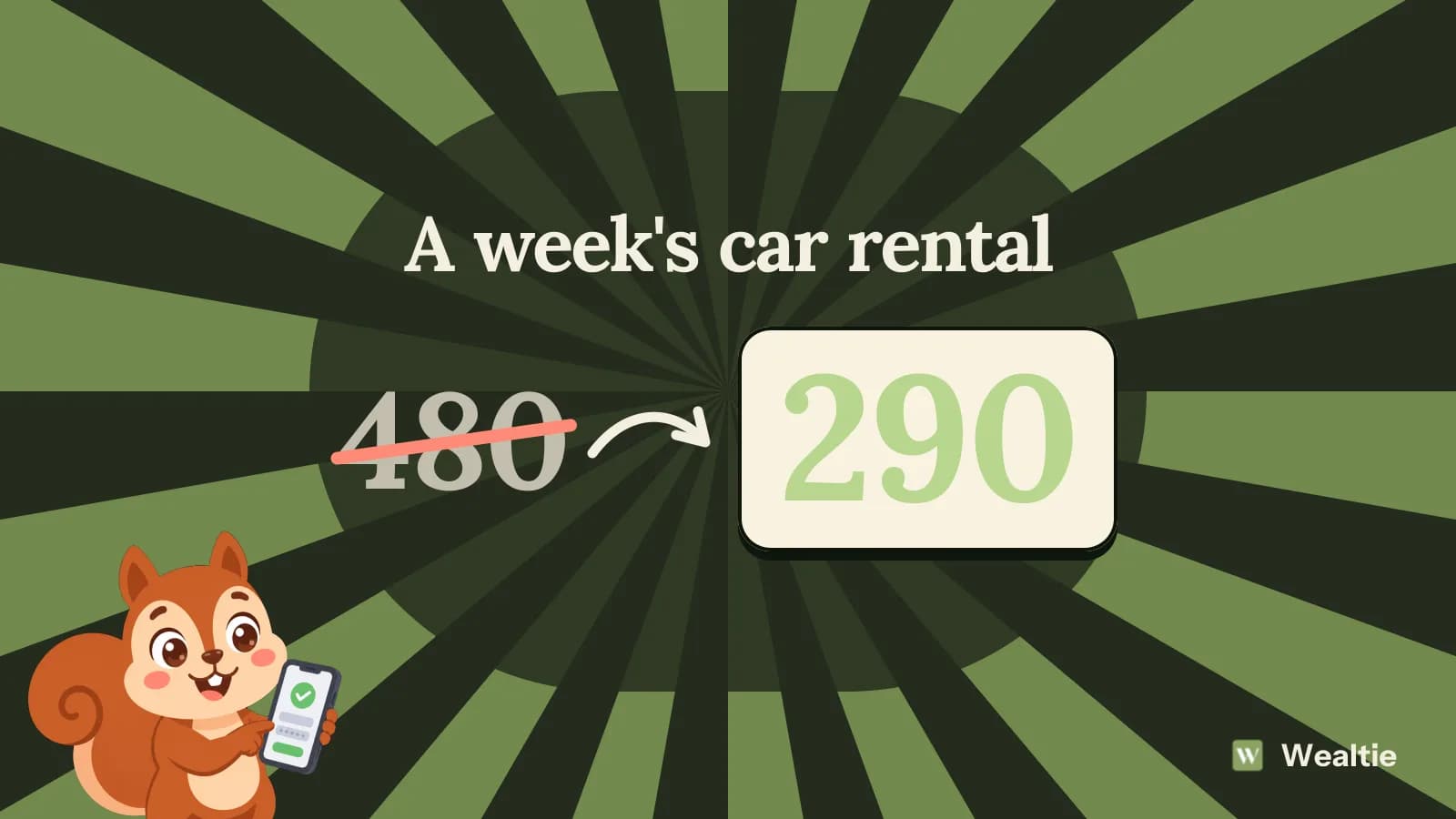
To save money on car rental, compare the total price including insurance and fees, book early, avoid expensive extras like the rental desk's excess cover, and check the car carefully before you drive. In a worked example, a week drops from 480 to 290.
 By Wealtie Team · 3 min read
Key takeaways
- Compare the total rental cost, including insurance, fees and fuel, not the daily rate.
- In a worked example, buying excess cover separately, booking early and choosing full-to-full fuel cut a week from 480 to 290.
- Rental desk add-ons, like excess cover and extra drivers, can add a lot, so decide in advance what you need.
- Photograph the car before you drive away and when you return it.
How do you save money on car rental?
Compare the full cost, book early, and decide what extras you need before you reach the desk. Car rental prices often look low online, then grow at the counter with insurance, fuel policies and fees. Knowing where the costs hide means you can avoid most of them.
Where does the saving come from?
Here's a worked example of a week's rental, in round numbers that work in any currency:
| Change | Saved |
|---|---|
| Buying excess cover separately instead of at the desk | 100 |
| Booking early instead of a few days before | 60 |
| Choosing a full-to-full fuel policy | 30 |
| From 480 to | 290 |
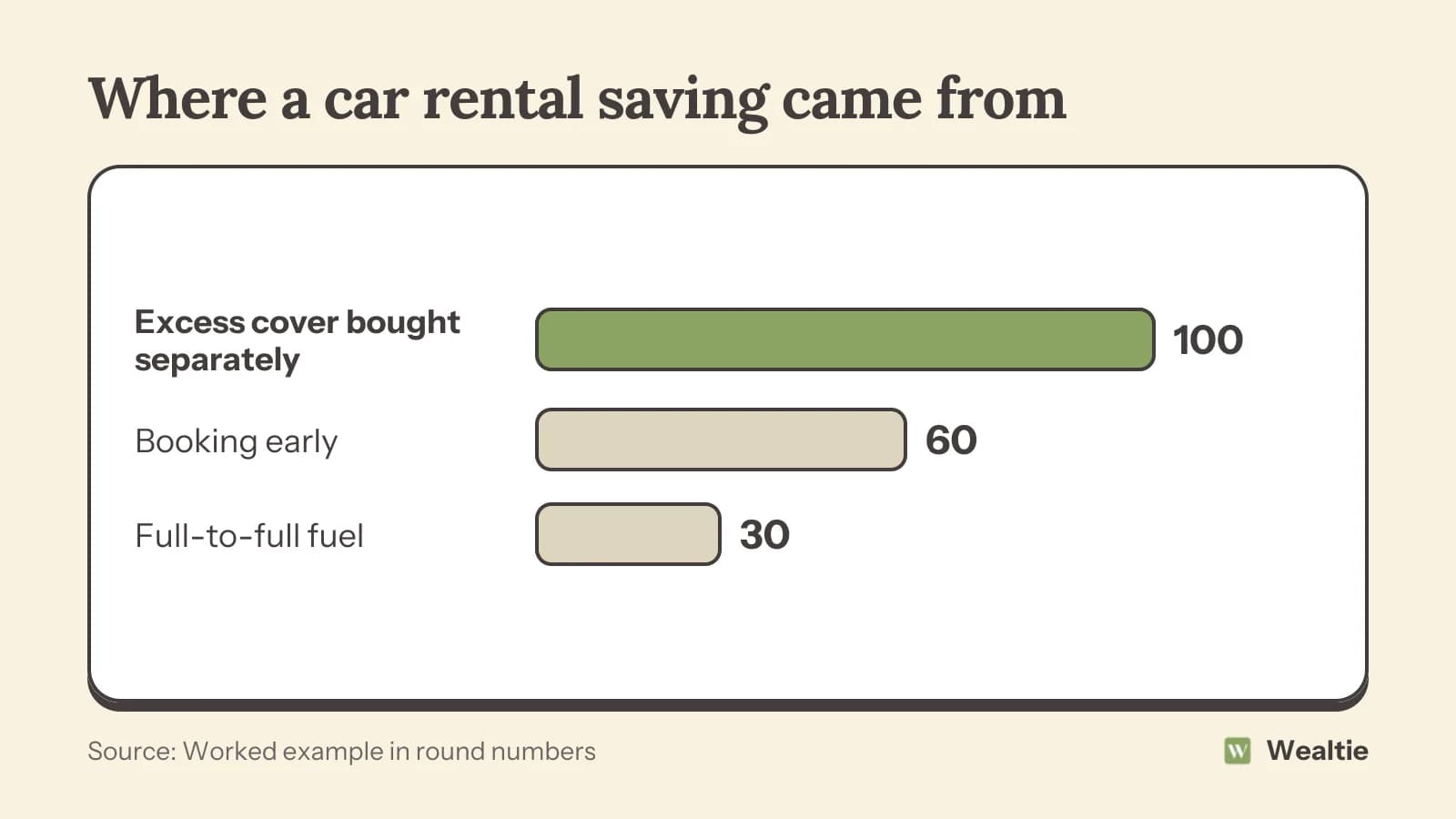
The car and the trip were the same. The saving came from avoiding extras and booking well. Picking up the car away from the airport can be cheaper too, since airport locations often add a fee, so compare a town-centre pickup if it's easy to reach.
How do you compare prices fairly?
Look at the total for the whole rental, including insurance, taxes, airport or one-way fees, and any charges for extra drivers, young drivers or child seats. A low daily rate with high fees can end up costing more than a higher rate with everything included.
Check the mileage limit too. Some deals cap the distance you can drive, with a charge for every kilometre or mile over. Smaller cars usually cost less to rent and to fuel, so book the smallest car that fits your group and luggage.
What is excess insurance, and do you need it?
Most rentals include basic cover, but with an excess: the amount you'd pay if the car is damaged or stolen. It can be large. The rental desk will usually offer to reduce it to zero for a daily fee, which can add a lot over a week.
Alternatives can cost much less:
- Standalone excess insurance bought in advance from a separate provider
- Cover included with some credit cards or travel insurance policies
Check the terms carefully, including what's covered and whether you'd pay the rental company first and claim it back. The rental company may also hold a deposit on your card, so make sure you've got enough available credit.
Which fuel policy is cheapest?
Usually full-to-full: you pick the car up with a full tank and return it full. Policies where you pay for a full tank upfront often charge more than the pump price and don't refund unused fuel. Find a petrol station near the drop-off point, and keep the receipt. Electric rental cars have their own rules on charge levels, so check those if you choose one.
What about tolls and other driving costs?
Count them before you go. Toll roads, congestion charges, low-emission zones and city parking can add a lot to a rental, and some rental companies add a fee on top for handling tolls or fines. Check whether the route has tolls and how they're paid, and look up parking at your destination. A few minutes of planning can save more than you'd save by choosing a cheaper car.
What other extras can you skip?
- Sat nav: your phone with offline maps usually does the job
- Child seats: some families bring their own, or check if a cheaper option is available
- Upgrades: politely decline unless you need the space
- Extra drivers: only add them if they'll drive, and compare the cost
Decide in advance and stick to it at the desk, since add-ons can be offered persuasively.
How do you avoid charges when you return the car?
Inspect the car before you drive away. Photograph or video every side, the wheels, the interior and the fuel level, and make sure any existing damage is noted on the paperwork. Do the same when you return it, ideally with a staff member. Return it on time, since late returns can be charged as an extra day.
Keep all the paperwork and receipts until your deposit is released and you've checked your card statement.
Is renting a car worth it?
Sometimes, sometimes not. For a city break, public transport is often cheaper and easier than renting and parking. For a road trip or somewhere with poor transport, a car can be good value, especially split between several people. The road trip budget shows how to cost a trip by car.
How do you track car rental costs in Wealtie?
Log the rental, fuel and any fees in a Travel category, so your expense categories show the trip's full cost. If you're paying in another currency, each account keeps its own currency, and the multi-currency budget app converts totals at each day's rate.
Questions people ask
Compare total prices including fees, book early, buy excess cover separately in advance, choose full-to-full fuel and skip extras you don't need.
Not necessarily. Standalone excess insurance or cover through a credit card or travel insurance can cost much less, so check the terms.
Full-to-full is usually cheapest, since prepaid fuel policies often charge more than the pump price and don't refund unused fuel.
Photograph the car before you drive and when you return it, and make sure existing damage is noted on the paperwork.
This article is general information, not financial, tax or legal advice. Your situation is your own; check the numbers that apply to you before you act on them.