Budgeting: Wood burning stove cost: buying, fitting and fuel
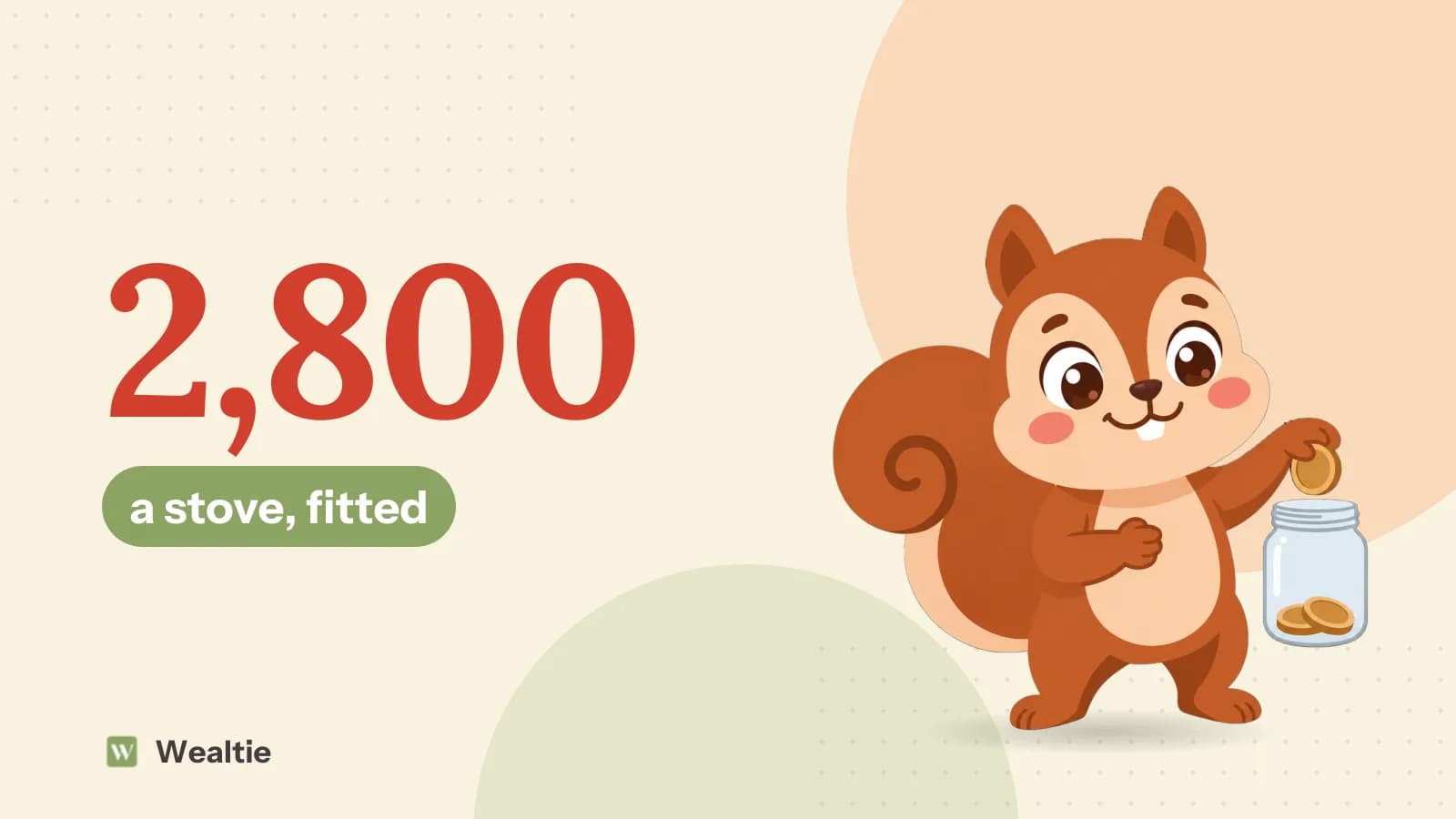
Wood burning stove cost is mostly the installation, since a flue liner and fitting can cost more than the stove itself. In a worked example, a stove costs 2,800 fitted and around 500 a year to run.
 By Wealtie Team · 3 min read
Key takeaways
- Wood burning stove cost is mostly installation, especially the flue liner.
- Yearly running costs include firewood and chimney sweeping.
- A stove rarely saves money on its own, but can cut heating in one room.
- Use a qualified installer and check local rules on smoke and fuel.
How much does a wood burning stove cost?
A wood burning stove, often called a log burner, brings warmth and atmosphere to a living room, and many people love the ritual of lighting a fire on a cold evening. Wood burning stove cost goes well beyond the price of the stove. Installation, especially a flue liner to carry smoke safely up the chimney, often costs more than the stove itself.
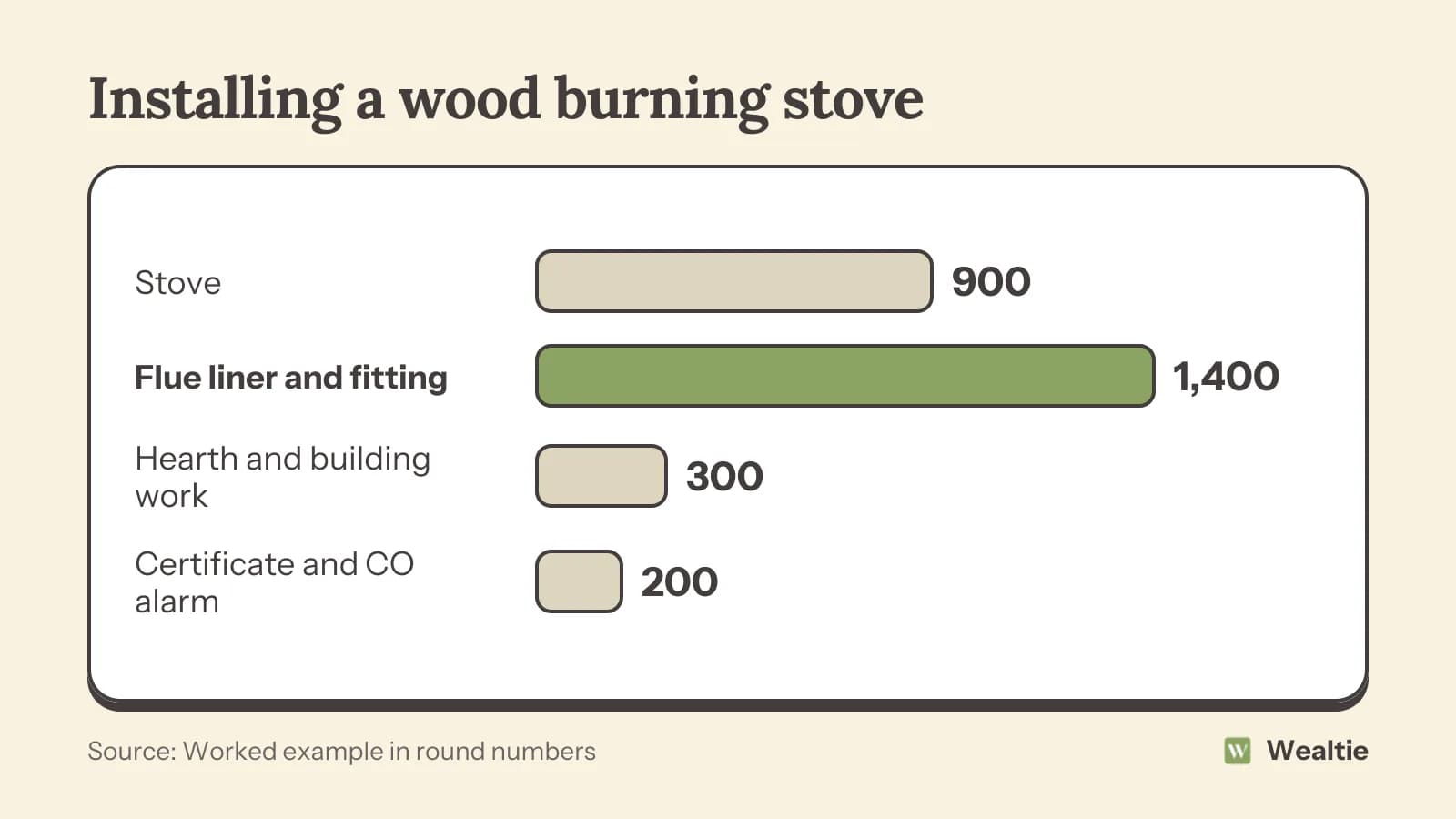
Here's a worked example of installing a stove in a home with an existing chimney, in round numbers that work in any currency:
| Cost | Amount |
|---|---|
| Stove | 900 |
| Flue liner and fitting | 1,400 |
| Hearth and building work | 300 |
| Certificate and carbon monoxide alarm | 200 |
| Total | 2,800 |
Homes without a chimney need a twin-wall flue system through a wall or roof, which can cost more. Prices vary a lot by area, stove type and the condition of the chimney.
What does a stove cost to run?
In the same example, running costs come to around 500 a year: about 400 for firewood, 70 for a yearly chimney sweep and 30 for kindling, firelighters and small parts. Costs depend on how often you use the stove and where you get your wood. Buying seasoned wood in bulk in spring or summer is usually cheaper than small bags in winter.
Does a wood burner save money on heating?
A stove can heat one room well, letting you turn down the central heating elsewhere or use it less on mild evenings. But it rarely pays for itself through savings alone, since installation is expensive and firewood isn't free. Most people choose a stove for comfort and atmosphere, with some heating savings as a bonus. How to save money on heating covers other ways to cut heating bills.
What affects the installation cost?
The chimney
An existing chimney in good condition makes installation easier. Chimneys that need repairs or relining cost more.
The type of stove
Larger stoves, multi-fuel stoves and models with boilers to heat water cost more.
The hearth
A non-combustible hearth is required under and around the stove. Building one adds cost.
No chimney
Fitting a flue system where there's no chimney involves more work.
Regulations
In many places, installations must meet building rules and be certified. Some areas also have rules about smoke and which fuels or stoves are allowed.
How do you keep stove costs down?
Use a qualified installer
A proper installation avoids dangerous problems and costly fixes later. Certification is often needed for insurance and selling your home. How to save money on home insurance covers what insurers ask for.
Burn dry, seasoned wood
Wet wood burns poorly, wastes heat and leaves more deposits in the chimney.
Buy wood in bulk
Large loads in spring or summer are usually cheaper per log.
Sweep regularly
A yearly sweep keeps the stove safe and efficient.
Fit a carbon monoxide alarm
It's essential for safety and inexpensive.
How do you budget for a stove?
Add installation to your home improvement budget and running costs to your yearly heating budget. How to plan a home renovation budget covers bigger projects, and how to budget for winter covers seasonal costs like firewood.
Choose the right size of stove for your room. A stove that's too powerful will make the room uncomfortably hot, so you'll end up burning it low, which is less efficient and creates more soot. A good installer will work out the right heat output based on the room's size and insulation. Bigger isn't better here.
Think about where you'll store firewood. Logs need a dry, ventilated store outside so they stay seasoned. A simple log store costs a little but protects your fuel and saves money by stopping wood getting wet and burning poorly.
If you're buying a home with a stove already fitted, ask for the installation certificate and when the chimney was last swept. A stove without paperwork may need checking or work before it's safe to use, which is worth knowing before you budget.
Local rules can affect which stoves and fuels you can use, especially in towns and cities with smoke controls. Checking these before buying avoids choosing a model you can't use as planned.
Finally, remember that a stove is a long-term investment. Looking after it, sweeping the chimney and burning good fuel keeps it safe and efficient for many years.
Ask installers about ongoing servicing too. Some recommend a yearly check of the stove's seals and glass alongside the chimney sweep, which keeps it burning cleanly.
How can Wealtie help you track stove costs?
Log the installation in a home expense category, and track firewood and sweeping in a heating category. Setting a budget for winter heating shows what your stove costs each year.
Questions people ask
In a worked example, installing a stove with a flue liner, hearth and certificate cost about 2,800.
In a worked example, firewood, sweeping and small extras came to about 500 a year.
Rarely on its own. It can heat one room well, but installation and firewood costs mean savings are modest.
Usually, yes. A flue liner carries smoke safely up the chimney and is often required by building rules.
This article is general information, not financial, tax or legal advice. Your situation is your own; check the numbers that apply to you before you act on them.