Budgeting: How to budget for winter
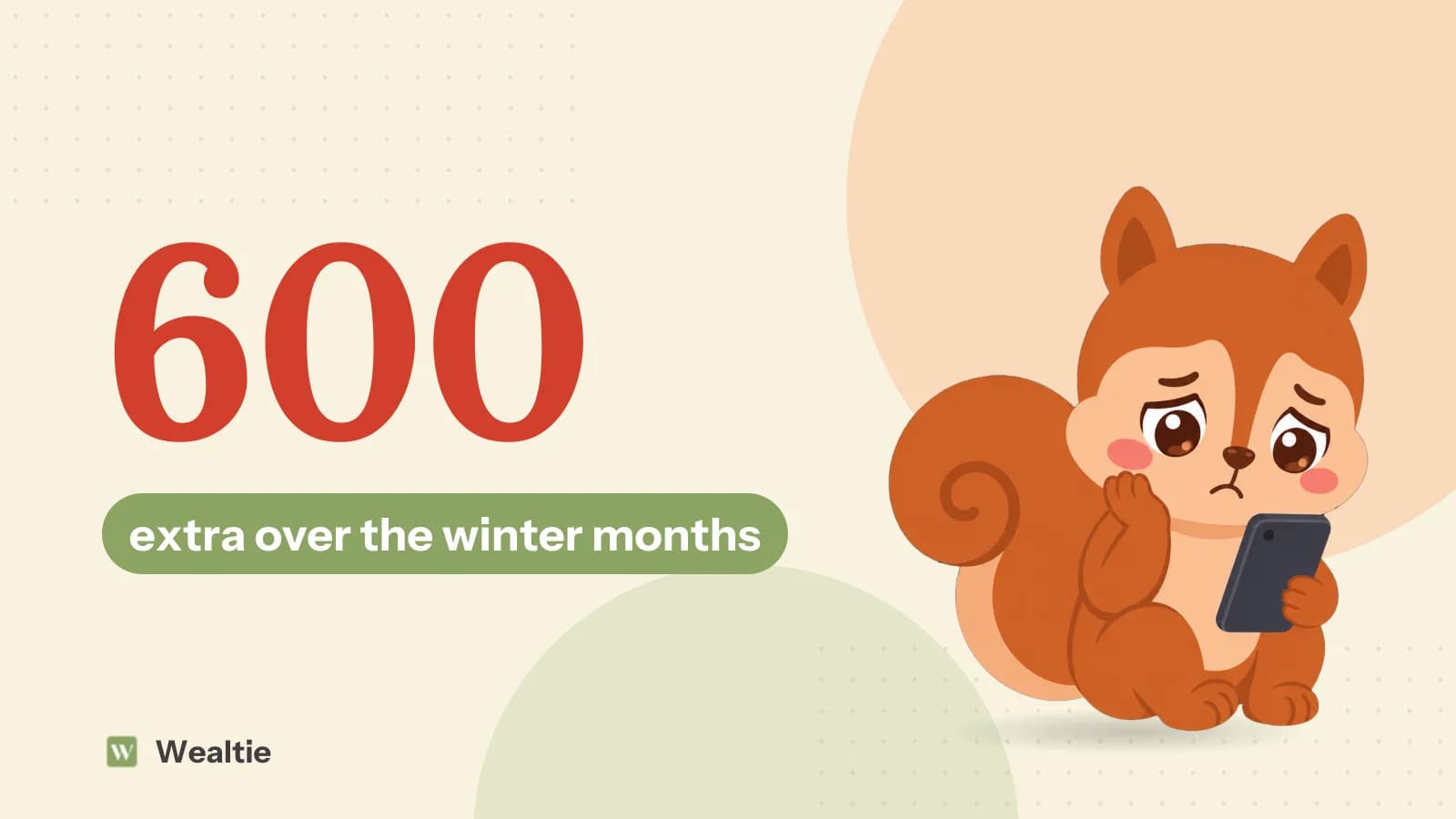
To budget for winter, plan for higher energy bills, warm clothes, festive costs and winter car care, which all arrive in the same few months. In a worked example, winter adds about 600 to a household's costs, and saving a little through the year keeps those months from stretching your budget.
 By Wealtie Team · 3 min read
Key takeaways
- Winter brings higher energy bills, warm clothes, car care and festive costs at the same time.
- In a worked example, winter adds about 600 to a household's costs, before festive spending.
- Saving a little each month through the year smooths out the winter peak.
- Small changes to heating and draughts can cut energy bills noticeably.
How do you budget for winter?
Plan for the extra costs before they arrive. Winter brings a cluster of higher costs: bigger energy bills, warm clothes, car care, more time indoors and often festive celebrations, all in the same few months. If you budget for winter only when the first big bill arrives, it can stretch your finances for months. Planning ahead turns a winter squeeze into a steady, manageable cost. Winter can also bring lower income for some workers, like those in outdoor or seasonal jobs, which makes planning even more important.
Whenever the coldest months fall where you live, the same approach works.
What extra costs does winter bring?
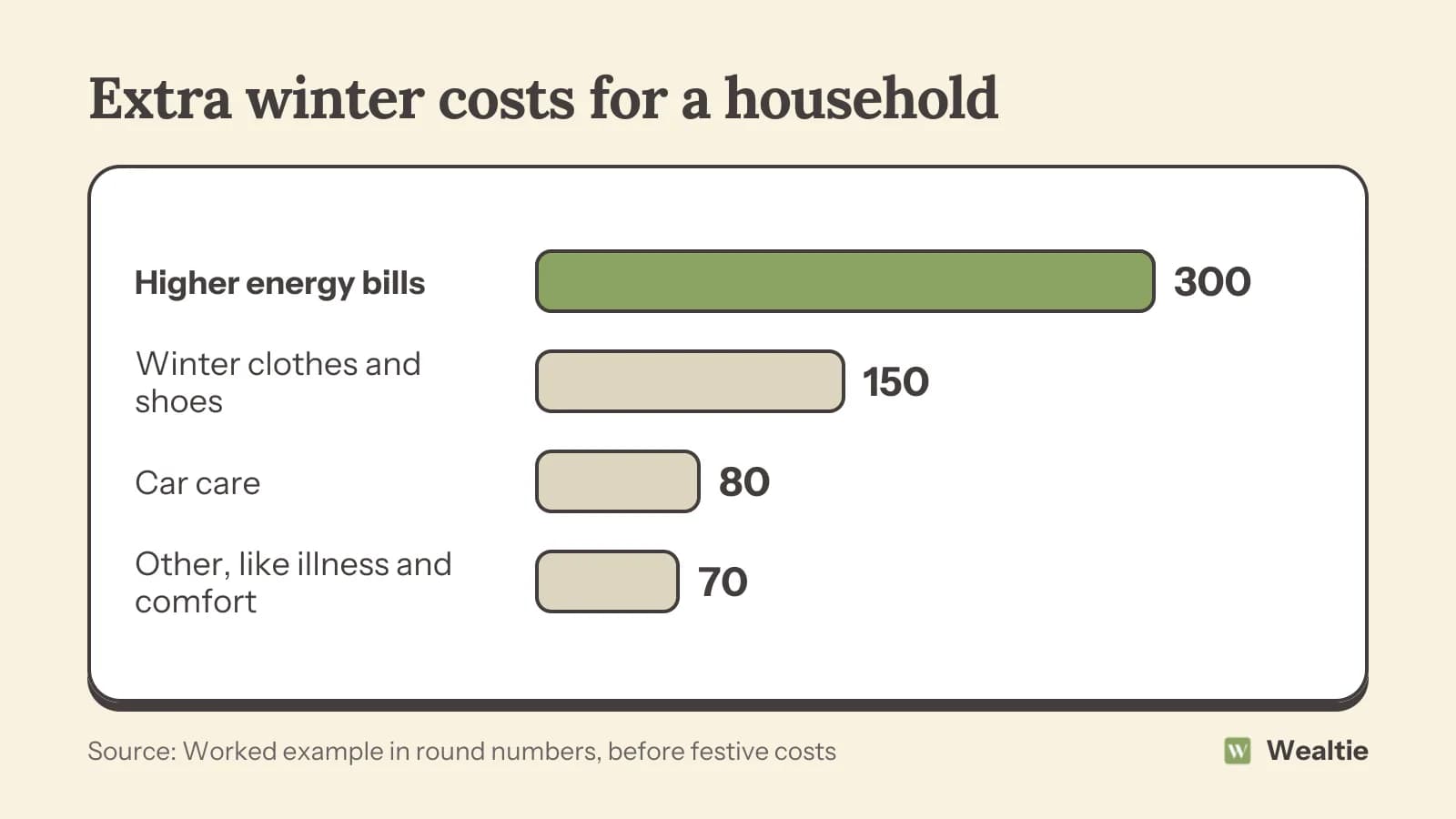
Here's a worked example for a household, before any festive spending, in round numbers that work in any currency:
| Cost | Amount |
|---|---|
| Higher energy bills | 300 |
| Winter clothes and shoes | 150 |
| Car care, like tyres and battery | 80 |
| Other, like illness and comfort | 70 |
| Total | 600 |
Your own figures depend on your home, your climate and your household. Festive costs, like gifts and celebrations, come on top. The Christmas budget covers those if you celebrate. Keeping festive spending separate from winter running costs helps you see each clearly.
How do you smooth the cost across the year?
Save a little each month. If winter adds 600 to your costs, saving 50 a month through the year covers it. Keeping that money in a separate pot means it's ready when bills rise. A sinking fund works well for costs you know are coming.
Spread energy bills
Many energy suppliers let you pay a fixed amount each month, based on your yearly use. You build up a credit in summer that covers higher winter use. Check that the monthly amount is realistic, so you don't end up with a big bill to settle. Submitting regular meter readings keeps the estimate accurate.
How do you cut heating costs?
Small changes make a difference:
- Draught-proof doors and windows, which is cheap and effective
- Lower your thermostat by a degree, and wear an extra layer
- Heat the rooms you use, and close doors to keep heat in
- Use timers so heating comes on only when needed
- Bleed radiators and keep furniture away from them
- Use thick curtains and close them at dusk
How to save money on heating and how to save money on your electric bill have more ideas.
Help with energy costs
In some places, there are grants, discounts or winter payments for households on lower incomes, older people or those with health conditions. Check what's available where you live, and ask your supplier about support if you're struggling to pay.
How do you save on winter clothes?
Check what you already have before buying. Good winter coats, boots and layers last several years, so it's worth buying quality pieces when needed and looking after them. Buy at the end of the season, when prices drop, or second-hand. For children who grow quickly, hand-me-downs and swaps help a lot. Thermal layers worn under normal clothes are a cheap way to stay warm without buying a new wardrobe.
How do you prepare your car for winter?
Check tyres, battery, lights, wipers and antifreeze before the cold arrives. Small checks prevent breakdowns that cost far more. In places with snow and ice, winter tyres may be needed or required. Setting aside a little for car repairs through the year helps. The car repair fund covers how much to save. Keeping a blanket, scraper and de-icer in the car costs little and saves trouble on cold mornings.
What about spending more time at home?
Shorter days and cold weather mean more time indoors, which can raise spending on takeaways, streaming and online shopping. Planning cosy, low-cost evenings, like cooking batches of soup, film nights with what you already have or board games, keeps winter enjoyable without extra cost. Batch cooking warm meals also saves money and energy. Library books, free online classes and community events fill dark evenings for nothing.
Looking after your health
Winter illnesses can mean time off work, which matters especially if you're self-employed or on hourly pay. A small buffer in your budget for medicine and missed work helps. Stocking up on basic cold and flu remedies when they're on offer avoids paying more when you're unwell.
How do you track winter costs in Wealtie?
Set up energy bills as recurring transactions with the bill tracker, and update the amount when your supplier changes it. Log winter clothes and car care in your expense categories, so you can see what winter costs over the year. A monthly limit in the budget tracker keeps the rest of the month on track.
Questions people ask
In a worked example, about 600 for energy, clothes, car care and other costs, before festive spending.
Save a little each month through the year, or pay energy bills at a fixed monthly amount, so winter costs are spread out.
Draught-proof, lower the thermostat by a degree, heat only the rooms you use and use timers.
At the end of the season, when prices drop, or second-hand, after checking what you already have.
This article is general information, not financial, tax or legal advice. Your situation is your own; check the numbers that apply to you before you act on them.