Saving: What to do with a tax refund: an order that works, with numbers
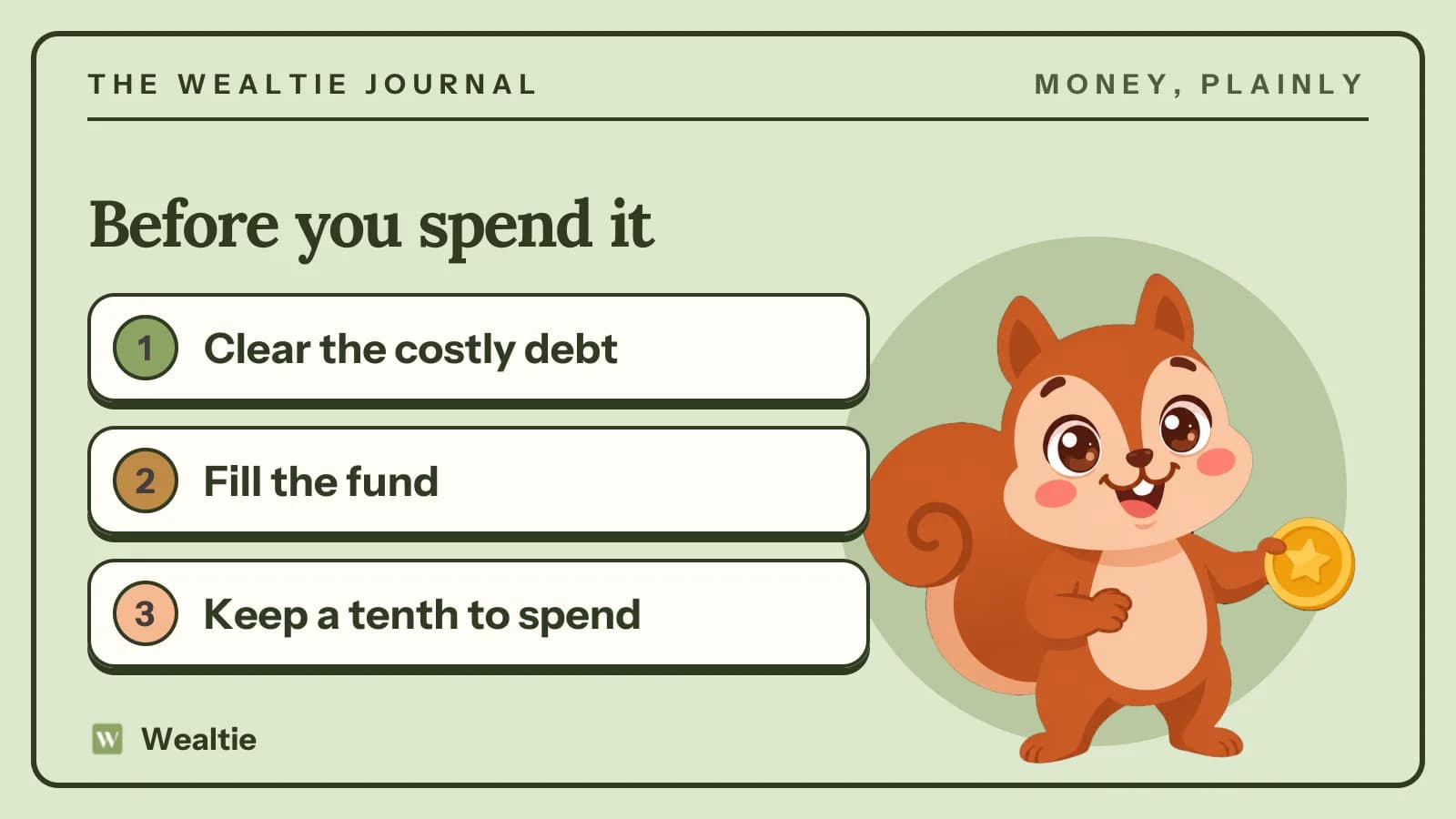
What to do with a tax refund depends on what's costing you most: pay down high-interest debt first, then fill your emergency fund, then cover bills you know are coming. Keep about a tenth to spend.
 By Wealtie Team · 3 min read
Key takeaways
- Put a tax refund toward high-interest debt first, because that debt costs more than savings can earn.
- Next comes an emergency fund of at least one month's income, then bills you already know are coming.
- Keeping about 10% to spend makes the plan easier to stick to.
- A large refund each year can mean too much tax is being withheld from your pay, and you can check that with the IRS Tax Withholding Estimator.
What should you do first with a tax refund?
Pay down any debt with a high interest rate, usually credit cards. A pound or dollar that clears a card stops costing you interest right away, and savings don't pay enough to beat that.
Pay off debt or save goes through the trade-off in detail. One exception: if you have no savings at all, put a small amount aside first, so the next surprise doesn't go back on the card.
How should you split a refund?
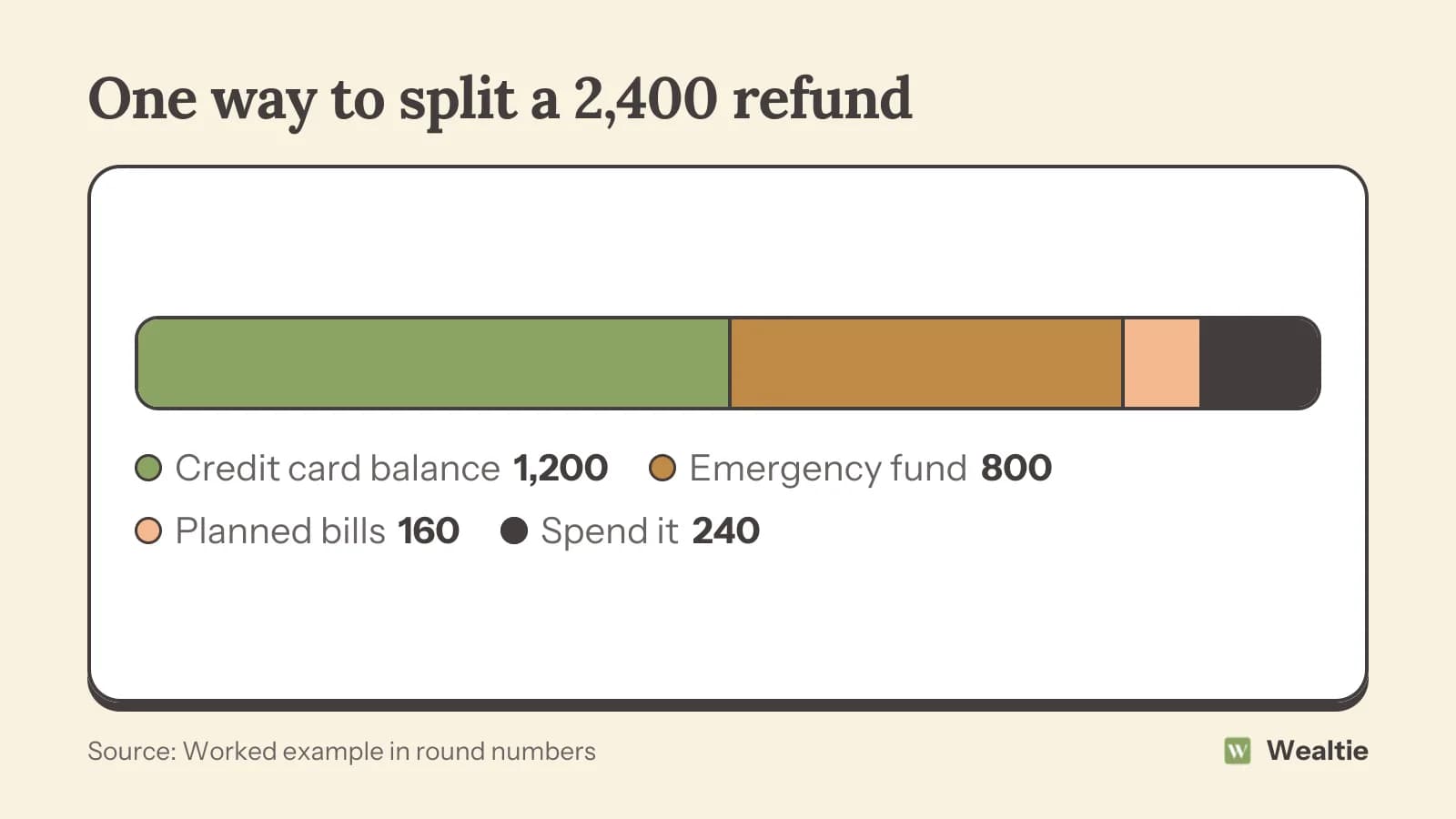
Follow the order until the money runs out. Here's one split of a refund of 2,400, in round numbers that work in any currency:
| Where it goes | Amount | Why |
|---|---|---|
| Credit card balance | 1,200 | Stops the interest |
| Emergency fund | 800 | Covers the next surprise |
| Planned bills | 160 | Next car service, renewals |
| Yours to spend | 240 | About 10% |
If you've got no costly debt, the first line goes to the fund. If the fund's already full, it can go to a goal you've been saving for: a deposit, a trip, a car.
What if the refund is small?
Put it in one place. A refund of 300 doesn't need a plan in four parts: if you've got card debt it goes there, and if you don't, it goes to savings. Keep 30 for yourself.
Why keep some of it to spend?
Because you'll follow a plan you don't resent. A tenth is enough for a dinner or something you've put off buying, and it means the other 90% goes where you planned.
Decide the amount before the money lands. The refund feels like a bonus, but it's your own money coming back, and the decision's easier before it's sitting in your account.
Should you be getting a refund this big?
Maybe not. A large refund often means too much tax came out of your pay during the year, and you could have had that money each month.
In the US, the IRS has a Tax Withholding Estimator that shows whether to change your withholding. Elsewhere, check the tax code or withholding on your payslip against what you expected. If you're self-employed, a refund may mean you've set aside more than you needed, and how much to set aside for taxes has the working.
How do you make sure it doesn't disappear?
Move the money within a day or two of it arriving. Pay the card, make the transfer to savings, and leave only the part you plan to spend in your everyday account.
Write the split down before the refund arrives, with an amount next to each line. When it lands, you've got three or four transfers to make, which takes five minutes and leaves nothing to decide in the moment. If it takes longer to arrive than you expected, leave the plan as it is and run it the day the money clears.
A refund that sits in a current account tends to get absorbed into ordinary spending without anyone choosing that. It's the same pattern as a pay rise, and what to do with a pay rise deals with it.
What if you've no debt and a full emergency fund?
Then pick from goals you've already set, by date. Money you'll need within a few years, for a deposit or a car, is best left in savings. Longer-term money is where investing comes in, and that's a decision worth making on its own. How to set financial goals helps you put them in order.
Should a refund change your monthly budget?
No. It comes once a year, so leave your limits alone and don't count it as a reason to raise them. If you use part of it to clear a card, the monthly payment you were making is now free, and that's the amount to decide about.
What if you owe tax instead?
Treat it as a bill with a date. If you can't pay in one go, contact your tax authority before the deadline, since most offer payment plans and it's easier to arrange one before you're late.
Then set aside a monthly amount for next year, so the bill doesn't arrive as a shock twice.
How do you record a refund in Wealtie?
Log it as income in the account it lands in, which the income tracker counts toward that month's total. Moving part of it to savings is a transfer, so it doesn't show as spending. The fund's new balance then shows in your net worth tracker.
Questions people ask
Pay down high-interest debt first, then build an emergency fund, then cover bills you know are coming. Keep around 10% to spend so the plan is one you'll follow.
Save most of it unless you have costly debt, in which case pay that down first. Setting aside about a tenth to spend makes the rest easier to leave alone.
Usually because too much tax was withheld from your pay during the year. In the US, the IRS Tax Withholding Estimator shows whether to adjust it.
Yes, if you carry a balance, since card interest usually costs far more than savings earn. Keep a small cushion in savings if you have none.
Sources
- Tax Withholding Estimator · Internal Revenue Service · checked 9 November 2026
This article is general information, not financial, tax or legal advice. Your situation is your own; check the numbers that apply to you before you act on them.