Saving: How much money to save before moving out, item by item
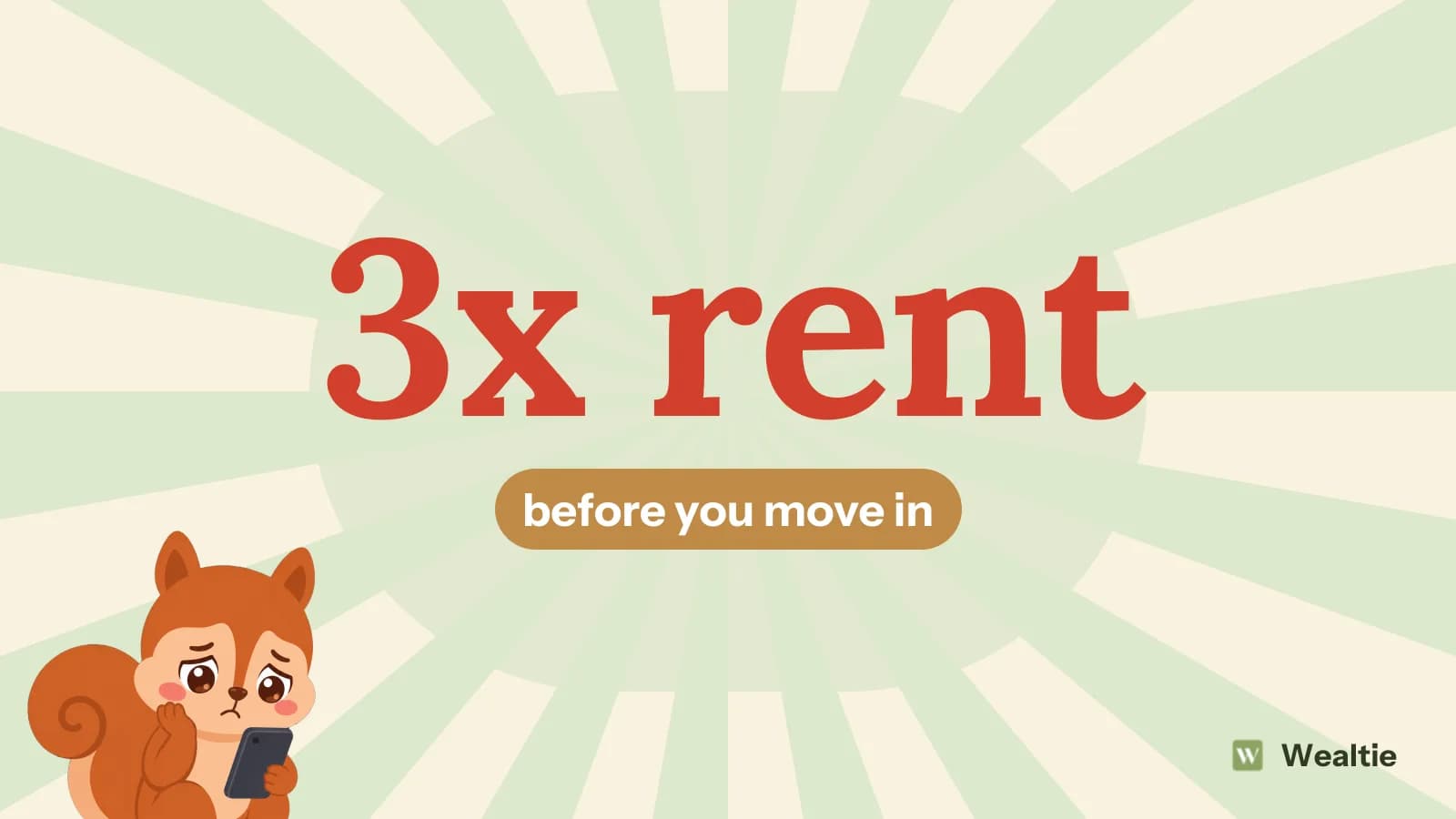
How much money to save before moving out is usually about three times the rent for upfront costs, plus one month of living costs as a buffer. On a rent of 900, that comes to around 4,600.
 By Wealtie Team · 3 min read
Key takeaways
- Upfront costs for moving out usually come to about three times the monthly rent, before any buffer.
- On a rent of 900, a worked example comes to 3,000 upfront and 4,600 with one month of living costs as a buffer.
- Saving 400 a month, that takes 12 months.
- The buffer matters because the first month's pay may not land until weeks after the first month's costs.
How much money should you save before moving out?
Enough for a deposit, the first month's rent, the cost of moving, whatever it takes to make the place livable, and a buffer. Here's a worked example on a rent of 900, in round numbers that work in any currency:
| Cost | Amount |
|---|---|
| Deposit (often one month's rent, sometimes more) | 900 |
| First month's rent | 900 |
| Van, boxes, help with the move | 300 |
| Bed, kitchen basics, cleaning things | 800 |
| Connecting internet and utilities | 100 |
| Upfront total | 3,000 |
| One month of living costs as a buffer | 1,600 |
| Total to save | 4,600 |
The upfront total is about 3.3 times the rent. Check your own lease for the deposit and for any agency or admin fees, since those differ a lot between countries and landlords.
Why save a buffer as well?
Because money goes out before it comes in. Rent is due on day one, and if you're paid at the end of the month, you could be four weeks away from the next payslip with a fridge to fill.
A month of living costs also covers the things you'll only discover once you're there: the missing shower curtain, the broken kettle, the bin bags the council wants you to buy. In this example, the 1,600 is rent of 900 plus 700 for bills, food and travel.
How much will the first year cost each month?
Work out the full monthly cost before you sign, because rent's the only part that's printed on the listing. Add energy, water, internet, council tax or local taxes, food, travel, phone and insurance.
Then compare it with your take-home pay. How much rent can I afford has the test: rent at about a quarter of what reaches your account, and rent, bills, groceries and debt payments together under half of it. The budget calculator splits the rest.
How long will it take to save?
Divide the total by what you can put away each month. At 400 a month, 4,600 takes 12 months. At 600, it takes 8.
Keep the savings in their own account, so the total's visible and you aren't tempted to count it as spending money. If you're renting a furnished room first, you can skip most of the furniture line.
If that's further off than you'd like, the lines that move are the furniture and the rent. Second-hand furniture can take a few hundred off the 800, and a flatshare cuts the deposit and first month together. How to split rent with roommates covers how to do that fairly.
What do people forget to budget for?
The things someone else was paying for until now. Run through these before you sign:
- Contents insurance
- Local taxes, like council tax in the UK
- A TV licence, where you need one
- Toilet paper, bin bags, washing-up liquid and the rest of the monthly shop that isn't food
- Getting your post redirected
- A parking permit or a new travel pass
Each one's small. Together they can add 100 or more to the monthly figure.
Is it cheaper to move out with someone else?
Usually, because the rent and the deposit get split. Take a two-bedroom flat at 1,400, shared evenly. Each person's deposit and first month come to 700 each, moving is 150, the setup is about 400 if you share the kitchen and sofa, and connecting the internet is 50. That's 2,000 upfront each, against 3,000 alone.
Check what you're signing, though. If you're both on one lease, you may be responsible for the whole rent if the other person leaves. The moving-in-together budget goes through the conversation to have first.
If you're moving for a new job, ask whether the employer pays any relocation costs before you count them yourself.
What should you buy first, and what can wait?
Buy what you'd miss on the first night: a bed, a way to cook, towels, toilet paper. Leave the rest until you've lived there for a month. You'll know by then which shelf you need and whether you'll use that air fryer.
How do you keep the first few months on track?
Set a monthly budget before you move, using the real numbers from your lease and bills. The first three months usually run high because you're still buying things for the flat, so expect that and count it as part of the setup.
In Wealtie, a budget tracker with a monthly limit shows how far through it you are, and Budget Health warns you mid-month if your pace would take you over. Log the setup costs in their own expense categories, and you'll see when they stop.
Questions people ask
Aim for about three times the monthly rent for upfront costs, plus one month of living costs as a buffer. On a rent of 900, that's around 4,600 in a worked example.
The main ones are a deposit, the first month's rent, the cost of moving, and basics like a bed and kitchen things. Add any connection fees for internet and utilities, plus agency fees where they apply.
It's possible but risky, because the deposit and first rent are due before you've moved in. A flatshare with a smaller deposit, or moving in stages while you save, makes the gap smaller.
Divide your total by the months you want to take. A total of 4,600 needs about 400 a month over a year, or about 600 a month over eight months.
This article is general information, not financial, tax or legal advice. Your situation is your own; check the numbers that apply to you before you act on them.