Budgeting: Underfloor heating cost: electric vs water systems
Underfloor heating cost depends on the system type, with electric mats cheap to fit but pricier to run, and water systems the reverse. In a worked example, an electric bathroom system costs 500 fitted, while a water system in a kitchen extension costs 2,500.
 By Wealtie Team · 3 min read

Key takeaways
- Underfloor heating cost depends on whether the system is electric or water-based.
- Electric systems are cheaper to fit but cost more to run over large areas.
- Water systems cost more upfront but can be cheaper to run, especially with a heat pump.
- Fitting it during a renovation or extension saves a lot.
How much does underfloor heating cost?
Underfloor heating warms a room from the floor up, giving even heat without radiators on the walls. It's popular in bathrooms, kitchens, extensions and conservatories. Underfloor heating cost depends on the system type, the size of the room, the floor covering and whether you're fitting it during a renovation or retrofitting into an existing floor.
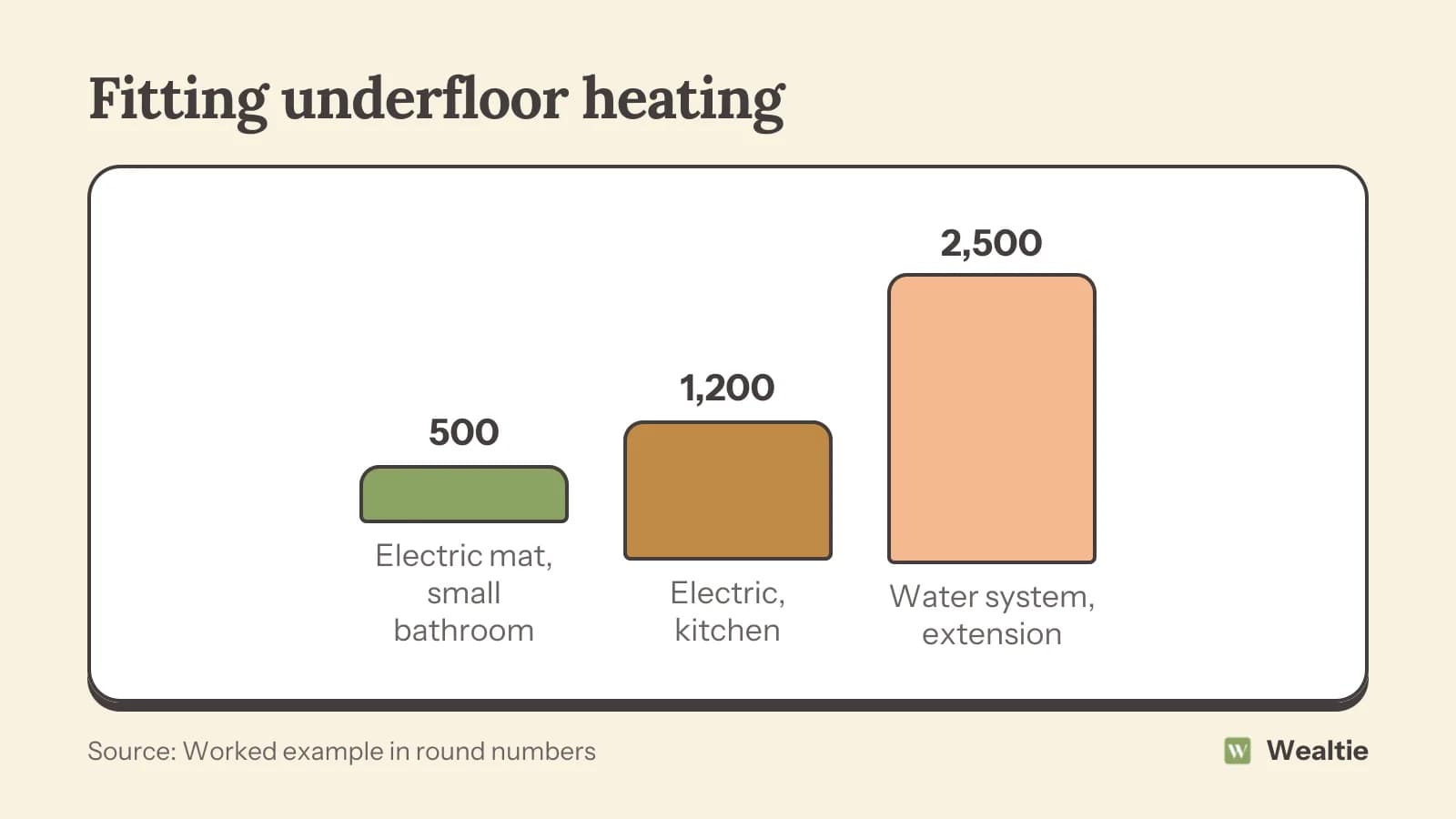
Here's a worked example, in round numbers that work in any currency:
| System | Cost, fitted |
|---|---|
| Electric mat, small bathroom | 500 |
| Electric, kitchen | 1,200 |
| Water system, kitchen extension | 2,500 |
Electric systems use heating cables or mats under the floor and are relatively cheap and quick to fit, especially in small rooms. Water systems, sometimes called wet systems, run warm water through pipes under the floor, connected to a boiler or heat pump. They cost more to install but can be cheaper to run over larger areas.
Electric vs water: which is better?
Electric underfloor heating
Electric systems are easier to retrofit, need less floor height and suit small rooms like bathrooms. Running costs depend on electricity prices and how long you use them. A small bathroom heated for an hour a day might cost around 30 a year, but heating a large room for many hours costs much more.
Water underfloor heating
Water systems are usually installed during major renovations or new builds, since they need more floor height and connection to the heating system. They're efficient, especially with a heat pump, which works well at the lower temperatures underfloor heating uses. The cost of a heat pump covers that pairing.
What affects the cost?
Room size
Bigger areas need more cable or pipe and more labour.
Floor covering
Tiles and stone conduct heat well. Thick carpets and some wood floors reduce efficiency and may need special products.
Insulation
Insulation boards under the heating stop heat escaping downwards, which improves efficiency and lowers running costs.
Renovation or retrofit
Fitting underfloor heating while floors are up, during an extension or bathroom refit, is much cheaper than lifting a finished floor.
Controls
Each zone needs a thermostat. Smart thermostats add cost but help control running costs.
Is underfloor heating worth it?
In bathrooms
Many people love warm tiles underfoot, and small electric systems are affordable. How to plan a bathroom renovation budget covers fitting it during a refit.
In extensions and conservatories
Large glazed rooms can be hard to heat with radiators. Underfloor heating spreads warmth more evenly. Conservatory cost covers heating options for conservatories.
Throughout a house
Whole-house water systems suit new builds and major renovations, especially with heat pumps.
When it might not be worth it
Retrofitting into finished floors in an older home can be disruptive and expensive. Efficient radiators may be a better choice.
How do you keep running costs down?
Use a timer or smart thermostat, insulate properly underneath, and set temperatures modestly, since underfloor heating takes longer to warm up but holds heat well. How to save money on heating covers other ways to cut bills.
Think about how you use each room before choosing. Underfloor heating takes longer to warm up than radiators, so it suits rooms you use for long periods, like kitchens and living spaces, better than rooms you only use briefly. In a bathroom, an electric mat on a timer can warm the floor before you get up, which feels luxurious without running all day.
Floor height can be a deciding factor. Water systems usually need a deeper floor build-up, which may mean raising the floor or adjusting doors. Electric mats are much thinner, which makes them easier to fit in existing rooms. An installer can check what's possible before you commit.
Get several quotes and ask what's included, such as insulation boards, screed, thermostats and connection to the boiler or electrics. Prices can vary a lot, and a cheap quote that skips insulation can lead to higher running costs for years.
Keep the installation details and wiring or pipe layout safe. If you ever need to drill into the floor or carry out repairs, knowing where the heating runs avoids expensive damage.
Finally, factor running costs into your budget, not just installation. Logging your energy bills for a winter after installation shows the real cost of the system.
Ask your installer how long the floor takes to warm up and how they recommend setting the thermostat, since good settings make a big difference to comfort and running costs.
How can Wealtie help you plan the project?
Set a budget for the renovation and log underfloor heating costs in a home expense category. Tracking your energy bills afterwards shows what the system costs to run. How to plan a home renovation budget covers fitting it into a bigger project.
Questions people ask
In a worked example, an electric mat for a small bathroom cost about 500 fitted, while a water system for a kitchen extension cost about 2,500.
It can be for large rooms or long hours. For a small bathroom used briefly each day, running costs are low.
Usually, especially over large areas and with a heat pump, though it costs more to install.
During a renovation, extension or new build, when floors are already up, which keeps costs down.
This article is general information, not financial, tax or legal advice. Your situation is your own; check the numbers that apply to you before you act on them.