Budgeting: How to plan a bathroom renovation budget
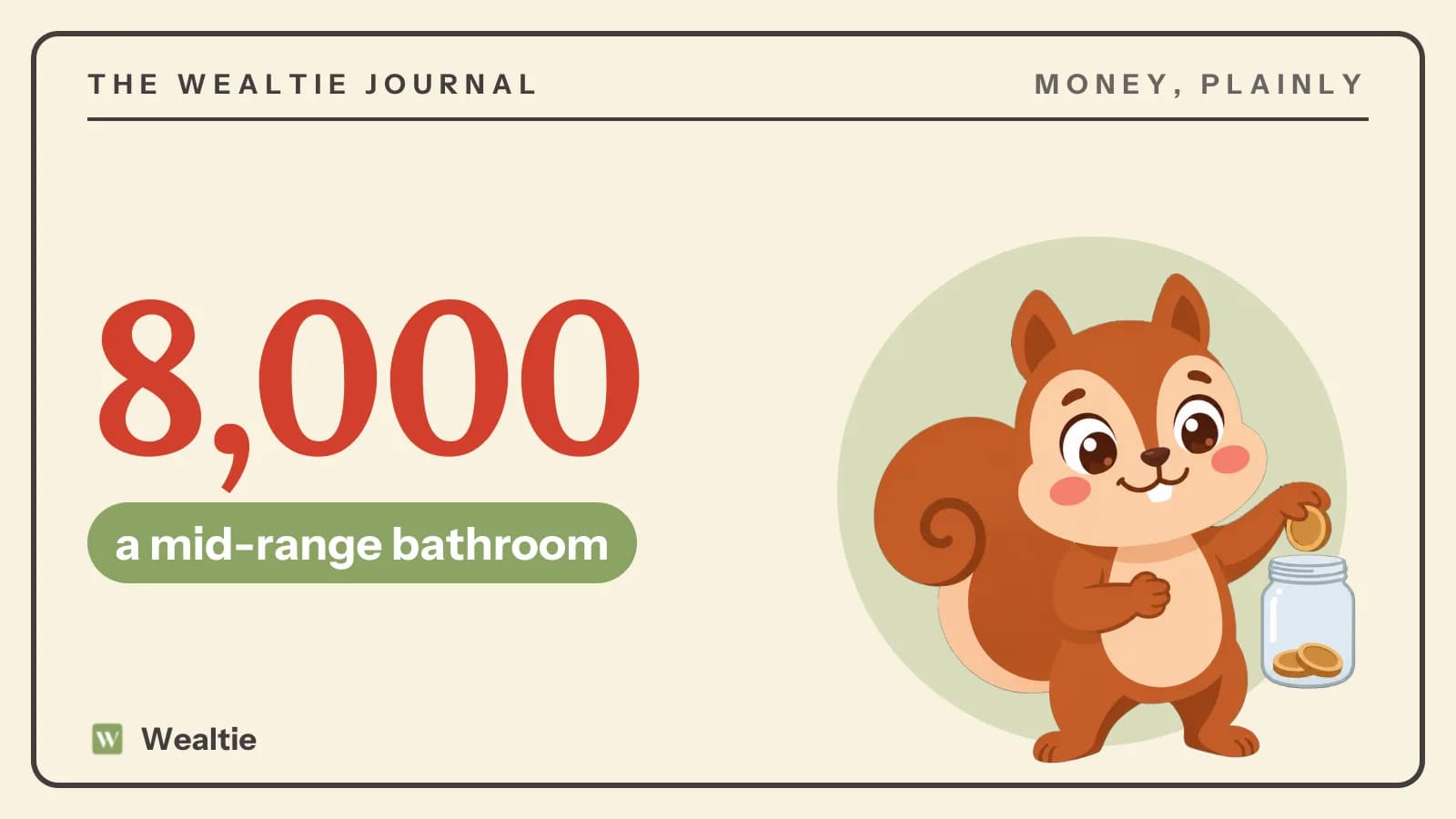
A bathroom renovation budget needs to cover the suite, tiling, plumbing, labour and a contingency for hidden problems. In a worked example, a mid-range bathroom costs about 8,000, while a refresh that keeps the layout and suite costs a fraction of that.
 By Wealtie Team · 3 min read
Key takeaways
- A bathroom renovation budget covers the suite, tiling, plumbing, labour and a contingency.
- In a worked example, a mid-range bathroom costs about 8,000.
- Keeping the layout and any fittings in good condition saves the most.
- Hidden leaks and damp are common, so a contingency matters.
How do you plan a bathroom renovation budget?
Decide on the scope, get detailed quotes and set aside a contingency. Bathrooms are small, but they're expensive per square metre, because they need plumbing, waterproofing, tiling and skilled trades. A clear plan before work begins keeps costs from creeping up as you add upgrades.
Start by deciding whether you need a full renovation or a refresh. If the layout works and the suite is in good condition, a refresh can make a big difference for much less.
What does a new bathroom cost?
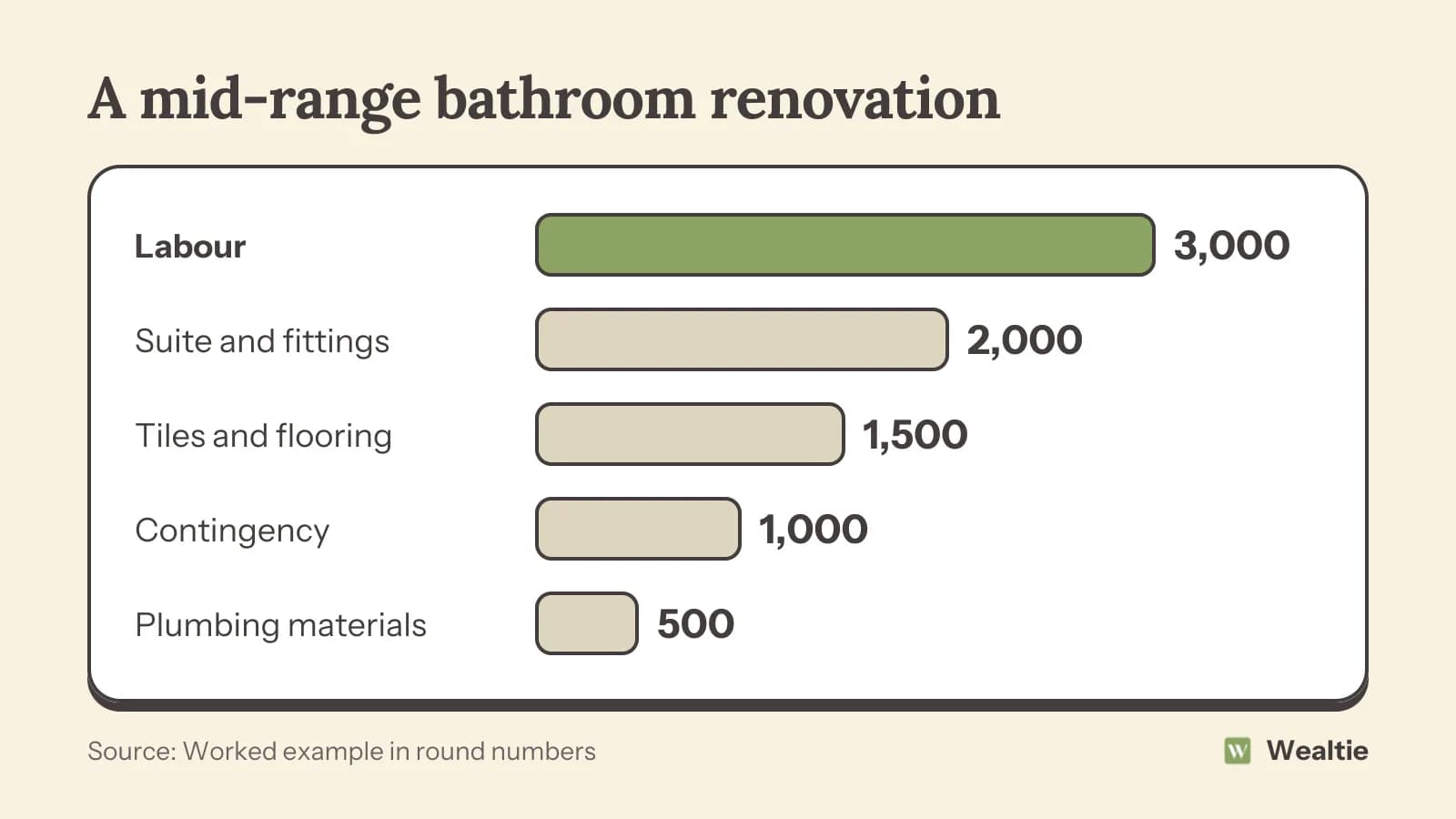
Here's a worked example for a mid-range bathroom, in round numbers that work in any currency:
| Cost | Amount |
|---|---|
| Labour | 3,000 |
| Suite and fittings | 2,000 |
| Tiles and flooring | 1,500 |
| Contingency | 1,000 |
| Plumbing materials | 500 |
| Total | 8,000 |
Your costs depend on the size of the room, the materials and where you live. A small bathroom with simple fittings can cost much less, while a large bathroom with premium fittings, underfloor heating or a walk-in shower can cost much more.
Where can you save on a bathroom?
A few decisions make the biggest difference:
- Keep the layout. Moving the toilet, bath or shower means moving pipes and waste, which adds a lot of cost.
- Keep what's in good condition. A bath that can be resurfaced, or a toilet that works well, may not need replacing. Resurfacing or re-enamelling a bath costs far less than replacing it.
- Tile only where needed. Tiling around the bath and shower, with waterproof paint elsewhere, costs less than tiling every wall.
- Choose standard sizes. Standard baths, basins and shower trays are cheaper than unusual shapes.
- Buy fittings yourself, if your fitter agrees, so you can shop around and use sales.
A refresh example
In a worked example, replacing taps and the shower head, regrouting or painting tiles, adding new accessories and a fresh coat of paint costs about 1,500, against 8,000 for a full renovation. Small changes like a new mirror, lighting and towels can make the room feel new.
How do you get quotes?
Get at least three detailed quotes, ideally from recommended fitters. Make sure each covers the same work: removing the old suite, plumbing, electrics for lights or fans, waterproofing, tiling, plastering and waste disposal. Ask how long the work will take, check reviews and agree to pay in stages as work is completed. Ask whether the fitter is insured and whether electrical work near water will be done by someone qualified.
Why do bathrooms need a contingency?
Because water damage is often hidden. Once tiles and the old suite come out, fitters may find leaks, rotten floorboards, damp walls or old pipes. Fixing these is essential, and a contingency means you can pay for it without cutting back on the finish. In the worked example, it's 1,000.
Ventilation matters
Good ventilation prevents mould, which damages paint, grout and sealant and leads to more repairs. If your bathroom has no window or a weak fan, include a better extractor in the plan. It's a small cost that protects the money you've spent on the rest.
How do you manage without a bathroom?
If it's your only bathroom, plan ahead. Ask your fitter whether the toilet can stay connected for as long as possible, and how many days you'll be without a shower. Some people stay with family, use a gym's showers or plan the work around a holiday. Agreeing a clear schedule helps, and a fitter who plans deliveries well can shorten the time you're without a bathroom.
Can a new bathroom save money on bills?
It can help. Water-saving taps, a low-flow shower head and a dual-flush toilet can reduce water use, which lowers bills if you're on a water meter. An efficient extractor fan reduces damp, which helps protect the room for longer. How to save money on your water bill has more ideas.
How do you pay for a bathroom renovation?
Saving ahead is cheapest. Divide your budget by the months until you start and set that aside. An 8,000 bathroom saved over two years is about 335 a month. If you're borrowing, compare the full cost including interest. The home renovation budget covers paying for bigger projects, and a sinking fund helps you save steadily.
How do you track renovation costs in Wealtie?
Add a savings account for the renovation and move money into it each month as a transfer, which isn't counted as spending. During the work, log each payment in a home improvement category in your expense categories, so you can compare spending against your budget as you go. A monthly limit in the budget tracker keeps everyday spending steady.
Questions people ask
In a worked example, a mid-range bathroom costs about 8,000, including the suite, tiles, plumbing, labour and a contingency.
Keep the layout, keep fittings in good condition, tile only where needed, choose standard sizes and shop for fittings yourself.
Enough to cover hidden leaks or damp. In a worked example, 1,000 on an 8,000 bathroom.
New taps and shower head, regrouting or painting tiles, new accessories, lighting and paint. In a worked example, about 1,500.
This article is general information, not financial, tax or legal advice. Your situation is your own; check the numbers that apply to you before you act on them.