Budgeting: Conservatory cost: what you'll pay and how to budget
Conservatory cost depends on size, style and the roof, and the extras can add more than people expect. In a worked example, a mid-sized conservatory costs 15,000 fitted, plus 2,000 for flooring, blinds and heating.
 By Wealtie Team · 3 min read
Key takeaways
- Conservatory cost depends on size, style, roof type and the base.
- Flooring, blinds, heating and furniture add to the build price.
- A solid or insulated roof costs more but makes the room usable all year.
- Get several fixed quotes and keep a buffer for surprises.
How much does a conservatory cost?
A conservatory adds a bright extra room to your home, often used as a dining area, playroom, office or somewhere to sit and enjoy the garden. Conservatory cost depends on its size, the style you choose, the materials for the frame and roof, and how much work the base and foundations need. The structure is the biggest cost, but the extras that make it usable, like flooring, blinds and heating, add a noticeable amount on top.
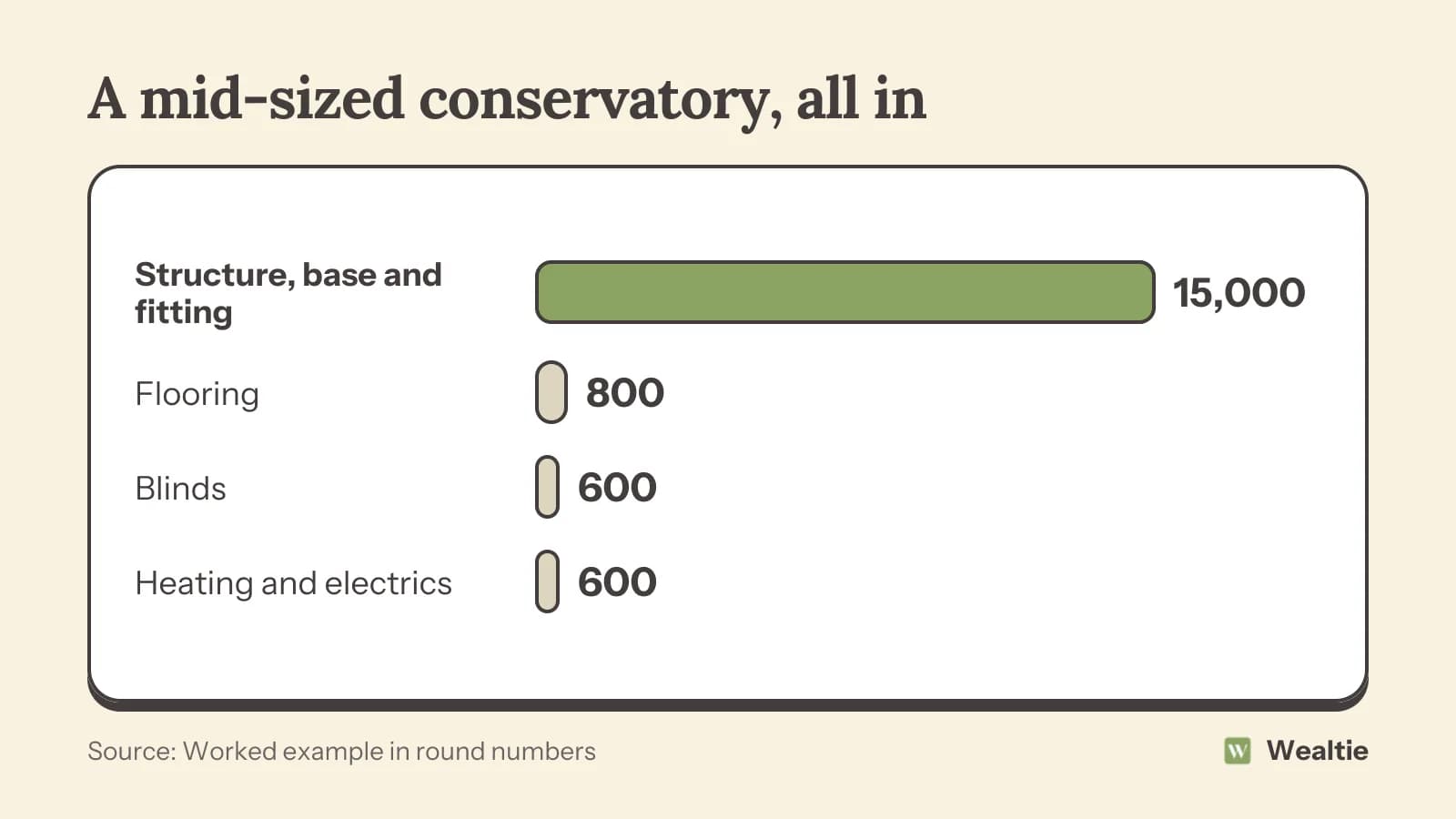
Here's a worked example for a mid-sized conservatory, in round numbers that work in any currency:
| Item | Cost |
|---|---|
| Structure, base and fitting | 15,000 |
| Flooring | 800 |
| Blinds | 600 |
| Heating and electrics | 600 |
| Total | 17,000 |
A small, simple lean-to might cost around 10,000 fitted, while a large orangery with a solid roof and brick walls could cost 25,000 or more. Prices vary a lot by area and installer, so treat these numbers as a guide and get local quotes.
What affects conservatory cost?
Style
Lean-to conservatories are the simplest and cheapest. Victorian, Edwardian and gable styles have more complex shapes and cost more. Orangeries, which have more brickwork and a partly solid roof, usually cost the most.
Size
Bigger conservatories need more materials, a larger base and more labour. A modest increase in size can add a lot to the price.
Frame material
Uncoated plastic frames are usually the cheapest. Aluminium and timber cost more but look different and can last longer.
Roof type
Polycarbonate roofs are the cheapest but can make the room hot in summer and cold in winter. Glass roofs cost more, and solid or insulated roofs cost the most but make the room far more comfortable all year.
Base and groundwork
Sloping gardens, poor ground or drains under the build area can add significant costs to the foundations.
What extra costs should you plan for?
Flooring
Tiles, laminate or engineered wood all work. Underfloor heating adds cost upfront but can make the room comfortable in winter.
Blinds
Roof and wall blinds help control heat and glare. They're often overlooked in the budget and can be expensive for complex roof shapes.
Heating and electrics
Sockets, lights and a radiator or heater make the room usable year round. Adding them during the build is cheaper than later.
Furniture
A new room usually needs furniture. Planning for it avoids stretching the budget after the build. How to furnish a home on a budget has ideas.
Permissions and paperwork
Many conservatories don't need planning permission, but rules vary by country and area, and some need building approval. Check local rules before you commit.
What does a conservatory cost to run?
Conservatories can be expensive to heat in winter and hard to keep cool in summer, especially with a polycarbonate roof. Running a heater for several hours on cold days adds to your energy bills. Better glazing, a solid roof and good blinds cut those costs. How to save money on heating covers keeping heating bills down across your home.
Does a conservatory add value to your home?
A well-built conservatory can make a home more appealing to buyers, especially if it's comfortable all year and fits the style of the house. A poorly built or uncomfortable one may add little. If you're planning to sell within a few years, it's worth asking a local estate agent what buyers in your area look for before spending. The costs of selling a house covers what else to expect if a move is on the horizon.
Is a conservatory or an extension better value?
A single-storey extension usually costs more than a conservatory of the same size but feels more like part of the house and is easier to heat. If you want a room you'll use every day all year, an extension may be better value over time. How to plan a home extension budget covers the costs of building one.
How do you budget for a conservatory?
Get several fixed quotes
Ask at least three installers for written quotes that list everything included, from groundwork to finishing. Compare like for like.
Add a buffer
Set aside about a tenth of the total, around 1,700 in this example, for surprises like extra groundwork or drainage.
Save or plan the finance
Saving ahead is cheapest. If you borrow, compare the full cost of the loan, not just the monthly payment. How to plan a home renovation budget covers paying for bigger projects.
Plan for maintenance
Cleaning the roof and gutters and occasional repairs keep a conservatory in good shape. A small amount in a sinking fund covers these costs.
How can Wealtie help you manage the project?
Set a budget for the conservatory and log deposits, stage payments and extras in their own expense categories. You'll see how much is left as the project goes on, and catch any part that's running over before it's too late to adjust.
Questions people ask
Costs vary by size, style and area. In a worked example, a mid-sized conservatory cost 15,000 fitted, or 17,000 with flooring, blinds and heating.
A lean-to conservatory with a uPVC frame is usually the cheapest. Orangeries with solid roofs usually cost the most.
They can be, especially with a polycarbonate roof. Better glazing, a solid roof and good blinds reduce heating and cooling costs.
Yes, usually. A conservatory costs less to build, but an extension is easier to heat and use all year.
This article is general information, not financial, tax or legal advice. Your situation is your own; check the numbers that apply to you before you act on them.