Budgeting: Pay more rent to live closer, or commute further? How to decide
Commute vs rent comes down to adding the full cost of each option, including fares or fuel and the value of your time, not just comparing rents. In a worked example, a flat 150 a month dearer near work saves 200 in travel, so living closer comes out ahead before counting the hours saved.
 By Wealtie Team · 3 min read
Key takeaways
- Commute vs rent is about the full monthly cost of each option, not just the rent.
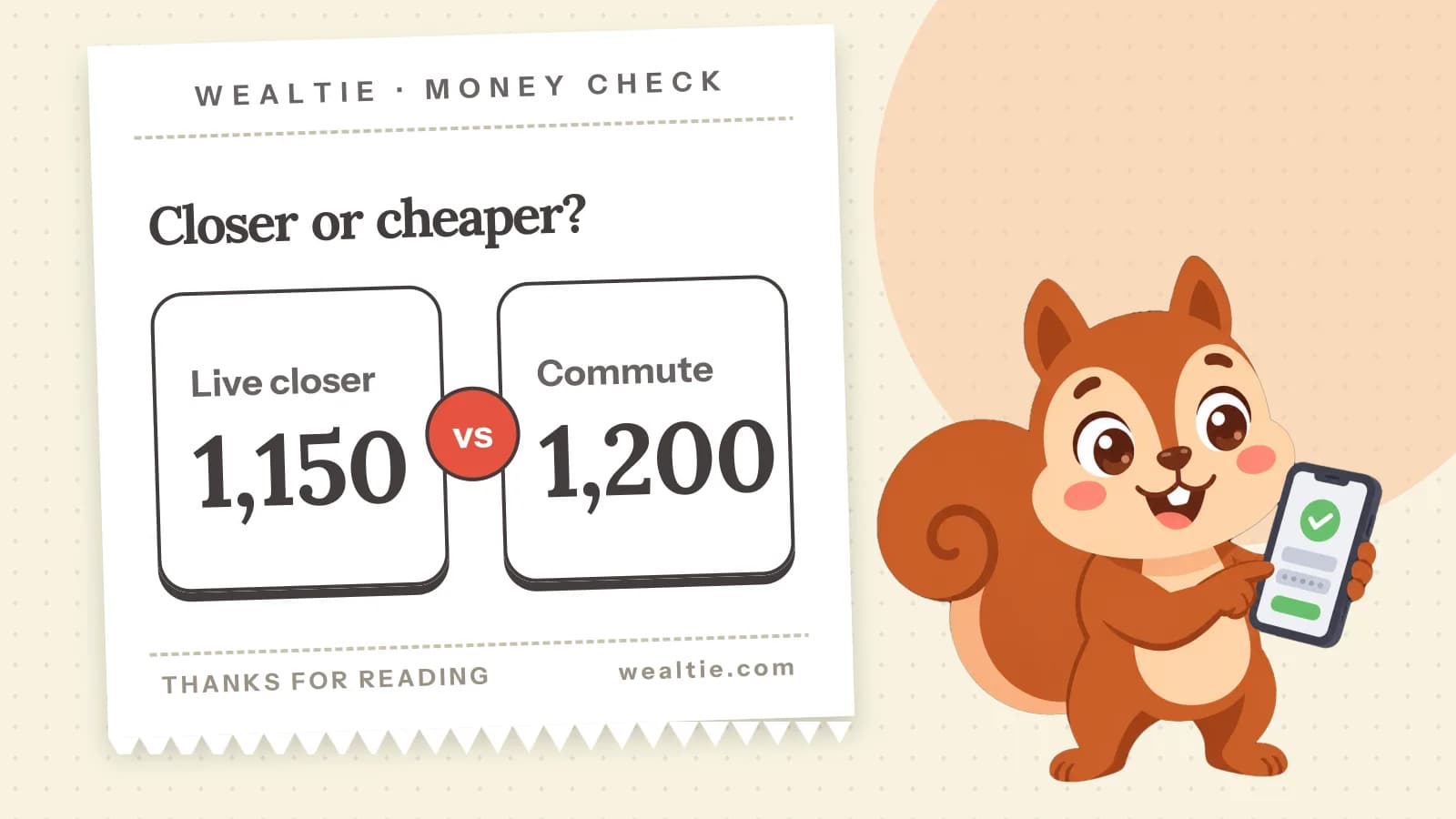
- In a worked example, living closer costs 1,150 a month against 1,200 for commuting further.
- Time spent commuting has a cost too, even if it doesn't show on a statement.
- Hybrid working changes the maths, so count the days you'll travel to work.
How do you compare commute vs rent?
Add up the full monthly cost of each option, then think about time. It's natural to compare rents and choose the cheaper one, but a cheaper home further away often comes with higher travel costs. Fares, fuel, parking and wear on a car can close the gap, or even make the cheaper home more expensive overall. Then there's the time spent travelling, which matters for your energy, health and evenings.
Whether you're moving for a new job or rethinking where you live, the same method works.
What does each option cost in total?
Here's a worked example in round numbers that work in any currency:
| Live closer | Commute further | |
|---|---|---|
| Rent | 1,100 | 950 |
| Travel | 50 | 250 |
| Total | 1,150 | 1,200 |
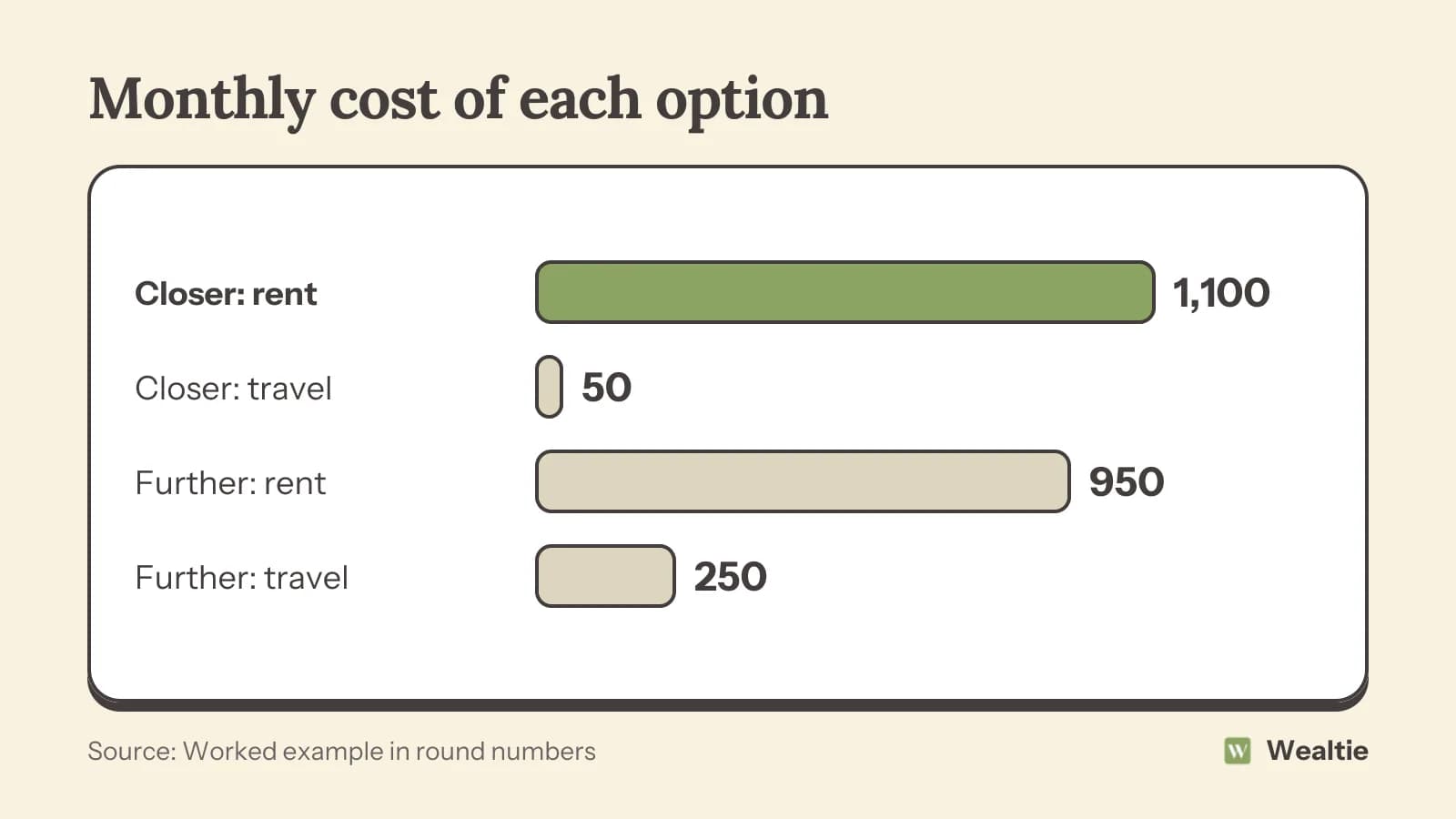
In this example, the flat near work costs 150 more in rent, but saves 200 in travel. Living closer works out 50 a month cheaper before you count the time saved. Your own numbers could go either way, which is why it's worth doing the sum.
Count everything in travel
Include all of it: train or bus passes, fuel, parking, tolls, car servicing and the extra wear from daily driving. If a longer commute means buying lunch or coffee more often, or paying for later childcare, include that too.
How do you value your time?
Think about what the extra hours mean. If commuting further adds an hour a day, that's about 20 hours a month. Some people use that time well, reading or listening on a train. For others, it means less sleep, less time with family and less energy for cooking at home, which can lead to more spending on convenience.
You don't need to put an exact price on your time, but it's worth asking: would I pay the difference to get those hours back? Often, the answer makes the choice clear. Some people find a walk or cycle to work replaces a gym, which changes the maths again.
How does hybrid working change the decision?
A lot. If you only travel to work two days a week, your travel costs might halve, which makes a cheaper home further away more attractive. In a worked example, the commute's travel cost drops from 250 to 100, so commuting further now costs 1,050 a month against 1,150 for living closer. If you drive, fewer trips also mean less wear on the car.
Check how settled your working pattern is. If your employer might change it, compare both scenarios so you're not caught out. Season tickets and travel passes may not be good value for part-time commuting, so look at flexible tickets too. How to cut commuting costs has more ideas.
What else should you weigh up?
Money is one part of the decision. Others include:
- Space: a cheaper area might give you a bigger home or a garden
- Social life: being near friends, family and things you enjoy
- Reliability: a long commute with frequent delays costs more stress
- Future plans: if you might change jobs, being near good transport links matters more than being near one office
- Costs in the area: some cheaper areas have higher costs for parking, shopping or energy
How much rent can you afford helps you check what fits your income, wherever you live.
Moving costs count too
If you're thinking of moving to cut your commute, include the cost of the move itself: deposit, removals and any overlap in rent. Spread over a year or two, a move might still pay off, but it takes time.
What if you're starting a new job?
Try the commute before you commit, if you can. Travelling at rush hour for a week shows you what it's like. Ask colleagues who already make the journey how reliable it is. If you're moving for the job, the first month in a new job budget covers the costs of getting started, and budgeting in an expensive city helps if living closer means a pricier area.
How do you decide?
Do the sum, think about the time, and choose the option that fits your budget and your life. If the costs are close, the extra time and energy from a shorter commute often tips it. If living closer would stretch your budget, a longer commute that keeps your finances comfortable can be the better choice. Writing both totals side by side, with the hours, often makes the answer obvious.
How do you track rent and travel in Wealtie?
Set up rent as a recurring transaction with the bill tracker, and log fares, fuel and parking in a transport line in your expense categories. Comparing housing and transport together each month shows the true cost of where you live, and a limit in the budget tracker keeps both on plan.
Questions people ask
Sometimes. In a worked example, a flat 150 dearer near work saves 200 in travel, making it 50 a month cheaper overall.
Add rent and all travel costs for each option, including fares, fuel, parking and wear, then compare the monthly totals.
Yes. Travelling fewer days cuts commuting costs, which can make a cheaper home further away better value.
Ask whether you'd pay the difference to get those hours back. Think about sleep, family time and energy.
This article is general information, not financial, tax or legal advice. Your situation is your own; check the numbers that apply to you before you act on them.