Saving: Electric shower cost: what each shower costs to run
Electric shower cost depends mostly on how long you shower, since electric showers use a lot of power while running. In a worked example, an eight-minute shower costs about 0.40, or around 290 a year for a household of two.
 By Wealtie Team · 3 min read
Key takeaways
- Electric shower cost depends mostly on how long you shower.
- Shorter showers are the easiest way to cut the cost.
- A short shower usually costs less than a bath.
- Water costs matter too if you're on a water meter.
How much does an electric shower cost?
Electric showers heat water as it flows through them, so they use a lot of electricity while they're running, often much more than other household appliances. That doesn't make them expensive to own, since they only run for a few minutes at a time. But electric shower cost adds up over a year, especially in a household where everyone showers daily.
Here's a worked example at an electricity price of 0.30 per unit, including a small amount for water, in round numbers that work in any currency:
| One wash | Cost |
|---|---|
| 4-minute shower | 0.20 |
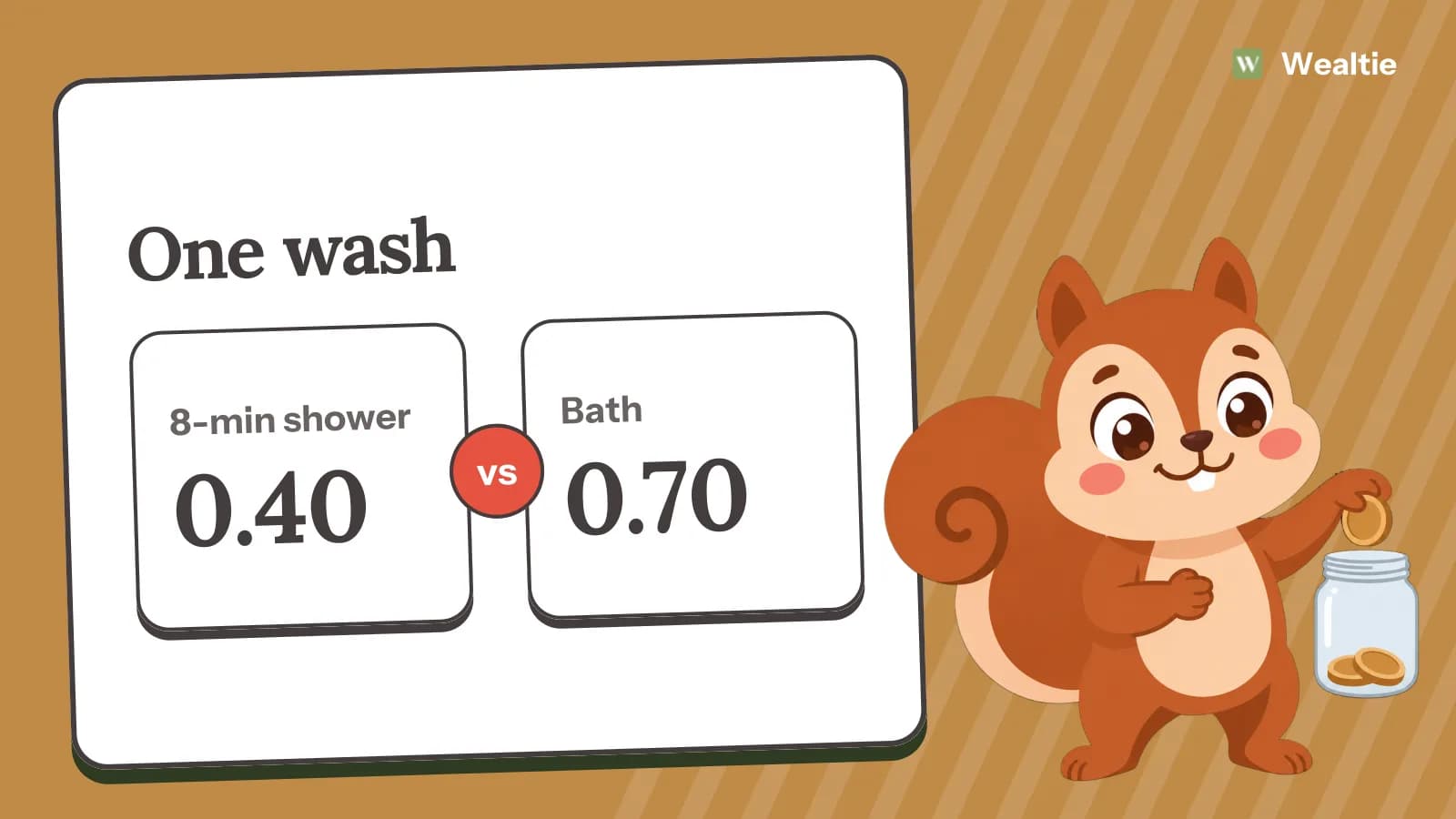
| 8-minute shower | 0.40 |
| 12-minute shower | 0.60 |
| Bath | 0.70 |
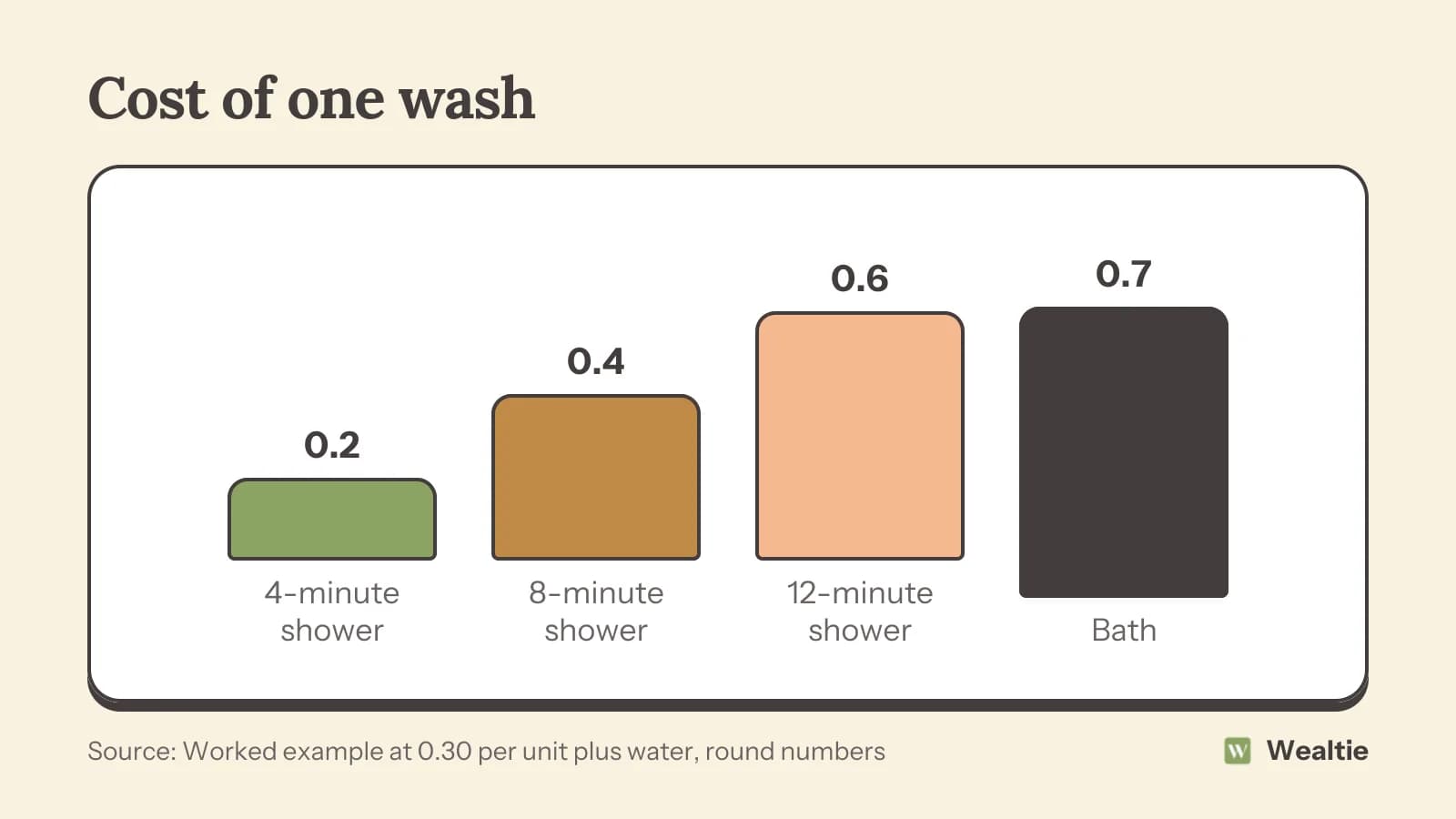
An eight-minute shower costs about 0.40. For a household of two who each shower once a day, that's about 290 a year. Cutting showers to four minutes would save around 145 a year. The exact cost depends on your shower's power rating, your electricity and water prices, and how long you stay in.
Why does shower length matter so much?
Because an electric shower uses power at a high rate, every minute counts. Doubling the length of a shower roughly doubles the cost. That makes shower time one of the most direct ways to control the cost. Using a shower timer, a short playlist or a waterproof clock helps you keep track.
Is a shower cheaper than a bath?
Usually, yes. A typical bath uses much more hot water than a short shower, so it costs more to heat. In the example, a bath costs about 0.70, while an eight-minute shower costs 0.40. Long showers can cost as much as a bath, though. If you enjoy baths, keeping them for a treat rather than a daily habit saves money.
How do you cut the cost of showering?
Shower for less time
Cutting a few minutes from each shower is the biggest saving. Try timing your usual shower first to see where you start.
Use a lower power setting
Many electric showers have power settings. A lower setting uses less electricity, though the water may be cooler or the flow lower.
Fit a water-efficient shower head
Shower heads designed to use less water can reduce both water and heating costs, though check they're compatible with electric showers, which often have specific requirements.
Keep the shower in good condition
Limescale can make showers less efficient. Cleaning the shower head regularly keeps it working well.
Turn it off while you lather
Switching off the water while you shampoo or soap up, then back on to rinse, shortens running time.
What about water costs?
If you're on a water meter, you also pay for the water used. Shorter showers and efficient shower heads reduce water bills as well as electricity. How to save money on your water bill covers other ways to cut water use. If you're not metered, it may be worth checking whether a meter would save money for your household.
How does it compare with other showers?
Showers fed by a gas boiler or hot water tank have different costs, depending on your heating system and energy prices. The same rule applies to all of them, though: shorter showers cost less. How to save money on heating covers hot water and heating costs more generally, and how to save money on your electric bill covers other ways to cut electricity use.
It helps to know your shower's power rating, which is usually printed on the unit or in the manual. Higher-powered showers give a stronger flow of hot water but cost more per minute. If you're replacing a shower, a lower-powered model may cost less to run, though the flow may feel weaker. Balancing comfort and cost is a personal choice, and the length of your showers will always matter more than the model.
In a busy household, a simple family agreement can help. Some families set a gentle target, like five minutes on weekdays, and keep longer showers for weekends. Teenagers in particular can take very long showers, and a timer or a playlist of a few songs can turn the target into a game rather than a rule.
If you're on a water meter, the savings from shorter showers come twice: once on electricity and once on water. Over a year, that can add up to a noticeable amount for a family, without spending anything on new equipment.
Tracking the change for a couple of months, by comparing your energy and water bills, shows whether the new habits are sticking.
How can Wealtie help you see the savings?
Add your electricity and water bills as recurring transactions and log them in a utilities expense category. Comparing bills before and after cutting shower times shows how much the change saves over a few months.
Questions people ask
In a worked example at 0.30 per unit, an eight-minute shower cost about 0.40, or around 290 a year for two people showering daily.
Usually, yes. In a worked example, a bath cost about 0.70, while an eight-minute shower cost 0.40. Long showers can cost as much as a bath.
Shower for less time, use a lower power setting, keep the shower free of limescale and turn the water off while you lather.
Yes, a lot. Electric showers use power at a high rate, so doubling the length roughly doubles the cost.
This article is general information, not financial, tax or legal advice. Your situation is your own; check the numbers that apply to you before you act on them.