Budgeting: Can you afford a four-day week? How to budget for fewer hours
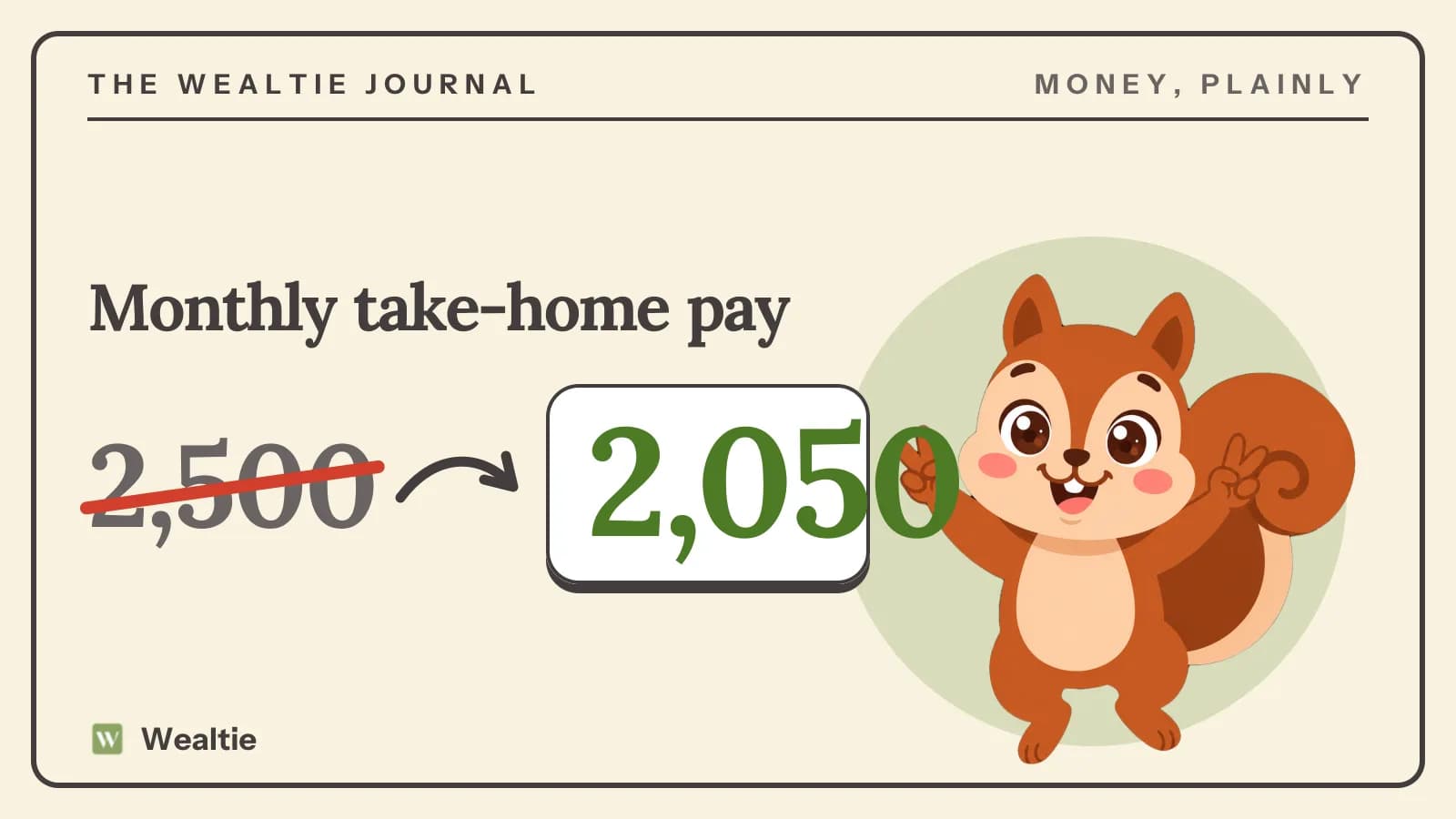
To afford a four-day week on reduced pay, work out your new take-home pay, see whether your essentials still fit, and look at what the extra day saves you. In a worked example, take-home pay falls from 2,500 to 2,050, and lower commuting and childcare costs narrow the gap to about 330.
 By Wealtie Team · 3 min read
Key takeaways
- To afford a four-day week on reduced pay, start with your new take-home pay, not your gross salary.
- In a worked example, pay falls by 450, but savings on commuting and childcare cut the real gap to about 330.
- Tax often falls with income, so take-home pay usually drops by less than the gross pay cut.
- Check the effect on pension contributions and benefits before you agree.
Can you afford a four-day week?
Find out what you'd take home, then see whether your budget still works. Some employers now offer four-day weeks at full pay, but many arrangements involve working fewer hours for less money. An extra day each week can mean more time with family, rest, study or a side project. Before you agree to reduced pay, it's worth knowing exactly what it means for your money.
How much would your pay change?
Start with take-home pay, not your salary. Tax and other deductions often fall when income falls, so your take-home pay usually drops by less than the headline cut. Ask your employer or payroll team for an estimate, or use an official tax calculator for where you live.
Ask about a compressed week
Some employers offer a compressed week, where you work the same hours over four days for the same pay. If that suits your role, it gives you the extra day without the pay cut, though the working days are longer.
Here's a worked example, in round numbers that work in any currency:
| Amount | |
|---|---|
| Take-home pay now | 2,500 |
| Take-home pay on four days | 2,050 |
| Difference | 450 |
What would the extra day save you?
Some costs go down when you work less:
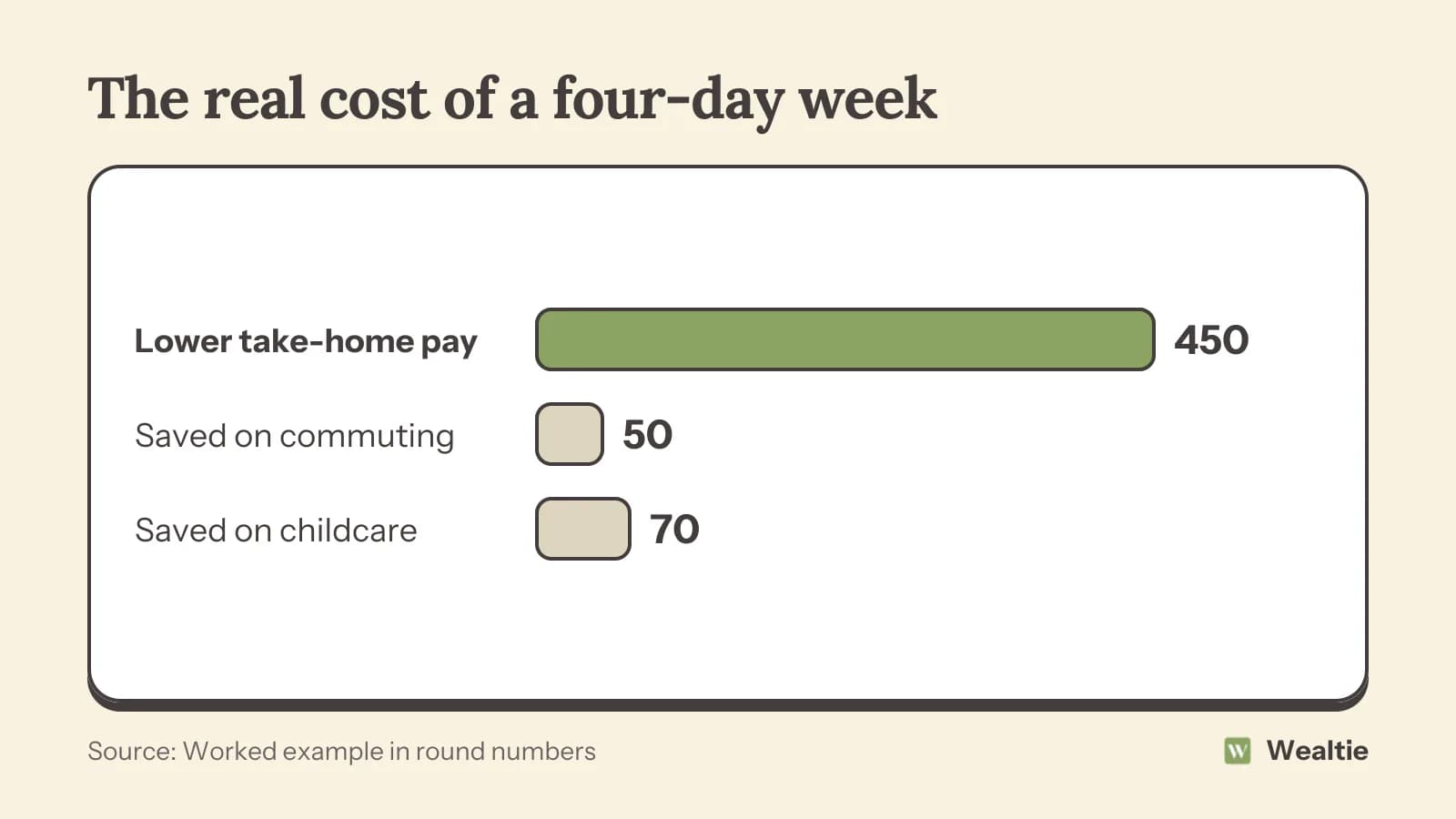
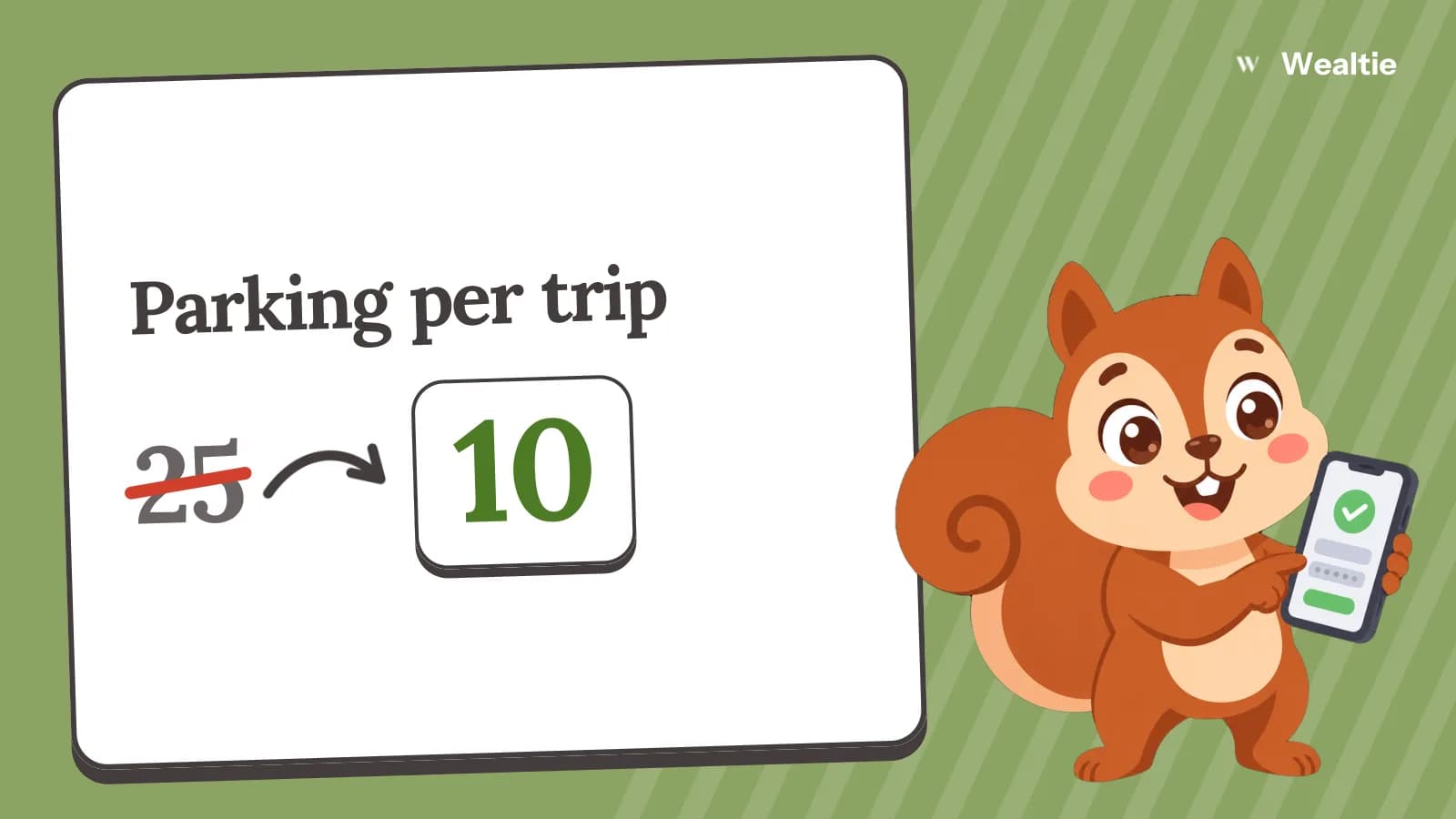
In this example, one less commute a week saves 50 a month, and one less day of childcare saves 70. The real gap shrinks from 450 to about 330. You might also save on lunches, coffees and work clothes, and a weekday off lets you do errands and appointments at quieter, sometimes cheaper times. Your own savings depend on your job and household.
What might cost more?
An extra day at home can bring its own costs, like heating, lunches at home or spending on days out. Planning low-cost uses for the day keeps it from eating into the savings.
Does your budget still work?
List your essentials, like housing, bills, food, transport and debt payments, and check they fit within the new take-home pay with room to spare. Then look at savings and flexible spending. If the numbers are tight, decide where you'd cut. If your income varies, test the budget against a lower month, not an average one. The bare-bones budget shows how to find the minimum you need each month.
If you're comfortable with the essentials but would need to save less, ask whether the extra day is worth slower progress towards your goals. For many people it is, but it's a choice to make with the numbers in front of you.
What else does reduced pay affect?
Check the wider effects before agreeing:
- Pension contributions, which usually fall with pay, along with any employer contributions
- Holiday entitlement, which may be reduced in proportion
- Benefits or tax credits, which can change with income in some places
- Borrowing, since lenders look at income for mortgages and loans
- Future pay rises, if they're calculated as a share of your salary
Some of these are long-term effects that don't show up in your monthly budget straight away. Ask your employer for details in writing. If you're planning a mortgage application soon, it may be worth waiting until it's complete.
How do you use the extra day well?
Decide what the day is for. Some people use it for family or rest, others for study, a side income or getting ahead on chores that save money, like batch cooking. If you plan a side income, check your employment contract first.
Trying it first
If your employer allows it, a trial period of a few months lets you test both the budget and the lifestyle before committing. Living on the lower amount for a month or two beforehand, while saving the difference, is another way to check it works. Keep a note of what you spend on the extra day during the trial, so you know its true cost.
What if it's a partner reducing hours?
The same steps apply to the household budget. Work out the new combined take-home pay, check essentials and agree how to share costs fairly. How to live on one income and how to deal with a pay cut cover adjusting a shared budget to less income.
How do you track a four-day week budget in Wealtie?
Update your monthly income goal to the new take-home pay, and track spending in your expense categories to see how the change plays out. A monthly limit in the budget tracker, with Budget Health, shows whether your new budget is holding. Comparing a few months before and after shows the real effect.
Questions people ask
Work out your new take-home pay, subtract what the extra day saves you and check your essentials still fit with room to spare.
Usually less than the gross cut, since tax often falls too. In a worked example, take-home pay falls by 450.
Often commuting, childcare, lunches and coffees. In a worked example, about 120 a month.
Pension contributions, holiday entitlement, benefits, borrowing and future pay rises.
This article is general information, not financial, tax or legal advice. Your situation is your own; check the numbers that apply to you before you act on them.