Saving: Sustainable living habits that also save money
Many sustainable living habits also save money, because using less energy, water and stuff costs less. In a worked example, a household cuts about 90 a month by lowering energy use, reducing food waste, buying second-hand and walking or cycling short trips.
 By Wealtie Team · 3 min read

Key takeaways
- Many sustainable living habits save money because using less costs less.
- In a worked example, greener habits save a household about 90 a month.
- Cutting energy, food waste and new purchases saves the most.
- Some green upgrades cost money upfront, so check the payback.
Do sustainable living habits save money?
Many of them do. The simplest green habits are about using less: less energy, less water, less food waste and fewer new things. Using less usually costs less, so sustainable living habits often lower your bills at the same time. You don't need to change everything at once; small, steady changes add up for both your budget and the planet. Starting with the habits that save you the most money is a good way to stay motivated.
Some green choices cost more upfront, like solar panels or electric cars, so it's worth checking the payback before you buy. But many everyday habits cost nothing and start saving straight away.
How much can greener habits save?
Here's a worked example of monthly savings for a household, in round numbers that work in any currency:
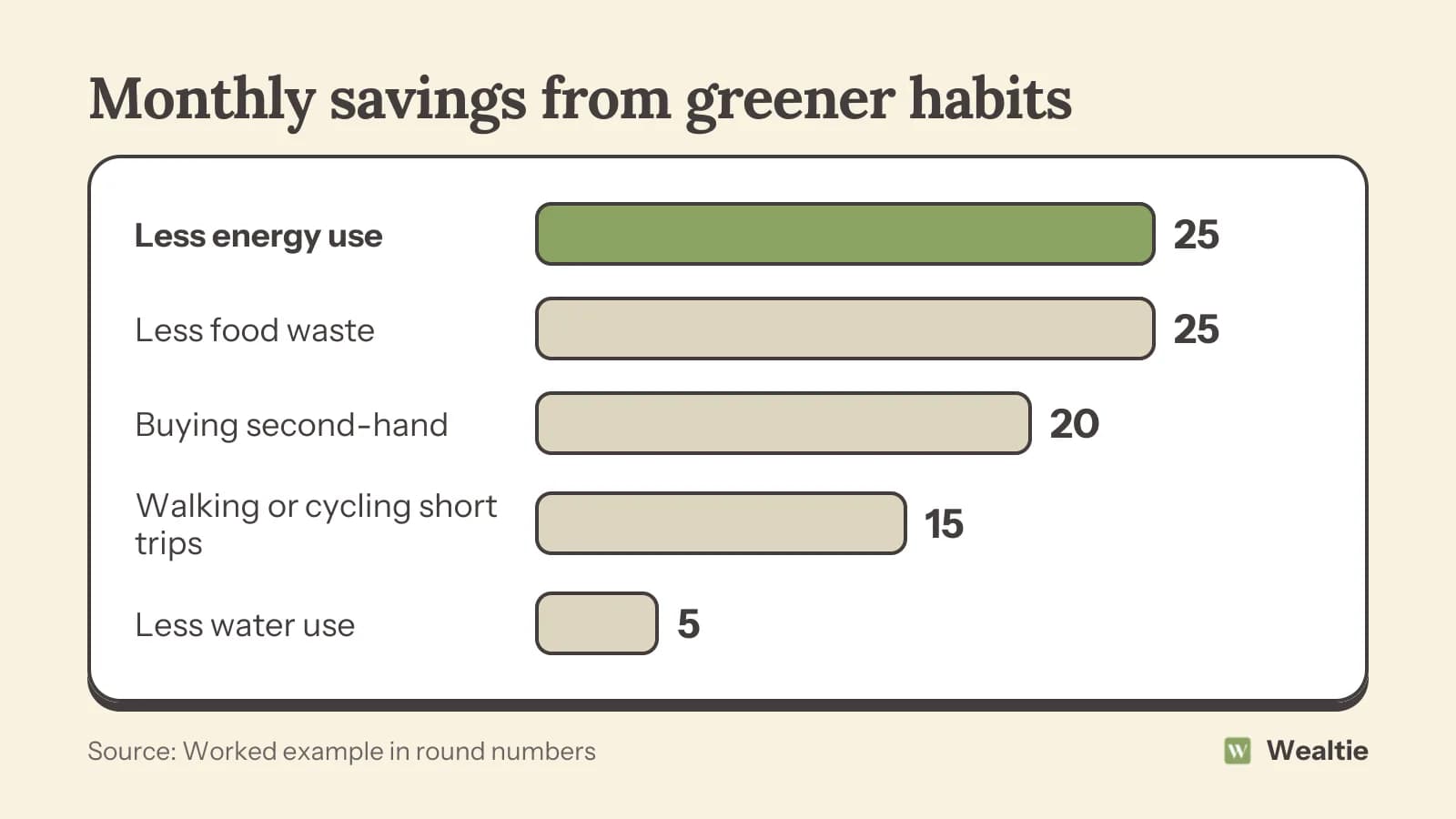
In this example, the household saves about 90 a month, or about 1,080 a year. Your own savings depend on your habits now and where you live. Tracking bills for a few months before and after making changes shows the real effect.
How do you use less energy?
Small changes lower bills:
- Turn off lights and devices at the wall when not in use
- Wash clothes at lower temperatures and dry them on a line
- Lower the heating by a degree and use draught-proofing
- Boil only the water you need
- Use efficient bulbs and appliances when replacing old ones
How to save money on your electric bill has more ideas.
How do you waste less food?
Wasted food is wasted money. Plan meals, shop with a list, store food properly and use leftovers. Freeze bread, fruit and cooked meals before they go off. How to reduce food waste covers this in detail.
How do you buy less, and better?
Buying fewer new things is one of the biggest ways to save and to live more sustainably. Ask whether you need something before you buy it, borrow or rent items you'll use rarely, and buy second-hand where you can. Clothes, furniture, books, tools and electronics are often available barely used. How to buy second-hand has tips.
Repair and maintain
Fixing things instead of replacing them saves money and resources. Looking after things in the first place, like cleaning and storing them properly, makes them last longer too. Mending clothes, servicing a bike or repairing an appliance often costs far less than buying new. Community repair groups can help for free.
How do you use less water?
Shorter showers, fixing dripping taps, running full loads in the washing machine and dishwasher, and collecting rainwater for the garden all reduce water use. If you're on a water meter, the savings show up quickly. Using less hot water also lowers energy bills, so the saving counts twice. How to save money on your water bill has more ideas.
Share and swap
Sharing and swapping saves money and resources. Clothes swaps, toy libraries, tool sharing and community groups where people give away unwanted items let you get what you need without buying new. Giving things away when you're done keeps them in use and clears space at home.
How do you travel more sustainably for less?
Walking or cycling short trips saves fuel, parking and wear on your car, and it's good exercise. Public transport, lift-sharing and combining errands into one trip all cut costs. How to cut commuting costs covers getting to work for less. Fewer car trips also mean less wear, which lowers servicing and repair costs over time.
Reusable swaps
Reusable water bottles, coffee cups, bags and food containers cost a little upfront but save money over time compared with buying disposable items repeatedly. Choose a few swaps you'll use, rather than buying a whole set of eco products you don't need.
Avoid green spending traps
Not every eco product saves money. Buying lots of new "sustainable" items can be less green and more expensive than using what you already own. The cheapest sustainable choice is often to keep using what you have. When something does need replacing, choosing quality that lasts often costs less over time.
How do you track savings from greener habits in Wealtie?
Track energy, water, food and transport in your expense categories, and compare months before and after making changes. A limit in the budget tracker helps you redirect the savings to a goal, so they don't disappear into other spending.
Questions people ask
Many do, because using less energy, water, food and new products costs less.
In a worked example, about 90 a month, or 1,080 a year.
Often cutting energy use, food waste and new purchases.
Only if you'll use them. Keeping and using what you already own is often the cheapest green choice.
This article is general information, not financial, tax or legal advice. Your situation is your own; check the numbers that apply to you before you act on them.