Budgeting: How to save money on your electric bill: what each change is worth
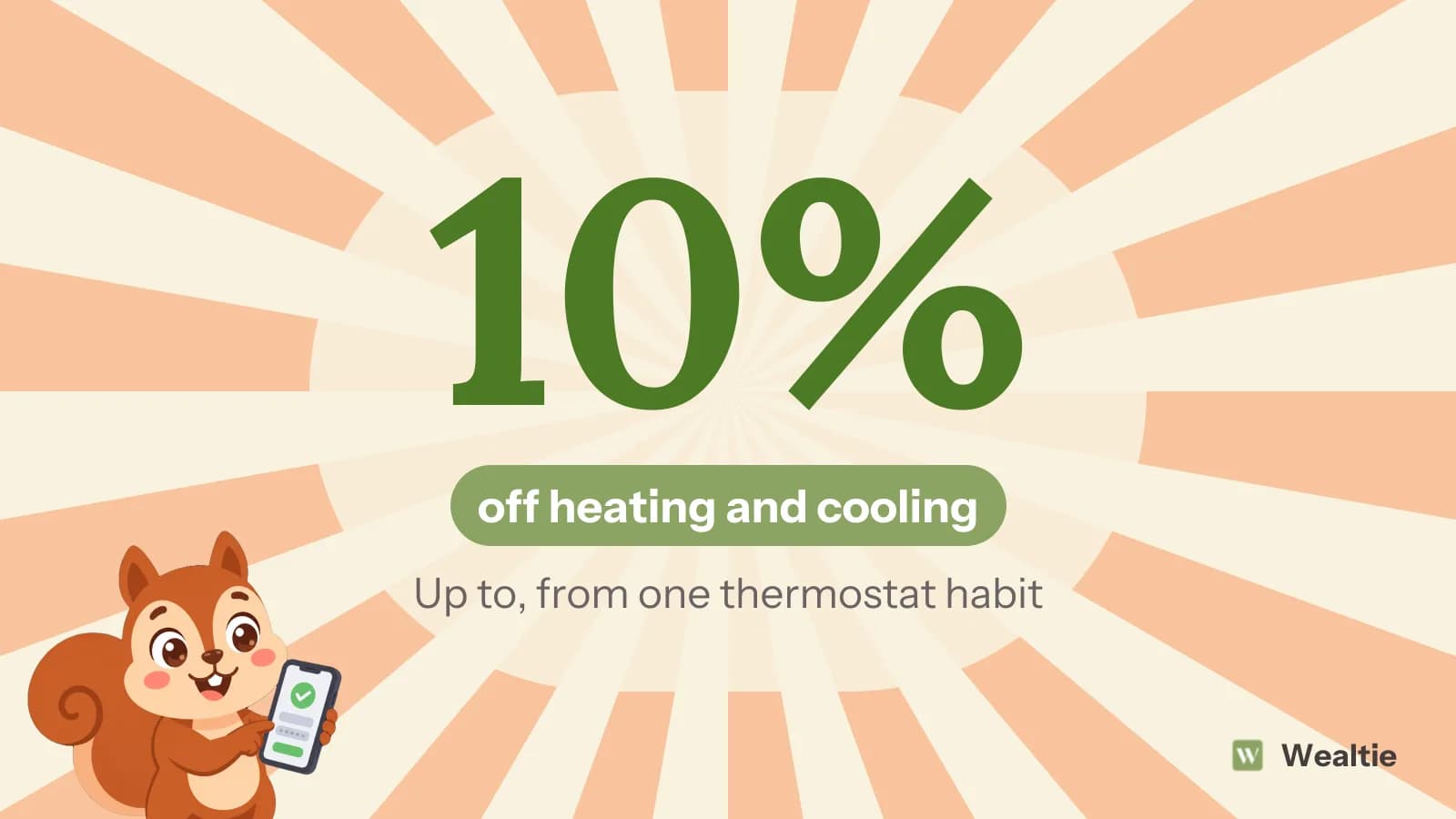
To save money on your electric bill, start with heating and cooling: setting the thermostat back while you sleep or are out can cut those costs by up to 10%, says the Department of Energy. Then swap the bulbs you use most for LEDs, check your rate plan, and budget for the bill's seasonal swings.
 By Wealtie Team · 4 min read
Key takeaways
- The average US household used 863 kWh of electricity a month in 2024 and paid $142.26, according to the Energy Information Administration.
- The average residential price was 18.16 cents per kWh in August 2026, up 3.4% from a year earlier, so the same usage now costs about $157 a month.
- Setting your thermostat back when you're asleep or out can cut heating and cooling costs by up to 10%; for heating, it's about 1% for each degree Fahrenheit over eight hours.
- LED bulbs use up to 90% less energy than incandescent bulbs and last up to 25 times longer.
- A bill that swings with the seasons is easier to budget as a fixed monthly amount, through your utility's budget billing or by setting aside the yearly average yourself.
What's the average electric bill?
$142.26 a month in 2024 for the average US home, which used 863 kWh at 16.48 cents per kWh, according to the Energy Information Administration.
Prices have gone up since. The average residential price was 18.16 cents per kWh in August 2026, up 3.4% from a year earlier, in the EIA's Electric Power Monthly. At that price, the same 863 kWh costs about $157.
Where you live matters more than almost anything you do at home:
| State | Monthly use | Price per kWh | Average monthly bill (2024) |
|---|---|---|---|
| Hawaii | 495 kWh | 42.86¢ | $212.12 |
| Texas | 1,096 kWh | 14.94¢ | $163.72 |
| California | 503 kWh | 31.97¢ | $160.86 |
| Florida | 1,104 kWh | 14.14¢ | $156.09 |
| US average | 863 kWh | 16.48¢ | $142.26 |
| Utah | 774 kWh | 12.22¢ | $94.57 |
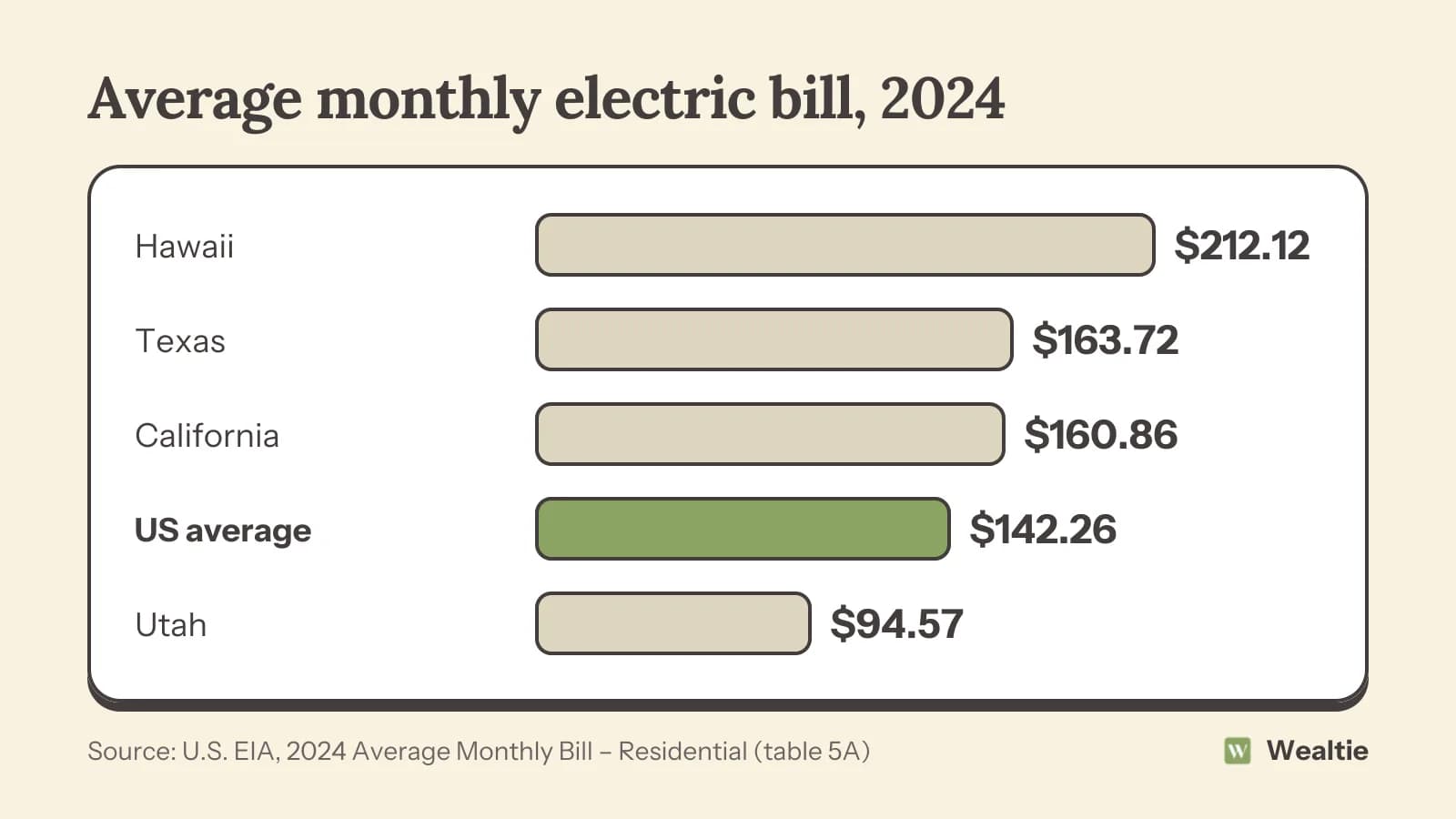
Texas and Florida homes use twice what California homes do, mostly on air conditioning, and pay about the same. Hawaii uses the least and pays the most. Your bill is usage times price, and the two halves need different fixes.
How do you read your electric bill?
Find three numbers: the kWh you used, the price per kWh, and the fixed monthly charge.
The fixed charge is what you pay to be connected, whatever you use. The kWh and the price make up the rest. Most bills also show the last 12 months of use as a small chart. That chart is the most useful thing on the page: the tall months are when heating or air conditioning ran most, and they're where savings come from.
What saves the most money on an electric bill?
Heating and cooling. Setting your thermostat back while you're asleep or out can cut those costs by as much as 10%, according to the Department of Energy's Energy Saver guidance.
In winter, the DOE suggests keeping the thermostat at the lowest comfortable temperature while you're awake and setting it back further at night. It puts the saving at about 1% on heating for each 1°F you set it back over eight hours. Set back 7°F overnight and that's about 7%.
In summer, set it to the highest comfortable temperature, and keep the system running when you're out rather than switching it off, to avoid moisture build-up. A programmable or smart thermostat does the setbacks without you having to remember.
Two cheaper fixes help the system do less work: clean or replace the filter during the months it runs most, and close curtains on hot afternoons and open them on sunny winter days.
Do LED bulbs make a difference?
Yes, if you still have incandescent or halogen bulbs. LEDs use up to 90% less energy and last up to 25 times longer than incandescent bulbs, according to the DOE.
A worked example: a 60-watt incandescent bulb on for three hours a day uses 5.4 kWh a month, about $0.98 at August 2026's average price. An LED using 90% less costs about $0.10. That's $0.88 a month per bulb. Across 15 bulbs, it's about $13 a month, or $158 a year. Start with the bulbs that are on longest: kitchen, living room, outside lights.
If your home already has LEDs, this one's done. Go back to heating and cooling.
What else lowers the bill?
Smaller changes add up, especially in homes with older appliances:
- Wash clothes in cold water and run full loads in the washer and dishwasher.
- Air-dry when you can. The dryer is one of the bigger appliances in most homes.
- Switch off standby power at the wall for TVs, consoles and chargers you're not using.
- Check the fridge and freezer seals. A door that doesn't close tightly runs the compressor all day.
Can you pay less for the same electricity?
Sometimes. Ask your utility about a time-of-use plan, which charges less at night and more at peak times, if you can shift laundry and dishwashing later. In states with retail choice, compare suppliers' rates per kWh, not the advertised headline.
If the bill is a struggle, the federal Low Income Home Energy Assistance Program helps eligible households with heating and cooling costs, and many utilities have hardship programs of their own.
How do you budget for an electric bill that changes every month?
Budget the yearly average every month, not the bill you got last month.
Add up the last 12 bills and divide by 12. If the total was 1,800, budget 150 a month. In a cheap spring month, the 40 you didn't spend goes into a separate pot. In January or August, the extra comes out of it. Many utilities offer budget billing, which does the same thing for you: a fixed monthly charge, settled once a year.
Wealtie's bill tracker logs recurring transactions on their due date, so a fixed budget-billing amount appears without you entering it; the Free plan includes one. Add the bill to your monthly budget and Budget Health warns you mid-month if your spending pace will take you over. For the bigger yearly costs that don't arrive monthly, a sinking fund works the same way as the averaging above.
Questions people ask
$142.26 a month in 2024 for the average US home, which used 863 kWh at 16.48 cents per kWh, according to the EIA. At August 2026's average price of 18.16 cents, the same usage costs about $157.
Heating and cooling, in most homes, followed by water heating and large appliances like the dryer and fridge. Your bill's monthly history shows it: the months with the highest use are the ones the heating or air conditioning ran most.
The lowest comfortable temperature in winter and the highest comfortable one in summer, then set it back further while you sleep or are out. The Department of Energy says each 1°F of setback over eight hours saves about 1% on heating.
A little. Devices on standby draw a small amount of power all the time. Unplugging or switching off at the wall chargers, TVs and consoles you're not using helps, but heating, cooling and lighting matter far more.
Budget billing, offered by many utilities, charges you the same amount each month based on your average use, then settles the difference once a year. It doesn't lower the total, but it removes the expensive winter or summer month.
Sources
- 2024 Average Monthly Bill – Residential (Electric Sales, Revenue, and Average Price, table 5A) · U.S. Energy Information Administration · checked 1 November 2026
- Electric Power Monthly, Table 5.3: Average Price of Electricity to Ultimate Customers (data for August 2026) · U.S. Energy Information Administration · checked 1 November 2026
- Energy Saver: Home Heating and Cooling fact sheet · U.S. Department of Energy · checked 1 November 2026
- Energy Saver: Energy-Efficient Lighting fact sheet · U.S. Department of Energy · checked 1 November 2026
- Energy price cap: standing charges and unit rates by region · Ofgem · checked 1 November 2026
This article is general information, not financial, tax or legal advice. Your situation is your own; check the numbers that apply to you before you act on them.