Budgeting: How to save money on water bill: start with the leaks
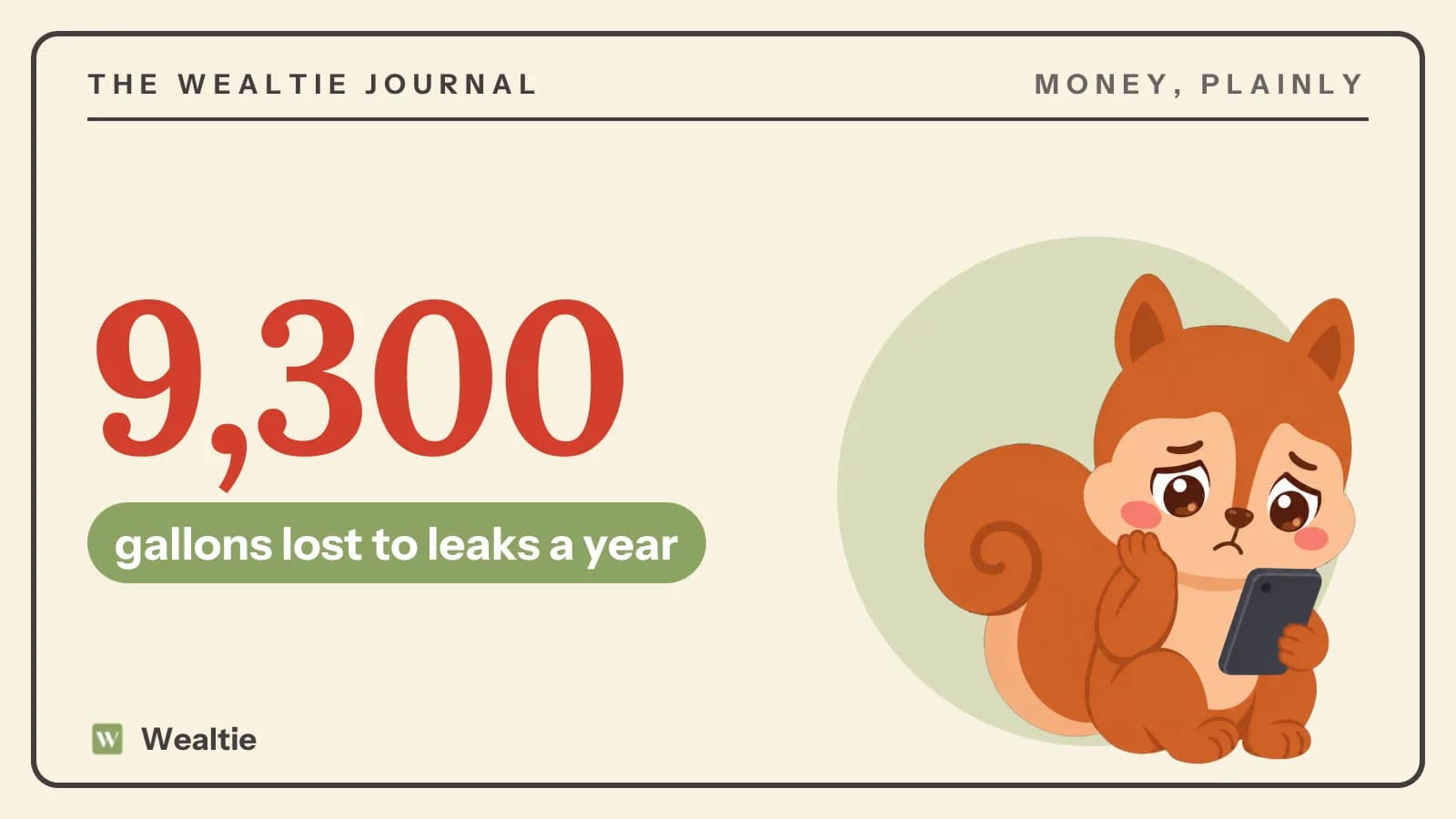
To work out how to save money on water bill costs, start with leaks: the EPA says the average US household's leaks can waste more than 9,300 gallons a year. After that, a water-saving showerhead and efficient toilets save the most.
 By Wealtie Team · 3 min read
Key takeaways
- The EPA says the average US household's leaks can account for more than 9,300 gallons wasted a year.
- Nine percent of US homes have leaks wasting 50 gallons or more a day, according to the EPA.
- Replacing old toilets can save the average family 13,000 gallons and $130 a year, the EPA says.
- The EPA puts the average family's water costs at more than $1,000 a year, with more than $380 of savings possible from efficient fixtures and appliances.
- Read your meter twice, two hours apart with no water running, to find a leak you can't see.
How do you save money on water bill costs fastest?
Find and fix leaks, because you're paying for water nobody uses. The EPA says the average household's leaks can account for more than 9,300 gallons wasted every year, and nine percent of homes have leaks wasting 50 gallons or more a day.
Common culprits are worn toilet flappers, dripping taps and leaking valves. Most need only a few tools and a cheap part.
How do you check for a leak?
Use your water meter. Turn off everything that uses water, take a reading, wait two hours with nothing running, and read it again. If the number's changed, you've got a leak somewhere.
For the toilet, put a few drops of food colouring in the cistern and wait about 15 minutes without flushing. If colour shows up in the bowl, the flapper's letting water through. That one's among the cheapest repairs in a house.
Check outdoor taps and hoses too, particularly after winter. A leak outside can run for months before anyone notices it on a bill.
Which changes save the most?
Fixtures that use less on every use. The EPA's figures for US households:
| Change | What the EPA says it saves |
|---|---|
| Replacing old toilets with efficient ones | 13,000 gallons and $130 a year |
| Efficient fixtures and appliances throughout | More than $380 a year |
| Turning off the tap while brushing | As much as 3,000 gallons a year |
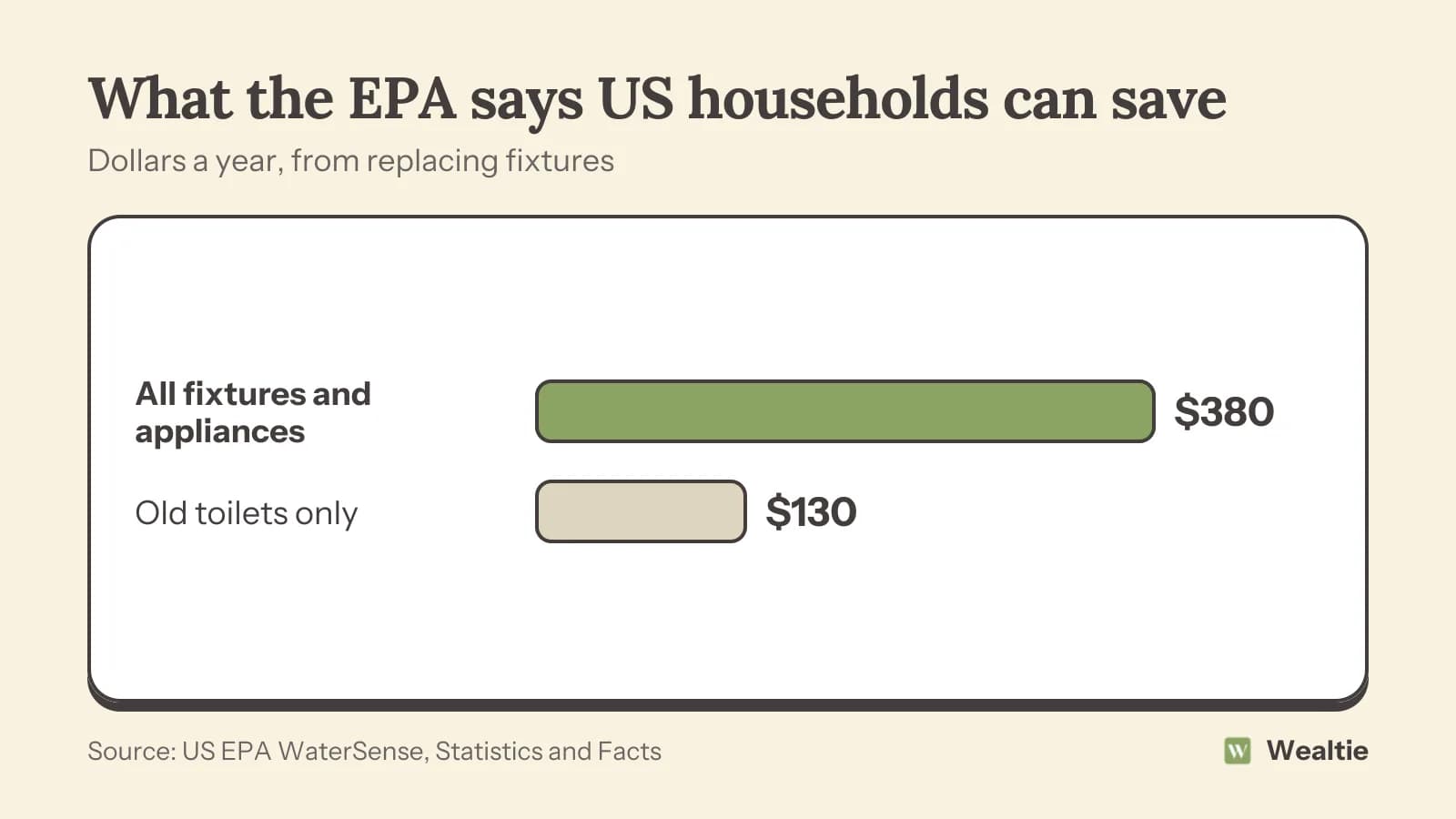
The EPA puts the average family's water costs at more than $1,000 a year, so those savings are a meaningful share of the bill. The toilet figure covers replacing all of them, so check what yours use before you buy anything.
Is a low-flow showerhead worth it?
Usually, because it's cheap and the shower runs daily. Showering accounts for nearly 17 percent of residential indoor water use, or nearly 40 gallons a day for the average family. Standard showerheads use 2.5 gallons a minute, and models with the WaterSense label use no more than 2.0.
There's a second saving if you heat water with gas or electricity, because less hot water means less energy. How to save money on electric bill and how to save money on heating cover the rest of that.
A cheap tap aerator does the same job at the sink. It's a part that screws on and costs little.
What habits make a difference?
The ones you repeat every day. Turning the tap off while you brush can save as much as 3,000 gallons a year, the EPA says. Other small ones:
- Run the dishwasher and washing machine only when they're full
- Shorten your shower by a couple of minutes
- Water the garden early or late in the day, so less evaporates
- Keep a jug of water in the fridge in place of running the tap until it's cold
Check the bill after each change, because it's the only way to see which of these did anything. A meter reading once a month shows a change sooner than a bill will.
Why is my water bill so high all of a sudden?
A sudden jump usually means a leak, a change in how many people are at home, or a billing estimate. Run the meter test first. Then compare the reading on the bill with what's on the meter, because an estimated bill can overshoot and get corrected later.
If you've had a burst or hidden leak, ask your supplier whether they'll reduce the bill. Many have a leak allowance, and some ask for proof that it was fixed. Seasonal changes, like filling a pool or watering a lawn, can also add a lot in a few weeks.
Would a water meter save you money?
It can, if you pay a flat rate and use less than the average. Where you've got a choice, as many UK households do, ask your supplier for a comparison before you switch. Fewer people in a large house tends to be the case where a meter wins.
If money's tight, ask about payment help. Many suppliers have social tariffs or support schemes for low-income households.
How do you see your water bill in Wealtie?
Log it in a Utilities category with the amount from each bill. Your expense categories then show what it comes to over time, and a change in the amount stands out next to the last one. If the amount's steady, set it up with the bill tracker, and it'll log itself on the due date. Free includes one recurring transaction, and Pro has no limit.
Questions people ask
Find and fix leaks first, then install a water-saving showerhead and tap aerators. Replacing old toilets saves the most over time, about $130 a year for the average US family according to the EPA.
A leak is the most common cause of a sudden jump, followed by more people at home, seasonal use or an estimated bill. Run the meter test by reading it twice, two hours apart with no water running.
The cost depends on how fast it leaks and your water rate. The EPA says the average household's leaks waste more than 9,300 gallons a year, and worn toilet flappers are one of the common causes.
Yes. The EPA says turning off the tap while you brush your teeth can save as much as 3,000 gallons a year.
Sources
- Fix a Leak Week · US Environmental Protection Agency · checked 9 November 2026
- WaterSense Statistics and Facts · US Environmental Protection Agency · checked 9 November 2026
- WaterSense Showerheads · US Environmental Protection Agency · checked 9 November 2026
- WaterSense Bathroom Faucets · US Environmental Protection Agency · checked 9 November 2026
This article is general information, not financial, tax or legal advice. Your situation is your own; check the numbers that apply to you before you act on them.