Saving: The habits of people who save money consistently
The habits of people who save money consistently are simple: they save first, know where their money goes, plan for irregular costs and spend on what they value. None of these needs a high income, and in a worked example, saving 150 a month builds 1,800 a year.
 By Wealtie Team · 3 min read

Key takeaways
- The habits of people who save money are simple and don't need a high income.
- Savers usually save first, track spending and plan for irregular costs.
- In a worked example, saving 150 a month builds 1,800 a year.
- Start with one habit, then add another once it sticks.
What are the habits of people who save money?
They're mostly simple routines, repeated consistently. People who save money reliably aren't always those who earn the most. Many people on modest incomes save steadily, while some high earners save little. The difference usually comes down to habits: small, repeatable choices that make saving the default rather than an afterthought.
The good news is that habits can be learned. You don't need to adopt them all at once. Picking one, practising it for a month and then adding another is far more likely to stick than changing everything overnight.
Habit 1: They save first
Savers move money into savings as soon as they're paid, before they start spending. They treat saving like a bill that must be paid. That way, they spend what's left, rather than trying to save what's left. Here's a worked example of saving 150 a month, in round numbers that work in any currency:
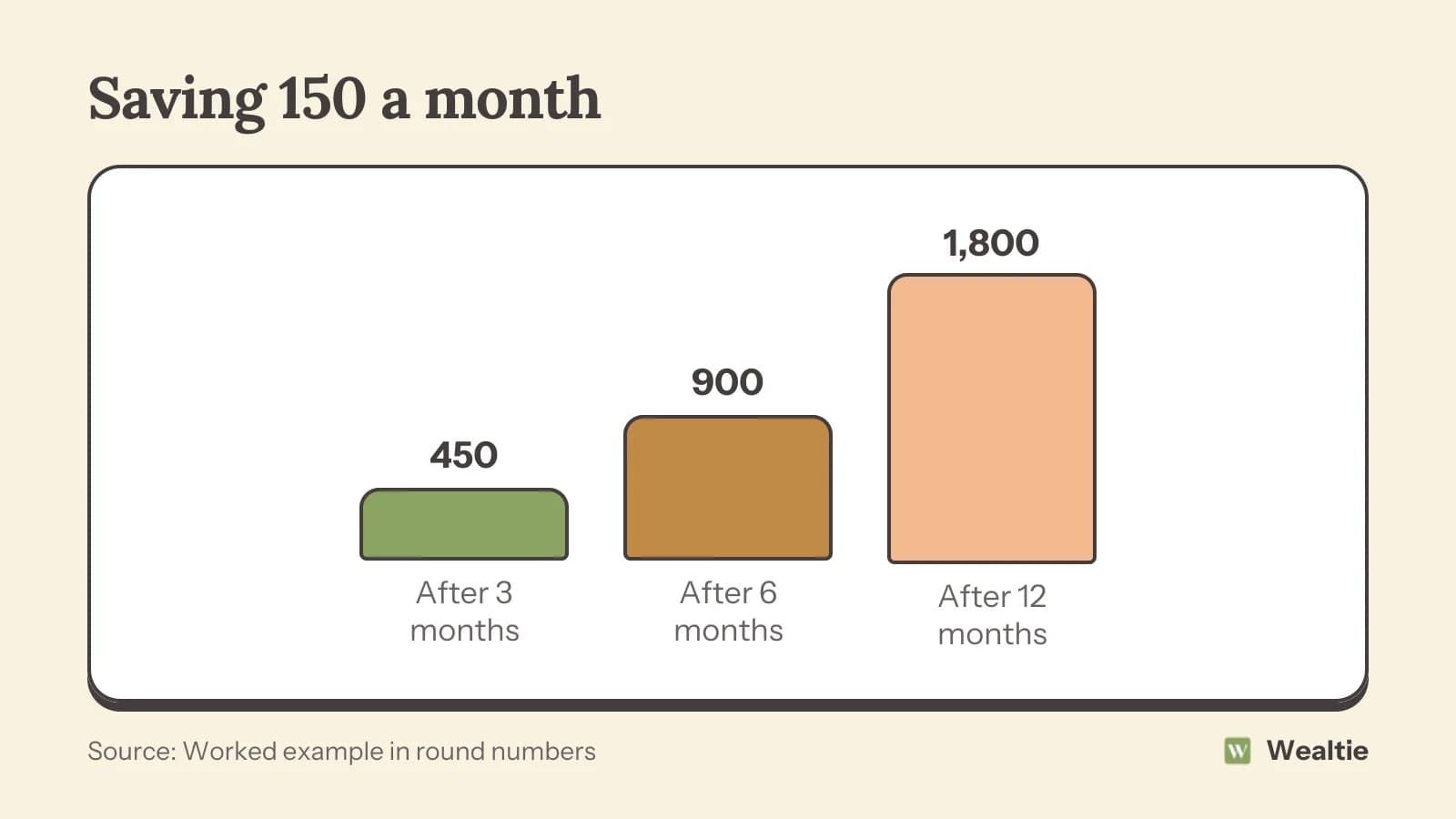
After a year, that's 1,800, built without relying on what's left over at the end of each month. Pay yourself first explains the idea in more detail. Setting it up as an automatic transfer means it happens even in busy months.
Habit 2: They know where their money goes
Savers track their spending, even roughly. They know what they spend on food, transport, eating out and subscriptions, which means they can spot problems early and make changes. Tracking doesn't have to be detailed; a few minutes a week is enough. How to track your spending covers simple methods. Many savers say the act of tracking, more than any budget, is what changed their habits.
They check in regularly
A short weekly or monthly check, looking at how spending compares with the plan, keeps small drifts from turning into big problems. It also gives a regular moment to notice progress, which keeps motivation up.
Habit 3: They plan for irregular costs
Car repairs, birthdays, holidays, yearly subscriptions and insurance renewals don't come every month, but savers expect them. They set aside a little each month in separate pots, so these costs don't wipe out their savings when they arrive. Sinking funds explain how this works. Over time, these pots become a buffer that makes surprises far less stressful.
Habit 4: They spend on what they value
Savers aren't necessarily frugal about everything. They spend generously on what matters to them and cut back on what doesn't. One person might spend on travel and skip expensive clothes; another might love eating out but drive an old car. Knowing your priorities makes saving feel less like giving things up. Writing down your top three spending priorities can help you decide what to cut first.
Habit 5: They pause before buying
Impulse buys add up. Savers often wait before unplanned purchases, sometimes a day, sometimes a week for bigger items. Many find the urge passes. A wish list, where items wait a while before purchase, turns impulse into a choice. How to stop impulse buying has more ways to build this habit.
They avoid lifestyle creep
When their income rises, savers increase their savings first, rather than letting spending rise to match. Lifestyle creep explains how spending tends to grow with income.
They have clear goals
A goal, like an emergency fund, a holiday or a deposit, gives saving a purpose. Savers often name their savings pots, which makes the money feel committed to something specific and less tempting to spend. Goals with a date, like a holiday next summer, are especially motivating.
How do you build these habits?
Start with one. Most people find saving first is the most powerful, because it works even if other habits are still developing. Once it's automatic, add tracking, then planning for irregular costs. Celebrate small wins, like your first 500 saved, to keep motivation high. Telling a friend or partner about your goal can add a bit of accountability too.
Expect setbacks
Everyone has months where saving doesn't go to plan. Savers don't give up after a bad month; they adjust and carry on. A smaller amount saved consistently beats a large amount saved now and then.
How can Wealtie help build saving habits?
Track spending in your expense categories so you know where money goes, and set a monthly limit in the budget tracker, where Budget Health shows whether you're on pace. Budget streaks reward staying within your plan, which helps habits stick.
Questions people ask
Saving first, tracking spending, planning for irregular costs, spending on what they value, pausing before buying and having clear goals.
No. Saving habits matter more than income, and many people on modest incomes save steadily.
Saving first, as soon as you're paid, since it works even while other habits develop.
Start with one habit, like saving a fixed amount on payday, then add tracking and planning once it sticks.
This article is general information, not financial, tax or legal advice. Your situation is your own; check the numbers that apply to you before you act on them.