Budgeting: How buying second-hand saves money, and what to buy new
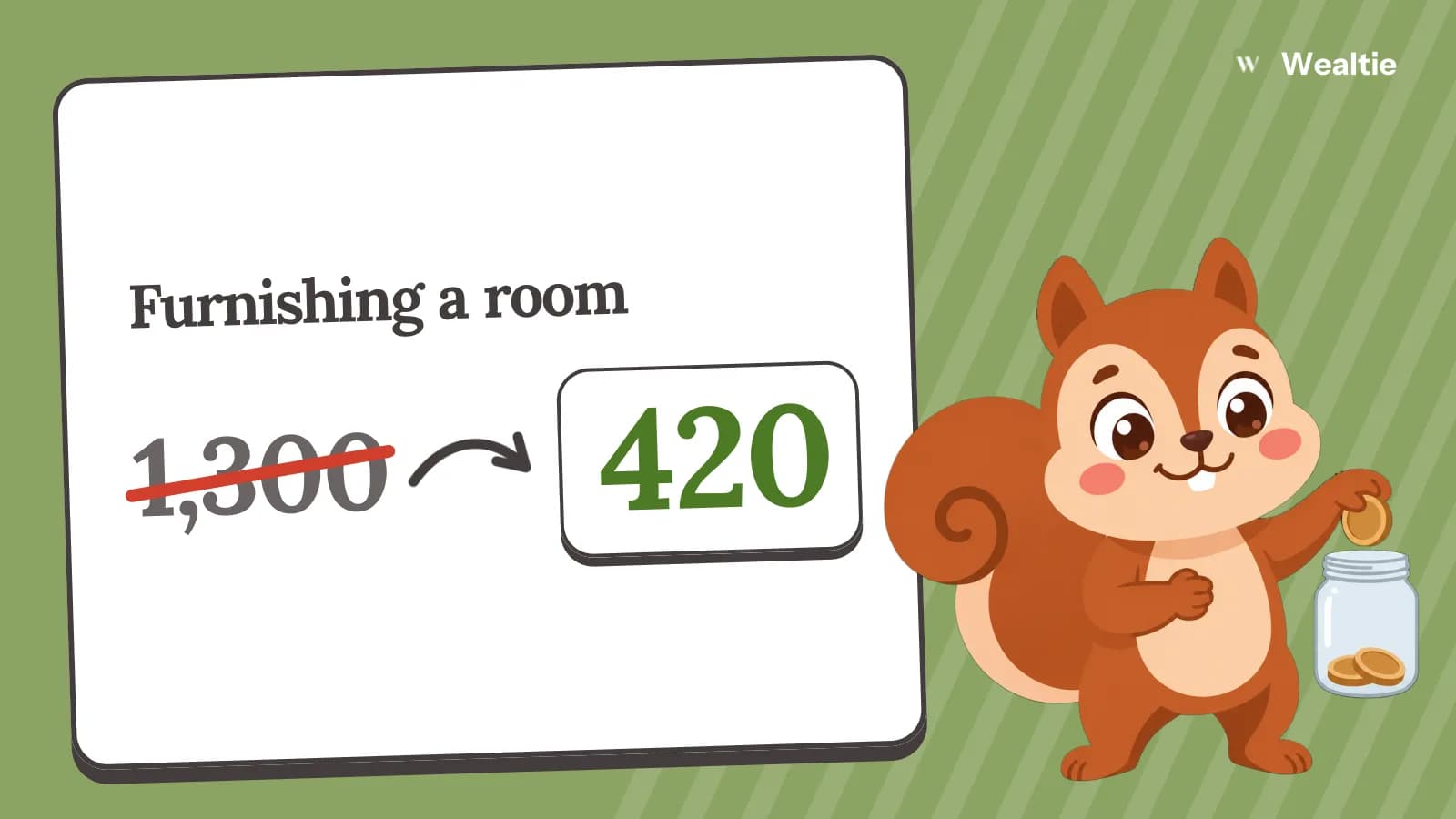
To save money by buying second-hand, focus on things that lose value fast but last a long time, like furniture, children's items, tools and bikes. In a worked example, furnishing a room second-hand costs 420 instead of 1,300 new.
 By Wealtie Team · 3 min read
Key takeaways
- Buying second-hand saves the most on items that lose value quickly but last a long time.
- In a worked example, furnishing a room second-hand costs 420 instead of 1,300 new.
- Some things are safer bought new, like car seats, helmets and mattresses.
- Check items carefully, meet in a safe place and pay in a way that leaves a record.
Does buying second-hand save money?
Often a lot, if you choose the right things. Many items lose a big part of their value the moment they're bought new, but still have years of use left. Buying them second-hand means someone else has absorbed that drop. For other things, the savings are small or the risks aren't worth it, so it helps to know which is which. Buying used also keeps things out of landfill, which many people count as a bonus on top of the saving.
What's good value second-hand?
Things that last and lose value quickly:
- Furniture: solid tables, chairs, bookcases and wardrobes often cost a fraction of the new price
- Children's items: clothes, toys, books and many larger items are outgrown long before they wear out
- Tools and garden equipment: many are used a few times and then stored
- Bikes: a good used bike can be far better than a cheap new one
- Books, games and music
- Sports equipment: weights, rackets and kit that people bought and stopped using
- Kitchen items: pans, dishes and small appliances in good condition
Here's furnishing a room both ways, in round numbers that work in any currency:
| Item | New | Second-hand |
|---|---|---|
| Sofa | 600 | 180 |
| Table and chairs | 350 | 120 |
| Bookcase | 150 | 40 |
| Lamp | 60 | 20 |
| Rug | 140 | 60 |
| Total | 1,300 | 420 |
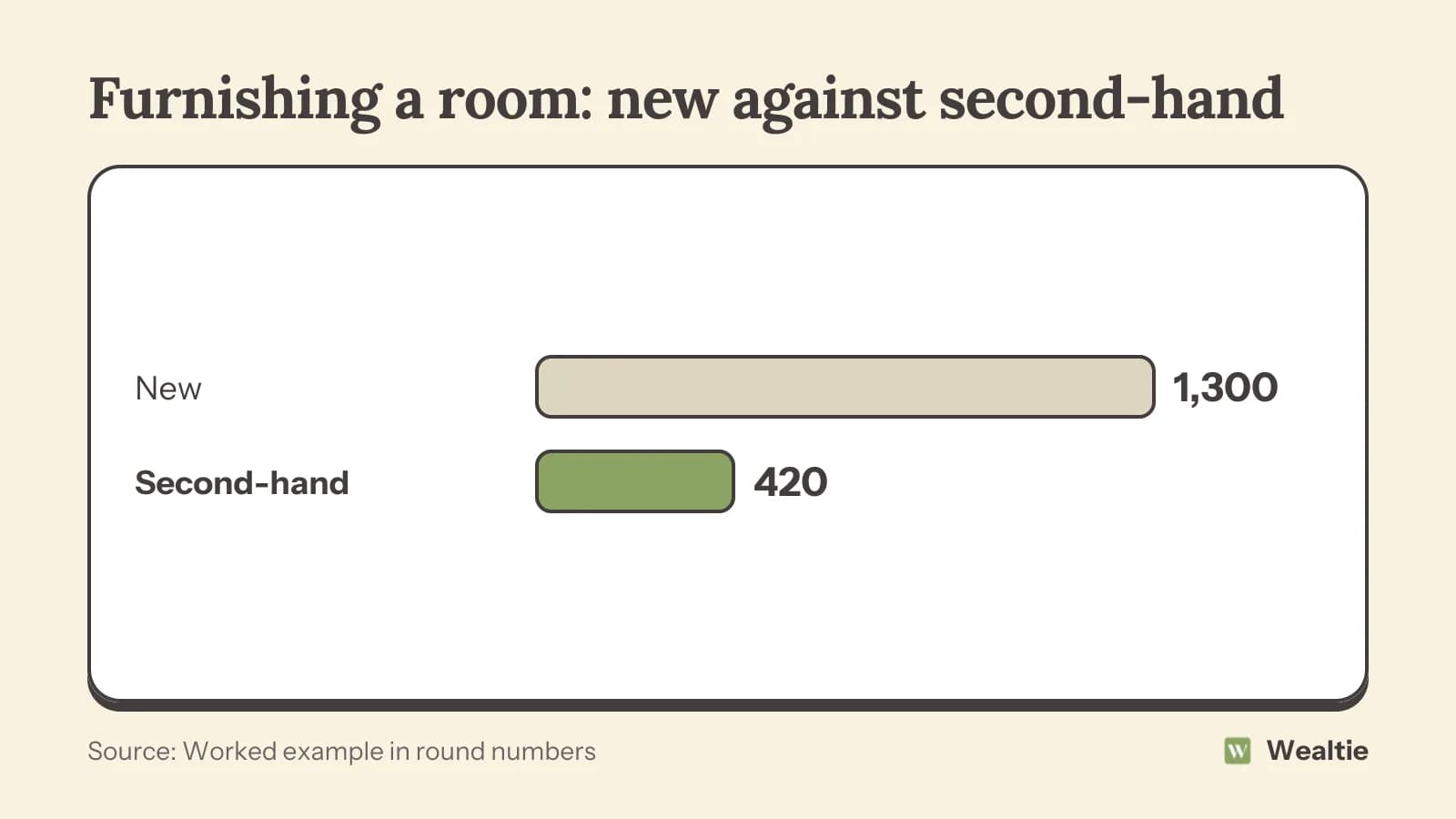
That's 880 saved on one room. Across a whole flat, the difference can pay for a lot more. Large items like wardrobes are often given away free by people moving, if you can collect, and many need only a clean or a small repair.
What should you buy new?
Things where safety, hygiene or hidden wear matter:
- Car seats: they may have been in an accident and can be unsafe even if they look fine
- Helmets: damage isn't always visible
- Mattresses: for hygiene and support
- Some electrical items: old or damaged appliances can be a fire risk, so check them or buy from a seller who tests them
- Underwear and swimwear
Check local safety guidance for children's equipment in particular, since standards change over time. When in doubt, the small saving isn't worth the risk.
Where should you look?
Online marketplaces, local selling groups, charity shops, second-hand furniture shops, car boot sales and community swap events. Friends and family are often the best source, especially for children's things. Some councils and charities run furniture reuse schemes at low prices.
Ask on local community groups for something specific, since someone often has one in a garage. Set up saved searches for things you're looking for, and be patient, since good finds come up every day. The best items go quickly, but new ones appear every day.
How do you check before you buy?
Look carefully and ask questions. For furniture, check joints, legs and drawers, and look for damp or pests. For electrical items, ask to see them working. For bikes, check the brakes, gears, chain and frame for cracks. Ask why it's being sold and how old it is. For anything upholstered, check for smells, stains and pests before you take it home, and for expensive electronics, ask for the original receipt.
Measure your space and the item before you go, and plan how you'll get it home. Delivery or a van hire can wipe out the saving on a big item.
How do you avoid scams?
Meet in a public place for small items, and bring someone with you for anything collected from a home. Pay in a way that leaves a record, and be wary of sellers who ask for payment before you've seen the item or want you to move off the platform to pay. If a deal looks far too good to be true, it usually is.
Can you sell what you no longer need?
Yes, and it's the other half of the habit. Selling things you don't use returns some of the money and makes space. Many people find the money from selling covers most of what they buy second-hand. Set a budget for second-hand buying too, since low prices can tempt you into things you don't need. Cost per use can help you decide what's worth keeping.
How do you track second-hand spending in Wealtie?
Log purchases in the right category as usual, so your expense categories show what you spend on furniture, clothes or children's things. If you sell items, log the money as income, and you'll see how much the habit saves you over a year. The expense tracker page covers logging. How to save money on clothes covers second-hand clothing in more detail.
Questions people ask
Often, for items that last and lose value quickly, like furniture, children's things, tools and bikes. A worked example of furnishing a room costs 420 used instead of 1,300 new.
Car seats, helmets and mattresses are usually best bought new, along with some electrical items unless they've been tested.
Online marketplaces, local selling groups, charity and reuse shops, and friends and family moving house.
Meet in a public place, see the item before paying, pay in a way that leaves a record and avoid sellers who push you to pay off the platform.
This article is general information, not financial, tax or legal advice. Your situation is your own; check the numbers that apply to you before you act on them.