Saving: Is a standing desk worth it for working from home?
Is a standing desk worth it? It is if you'll switch between sitting and standing most working days, and in a worked example, a converter costs 120, against 400 for an electric desk.
 By Wealtie Team · 3 min read

Key takeaways
- A standing desk is worth it if you'll switch positions most working days.
- Try standing with a box or shelf before buying.
- Converters cost less than full desks but take up desk space.
- Check whether your employer will pay for home office equipment.
Is a standing desk worth buying?
Standing desks let you work standing up, sitting down or switching between the two. Many people who work at a desk all day like the variety, and some find that changing position helps them feel more comfortable and alert. A standing desk isn't a cure-all, though. Standing all day has its own downsides, and the main benefit for most people comes from moving and changing position regularly.
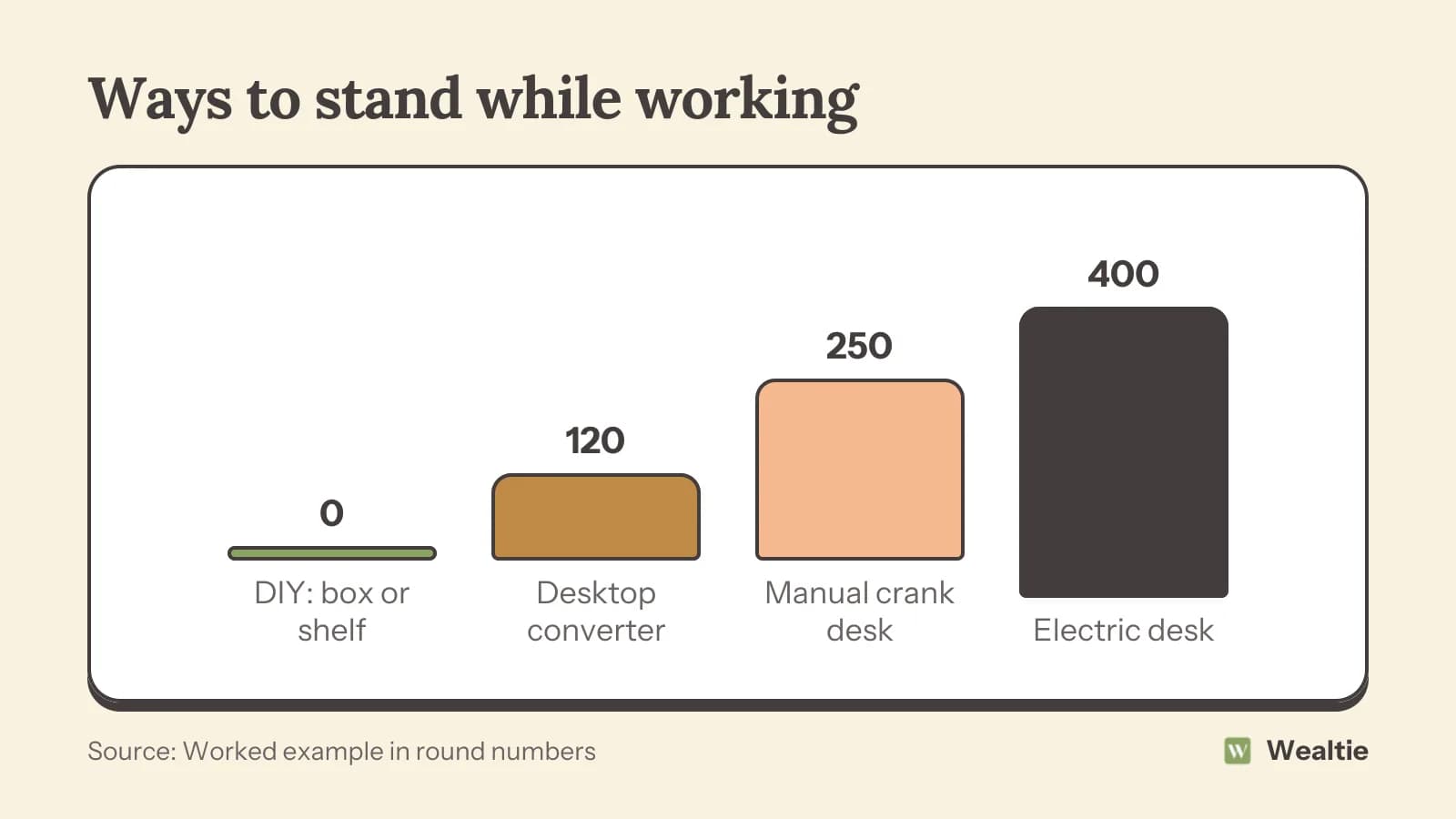
Price is the other question. Standing desks range from free, makeshift setups to expensive electric desks. Here's a worked example, in round numbers that work in any currency:
| Option | Cost |
|---|---|
| DIY: box or shelf | 0 |
| Desktop converter | 120 |
| Manual crank desk | 250 |
| Electric desk | 400 |
An electric desk used every working day for five years works out at about 0.32 per day. If you stop standing after a few weeks, as many people do, it becomes an expensive ordinary desk. That's why it pays to try standing before you buy.
What are the options?
DIY setup
A sturdy box, a shelf or a stack of books under your laptop lets you test standing for free. It's not elegant, but it tells you whether you'll use it.
Desktop converter
A converter sits on your existing desk and lifts your screen and keyboard. It's cheaper than a full desk but takes up desk space and can feel less stable.
Manual crank desk
You wind a handle to raise or lower the desk. It's cheaper than electric but slower to adjust, which means some people switch less often.
Electric desk
A motor adjusts the height at the touch of a button, often with saved settings. It's the easiest to use and the most expensive.
When is a standing desk worth it?
You work at a desk most days
The more hours you spend at a desk, the more use you'll get from being able to change position.
You'll switch regularly
People who stand for short periods several times a day tend to stick with it. Setting reminders helps.
Your employer will help
Some employers pay for home office equipment or offer a budget for it. How to plan a home office budget covers kitting out a workspace, and the value of workplace benefits covers perks worth asking about.
When might it not be worth it?
You'll rarely stand
If you know you'll mostly sit, a good chair may be a better use of the money.
You have little space
Converters need a deep desk, and full desks need room to move around.
You're expecting a fix for pain
If you have back or joint pain, talk to a doctor or physiotherapist. A standing desk might help, but it's not a guaranteed fix.
How do you buy one for less?
Test first
Use a DIY setup for a couple of weeks. If you stand often, you'll know a desk is worth it.
Buy second-hand
Standing desks are often sold second-hand when people move or offices close. Check the motor or crank works smoothly.
Choose a converter
If your current desk is fine, a converter costs much less than replacing it.
Skip extras you won't use
Anti-fatigue mats can help, but expensive accessories and smart features add cost without much benefit for most people. A basic mat might cost around 30.
What if you don't use it?
If you buy a desk and don't use the standing feature, selling it soon recovers more of the cost. How to sell things you don't use covers getting a fair price. Cost per use is a helpful check before any home office purchase.
Whatever you choose, the setup matters. Your screen should be roughly at eye level and your keyboard at a height where your elbows rest comfortably, whether you're sitting or standing. Many people buy a standing desk but keep a laptop too low, which defeats much of the point. A cheap laptop stand and separate keyboard can make a bigger difference than an expensive desk.
Build the habit gradually. Start with short periods of standing, like 15 minutes a couple of times a day, and increase slowly. Setting a reminder on your phone or computer helps. People who switch little and often tend to keep using their desk, while those who try to stand all day often give up after a week.
If you share a home office, a desk that suits two people of different heights can be worth paying more for, since an adjustable desk saves buying two.
How can Wealtie help you plan home office costs?
Log home office purchases in their own expense category and set a budget for the setup. If your employer reimburses equipment, logging the refund as income keeps your records straight.
Questions people ask
It's worth it if you work at a desk most days and will switch between sitting and standing regularly.
In a worked example, a desktop converter cost about 120, a manual crank desk 250 and an electric desk 400.
A converter costs less and works on your existing desk, but takes up desk space and can feel less stable than a full desk.
Put your laptop on a sturdy box or shelf for a couple of weeks to see how often you stand before buying.
This article is general information, not financial, tax or legal advice. Your situation is your own; check the numbers that apply to you before you act on them.