Budgeting: Stairlift cost: buying, renting and running one
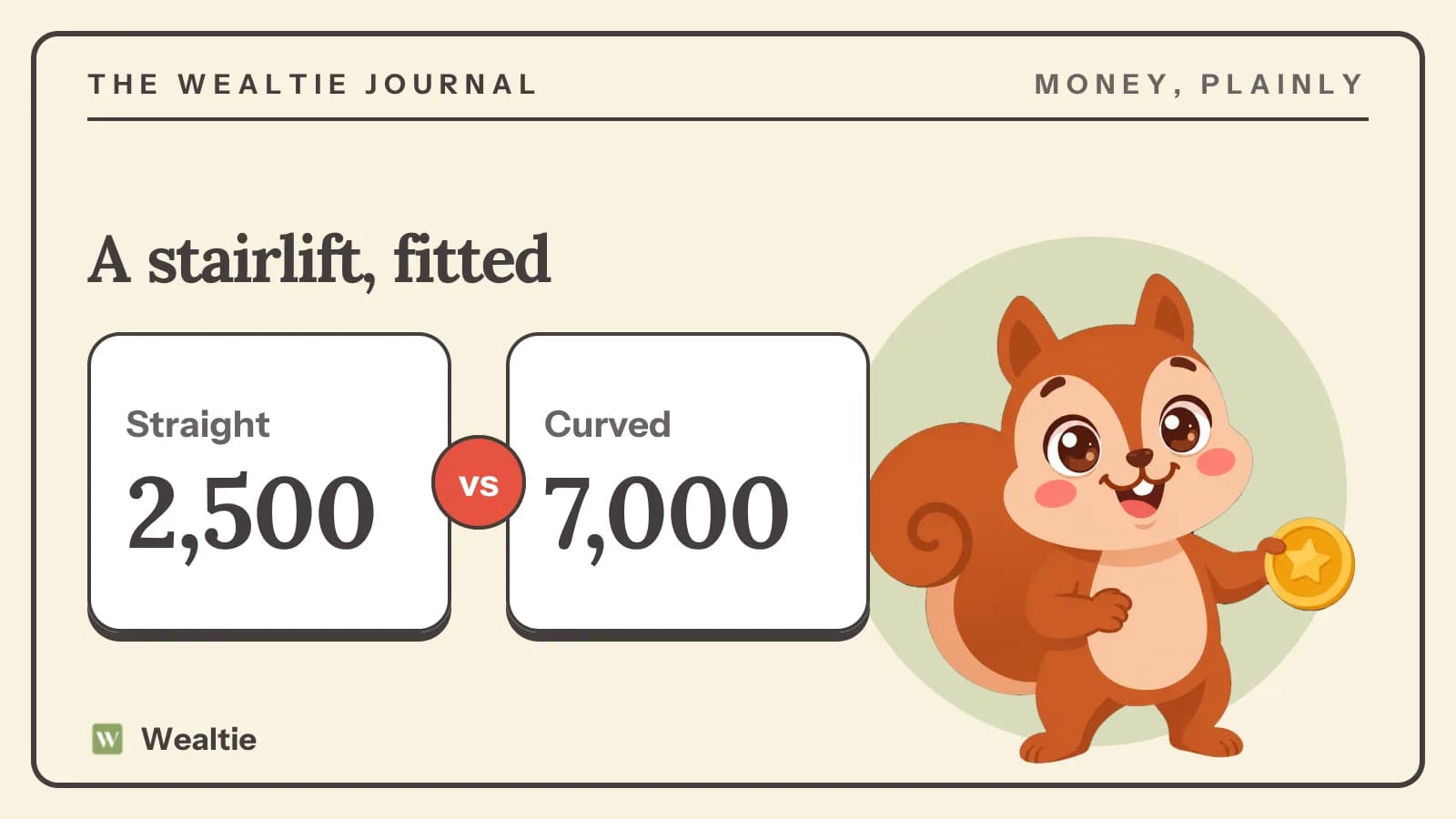
Stairlift cost depends mostly on the shape of your stairs, with curved stairlifts costing several times more than straight ones. In a worked example, a new straight stairlift costs 2,500 fitted, against 7,000 for a curved one.
 By Wealtie Team · 3 min read
Key takeaways
- Stairlift cost depends mainly on whether your stairs are straight or curved.
- Reconditioned and rented stairlifts cost less upfront.
- Servicing and repairs are ongoing costs to plan for.
- Check for grants or support before paying in full.
How much does a stairlift cost?
A stairlift can make it possible for someone with limited mobility to stay safely in their home, keep using every floor and avoid the much bigger cost and upheaval of moving. Stairlift cost depends mostly on the shape of the staircase. Straight stairs can use a standard rail, which is quicker to make and fit. Curved stairs, or stairs with a landing or turn, need a rail made to measure, which costs much more.
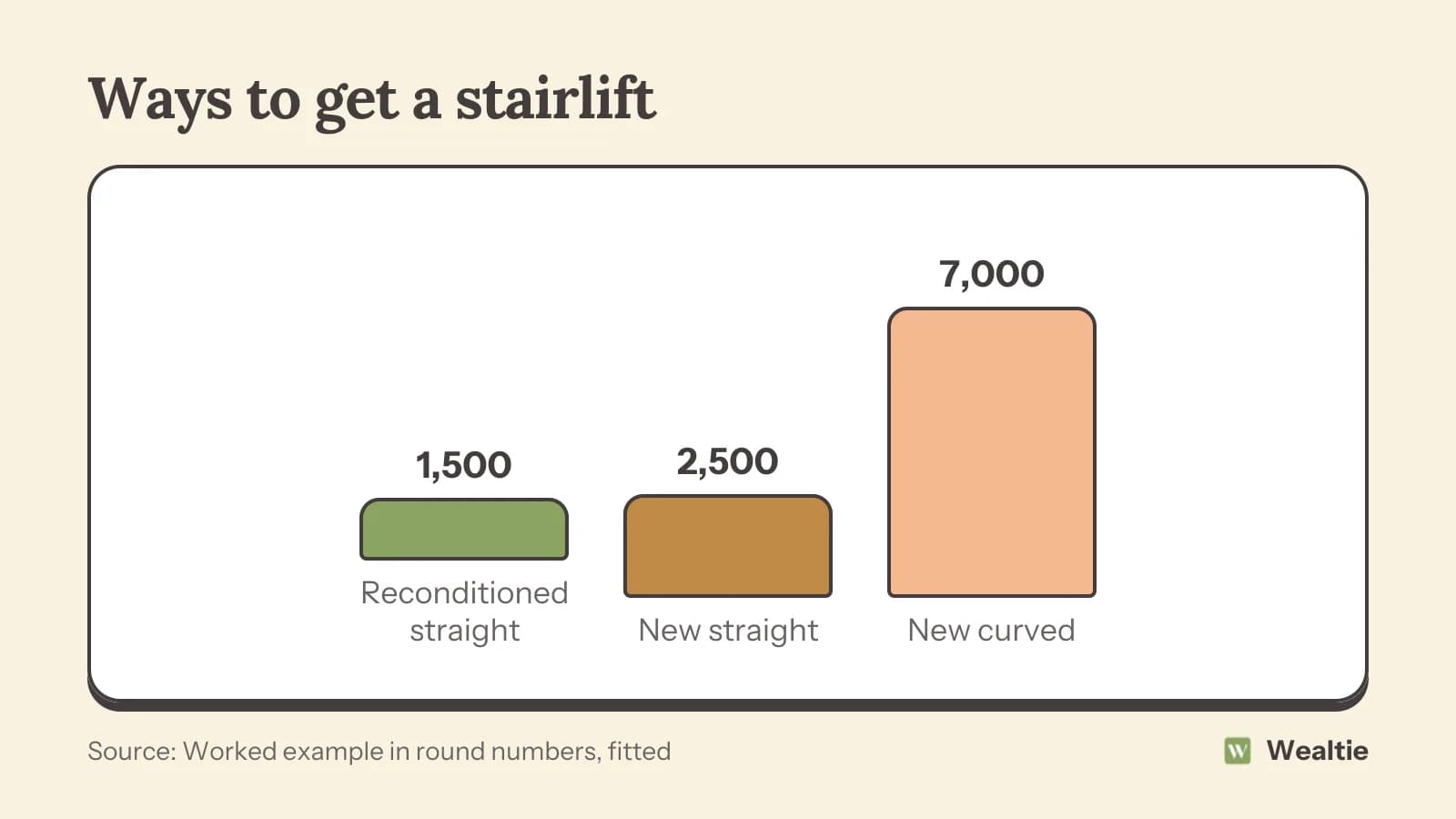
Here's a worked example of stairlifts fitted in a typical home, in round numbers that work in any currency:
| Option | Cost, fitted |
|---|---|
| Reconditioned straight | 1,500 |
| New straight | 2,500 |
| New curved | 7,000 |
Prices vary by supplier, location and features, like powered swivel seats, folding rails or outdoor use. Always get a home survey and a written quote before deciding. Be cautious of pressure to sign on the day of the visit.
Should you rent or buy?
Renting
Some suppliers rent stairlifts, often with an installation fee, like 300, plus a monthly charge, like 50. Renting suits short-term needs, such as recovery after surgery, or situations where the future is uncertain. Over several years, renting usually costs more than buying.
Buying new
Buying new gives you the latest model and a full warranty. It suits long-term needs.
Reconditioned
Reconditioned stairlifts are used models that have been refurbished and come with a warranty. They're usually only available for straight stairs and can save a lot.
Buy-back schemes
Some suppliers will buy back or remove a stairlift when it's no longer needed. Ask about this when comparing quotes, since removal can otherwise cost extra.
What are the running costs?
Servicing
Most suppliers recommend a yearly service, which might cost around 150. Some include servicing for the first year or offer service plans.
Repairs and batteries
Batteries need replacing every few years, and parts can wear out. A warranty or service plan can cover some of this.
Electricity
Stairlifts use very little electricity, since they charge their batteries and only run for short trips.
Is there help with the cost?
In many countries, local councils, health services or charities offer grants, loans or assessments for home adaptations like stairlifts, often based on need and income. An occupational therapist can assess what would help most and may recommend other options too, like grab rails or a downstairs bathroom. Check what's available where you live before paying in full. Some sellers also offer tax relief or reduced rates for people with disabilities, depending on local rules.
What should you check before buying?
Get several quotes
Ask at least two or three suppliers for a home survey and written quote.
Check the warranty and service terms
Find out what's covered, for how long and how quickly repairs are carried out.
Think about the future
Consider how needs may change. A stairlift may be the right answer now, but in some cases, moving to a single-level home might suit better in the long term. Downsizing to save money covers that option.
Avoid high-pressure sales
Reputable suppliers give you time to decide. Be wary of limited-time discounts that require an instant decision.
Be careful with finance
Some suppliers offer monthly payment plans. Check the total cost and terms carefully. Buy now, pay later covers the risks of spreading costs.
How does it fit into a care budget?
A stairlift is often one of several costs when caring for an older relative or planning for later life. How to budget for caring for parents covers the wider costs, and how to budget in retirement covers planning income and spending in later life.
Think about who will use the stairlift and how. Some people need a powered swivel seat to get on and off safely at the top, while others need a perch seat because they find it hard to bend their knees. A good surveyor will ask about these needs and suggest the right model, rather than the most expensive one. Involving the person who'll use it in the decision makes it more likely they'll be comfortable and use it every day.
Check how much space the stairlift takes when folded, too. Other people in the home still need to use the stairs, and a rail or seat that blocks the way can be a trip hazard.
If the stairlift is for a parent, agree with siblings early on how the cost will be shared and who will arrange servicing. A clear plan avoids awkward conversations later.
How can Wealtie help you plan the cost?
Log the stairlift, servicing and repairs in a home or care expense category, and add a service plan as a recurring transaction. If you're sharing costs with siblings for a parent's stairlift, keeping clear records makes it easy to see who has paid what.
Questions people ask
In a worked example, a new straight stairlift cost about 2,500 fitted and a curved one about 7,000. Reconditioned straight stairlifts cost less.
Renting is cheaper for short-term needs. For long-term use, buying usually costs less over several years.
Curved stairs need a rail made to measure for the exact staircase, which takes more time and materials than a standard straight rail.
In many places, councils, health services or charities offer grants or assessments for home adaptations. Check what's available locally.
This article is general information, not financial, tax or legal advice. Your situation is your own; check the numbers that apply to you before you act on them.