Saving: Should you downsize to save money? What it frees up
Should you downsize to save money? It works if the monthly saving outweighs the cost of moving within a reasonable time: In a worked example, moving from rent of 1,400 to 1,050 saves 350 a month, and the 2,100 cost of moving pays for itself in six months.
 By Wealtie Team · 3 min read
Key takeaways
- Compare the monthly saving from a smaller or cheaper home with the full cost of moving.
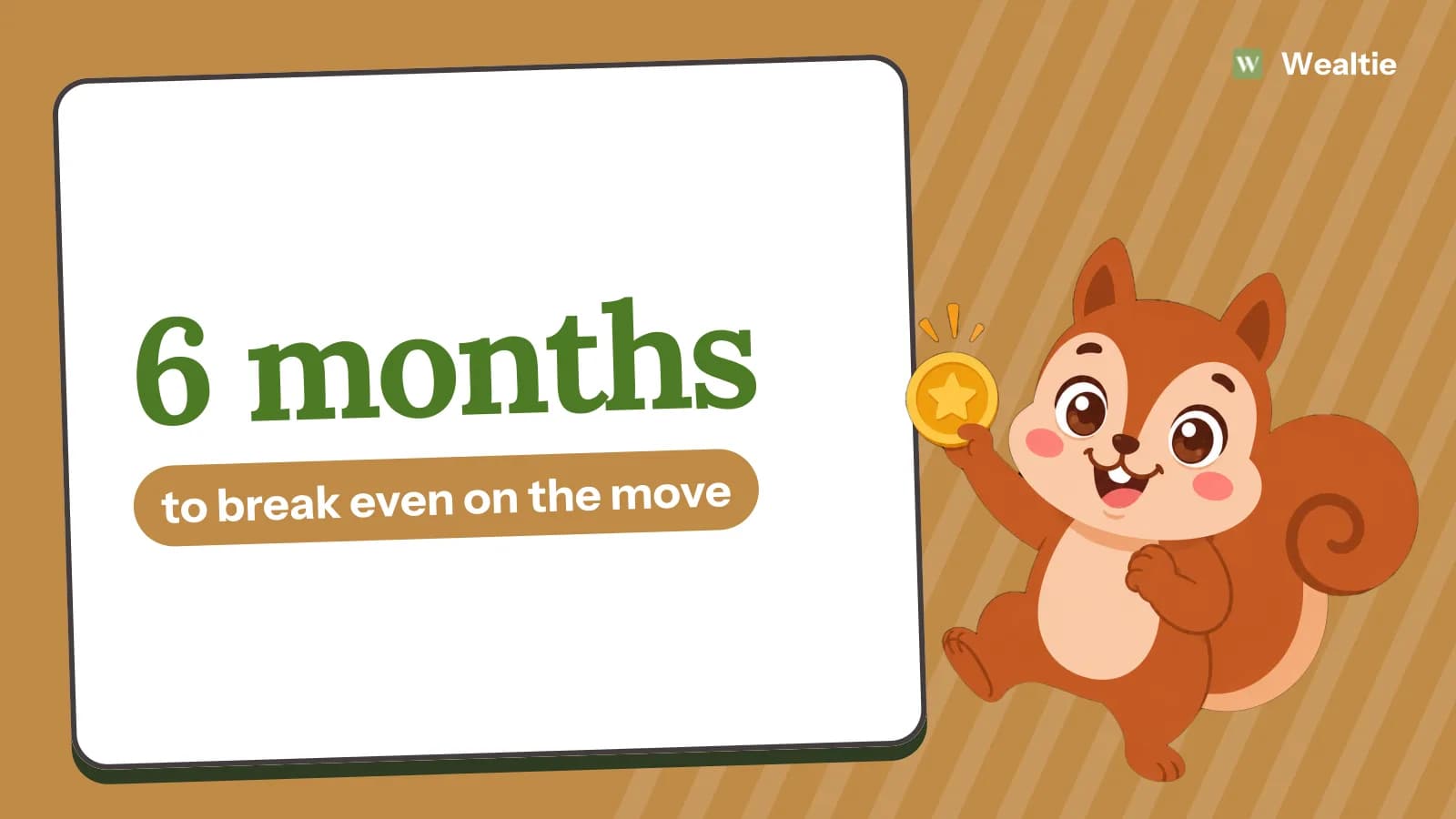
- In a worked example, rent falling from 1,400 to 1,050 saves 350 a month, and 2,100 of moving costs pays back in six months.
- Bills, local taxes and commuting can change too, so compare the full monthly cost.
- Downsizing also means fewer things, which can be sold to help pay for the move.
Should you downsize to save money?
It can be one of the biggest savings available, because housing is usually the largest monthly cost. But moving costs money too, so the real question is how quickly the saving pays for the move, and what else changes. Run the numbers before you decide, and be honest about how long you'd stay. A move that pays for itself in six months is a good deal if you'll be there for years, and a poor one if you're likely to move again soon. The sum below takes ten minutes with your own figures.
How do you work out the saving?
Compare the full monthly cost of each home, not just the rent or mortgage. Here's a worked example in round numbers that work in any currency:
| Monthly cost | Current home | Smaller home |
|---|---|---|
| Rent | 1,400 | 1,050 |
| Bills and local taxes | 250 | 250 |
| Total | 1,650 | 1,300 |
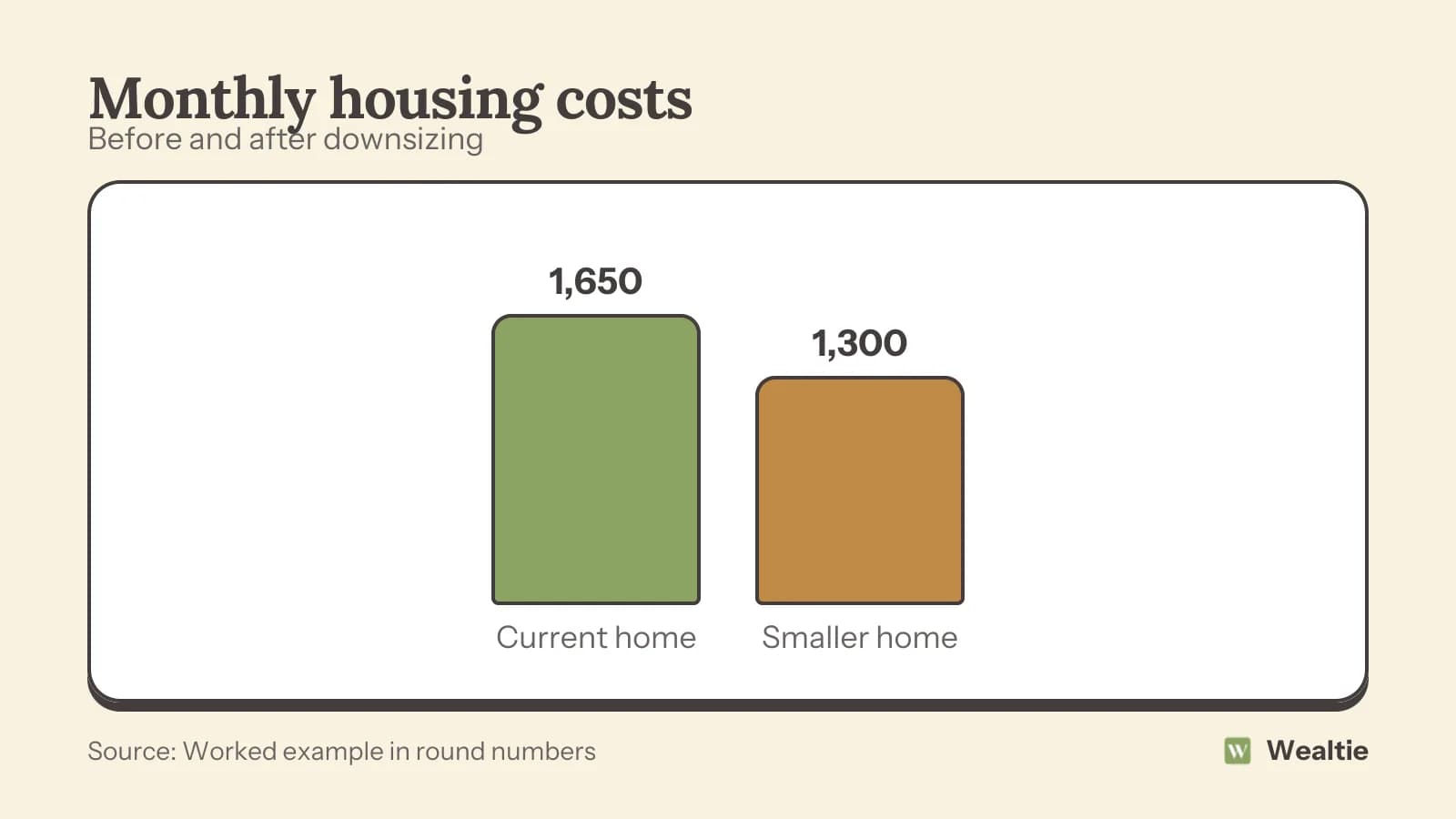
That's 350 a month saved. Ask the new landlord or agent about typical bills, or look at the home's energy rating, so the comparison is realistic. In practice, a smaller home often brings lower energy bills and sometimes lower local taxes too, which would add to the saving.
What does moving cost?
More than people expect. In this example: removal costs of 600, an overlap where you pay rent on both places of 1,000, and extras like cleaning, new curtains and connection fees of 500. That's 2,100.
Check notice periods on your current home before you sign anything new, since that sets the overlap. Divide the moving cost by the monthly saving to find the break-even point. 2,100 divided by 350 is six months. After that, the saving is yours. If you'd stay at least a year or two, it's clearly worth it in this example.
If you own your home, selling and buying involve much larger costs, like agent fees, legal costs and taxes. The break-even point can be years rather than months, so the sum matters even more.
What else changes?
Location and lifestyle. A cheaper home further out might mean a longer commute, which costs time and money. Count transport in the comparison, as well as how you'd feel about the change. How to budget in an expensive city covers the trade-off between rent and travel.
Space matters too. If you work from home, a smaller place without a spare room can be harder to live with. Think about what you use and what you'd miss, and visit the area at different times of day before committing. Some people downsize in stages, starting with a lodger or flatmate before deciding to move.
How do you make the move cheaper?
Sell what you won't need. Downsizing usually means less space for furniture and belongings, and selling them can pay for a good part of the move. Give notice on your current place to keep the overlap short, and compare removal quotes or use a van and friends for a short move.
Moving midweek or outside the busiest times of month can also be cheaper. Measure the new place and plan where furniture goes before the move, so you only pay to move what fits.
When is downsizing a good idea?
When your housing costs are stretching your budget, when you've got more space than you use, or when you want to free up money for a goal like clearing debt or saving for a deposit. It can also make sense in retirement, when a big family home is more than you need. Owners in that position can free up money that supports them for years.
It's less useful for a short-term problem, since moving costs are high and you'd lose the saving if you moved again soon.
What should you do with the saving?
Decide before you move. Put the monthly difference toward a goal, like an emergency fund, paying off debt or saving for a home. Without a plan, the extra money tends to drift into everyday spending. Setting up an automatic transfer on payday makes sure it goes where you intended. Review it after six months to check the move is delivering what you expected.
How do you plan a downsize in Wealtie?
Set your new monthly limit in the budget tracker based on the lower housing costs, and move the difference to a savings account as a transfer each payday, which isn't counted as spending. Your net worth tracker shows the saving building up.
Questions people ask
Often, because housing is usually the biggest cost. Compare the full monthly saving with the cost of moving to see how long it takes to pay back.
Divide the moving cost by the monthly saving. In a worked example, 2,100 of costs and 350 a month saved break even in six months.
Removal, any overlap in rent, cleaning, connection fees and new items, plus selling and buying costs if you own.
Decide before you move, and set up a transfer to savings or debt on payday so the difference doesn't drift into spending.
This article is general information, not financial, tax or legal advice. Your situation is your own; check the numbers that apply to you before you act on them.