Budgeting: Is buy now pay later a good idea? How to use it without trouble
Buy now pay later splits a purchase into instalments, often interest-free, and it's fine for something you could afford anyway if you track every payment. The trouble starts when several plans stack up, or a missed payment brings fees.
 By Wealtie Team · 3 min read
Key takeaways
- Buy now pay later splits a purchase into instalments, often without interest if you pay on time.
- In the UK, the FCA started regulating interest-free Deferred Payment Credit on 15 July 2026, and lenders must now check affordability.
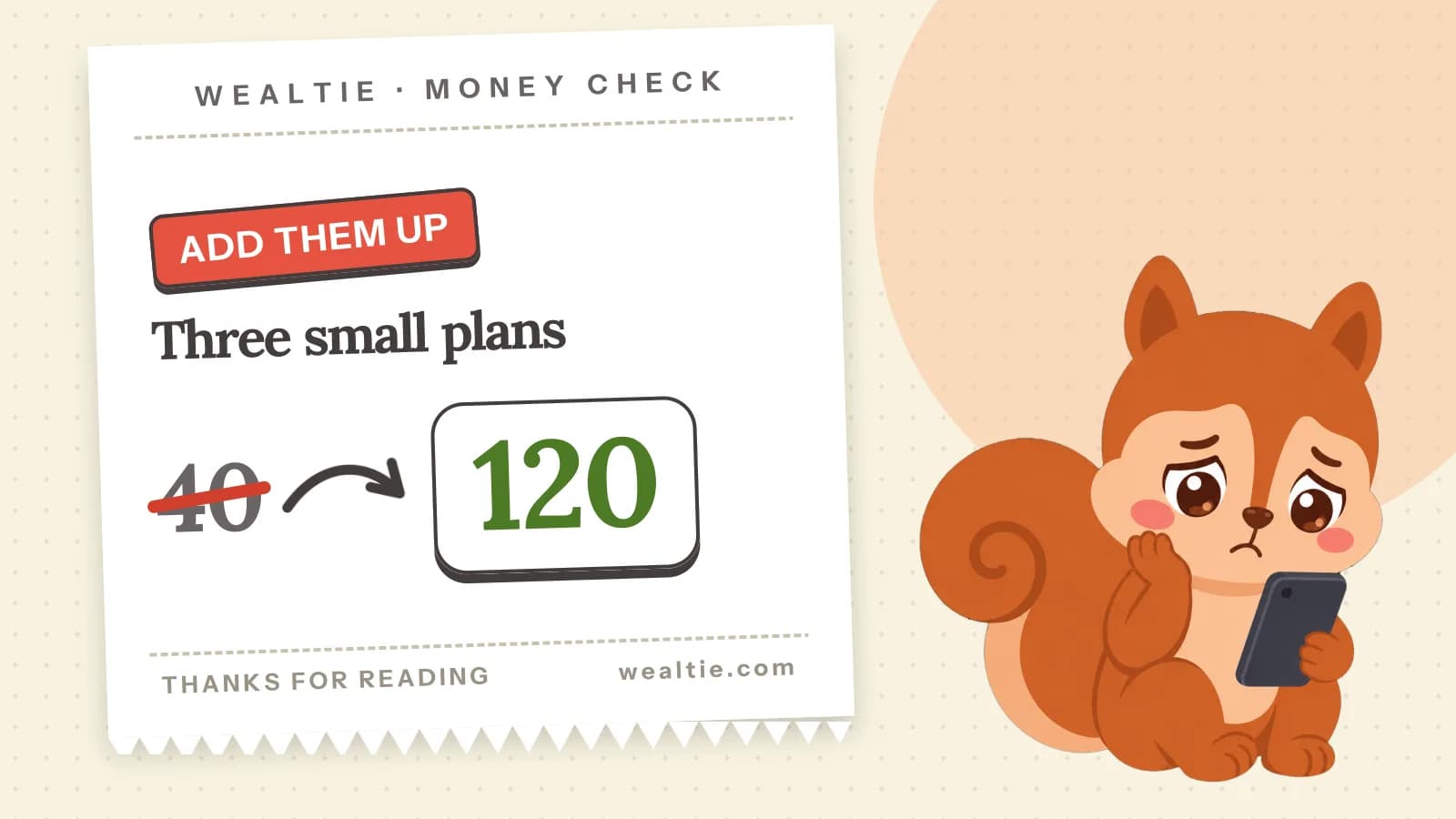
- Several small plans can add up to a large monthly commitment, as three plans of 30, 50 and 40 come to 120.
- Use it only for things you could afford outright, and log every instalment in your budget.
How does buy now pay later work?
You buy something and pay for it in instalments instead of all at once, often in three or four payments over a few weeks, or monthly over a longer period. Many plans charge no interest if you pay on time. Some charge interest from the start, or if you don't clear the balance within a set period.
It's offered at checkout online and in many shops, usually with a quick approval. That ease is what makes it useful, and also what makes it easy to overuse.
What changed in the UK in 2026?
The interest-free kind became regulated. The Financial Conduct Authority says it started regulating Deferred Payment Credit, often known as buy now pay later, on 15 July 2026. It defines that as interest-free credit repayable in 12 or fewer instalments, over 12 months or less.
Before that date, these agreements weren't regulated. Now lenders need to be authorised or have temporary permission, and the FCA says they need to check whether you can afford to repay before you take out an agreement. If you're unhappy with how a lender treats you, you can complain to the lender and then to the Financial Ombudsman Service. The FCA also says Section 75 of the Consumer Credit Act is available, so you may be able to get a refund from the lender if something goes wrong with the purchase.
Rules in other countries differ, so check what applies where you live.
When is buy now pay later fine?
When you could have paid for the item in full without it hurting, and you'll pay every instalment on time. In that case, spreading the cost over a few weeks costs nothing extra and might help with timing, like a purchase a week before payday.
Some people use it for a planned purchase they'd budgeted for, to keep cash in the account for a little longer. That works as long as the instalments are in the budget like any other bill.
When does it cause problems?
When it's used for things you couldn't otherwise afford, or when plans stack up. Here's a worked example in round numbers that work in any currency:
| Plan | Monthly instalment |
|---|---|
| Trainers | 30 |
| Jacket | 50 |
| Headphones | 40 |
| Together | 120 |
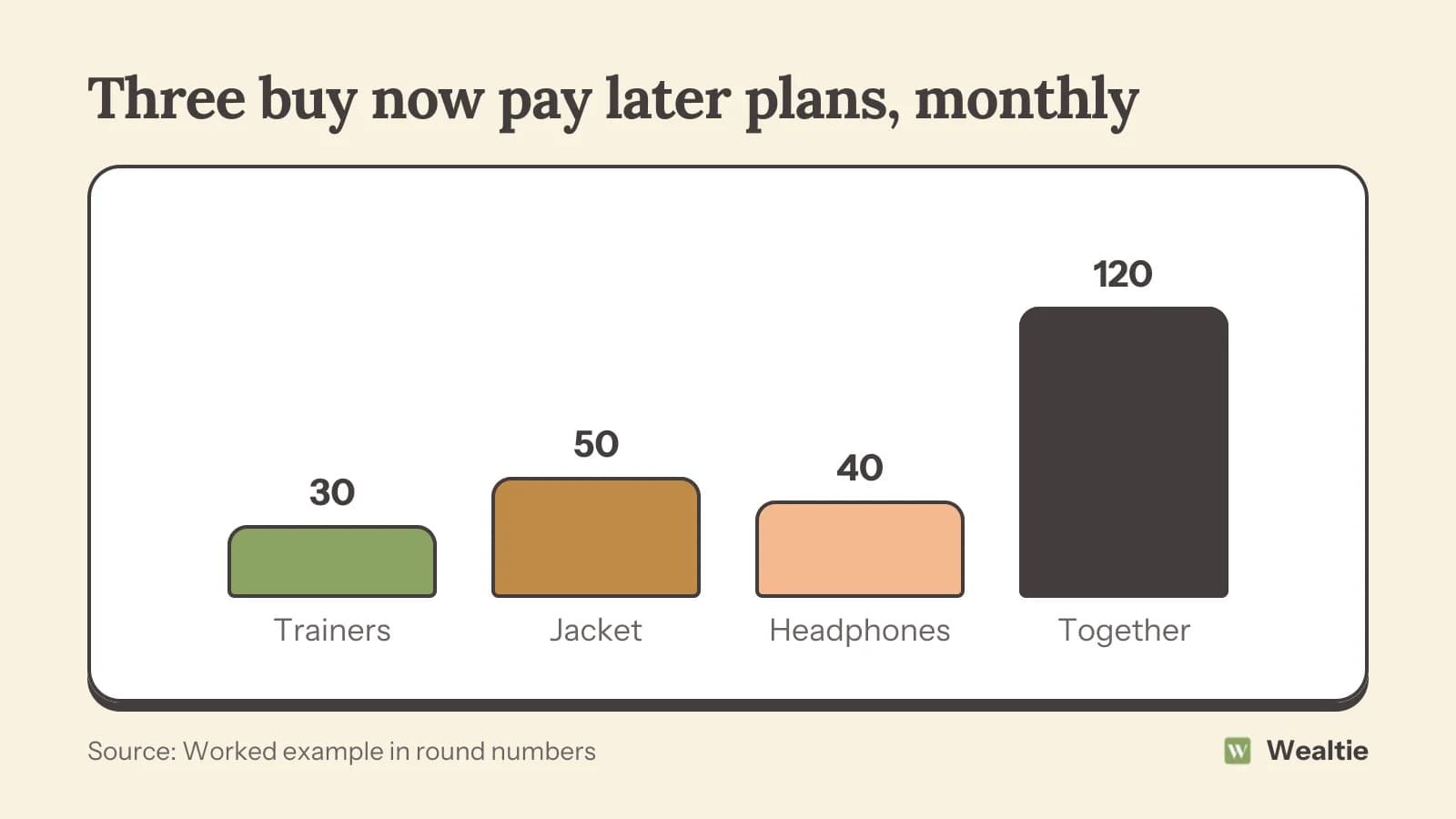
Each one looks small at checkout. Together, they're 120 a month, like a new phone contract you didn't plan for. And because they come from different providers, there's no single place where you see the total.
A missed payment can bring late fees, and some providers report missed payments to credit reference agencies. Check the terms of any plan you use.
How do you use it safely?
A few rules keep it under control:
- Only use it for something you'd buy outright anyway
- Keep to one plan at a time, or set a total limit for all instalments
- Pay from a debit card or bank account that has the money, not another credit card
- Put every instalment date in your calendar or budget
- Don't use it for everyday spending like groceries
If you notice you're using it more often, or juggling several plans, pause and add them all up. How to stop impulse buying has rules that help at checkout.
What if you're struggling with payments?
Contact the provider before you miss one. Ask what options they have, such as more time. If you've got several plans and other debts, free debt advice from a non-profit or government-backed service can help you work out an order. Avoid taking out a new plan or loan to pay an existing one.
How do you budget for instalments?
Treat each instalment as a bill. Add the total of all your plans to your monthly budget, so your spending money is what's left after them. If they come to 120, that's 120 less to spend this month. How to make a budget shows where bills fit.
When a plan ends, don't start a new one straight away. Move the amount to savings for a month or two, and you'll often find you didn't miss it.
How do you track buy now pay later in Wealtie?
Log the full purchase when you make it, in the right category, so your expense categories show what you bought. Or log each instalment as it's paid if you'd rather the budget matched your bank. If a plan's instalments are regular, a recurring transaction with an end after a set number of payments shows them in the recurring list until it's paid off. The bill tracker page explains how.
Questions people ask
It can be for something you could afford outright, as long as you pay every instalment on time. It causes problems when several plans stack up or it's used for everyday spending.
Yes. The FCA started regulating interest-free Deferred Payment Credit on 15 July 2026, and lenders must now check whether you can afford to repay.
It can. Some providers report missed payments to credit reference agencies, so check the terms of each plan.
You may be charged a late fee, and it can be reported to credit reference agencies. Contact the provider before you miss a payment to ask about options.
Sources
- Buy Now Pay Later · Financial Conduct Authority · checked 9 November 2026
This article is general information, not financial, tax or legal advice. Your situation is your own; check the numbers that apply to you before you act on them.



