Budgeting: How to plan a spring break budget as a student
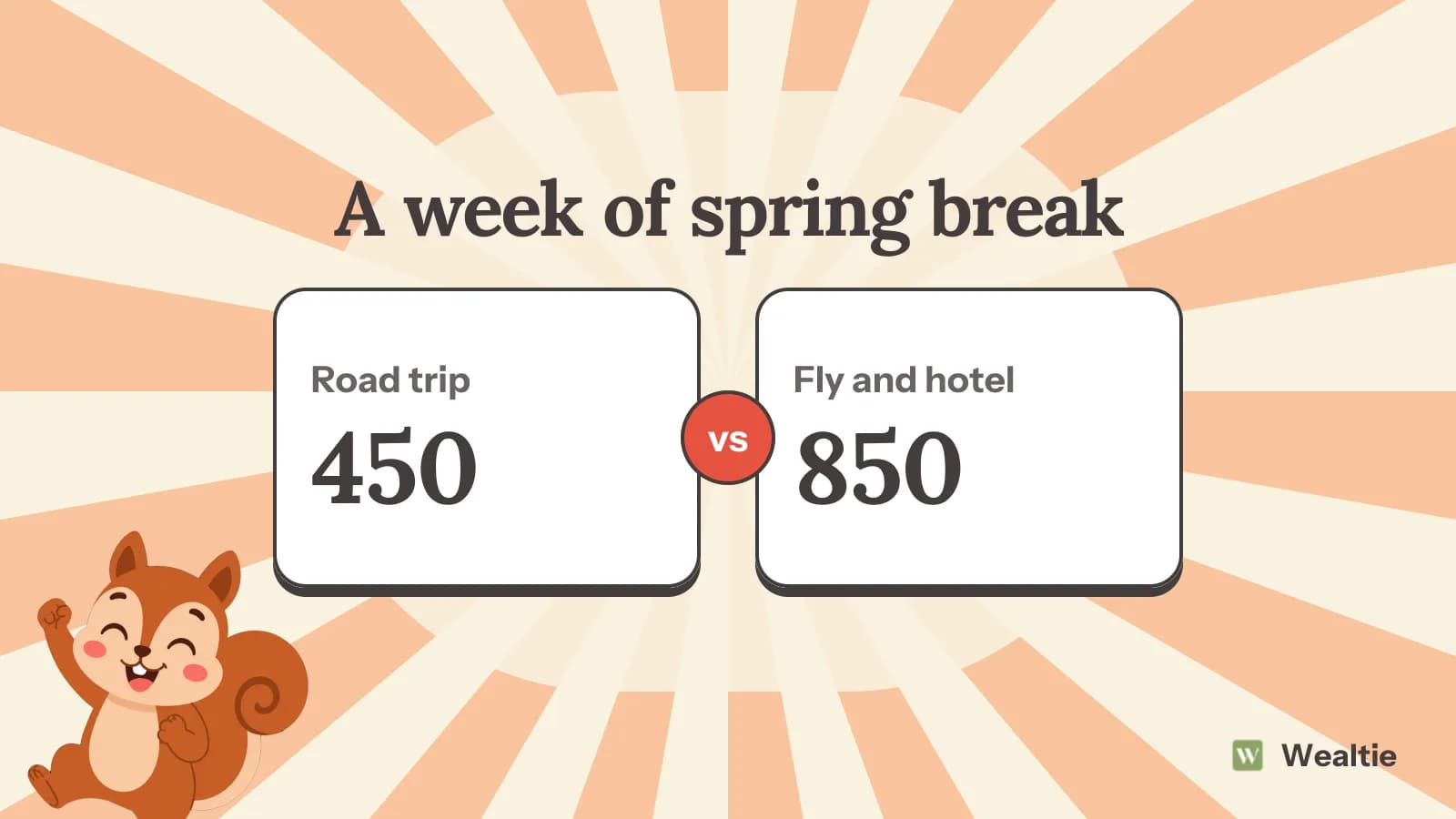
A spring break budget is mostly travel and accommodation, so splitting rooms with friends and booking early make the biggest difference. In a worked example, a week away costs 850 per person, or 450 with shared rooms and a road trip.
 By Wealtie Team · 3 min read
Key takeaways
- A spring break budget is mostly travel and accommodation.
- Sharing rooms and travelling by car or bus cut the cost a lot.
- Set a daily spending limit for food and nights out.
- A staycation or local trip can be just as fun for much less.
What does a spring break budget cover?
Spring break is a highlight of the year for many students, whether it's a beach trip, a city break, a road trip with friends or a week at home. It can also be expensive, especially at popular destinations where prices rise for the week. A spring break budget helps you choose a trip you can afford and keeps spending under control while you're away, so you don't come back to a maxed-out card.
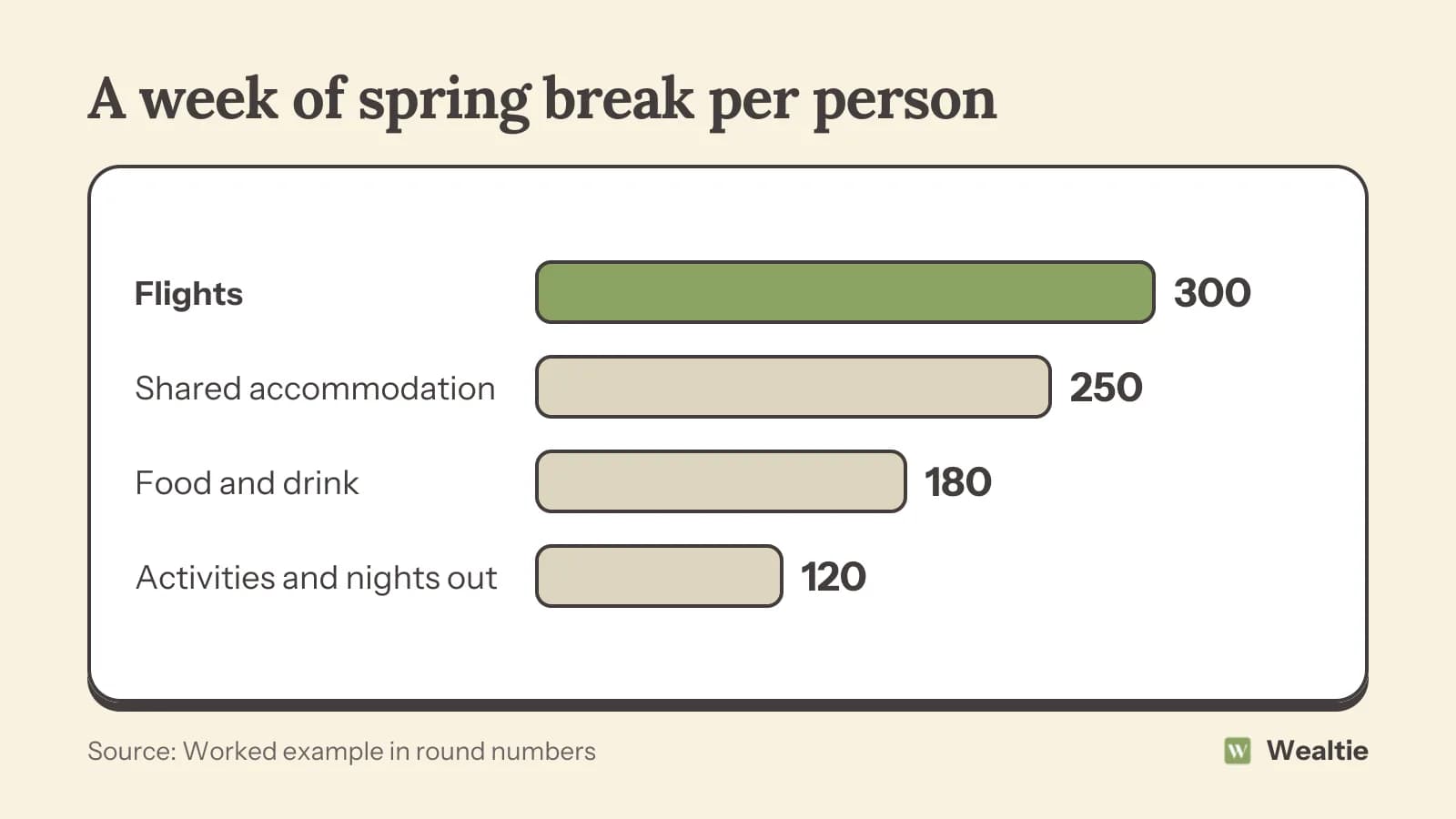
The biggest costs are usually travel and accommodation, followed by food, drinks and activities. Here's a worked example of a week away per person, in round numbers that work in any currency:
| Cost | Per person |
|---|---|
| Flights | 300 |
| Shared accommodation | 250 |
| Food and drink | 180 |
| Activities and nights out | 120 |
| Total | 850 |
A road trip with friends to a nearby destination, sharing fuel and a rental, might cost about 450 per person. The choice of destination and how you get there make the biggest difference.
How do you plan a cheaper spring break?
Book early
Flights and accommodation for spring break weeks rise as dates get closer. Booking a few months ahead usually saves money. How to save money on flights has more tips.
Travel by car, bus or train
Driving with friends and splitting fuel, or taking a bus or train, can cost far less than flying. How to plan a road trip budget covers sharing costs on the road.
Share accommodation
Splitting a rental or hotel room between several friends cuts the cost per person a lot. Holiday rentals with kitchens also save on food.
Avoid the busiest hotspots
Popular spring break destinations charge peak prices. A less famous beach or city can offer the same fun for less.
Cook some meals
Having breakfast and some dinners in your accommodation saves money for nights out.
How do you split costs with friends fairly?
Agree on the budget before booking, so nobody feels pressured into a trip they can't afford. Use a shared note or app to track who paid for what, and settle up regularly. Decide upfront how you'll split shared costs like fuel, groceries and the rental. How to split travel costs with friends covers keeping it fair.
How do you stay on budget while away?
Set a daily limit
Decide how much you'll spend each day on food, drinks and activities, like 40, and stick to it. How to set a daily travel budget covers working out an amount.
Take cash for nights out
Taking a set amount of cash for evenings makes it easier to stop when it's gone.
Look for free activities
Beaches, hikes, markets and free events cost nothing and are often the best memories.
Watch for card fees abroad
If you're travelling internationally, foreign transaction fees can add up. Use a card without fees if you can.
What are cheaper spring break alternatives?
A staycation, a camping trip or visiting a friend's hometown can be just as fun for a fraction of the cost. Some students use spring break to work extra shifts and save, then plan a bigger summer trip. How to plan a staycation budget has ideas. How to make a college student budget covers fitting trips into a student budget.
How do you avoid spring break debt?
Save for the trip in the months before, rather than putting it on a credit card. Dividing the total by the number of months until spring break gives you a monthly saving target. If you do overspend, how to recover from holiday spending covers getting back on track.
Think about what you want from the week before choosing a destination. If it's time with friends, a cheap cabin or a friend's family home might be as fun as a resort. If it's sun and beaches, a less famous coastal town can be much cheaper than the best-known spots. Talking about priorities as a group avoids paying for a trip that's more expensive than anyone needed.
Safety matters as much as money. Keep a little emergency money separate from your daily spending, share your plans with someone at home and make sure everyone knows where you're staying. Travel insurance can also be worth it, especially if you're travelling abroad.
If money is tight this year, there's no shame in skipping a big trip. Working extra shifts during spring break, then planning a summer trip with the savings, can be a smart move. Many students find a cheaper break at home, with day trips and time with friends, is just as restful.
Whatever you choose, agree the plan early so everyone can save, and keep the receipts and shared costs organised so settling up afterwards is quick and friendly.
How can Wealtie help you plan spring break?
Set a budget for the trip and log travel, accommodation and daily spending in their own expense categories. Checking your remaining budget each day helps you enjoy the week without overspending.
Questions people ask
In a worked example, a week away cost about 850 per person with flights, or 450 with a shared road trip.
Book early, travel by car, bus or train, share accommodation, avoid peak hotspots and cook some meals.
Agree the budget before booking, track who pays for what in a shared note or app and settle up regularly.
Set a daily spending limit, take cash for nights out, look for free activities and avoid card fees abroad.
This article is general information, not financial, tax or legal advice. Your situation is your own; check the numbers that apply to you before you act on them.