Multi-currency & travel: How to set a daily travel budget, and stick to it
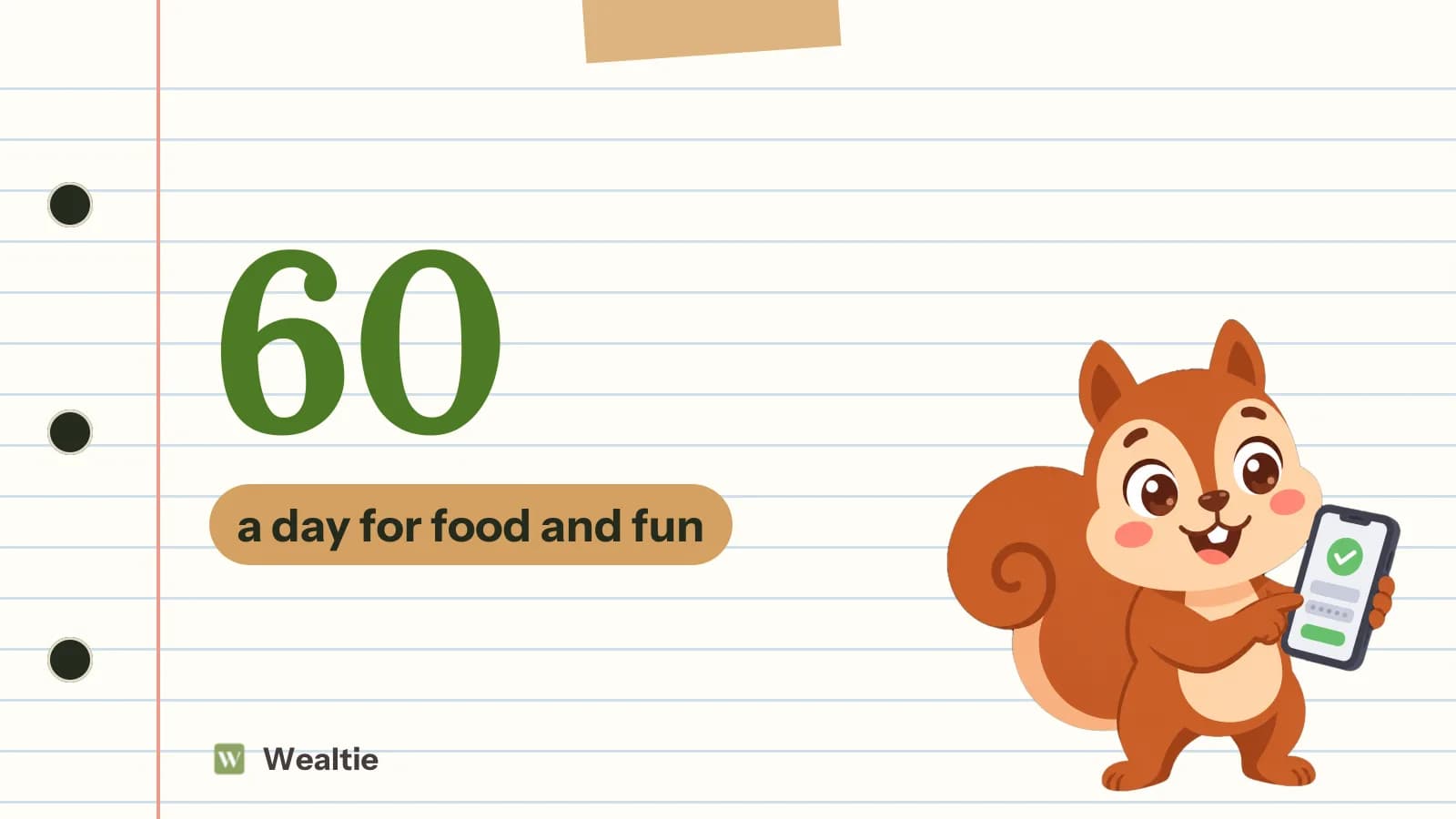
To set a daily travel budget, take your total trip money, subtract the big costs you've already paid, and divide what's left by the number of days. In a worked example, 2,000 for a 14-day trip with 1,160 already spent on flights and rooms leaves 60 a day for food, transport and fun.
 By Wealtie Team · 3 min read
Key takeaways
- A daily travel budget is what's left after big costs, divided by the days of your trip.
- In a worked example, a 2,000 trip with 1,160 of big costs leaves 60 a day.
- Check your spending every day or two, and carry over what you don't use.
- Keep a small buffer outside the daily budget for surprises.
How do you set a daily travel budget?
Start with your total, take off what's already paid, and divide the rest by your days away. A daily travel budget turns a big trip total into a simple number you can check against each evening. It shows whether you can afford a nice dinner tonight or should keep tomorrow cheap, without having to work out the whole trip each time.
How does the calculation work?
Here's a worked example for a 14-day trip with 2,000 in total, in round numbers that work in any currency:
| Amount | |
|---|---|
| Total trip money | 2,000 |
| Flights, already paid | 500 |
| Accommodation, already paid | 660 |
| Left for daily spending | 840 |
| Daily budget, 14 days | 60 |
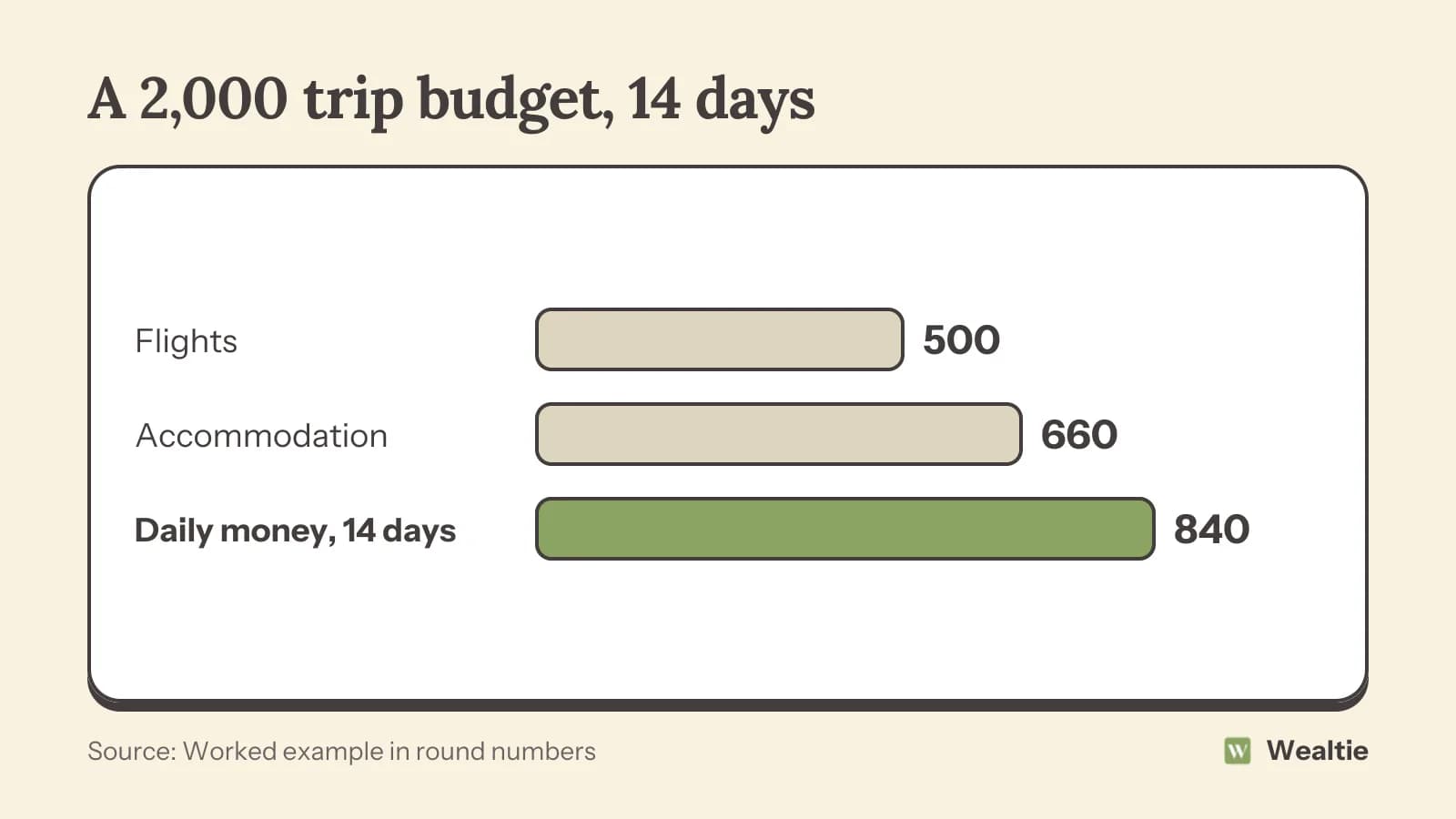
In this example, 60 a day covers food, local transport, activities and small extras. Your own figure depends on your total and what you've paid upfront.
What should the daily budget cover?
Everything you'll spend day to day:
- Meals, snacks and drinks
- Local transport, like buses, trains and taxis
- Entry fees and activities
- Small purchases, like toiletries, laundry and souvenirs
- Data or a local SIM, if not already bought
Big one-off costs, like a day trip, a tour or a show, are easier to handle separately. Either set them aside before you work out the daily figure, or plan cheaper days around them.
Pre-paying where it helps
Some costs are cheaper booked ahead, like airport transfers, rail tickets or popular attractions. Paying for these before you go lowers your daily figure and stops the biggest costs landing on a single day. Remember to subtract them from the total first.
Keep a buffer
Hold back a small buffer outside the daily budget, like 100 for a two-week trip, for things you can't predict: a missed bus, a pharmacy visit or a taxi in the rain. If you don't use it, it's a bonus at the end.
Should every day be the same?
No. A daily budget is an average. Some days will cost more, like travel days or a special dinner, and some will cost less, like a day at the beach. What matters is the total over the trip. If you spend 80 one day, aim for 40 the next, and your average stays on track. Planning a cheap day after an expensive one, like a picnic and a free museum after a big dinner, keeps the average steady without much effort.
If you're visiting several places with different costs, set a separate daily figure for each. A city might need more than a quiet town, and a cheaper country can balance a pricier one.
How do you stick to a daily budget?
Check in often. Look at what you've spent every day or two, while it's fresh. Many travellers find a quick check each evening is enough. If you're under budget, carry the difference forward. If you're over, plan a cheaper day. A small notebook or a note on your phone works if you don't want to use an app.
Other habits that help:
- Withdraw cash in planned amounts rather than whenever you run low
- Eat one main meal out and keep the others simple
- Use public transport rather than taxis where it's safe
- Look for free activities, like walking tours, parks and markets
How much cash to travel with and is it cheaper to withdraw money abroad cover managing cash.
What about exchange rates?
Work out your daily budget in the local currency, so you're not converting every price in your head. Check the rate before you go, and round to a simple figure. Rounding in a way that slightly overstates prices keeps you on the safe side. If the rate changes a lot during your trip, adjust your daily figure. How to budget for a trip abroad covers currency and travel money.
What if you run out early?
Look at what's left and the days remaining, and work out a new daily figure. Cutting back for a few days, using your buffer, or skipping a planned activity is usually enough. That's why checking early matters: a small adjustment in the first week is much easier than a big one at the end. If you finish with money left, it can start your next trip fund.
How do you track a daily travel budget in Wealtie?
Add an account in the local currency, so spending is recorded in the money you paid in, with totals converted into your display currency. Log costs in your expense categories as you go. Pro lets you set a daily or weekly period in the budget tracker, so Budget Health shows whether each day is on pace.
Questions people ask
Take your total trip money, subtract big costs already paid, and divide the rest by your days away.
Whatever's left after flights and accommodation, divided by your days. In a worked example, 60 a day.
Meals, local transport, activities, small purchases and data. Big one-off costs are easier to plan separately.
Spend less the next day or two, so your average stays on track, and use your buffer if needed.
This article is general information, not financial, tax or legal advice. Your situation is your own; check the numbers that apply to you before you act on them.