Budgeting: How to plan a staycation budget that still feels like a holiday
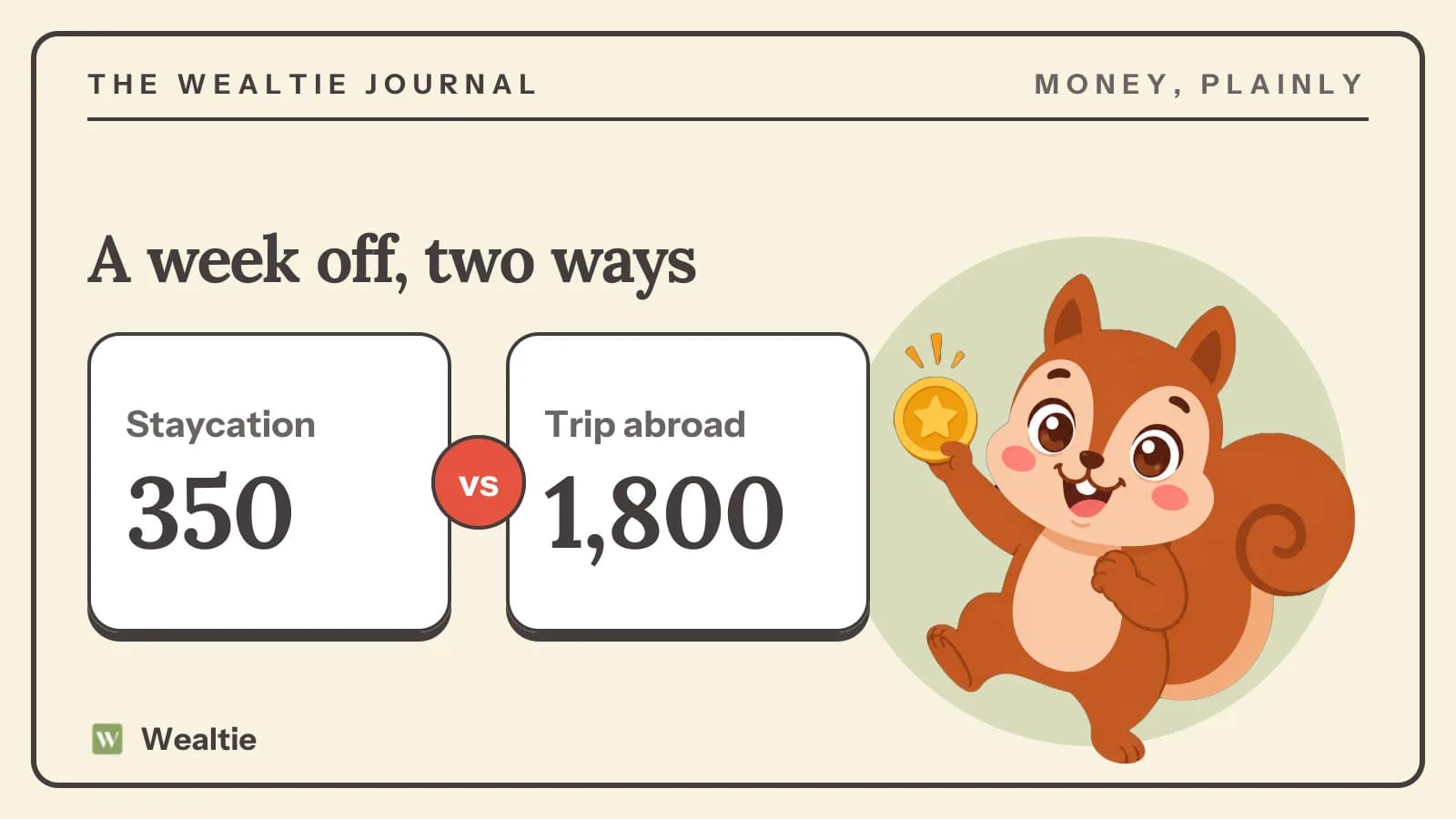
A staycation budget works best with a set total for the week, a plan of days out and treats, and a few rules that make it feel different from a normal week. In a worked example, a week at home for two costs about 350, against 1,800 for a trip abroad.
 By Wealtie Team · 3 min read
Key takeaways
- Set a total for the staycation, so a week at home doesn't turn into a week of unplanned spending.
- In a worked example, a week at home for two costs about 350, against 1,800 for a trip abroad.
- Plan a mix of free days and a few paid treats, so it feels like a holiday.
- Watch for costs that creep in, like takeaways every night or online shopping out of boredom.
How do you plan a staycation budget?
Decide the total, plan the week, and make a few changes so it feels like a break. A staycation, a holiday spent at home or close to it, can cost a fraction of a trip away, and it saves the time and stress of travel too. But without a plan, a week off at home can turn into a week of takeaways, impulse shopping and expensive days out that add up to more than expected.
What does a staycation cost?
Here's a worked example for two people, in round numbers that work in any currency:
| Cost | Staycation | Trip abroad |
|---|---|---|
| Travel and accommodation | 0 | 1,200 |
| Days out | 150 | 200 |
| Meals out | 100 | 300 |
| Treats and activities | 100 | 100 |
| Total | 350 | 1,800 |
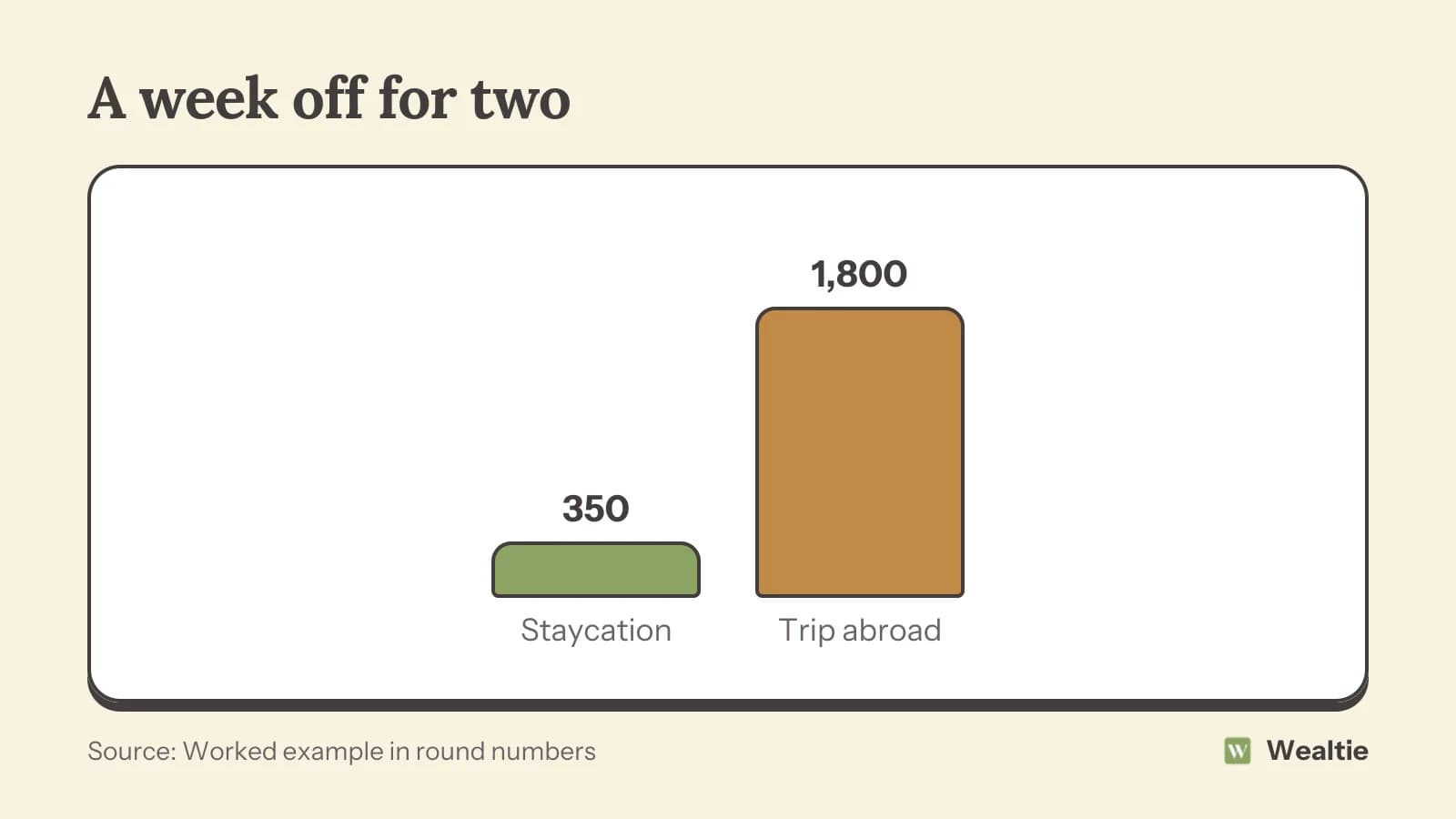
The saving comes mostly from travel and accommodation. You still get time off, days out and some treats. If you're working from home, a staycation needs a clear start and end, or it can blur into normal work weeks.
How do you make it feel like a holiday?
Treat it differently from a normal week off. A few ideas:
- Turn off work emails and put an out-of-office on
- Do the cleaning and chores before it starts, so the week is free
- Plan one or two outings in advance, so you have things to look forward to
- Explore your own area like a tourist, with places you've never been
- Try a new café, walk or market each day
- Have a "holiday breakfast" each morning, something you'd normally only have away
The changes are small, but they make the week feel like a break rather than time at home. Writing a simple plan for the week, with one highlight each day, helps you use the time well instead of drifting.
What are good low-cost staycation days?
Plenty, depending on where you live:
- A day at the beach, a lake or in the countryside
- A long walk or bike ride somewhere new
- Free museums, galleries and gardens
- A picnic in a park you've never visited
- A local festival or market
- A film marathon at home with snacks
Mix free days with one or two paid ones, like a boat trip, a theme park or a nice meal out. The paid days feel more special when they're the highlight rather than every day. Many attractions are cheaper booked online or on weekdays, and local residents sometimes get discounts. If you've got children, check what the council or library runs during school holidays, since many activities are free.
What costs creep in?
The small ones. Takeaways because you're on holiday, coffee and snacks on every outing, impulse online shopping when you're bored, and expensive last-minute plans. Set a daily amount for food and treats, and plan most meals as you would on a holiday rental: some cooked at home, some eaten out.
Petrol and parking for day trips add up too, so count them in the total. Public transport day tickets can be cheaper than driving and parking for city days out.
How do you plan the week?
Write a rough plan with one highlight a day and a budget next to each. For example: a beach day with a picnic on Monday, a free museum on Tuesday, a lazy day at home on Wednesday, a paid outing on Thursday, a meal out on Friday. Leave a couple of days unplanned for rest or weather. A plan stops the week slipping away, and it shows you at a glance whether the total fits. Check the weather forecast at the start of the week and swap days around so the outdoor plans get the best weather.
Should you stay somewhere nearby for a night or two?
It can make a staycation feel more like a holiday, without the cost of a full trip. A night or two somewhere within driving distance, at a campsite, cabin or cheap hotel, adds variety. Count it in the total, and book early for better prices. Midweek stays are often cheaper than weekends.
How do you save for it?
Even a staycation benefits from a small savings pot, so the week's spending doesn't hit one month's budget. A 350 staycation saved over three months is about 117 a month. If you were planning a trip abroad and chose a staycation instead, consider putting some of the difference toward a goal, like an emergency fund or next year's trip.
How to save for a vacation covers saving for a bigger trip later.
How do you track a staycation in Wealtie?
Make a Holiday category and log the week's costs there, so your expense categories show the total. A monthly limit in the budget tracker keeps the rest of the month on track, and Budget Health warns you mid-month if your pace would take you over.
Questions people ask
About 350 for a week at home for two in a worked example, against 1,800 for a trip abroad.
Switch off work, do chores beforehand, plan a few outings, explore your area like a tourist and treat yourself to small holiday habits.
Beaches, walks, free museums, picnics, local festivals and film nights at home, mixed with one or two paid days out.
Set a total and a daily amount for food and treats, and watch for takeaways and impulse shopping.
This article is general information, not financial, tax or legal advice. Your situation is your own; check the numbers that apply to you before you act on them.