Multi-currency & travel: How to save money on flights without spending hours searching
Here's how to save money on flights: be flexible on dates and airports, compare the total price including bags and seats, and book when fares are reasonable instead of waiting for a perfect deal. Fees can turn a cheap fare into an expensive one.
 By Wealtie Team · 3 min read
Key takeaways
- Flexible dates and nearby airports usually save more than any booking trick.
- Compare the total price, including bags, seats and transfers, not the headline fare.
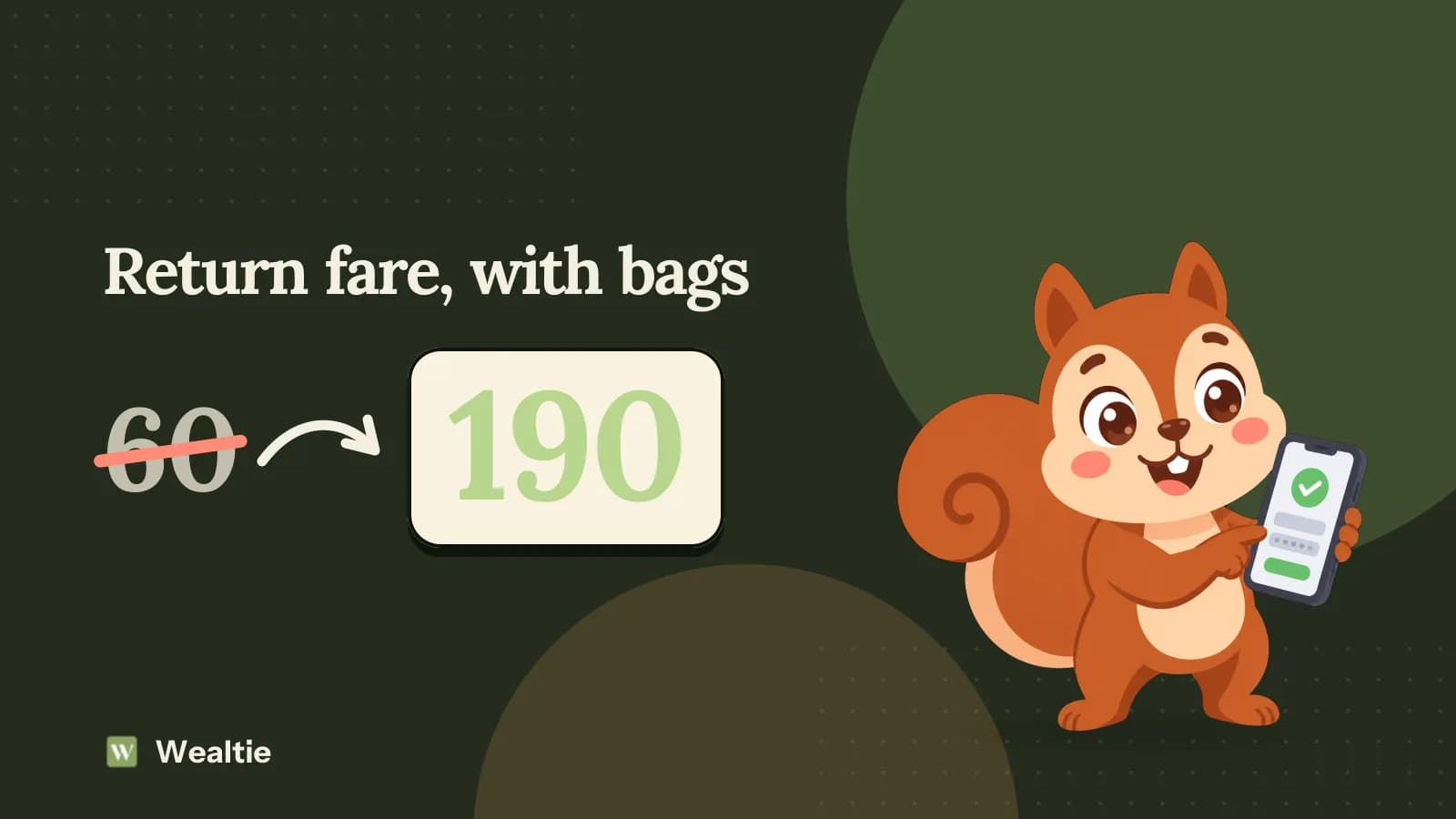
- In a worked example, a 60 return fare becomes 190 with a bag and seat each way and a long transfer, more than a 170 fare that includes a bag.
- Set a price alert and book when the fare is reasonable for your route, instead of waiting for a perfect deal.
How do you save money on flights?
Be flexible, compare the full price and don't wait too long. Most of the savings come from flying on a different day or from a different airport. Tricks like clearing your browser history matter far less than people think. What does matter is comparing like with like, including fees.
Where do the biggest savings come from?
Flexibility, mostly. Prices can change a lot between days of the week, times of day and nearby airports. Checking two or three options takes a few minutes and is where most savings are found. A few habits help:
- Use the calendar or month view on comparison sites to see which days are cheaper
- Check every airport within reach, including smaller ones
- Look at flights a day or two either side of your ideal dates
- Consider flying into one city and out of another
Flying midweek, or very early or late in the day, is often cheaper, though it varies by route. If you have to travel on fixed dates, like school holidays, book earlier. Fares for busy dates tend to rise as seats fill.
How do fees change the real price?
They can double it. Budget airlines often show a low headline fare and charge for everything else. Here's a worked example for a return trip, in round numbers that work in any currency:
| Line | Budget fare | Standard fare |
|---|---|---|
| Fare | 60 | 150 |
| Checked bag, each way | 80 | Included |
| Seat selection, each way | 20 | 20 |
| Getting to a further airport | 30 | 0 |
| Total | 190 | 170 |
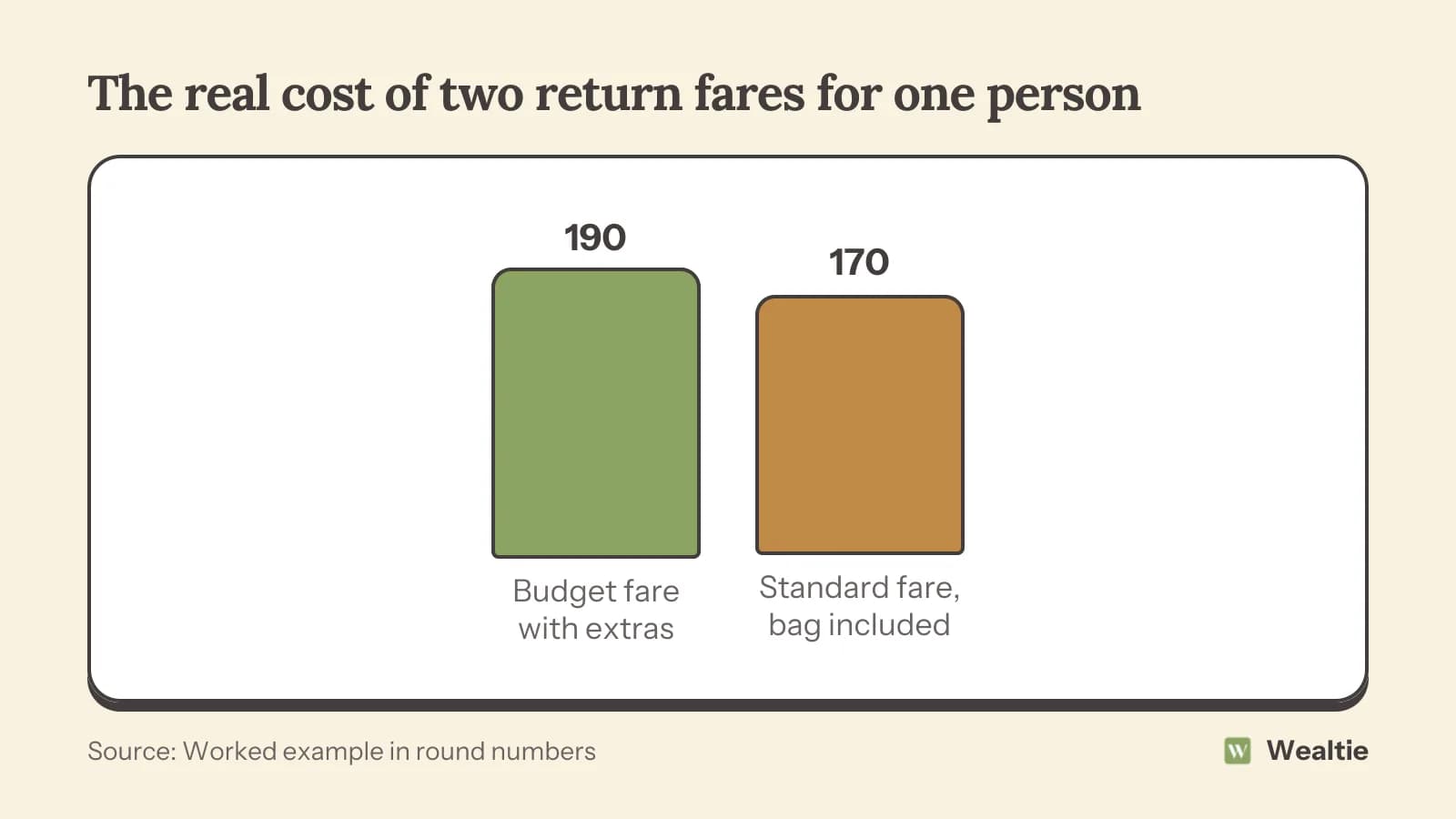
The cheap fare ends up costing more. Before you book, add up the bag, seats, transfers and any card fees, and compare totals. If you can travel with only a small bag, the budget fare might win. Read the bag size rules carefully, though. A bag that's slightly too big at the gate can cost more than booking a checked bag in advance.
When should you book?
When the fare is reasonable for your route. Nobody can reliably predict the lowest price, and waiting for a perfect deal often means paying more as the date gets closer.
Set a price alert on your route a few months ahead. You'll get a sense of what's normal, and you'll know a good fare when you see one. Book once it drops into that range. For long-haul or busy holiday periods, earlier is usually safer.
Are there other ways to cut the cost?
A few, depending on how you travel:
- Loyalty points and card rewards, if you'd use the card anyway and clear it every month
- Packages, where a flight and hotel together can cost less than booking separately
- Travelling light, which avoids bag fees entirely
- Bringing food and an empty water bottle, since airport prices are high
Students, young people and older travellers sometimes get discounted fares, or discounts on the train to the airport, so check whether you qualify. Watch out for paying in a different currency at checkout. If a booking site offers to charge you in your home currency, compare it with paying in the airline's currency and letting your card convert. Foreign transaction fees explains why the local currency often wins.
What should you check before booking?
The fare rules. Can you change or cancel, and what does it cost? Is a bag included? What time does the flight land, and how will you get from the airport? An early flight that needs a taxi because no trains run at that hour can cost more than a later one.
Check the connection time on any itinerary with a change. A cheap route with a 45-minute connection at a big airport can cost you a missed flight. Consider travel insurance when you book, not just before you go, so cancellation is covered.
How do you fit flights into a trip budget?
Pay with a card that offers purchase protection where you can. Book flights first, since they're often the biggest fixed cost, then plan the rest around what's left. How to budget for a trip abroad has a worked example, and how to save for a vacation helps you get the money together.
How do you track travel spending in Wealtie?
Log flights and other travel costs in a Travel category, so the trip's full cost is in one place. Your expense categories show the total, and if you're paying in another currency, each account keeps its own currency, with totals converted into your display currency at each day's rate. The multi-currency budget app covers 68 currencies on the Free plan.
Questions people ask
Be flexible on dates and airports, use calendar views on comparison sites, and set a price alert. Book when the fare is reasonable for your route.
Not always. Once bags, seats and travel to a further airport are added, a budget fare can cost more than a standard one.
When the fare is reasonable for your route, which a price alert helps you judge. For busy dates, booking earlier is usually safer.
There's little evidence it helps much. Flexibility on dates and airports, and comparing total prices, make a bigger difference.
This article is general information, not financial, tax or legal advice. Your situation is your own; check the numbers that apply to you before you act on them.