Multi-currency & travel: How to make a road trip budget: fuel, beds, food and a buffer
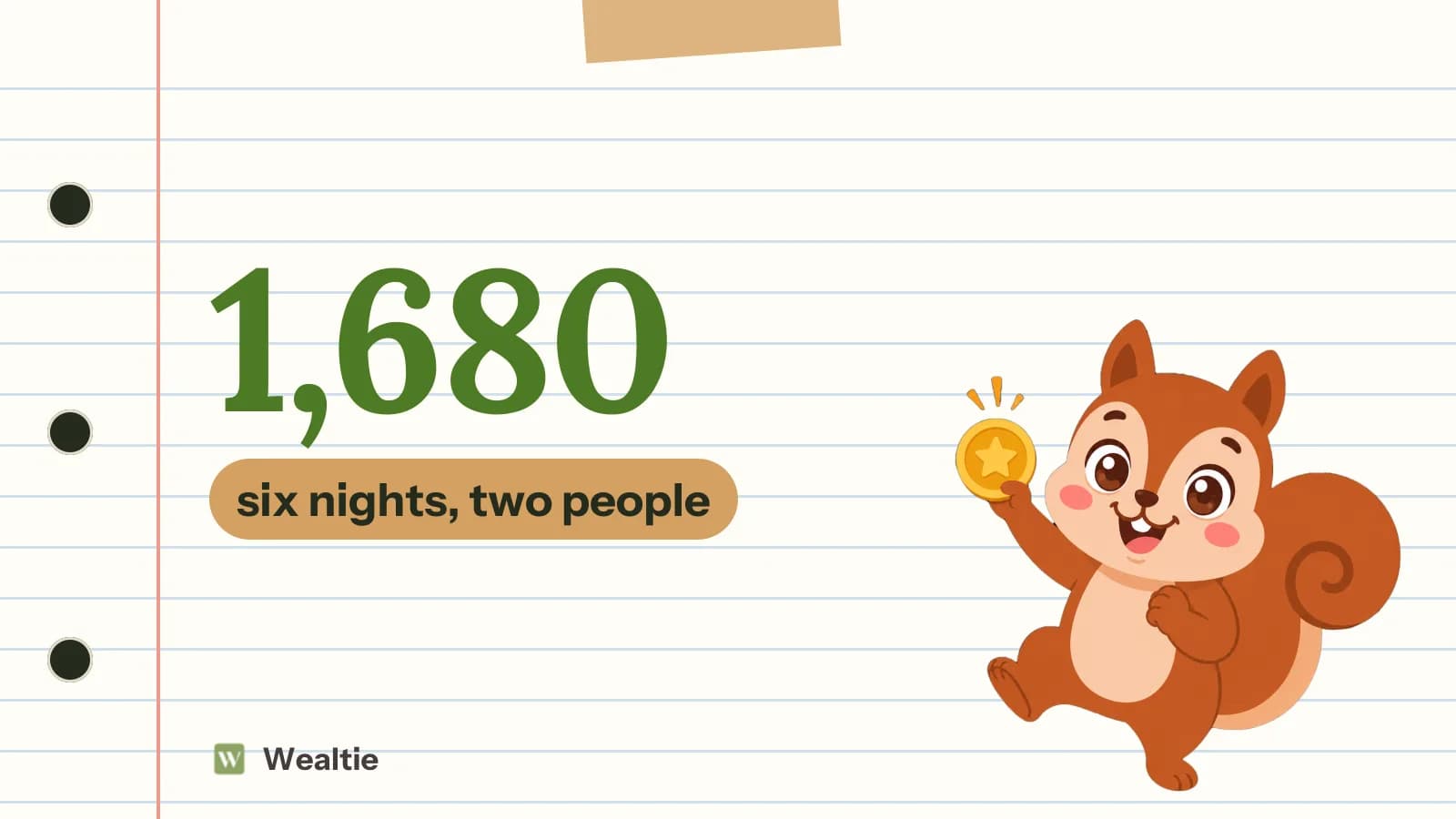
A road trip budget starts with fuel, worked out from distance and your car's consumption, then adds beds, food, tolls, activities and a buffer. A six-night trip for two over 1,800 km comes to about 1,680 in a worked example.
 By Wealtie Team · 3 min read
Key takeaways
- Work out fuel by multiplying the distance by your car's consumption and the local fuel price.
- In a worked example, 1,800 km at 7 litres per 100 km and 1.80 a litre comes to about 227 of fuel.
- Beds and food usually cost more than fuel, so they're where the budget can move most.
- Add a buffer of about a tenth for parking, a detour or a night that costs more than planned.
How do you make a road trip budget?
Start with the route, then work out each cost in turn: fuel, places to stay, food, tolls and parking, things to do, and a buffer. Fuel is the one people focus on, but it's rarely the biggest line.
How do you work out the fuel cost?
Multiply the distance by your car's consumption and the fuel price. For a 1,800 km round trip, in a car using 7 litres per 100 km, with fuel at 1.80 a litre:
1,800 ÷ 100 × 7 = 126 litres. 126 × 1.80 = about 227.
If you think in miles: divide the distance by your car's miles per gallon and multiply by the price per gallon. 1,100 miles at 30 mpg is about 37 gallons.
Electric cars work the same way: multiply the distance by the car's consumption in kWh per 100 km and the charging price, which can differ a lot between home charging and fast chargers.
Use your car's real consumption, not the brochure figure, and add a little for a loaded car and motorway speeds. Check fuel prices along your route, since they can differ a lot between countries or regions. How to save money on gas has tips for the driving itself.
What does a full road trip budget look like?
Here's a six-night trip for two, in round numbers that work in any currency:
| Line | Amount |
|---|---|
| Fuel (1,800 km) | 227 |
| Accommodation, 6 nights at 90 | 540 |
| Food, 6 days for two at 40 each | 480 |
| Activities and entry fees | 200 |
| Tolls and parking | 80 |
| Buffer, about a tenth | 153 |
| Total | 1,680 |
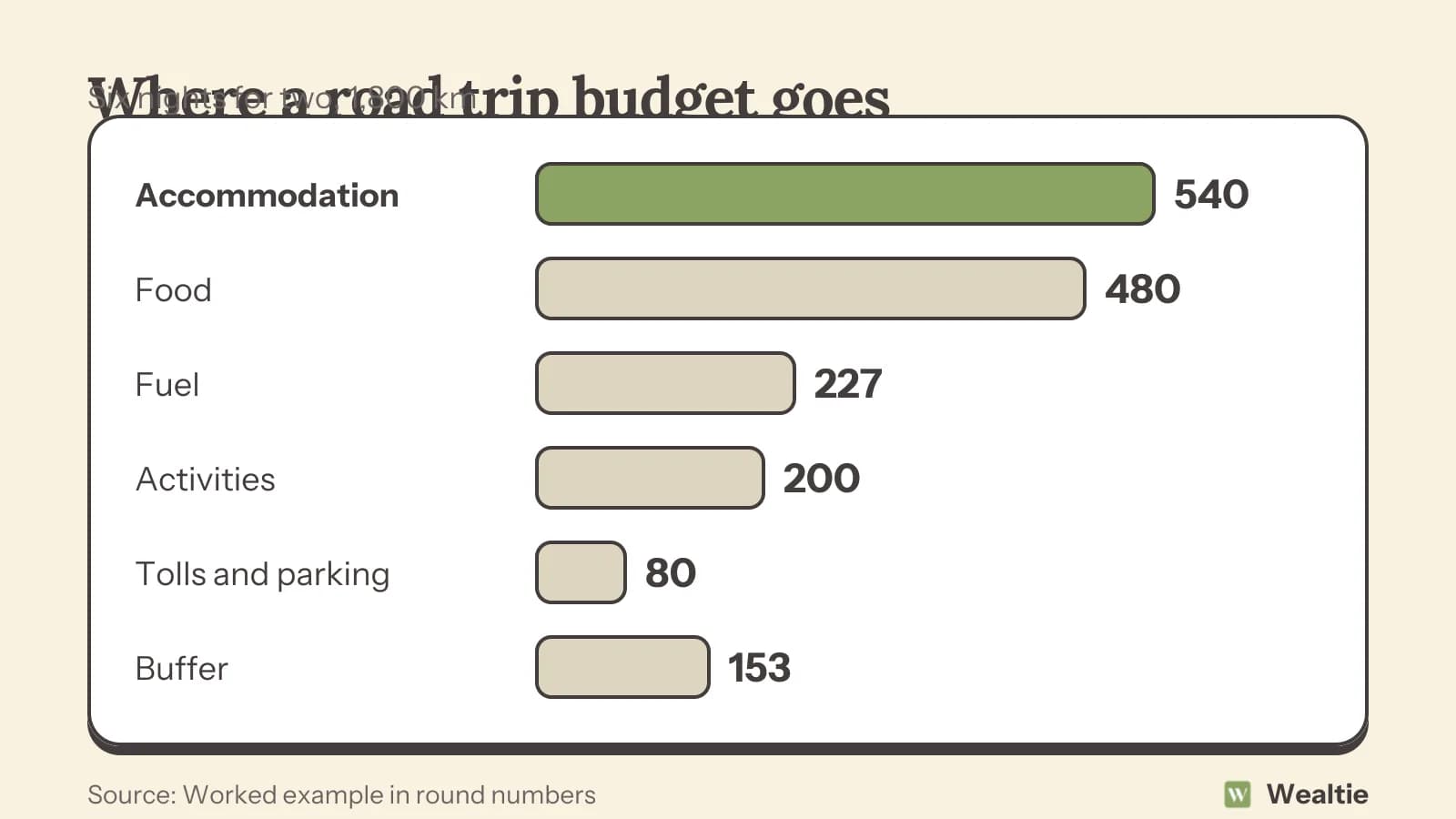
That's 840 each. Beds and food are well over half of it, so those are where small changes make the most difference.
How can you spend less on a road trip?
Go after the big lines first:
- Beds: stay two nights in each place instead of one, since longer stays are often cheaper and you'll drive less
- Food: have breakfast and lunch from a supermarket and eat out once a day
- Route: fewer, longer stops cost less fuel than lots of short detours
- Timing: outside school holidays, accommodation can cost much less
- Car: pack light, check tyre pressures and keep a steady speed
Camping or cabins can cut the accommodation line hard, if that's the kind of trip you want.
What costs catch people out?
The ones that aren't on a map:
- City parking, which can cost more than a day's fuel
- Tolls and road charges, including vignettes in some countries
- Low-emission zone charges in some cities
- Insurance or breakdown cover for driving abroad
- A one-way fee if you're renting and dropping the car elsewhere
Download offline maps before you go, since mobile data abroad can cost extra, and put a data add-on in the budget if you'll need one. Check the rules for each country on your route before you go. Some require a sticker or electronic toll registration before you enter.
How should you split costs with friends?
Agree how you'll split before you leave, and keep a shared record. Fuel is usually split equally among the people in the car. Rooms are split by who's in them. If one person's car is used, it's fair for the others to cover more of the fuel or a share of the wear. Splitting travel costs with friends has a system for settling up.
How do you stay on budget during the trip?
Set a daily amount for everything except fuel and beds. In this example, food and activities come to 680 over six days, or about 113 a day for two. Check at the end of each day whether you're over or under.
Book the first and last nights in advance so the start and end of the trip are fixed, and leave a few middle nights flexible if you like to improvise. Last-minute rooms in busy areas can cost far more, so check prices a day ahead.
Log spending as you go. Card payments are easy to track, but cash for parking, coffee and snacks tends to disappear. How to budget for a trip abroad has more on daily budgets.
How do you track a road trip in Wealtie?
Make a Travel category and log fuel, beds and food there as you go. Your expense categories then show the trip's total, and a monthly limit in the budget tracker shows how much is left for the rest of the month. If you're driving through countries with different currencies, each account keeps its own currency.
Questions people ask
About 1,680 for six nights for two over 1,800 km in a worked example, or 840 each. Accommodation and food decide more of it than fuel.
Divide the distance by 100, multiply by your car's litres per 100 km, then by the fuel price. For miles, divide distance by miles per gallon and multiply by the price per gallon.
Stay longer in fewer places, eat breakfast and lunch from supermarkets, travel outside school holidays and drive steadily with a light car.
Split fuel equally among passengers and rooms by who's in them, and agree it before you leave. Keep a shared record so settling up is easy.
This article is general information, not financial, tax or legal advice. Your situation is your own; check the numbers that apply to you before you act on them.