Money as a couple: When one of you is a spender and the other a saver
When a spender and saver share a life, the answer is usually a budget that protects shared goals and gives each person money of their own. In a worked example, a couple sets aside 300 a month for shared goals and gives each partner 150 to spend freely.
 By Wealtie Team · 3 min read
Key takeaways
- A spender and saver can make money work together with shared goals and personal spending money.
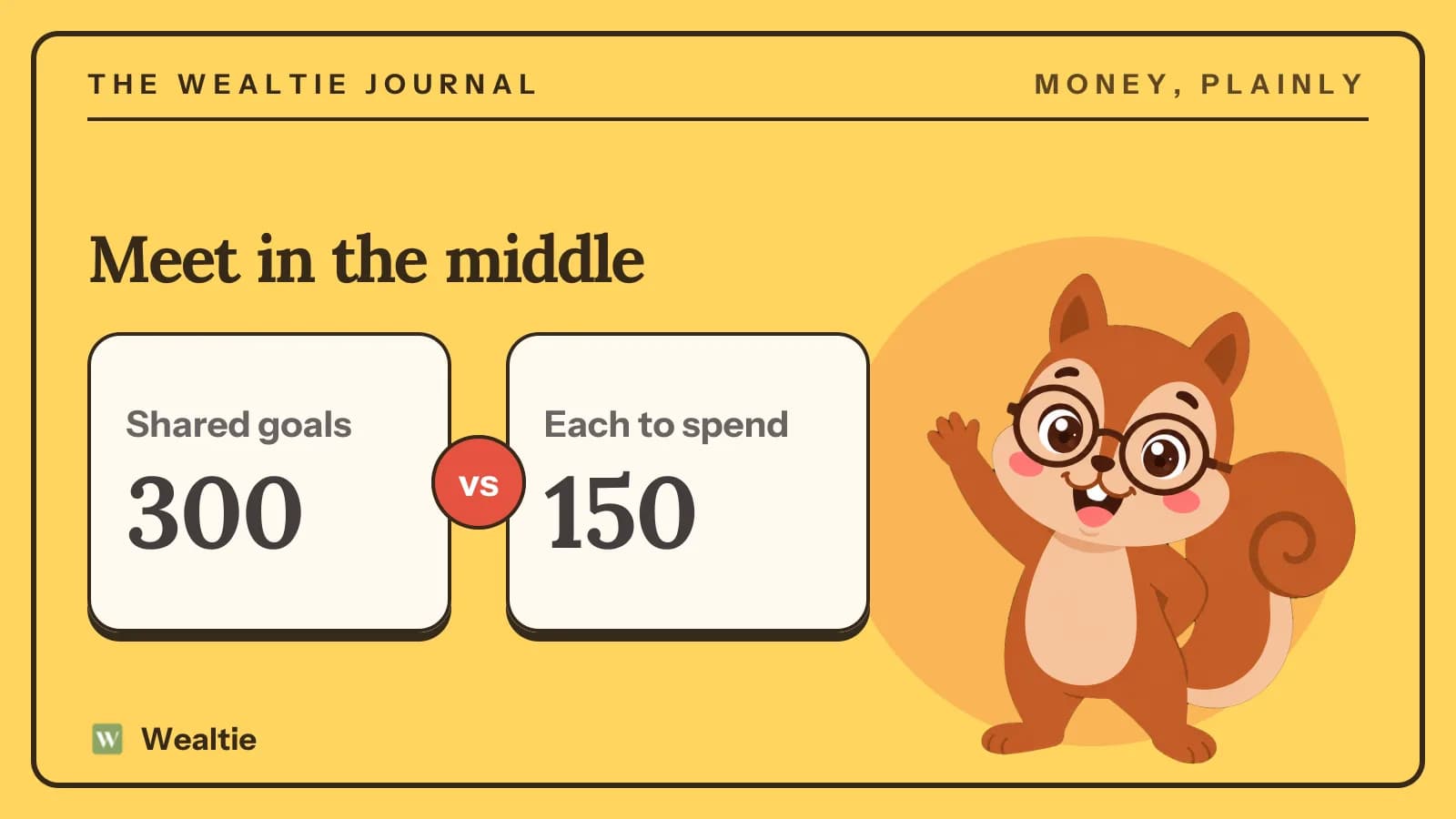
- In a worked example, a couple sets aside 300 for shared goals and gives each partner 150 to spend.
- Understanding where each person's money habits come from reduces blame.
- Both styles have strengths: savers bring security, spenders bring enjoyment.
What happens when a spender and saver are together?
Often, a mix of tension and balance. A spender and saver usually see money differently: one enjoys spending on experiences and things now, the other feels safer seeing savings grow. These differences can lead to arguments, with the saver feeling anxious and the spender feeling judged. But they can also balance each other, as long as you find a way to respect both styles.
The goal isn't to turn one person into the other. It's to build a plan you can both live with. Many couples find their differences soften over time once they have a system they trust.
Where do money habits come from?
Usually from childhood and past experiences. Someone who grew up with money worries may save hard to feel secure. Someone who grew up being careful may enjoy spending now they can. A useful exercise is for each of you to describe your ideal month with money, then compare. Talking about how money was handled in your families, and what money means to each of you, helps you understand each other and reduces blame. It can also help to describe what a good financial life looks like to each of you, since the answers often overlap more than expected.
Both styles have strengths
Savers bring security, emergency funds and long-term thinking. Spenders bring enjoyment, generosity and a reminder that money is for living. A couple that uses both strengths often does better than either alone.
How do you build a budget you both like?
Cover the essentials, protect shared goals, then give each person money of their own. Here's a worked example of what a couple does with the money left after bills, in round numbers that work in any currency:
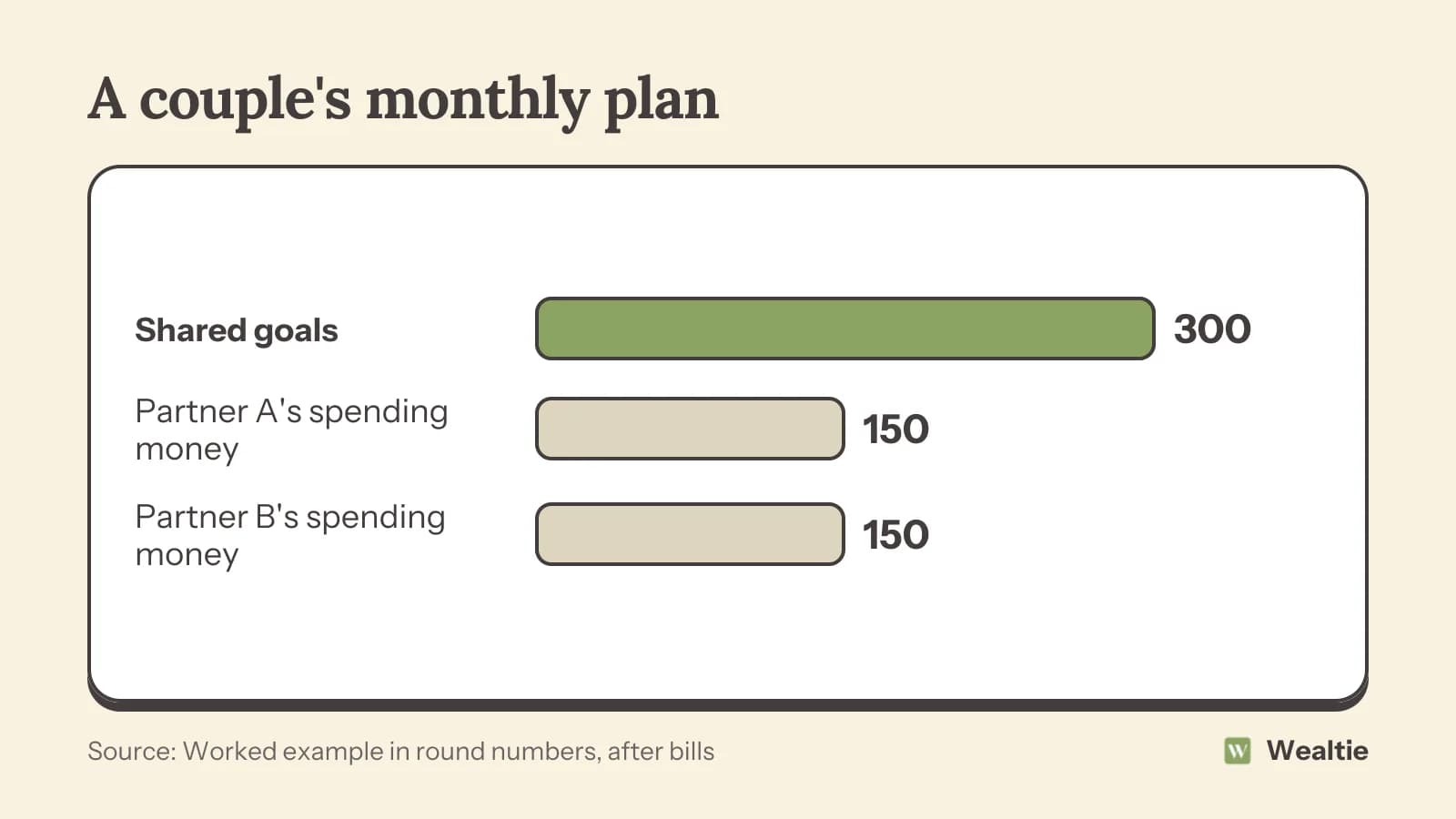
In this example, 300 goes to shared goals, like an emergency fund and a holiday, and each partner gets 150 to spend however they like, no questions asked. The saver knows the goals are covered. The spender has freedom without guilt. If income is tight, the amounts can be small; what matters is that both partners have some money that's theirs.
Why does personal spending money help?
It removes the need to justify every purchase. When each partner has an agreed amount that's theirs, small spending stops being a source of conflict. The spender can buy what they enjoy, and the saver can save their share if they prefer. It works best when both get the same amount, or a fair amount based on income.
How do you agree on shared goals?
Talk about what you both want, and find the overlap. A saver might want a bigger emergency fund; a spender might want a holiday. Both can be goals, with an amount set aside for each. Writing goals down, with target amounts and dates, turns vague disagreements into a shared plan. Seeing progress each month also helps the spender feel the reward of saving. How to save for a goal together covers this in detail.
Agree a limit for big purchases
Decide an amount above which you'll talk before buying, like 200. Below it, each partner decides; above it, you decide together. It prevents surprises and gives the saver reassurance without the spender feeling watched. Waiting a day before any purchase over the limit gives both of you time to think.
How do you split shared bills?
Agree a system that feels fair. Some couples split everything equally, others contribute in proportion to income. How to split bills as a couple covers the options. A joint account for shared bills, with personal accounts for the rest, works well for many spender-saver couples. Automating transfers to savings on payday helps the saver relax, since the goals are funded before any spending happens.
How do you keep talking about money?
Regular check-ins stop small frustrations growing. A short monthly conversation about how the budget went, what's coming up and progress on goals keeps you both informed. The monthly money meeting is a simple format, and how to talk about money with your partner has tips for keeping it calm. If one partner's spending is causing real problems, when your partner overspends covers what to do.
How can Wealtie help spender and saver couples?
Set shared limits in the budget tracker and separate personal expense categories for each partner's spending money, so you can both see how the month is going. Wealtie's sharing lets you share accounts with a partner; the person who shares needs Pro, and the person invited can be on any plan.
Questions people ask
Cover essentials, protect shared goals and give each partner personal spending money they control.
An amount you both agree is fair. In a worked example, each partner gets 150 a month after bills and goals.
Usually because of childhood and past experiences with money. Talking about them reduces blame.
Many use a joint account for shared bills and goals, with personal accounts for their own spending.
This article is general information, not financial, tax or legal advice. Your situation is your own; check the numbers that apply to you before you act on them.