Money as a couple: How to plan a family reunion budget everyone can live with
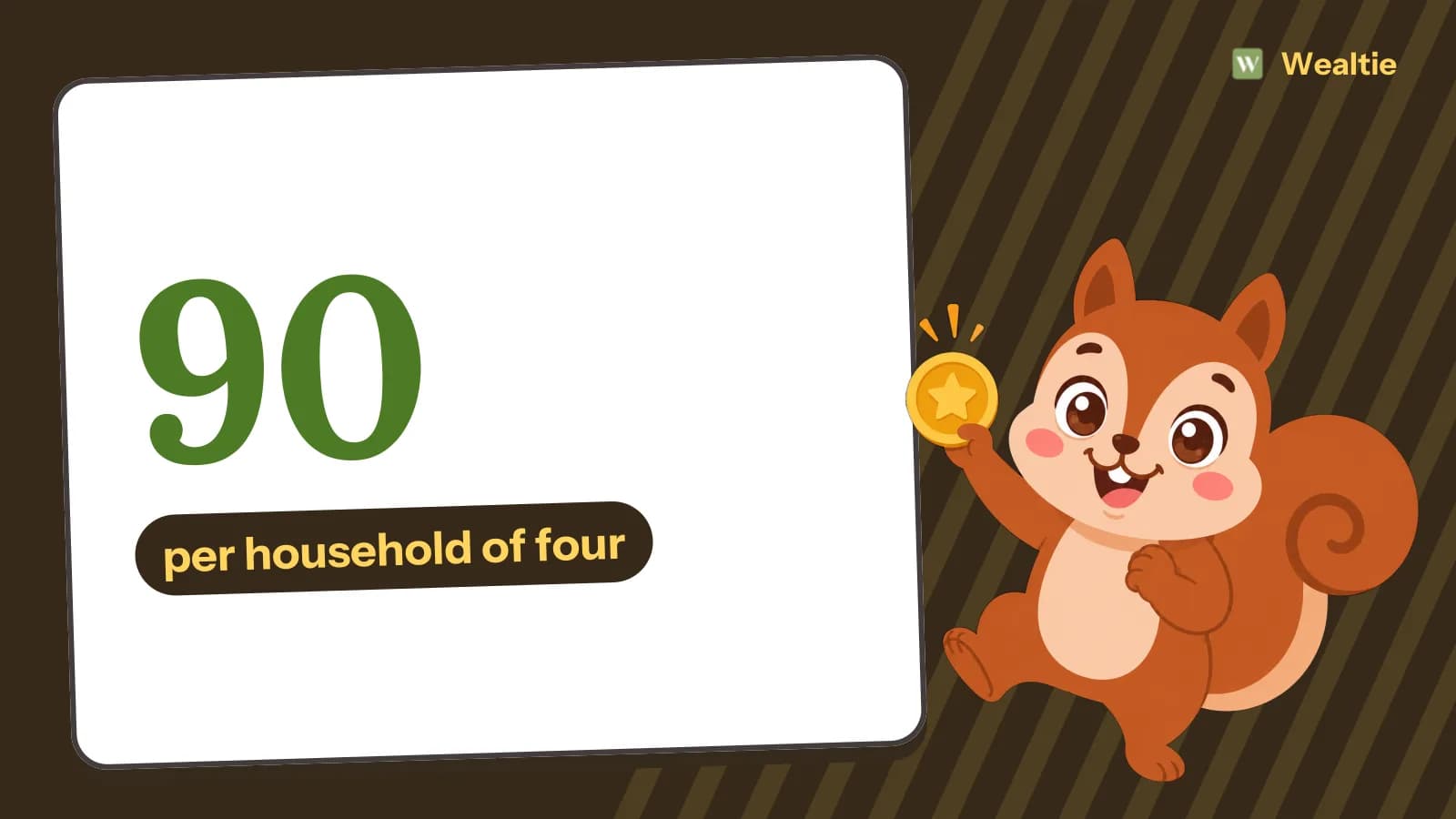
A family reunion budget works best when you agree a per-household amount early, then choose the venue, food and activities to fit. In a worked example, a day for 40 people costs about 900, or 90 per household of four.
 By Wealtie Team · 3 min read
Key takeaways
- Agree a per-household amount early, so everyone knows what to expect.
- In a worked example, a day for 40 people costs about 900, or 90 per household of four.
- A potluck, a free or cheap venue and simple activities keep the cost down.
- Collect money upfront for shared costs, and keep a clear record of who's paid.
How do you plan a family reunion budget?
Agree the per-household amount first, then build the day around it. Family reunions bring together people at very different stages of life and income, from students to grandparents. A plan that works for everyone keeps the focus on seeing each other, rather than on the cost. Deciding the money side early also makes it easier to choose a date, venue and food without awkward conversations later.
What does a reunion cost?
Here's a worked example for a day with 40 people, in round numbers that work in any currency:
| Cost | Amount |
|---|---|
| Venue hire | 250 |
| Food and drinks | 450 |
| Activities, like games or a hired bouncy castle | 100 |
| Decorations and extras | 50 |
| Buffer | 50 |
| Total | 900 |
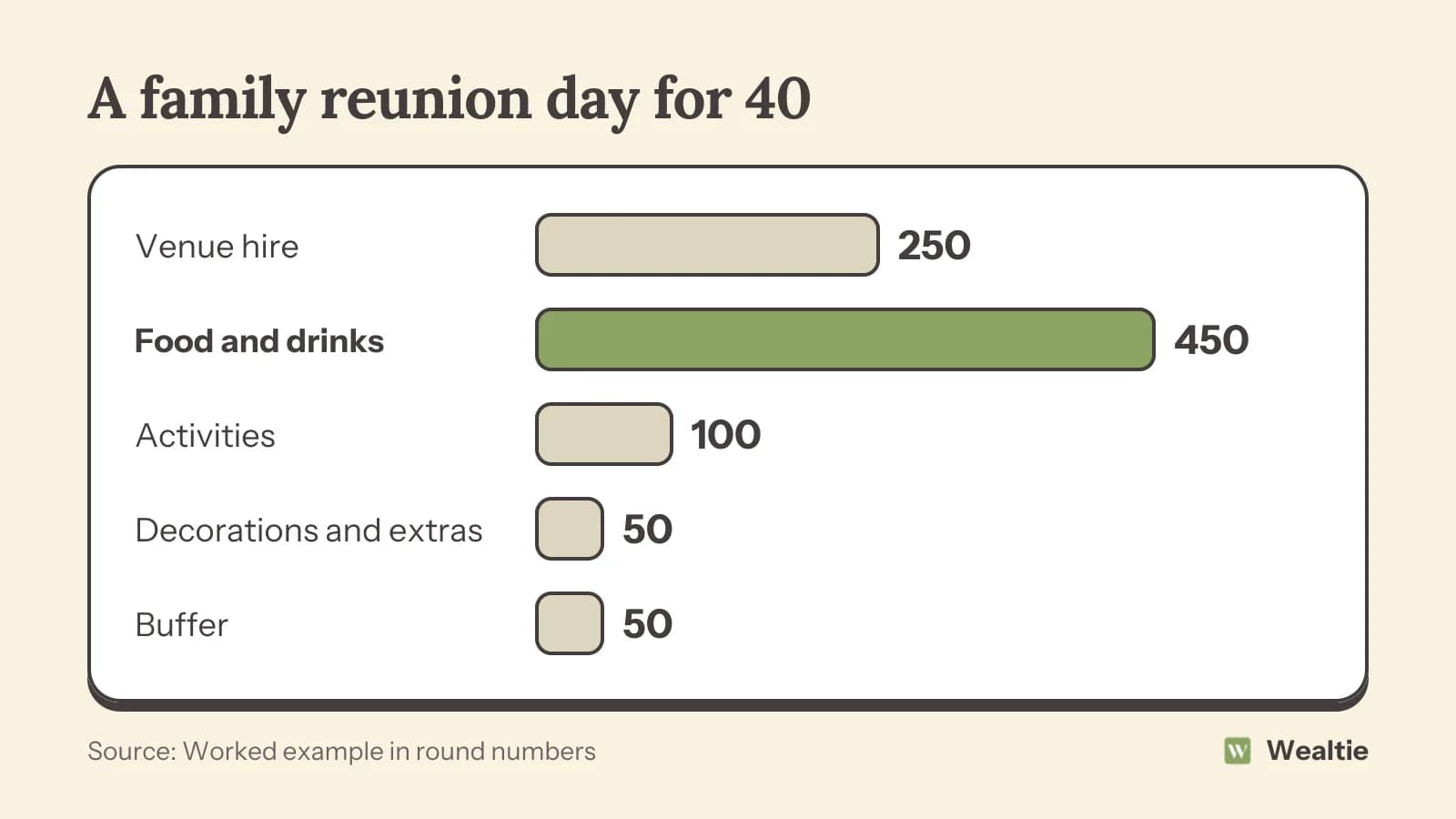
Split between 10 households of four, that's 90 each. If the reunion lasts a weekend, or includes accommodation, the cost rises a lot, so be clear about the format from the start.
How do you keep the cost down?
Choose the big lines carefully:
- Venue: a family member's garden, a park, a community hall or a church hall often cost little or nothing compared with a hired venue
- Food: a potluck, where each household brings a dish, cuts the biggest cost and gives everyone a part to play
- Drinks: one or two families can bring drinks, or set up a simple drinks station
- Activities: games, a quiz about the family, old photos and music cost very little
A barbecue or picnic in summer keeps things relaxed and affordable. Asking each household to bring their own plates, cutlery and chairs saves buying or hiring them, and borrowing a gazebo from a relative covers you if the weather turns. Keep the menu simple, since a few big dishes go further than lots of small ones.
How do you split the costs fairly?
Agree a method that suits your family. Common approaches:
- Per household: each household pays the same, simple and easy
- Per person: fairer if household sizes differ a lot, sometimes with children at a lower rate
- By ability to pay: some families quietly cover more for relatives who are stretched
Whatever you choose, share it clearly in the invitation, with a deadline for payment. Ask privately if anyone would find the amount difficult, since some people won't say so in front of the family.
How do you collect money?
Upfront, for shared costs like venue and food, with a clear deadline. Keep a list of who's paid and what's been spent, and share a summary afterwards. That way, the organiser isn't left out of pocket, and everyone can see where the money went.
Agree what happens to any money left over, like putting it toward the next reunion.
What about travel and accommodation?
That's usually each household's own cost, and it can be the biggest one for relatives coming from far away. Choose a central location if you can, and give plenty of notice so people can book travel early at lower prices. For a weekend reunion, a large rental house shared between families can cost less per person than hotel rooms. Compare the total price including cleaning fees, and agree how the cost is split between families before booking. Splitting travel costs with friends has a simple system that works for families too.
How do you make it fun without spending much?
Plan a few shared moments rather than lots of paid activities. A family photo, a quiz about family history, a display of old photos and a simple sports game for the children cost almost nothing and are often what people remember. Older relatives often enjoy sharing stories, and younger ones can help run games. A shared playlist and a few printed name tags help people who haven't met in years. If you want one paid extra, like a hired bouncy castle for the children, put it to the group so everyone agrees before it's booked.
Who should organise?
One or two people, with clear help from others. The organiser has a lot to manage, so share the jobs: one person on food, one on activities, one on money. Agree who makes final decisions on spending, so the budget doesn't grow by committee.
How do you plan a reunion in Wealtie?
A shared account lets the organisers see what's been paid and spent, and split costs using current shares or custom amounts, to the cent. The account owner needs Pro to invite, and others can be on any plan. The shared accounts page has more, and logging costs in your expense categories gives a clear record to share afterwards.
Questions people ask
It varies with the venue, food and length. A worked example of a day for 40 people costs about 900, or 90 per household of four.
Per household, per person or by ability to pay. Share the method clearly in the invitation and ask privately if anyone finds it difficult.
Use a free or low-cost venue like a garden or park, make it a potluck and keep activities simple.
Usually each household pays its own travel and accommodation, so give plenty of notice to book early.
This article is general information, not financial, tax or legal advice. Your situation is your own; check the numbers that apply to you before you act on them.