Money as a couple: How to budget for a second child without starting from scratch
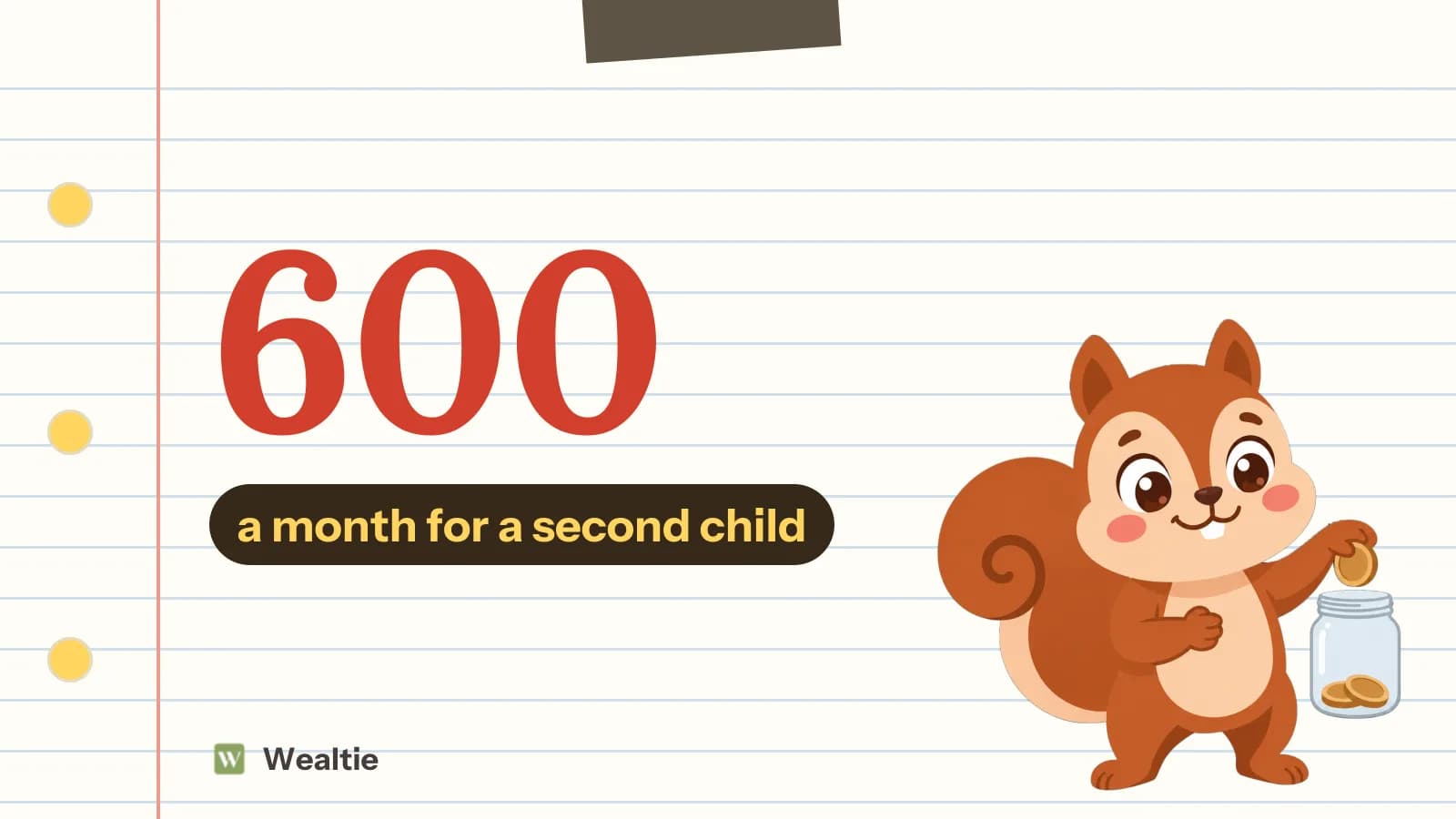
To budget for a second child, list which costs double, like childcare and food, which you can reuse, like the cot and clothes, and plan for parental leave. In a worked example, a second child adds about 600 a month, much of it childcare.
 By Wealtie Team · 3 min read
Key takeaways
- A second child usually costs less to set up than the first, since many items can be reused.
- Some costs double, especially childcare, food and activities.
- In a worked example, a second child adds about 600 a month, much of it childcare.
- Plan for parental leave and any change in income before the birth.
How do you budget for a second child?
Start from what you learned with the first. You already know roughly what a baby costs in your family, which items you used and which you didn't. A second child is usually cheaper to set up, since much of the equipment can be reused, but some ongoing costs double, and childcare can be the biggest change of all.
What costs double?
The ongoing ones. Here's a worked example of what a second child adds each month, in round numbers that work in any currency:
| Cost | Added per month |
|---|---|
| Childcare | 400 |
| Food and nappies | 120 |
| Clothes and extras | 50 |
| Activities | 30 |
| Total | 600 |
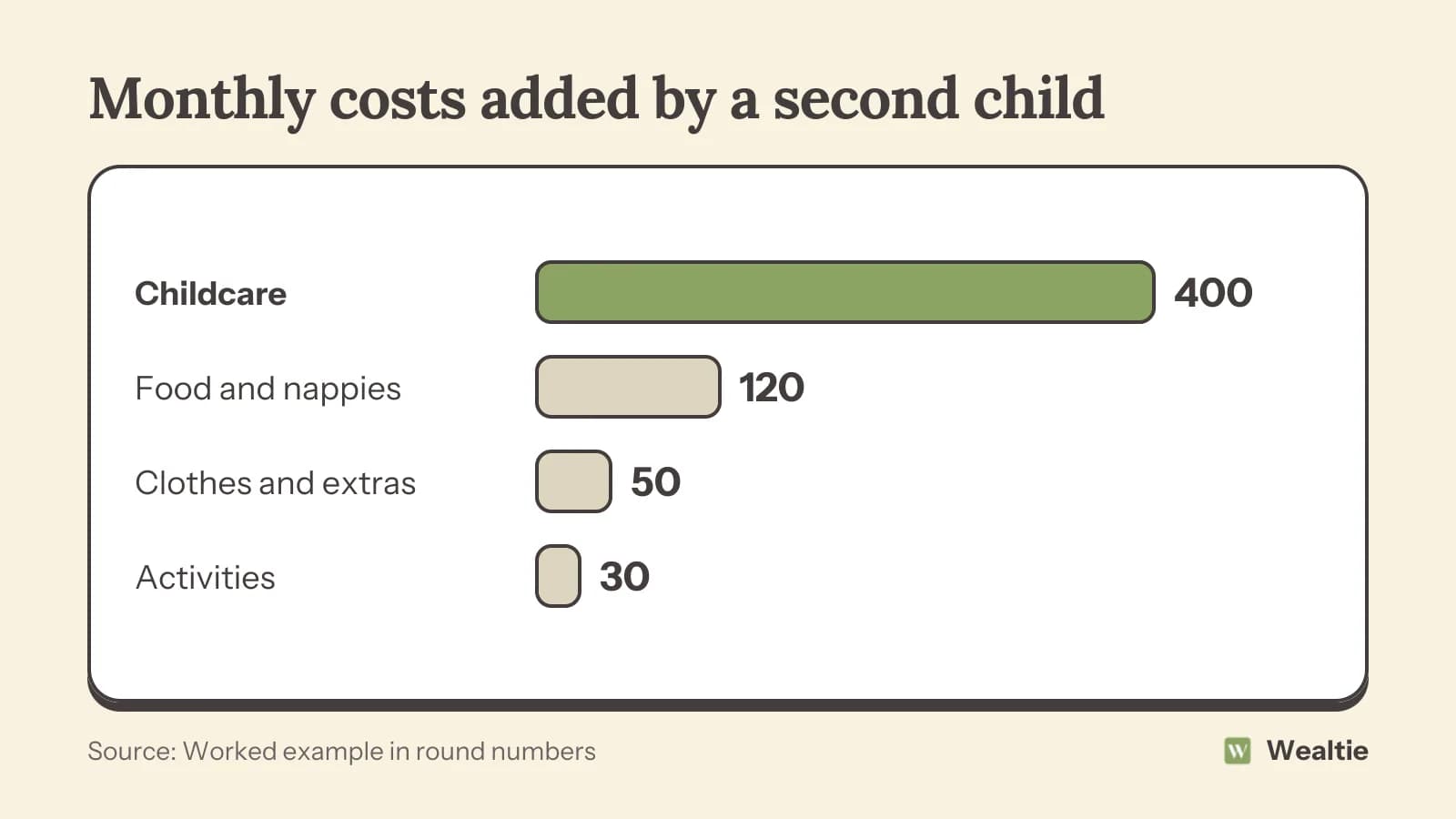
Childcare is usually the biggest line, and it can vary a lot depending on the ages of both children and the type of care. Some providers offer a sibling discount, and the timing matters: if your first child is about to start free hours or school, the total childcare bill might not double.
What can you reuse?
Much of the equipment from your first child. Cots, prams, car seats (if they're within their safe use date and haven't been in an accident), baby clothes, toys, bottles and books can often be used again. Check car seats and other safety items carefully, since standards change and some have expiry dates.
Store outgrown items by size and type, so they're easy to find. If you gave things away after the first child, ask friends and family, since many will have items to pass on. Second-hand baby equipment is easy to find for items that don't have safety concerns. How to budget for a baby lists what you'll need, and many of those costs won't come up the second time.
What new costs come up?
A few you might not expect:
- A double pram or buggy board, if the children are close in age
- A second car seat, if the first is still in use
- A bigger car or home, if space runs out
- More childcare, especially for two children under school age
- Extra food and bigger utility bills
The bigger car and home are the costs to think hardest about, since they're large and long-lasting. Many families manage without them for longer than they expected. Children can share a room for years, and a slightly bigger car can often wait until the older child's car seat changes.
How does parental leave affect the budget?
Plan for it the same way as the first time. Find out what you'll be paid and for how long, work out the gap against your normal income, and save the difference in advance. With two children, childcare for the older one might continue during leave, so include that. The maternity leave budget has the method.
How do you prepare before the birth?
Build up your emergency fund, pay down any high-interest debt, and live on your expected budget for a few months while saving the difference. Check what child benefits or tax support change with a second child where you live, since some support is paid per child and some isn't, and plan for any change in childcare help when the older child moves to a new age group. Review your life insurance and wills, since your family's needs have grown. If you've got a gap between the births, use it to rebuild any savings the first child used.
How do you keep costs down with two children?
Hand-me-downs and second-hand items save a lot, and so does planning activities that work for both children together. Look for sibling discounts on childcare, clubs and attractions. Meal planning for the whole family keeps food costs in check. The family budget covers ways to save across all the costs of raising children.
How do you share the costs as a couple?
Agree how the extra costs will be covered, especially childcare, which lets both parents work. Treat it as a household cost. If one parent's income drops during leave or because of reduced hours, adjust the split so it stays fair. Combining finances after marriage covers ways to share fairly.
How do you plan a second child in Wealtie?
A shared account gives both parents the same view of family costs, with owner, editor and viewer roles. The owner needs Pro to invite, and the other parent can be on any plan. Set the family's monthly limit in the budget tracker based on the new costs, and set childcare up as a recurring transaction. The shared accounts page has more.
Questions people ask
Usually cheaper to set up, since much equipment can be reused, but ongoing costs like childcare and food roughly double.
It varies, especially with childcare. A worked example comes to about 600 a month, much of it childcare.
Cots, prams, clothes, toys, bottles and books often can. Check car seats and safety items for expiry dates and accident history.
Build your emergency fund, pay down high-interest debt, plan for parental leave and live on the expected budget for a few months first.
This article is general information, not financial, tax or legal advice. Your situation is your own; check the numbers that apply to you before you act on them.