Money as a couple: How to run a monthly money meeting as a couple in 20 minutes
A monthly money meeting is 20 minutes after payday where you look at last month, check this month's bills and savings, and agree one thing to change. Keeping it short and regular stops money from becoming a crisis topic.
 By Wealtie Team · 3 min read
Key takeaways
- Hold a monthly money meeting the weekend after payday, for about 20 minutes.
- Look back at last month, check the coming month's bills, and agree one change at most.
- Keep the same agenda every time, so it becomes routine and not a confrontation.
- Talk about purchases above an agreed threshold, not every small expense.
What is a monthly money meeting?
A short, regular check-in where you look at your money together. Twenty minutes, once a month, with the same agenda. It's not a review of who spent what. It's how you keep a shared plan on track without having to bring money up in the middle of a disagreement.
When should you hold it?
The weekend after payday works well. The month's money has arrived, bills haven't all gone out, and there's still time to adjust. Put it in both calendars as a recurring event, so it doesn't depend on someone remembering.
Pick a relaxed setting. Over coffee at the kitchen table is better than at 11pm after a long day.
What's on the agenda?
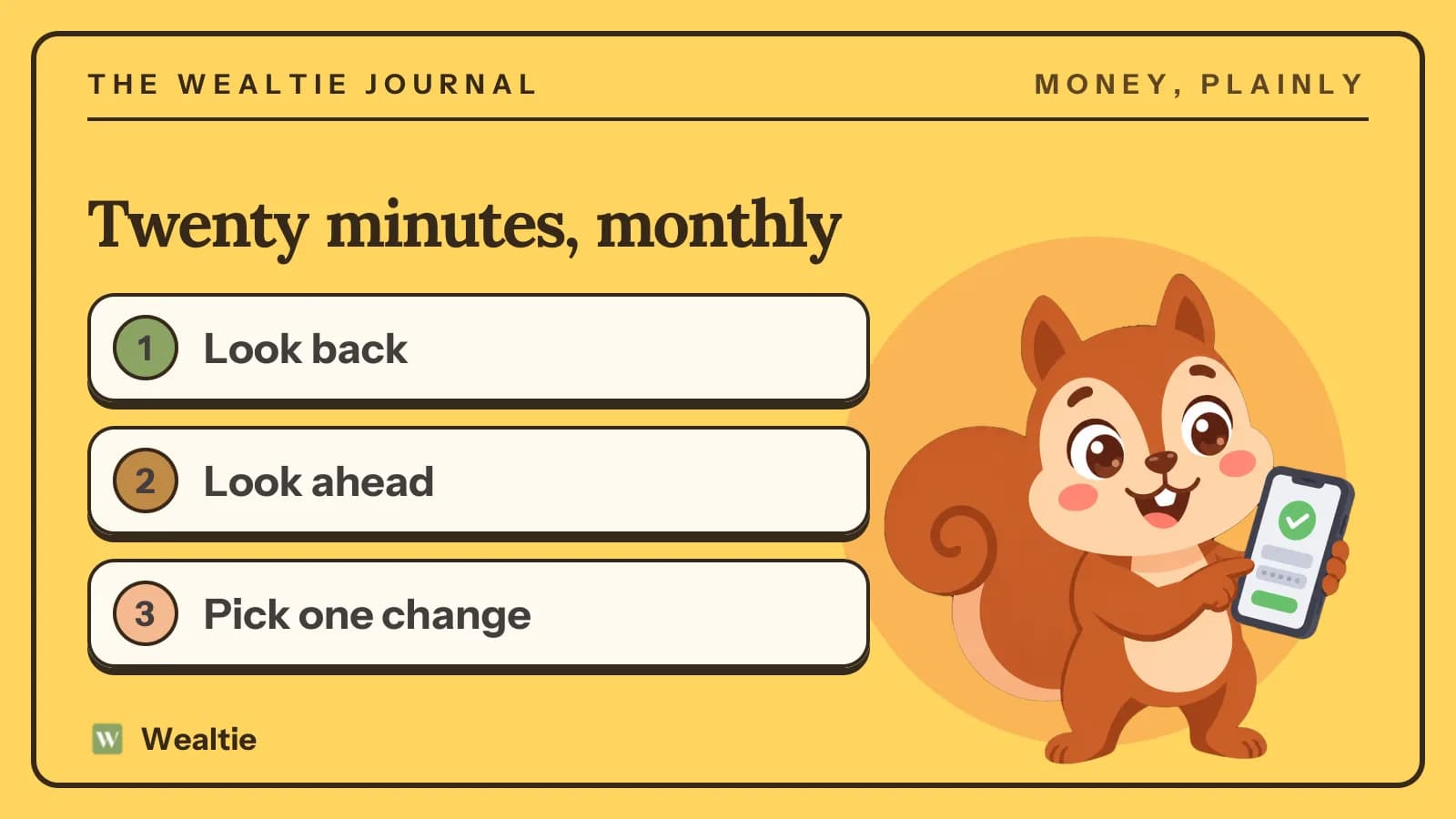
The same four items every time:
| Part | Time | What you do |
|---|---|---|
| Look back | 5 minutes | Did last month go roughly as planned? |
| Look ahead | 5 minutes | Bills and big costs due this month |
| Goals | 5 minutes | Are savings on track? |
| One change | 5 minutes | Agree a single thing to adjust, if any |
Keep a shared note with the numbers you check each month: the budget total, what you saved, the balance of any debts and the next big cost coming up. Over a year, that note becomes a simple record of your progress, and it's encouraging to look back on. Open it at the start of each meeting so you're not hunting for figures.
That's it. A fixed agenda keeps the meeting short and stops it wandering into every money worry at once.
What should you look at in the look-back?
The totals, not the line items. Did you stay within the monthly budget? Did the savings transfer go through? Was there anything unexpected?
Avoid going through each purchase. If you've agreed a threshold, say 150, then only purchases above it are worth mentioning, and you'll already have talked about them at the time. Everything below that is personal money or ordinary spending.
What should you look at for the month ahead?
Anything unusual. A car service, an annual insurance renewal, a birthday, a trip. If a big bill's coming, decide now where the money comes from: the budget, a sinking fund or savings.
Check that the regular bills are all still right. Prices change at renewal, and a monthly look catches it before it becomes normal. How to organize bills has a list worth keeping.
How do you keep it from becoming an argument?
Agree a few ground rules:
- Talk about the plan, not each other
- No surprises: big purchases get discussed when they happen, not saved up for the meeting
- One change per month, at most
- If something gets heated, park it and come back to it another day
If one of you finds these meetings stressful, keep the first few very short, ten minutes and one number, and build from there. Phones away, apart from the banking app.
Start with something that went well, even if it's small. The savings went out, or you came in under budget on groceries. It sets a better tone than leading with a problem.
If one of you handles most of the money day to day, the meeting is also a chance for the other to see what's going on. Couples where only one person knows the numbers can run into trouble if that person is ever unable to manage them.
What if you can't agree on something?
Write it down and come back to it next month. Many disagreements shrink after a few weeks. If it's a bigger question, like whether to buy a house or how much to spend on a holiday, give it its own conversation instead of squeezing it into 20 minutes.
How to talk about money with a partner has ways to handle the harder conversations.
What about a yearly review?
Once a year, take an hour for a bigger look: what you saved, what you spent by category, how your goals have changed, and whether your setup still works. The year-end money review has a checklist.
How can Wealtie help with the meeting?
A shared account gives both of you the same record of shared costs, with owner, editor and viewer roles. The budget tracker shows how the month went, and Budget Health shows whether your pace was on track. Spending analytics compares month against month, which makes the look-back quick. The account owner needs Pro to invite, and the other person can be on any plan. The shared accounts page has more.
Questions people ask
Last month's totals, the coming month's bills and big costs, progress on savings goals, and one thing to change. Keep it to about 20 minutes.
Once a month is enough for most couples, plus a longer yearly review. Talk about large purchases when they happen, not at the meeting.
Use a fixed agenda, talk about the plan instead of each other, start with something that went well, and agree only one change per month.
The weekend after payday, when the money has arrived and there's still time to adjust before most bills go out.
This article is general information, not financial, tax or legal advice. Your situation is your own; check the numbers that apply to you before you act on them.