Money as a couple: How to talk about money with your partner without a fight
To talk about money with your partner, pick a calm time that isn't straight after a big purchase, start with what you each want rather than what went wrong, and share the numbers both ways: income, debts and regular costs. Then agree one small next step, and meet again in a month.
 By Wealtie Team · 3 min read
Key takeaways
- Money talks go better at a planned time than in the middle of a disagreement about a purchase.
- Start with goals and worries, not numbers; the numbers make more sense once you know what each of you wants them for.
- Both people share the same facts: income, debts, savings and regular costs, so neither is negotiating blind.
- End every conversation with one small, specific decision, not a full financial plan.
- A short monthly check-in of 20 to 30 minutes prevents most of the arguments a big annual talk is meant to fix.
How do you talk about money with your partner?
Pick a calm time, start with what you each want, share the numbers both ways, and finish with one small decision. Then do it again next month.
Most money arguments aren't about money. They're about a purchase one person didn't expect, a debt that came up late, or a worry nobody said out loud. A planned conversation, with the facts on the table, takes most of the heat out before it starts.
When should you talk about money?
At a planned time, when neither of you is tired, hungry or upset about a specific purchase.
Ask for the conversation instead of starting it on the spot: "Can we sit down on Sunday and talk about money for half an hour?" It gives you both time to think, and it separates the talk from whatever prompted it. The worst time is straight after an unexpected card bill, because the conversation becomes about that bill.
A few moments make it unavoidable, and they're good starting points: moving in together, opening a joint account, a new job or a pay cut, a big purchase, planning a wedding or a baby.
What should you talk about first?
Goals and worries, before numbers. The numbers mean more once you know what each of you wants them to do.
Good opening questions:
- What would you like us to be able to do in the next year? In five years?
- What worries you about money right now?
- What did money feel like in your family growing up?
- What's one thing you spend on that you'd never want to give up?
Listen more than you talk in this part. Two people can want the same things and still have very different ideas about getting there. One saves because money was tight growing up; the other spends on travel because their parents never did. Neither is wrong.
Which numbers should you share?
The same facts, both ways: take-home pay, debts, savings and regular costs. Neither person should be planning with half the picture.
| Share | Why it matters |
|---|---|
| Take-home pay | You can't split shared costs fairly without it |
| Debts, with balances and rates | They affect what you can save and borrow together |
| Savings and emergency fund | So you know what cushion there is |
| Regular costs you each pay | To see what's left for shared goals |
| Credit score, if you plan to borrow together | It affects a joint mortgage or loan |
If one of you has a debt the other doesn't know about, this is the moment. It's easier to hear now than to discover later on a mortgage application.
How do you decide who pays for what?
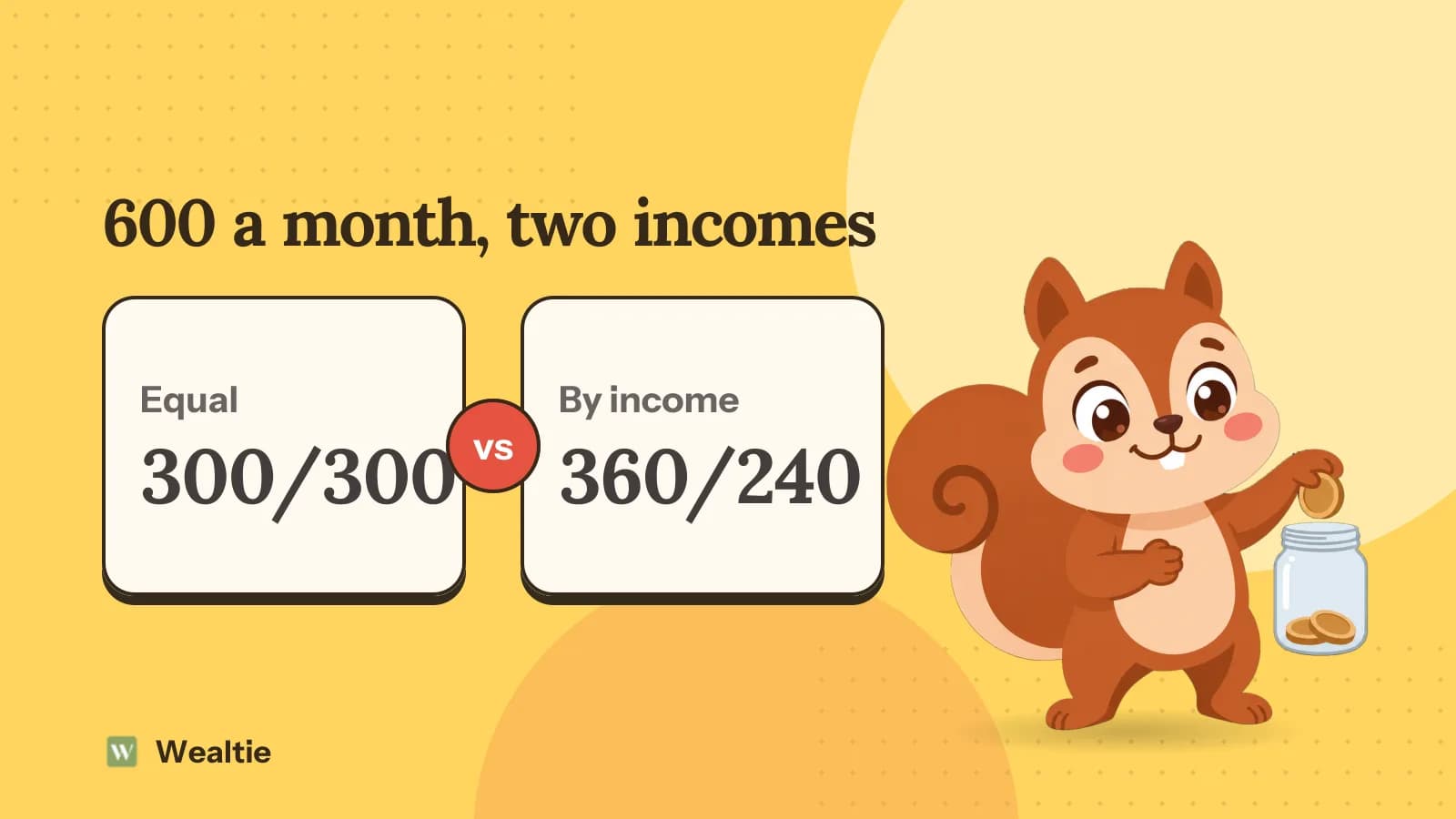
Start with the shared costs and pick a split you both think is fair: 50/50, by income, or pooled. Then agree how much each of you spends without checking in.
The split matters less than agreeing on it out loud. How to split bills as a couple compares the three ways with a worked example, and should couples have joint bank accounts covers the account setups that go with each.
A personal spending amount, the money each person spends without asking, removes most of the small arguments. Agree a number and don't comment on how it's spent.
How do you keep money talks from turning into fights?
Talk about the plan, not the person. Say "we went over on eating out" rather than "you spent too much".
- Stick to one topic. Today is the holiday budget, not every purchase since March.
- Bring the numbers. Facts end arguments that feelings start.
- Pause if it heats up. Agree a time to pick it up again, and keep to it.
- End with one decision. "We'll each put 200 into the holiday fund on payday" is better than "we'll be more careful".
How often should couples talk about money?
Once a month, for 20 to 30 minutes, plus a longer talk once a year or when something big changes.
The monthly check-in is short: what came in, what went out, whether shared costs need a new split, and how the goals are going. Keep it on the same day each month, maybe the weekend after payday. Most couples find it gets easier and shorter each time, because nothing has had a chance to build up.
Wealtie's shared accounts give you both the same view of shared spending, with owner, editor and viewer roles, pooled or per-person balances, and expenses split to the cent. Each of you keeps your own accounts private. The account owner needs Pro to invite; the person who accepts can be on any plan, Free included. A shared monthly budget means the check-in starts from the same numbers.
Questions people ask
Ask for a time rather than starting one on the spot, and open with a question about what they want, like 'What would you like us to be able to do in the next year?'. Leave last month's spending for later.
Income, debts, savings, regular costs and goals, in that order of sharing, then how you'll split shared costs and how much each person can spend without checking in. Credit scores and money habits from childhood often come up too.
Once a month for 20 to 30 minutes works for most couples, plus a longer conversation once a year or when something big changes, like a new job, a move or a baby.
Start smaller. Agree on one shared cost or one goal instead of the whole picture, keep it short, and say why it matters to you. Avoidance is often worry about being judged, so begin with your own numbers first.
If you share costs or plan a future together, yes. You can't split bills fairly or plan savings without knowing what each person brings in. How much else you share is up to the two of you.
This article is general information, not financial, tax or legal advice. Your situation is your own; check the numbers that apply to you before you act on them.