Money as a couple: What to do when your partner overspends, without a fight
When your partner overspends, start by finding out why, then agree a few shared numbers together: what you save, what bills cost and how much each of you can spend freely. Personal spending money each month takes most of the heat out.
 By Wealtie Team · 3 min read
Key takeaways
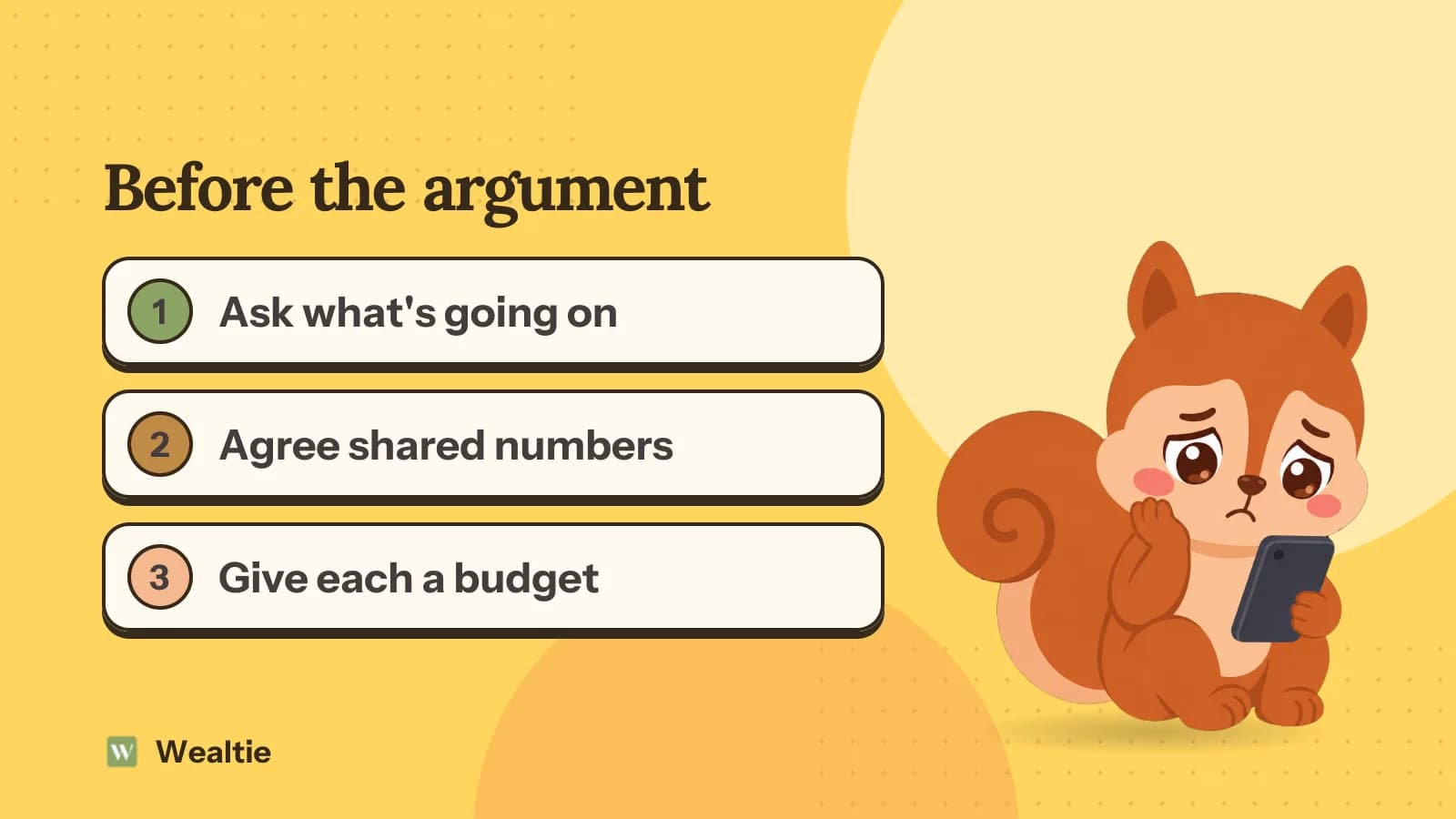
- Start with a conversation about why, at a calm moment, not when a bill has just arrived.
- Agree shared numbers together: monthly bills, savings and a limit for any single purchase that needs a joint decision.
- Give each of you an equal amount of personal spending money that nobody has to justify.
- If spending is hidden, compulsive or causing debt, it may need more than a budget, and outside help is worth considering.
What should you do when your partner overspends?
Talk about it calmly and find out what's behind it before you try to fix it. Overspending is usually a symptom. It might be stress, different ideas about what's normal, a lack of visibility into the shared numbers, or a gap between what each of you thinks the budget is.
Pick a quiet time to bring it up. Right after a large card bill arrives is the worst moment, because it turns into blame. How to talk about money with a partner has ways to start.
How do you start the conversation?
With the shared goal, not the purchase. Something like: "I'd like us to save for the deposit this year, and I'm not sure we're on track. Can we look at the numbers together?" That's much easier to hear than "you spent too much again".
Then ask questions and listen. Does your partner know what the bills come to? Do they feel they never get to spend anything on themselves? Was there a reason for the recent spending? You may find you're working from different numbers.
What numbers should you agree on?
A few shared ones, written down. Here's a worked example for a household taking home 4,800 a month, in round numbers that work in any currency:
| Line | Amount |
|---|---|
| Shared bills and groceries | 3,200 |
| Savings toward shared goals | 600 |
| Personal money, 500 each | 1,000 |
| Total | 4,800 |
Agree a threshold for any single purchase that needs a quick chat first, say 150. Below that, nobody asks. Above it, you check with each other. It's a simple rule that heads off a lot of surprises.
Why does personal spending money help?
Because it gives each of you freedom within a limit. If you each get the same 500 a month to spend however you like, there's nothing to argue about inside that amount. One of you can spend it all on takeaways and the other can save it, and neither has to explain.
It also moves the conversation away from individual purchases. The question stops being "why did you buy that?" and becomes "are we sticking to the plan?" Joint or separate accounts explains how couples set this up, often with a joint account for shared costs and a personal account each.
What if the overspending is causing debt?
Then it needs dealing with directly, and fairly quickly. Make a list of all the debts together: who owes what, at what rate, and the minimum payments. Agree a plan to pay them down. The debt snowball or avalanche helps you pick the order.
Look at what's driving it. If one of you is covering a shortfall in their personal budget with a credit card, the personal amount might be too small, or the shared bills too high.
What if your partner hides spending?
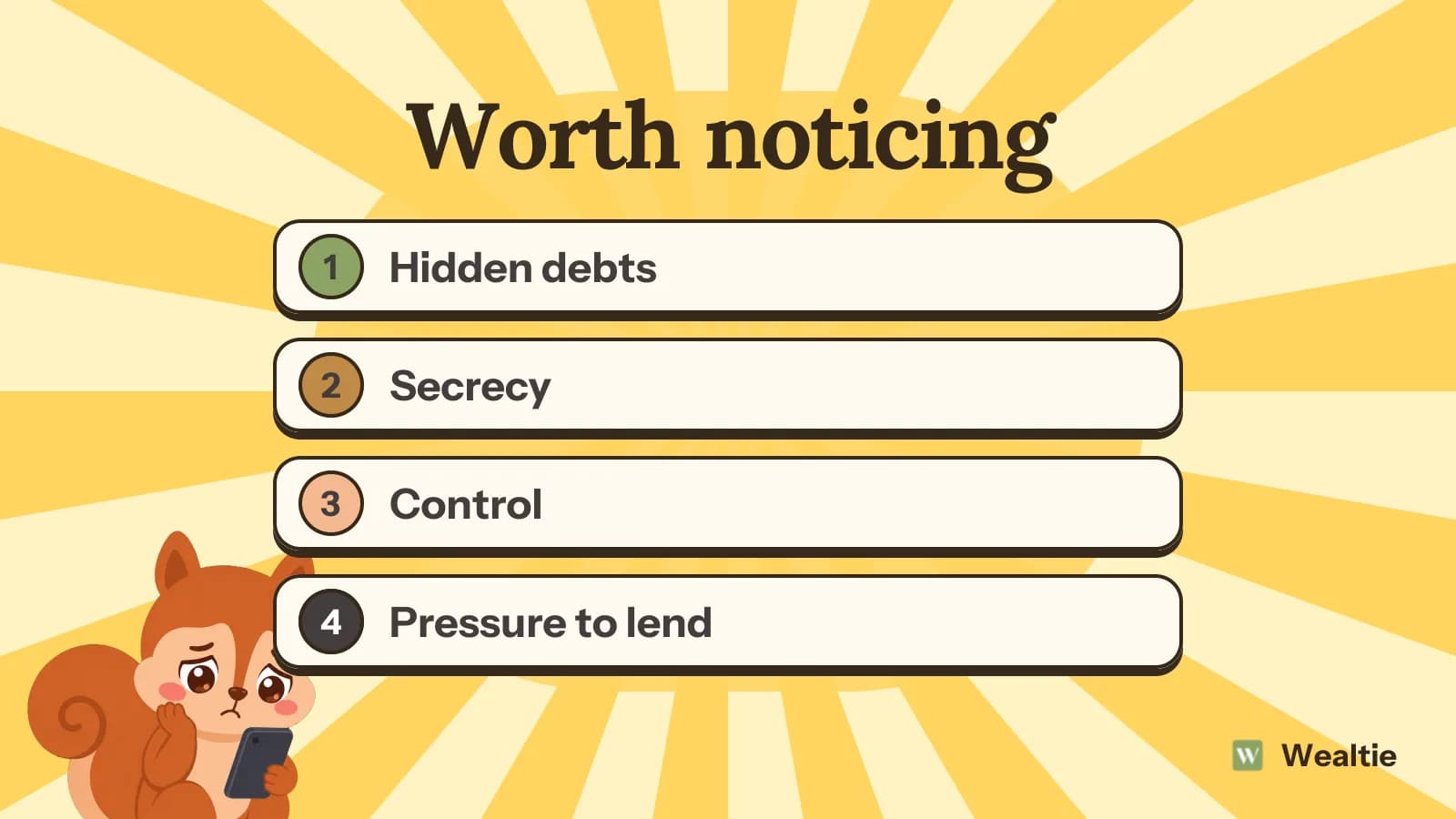
That's a trust problem as well as a money one. Hidden cards, secret purchases or lying about what something cost are worth taking seriously. Say how it makes you feel, without attacking, and ask what's going on.
If spending feels out of control for your partner, if they're borrowing to cover it, or if it's linked to stress or low mood, a budget alone may not be enough. A couples counsellor, a doctor or a debt advice service can help.
What if you're the one who overspends?
Say so. It's much easier to fix together than to hide. Ask for a personal budget that's realistic, and log your spending for a month to see where it goes. How to stop overspending has practical rules if purchases happen on a whim.
How often should you check in?
Once a month is enough for most couples: ten minutes, after payday, looking at the shared numbers. Did the savings go out? Are the bills on track? Is either personal budget not working? Keep it short and regular, so money's a routine topic instead of a crisis.
If the same issue comes up every month, it's a sign the numbers need changing more than the person does. Raise the personal amount, lower savings for a while, or look at what's pushing shared costs up.
How can you share the numbers in Wealtie?
A shared account gives both of you the same view of shared costs, with owner, editor and viewer roles. You can choose pooled or per-person balances and split expenses to the cent. The account owner needs Pro to invite, and the other person can be on any plan. Keep personal money in separate accounts that each of you tracks alone. The shared accounts page has more, and the budget tracker shows how the month's going.
Questions people ask
Talk calmly about why, agree shared numbers for bills and savings, and give each of you equal personal spending money. Agree a threshold above which purchases need a quick chat.
Start with a shared goal, like saving for a home, and ask to look at the numbers together. Avoid starting with a specific purchase or right after a big bill.
Often, yes. An equal amount each that nobody has to justify cuts out a lot of arguments about individual purchases.
Treat it as a trust issue as well as a money one, and talk about it calmly. If spending seems compulsive or is causing debt, outside help can make a difference.
This article is general information, not financial, tax or legal advice. Your situation is your own; check the numbers that apply to you before you act on them.