Multi-currency & travel: How to budget for a ski season working abroad
A ski season budget balances low wages and staff perks against the cost of kit, a lift pass and a busy social life. In a worked example, a five-month season earns 6,000 and costs 5,200, leaving 800.
 By Wealtie Team · 3 min read

Key takeaways
- A ski season budget balances low wages against kit, insurance and social costs.
- Jobs that include housing and a lift pass save the most.
- Food and nights out are the biggest costs during the season.
- Saving before you go gives you a buffer for kit and emergencies.
What does a ski season budget look like?
Doing a ski season, working in a mountain resort for a winter, is a dream for many young people and career-breakers. Jobs in chalets, hotels, bars, ski hire shops and lift operations often come with staff housing and a lift pass, but wages are usually low and the social life can be expensive. A ski season budget helps you enjoy the winter and come home without debt.
Here's a worked example of a five-month season, in round numbers that work in any currency. The job pays 1,200 a month and includes staff housing and a lift pass:
| Cost | Amount |
|---|---|
| Food and nights out | 2,200 |
| Travel there and back | 600 |
| Kit and clothing | 900 |
| Insurance | 300 |
| Phone, extras and trips | 1,200 |
| Total | 5,200 |
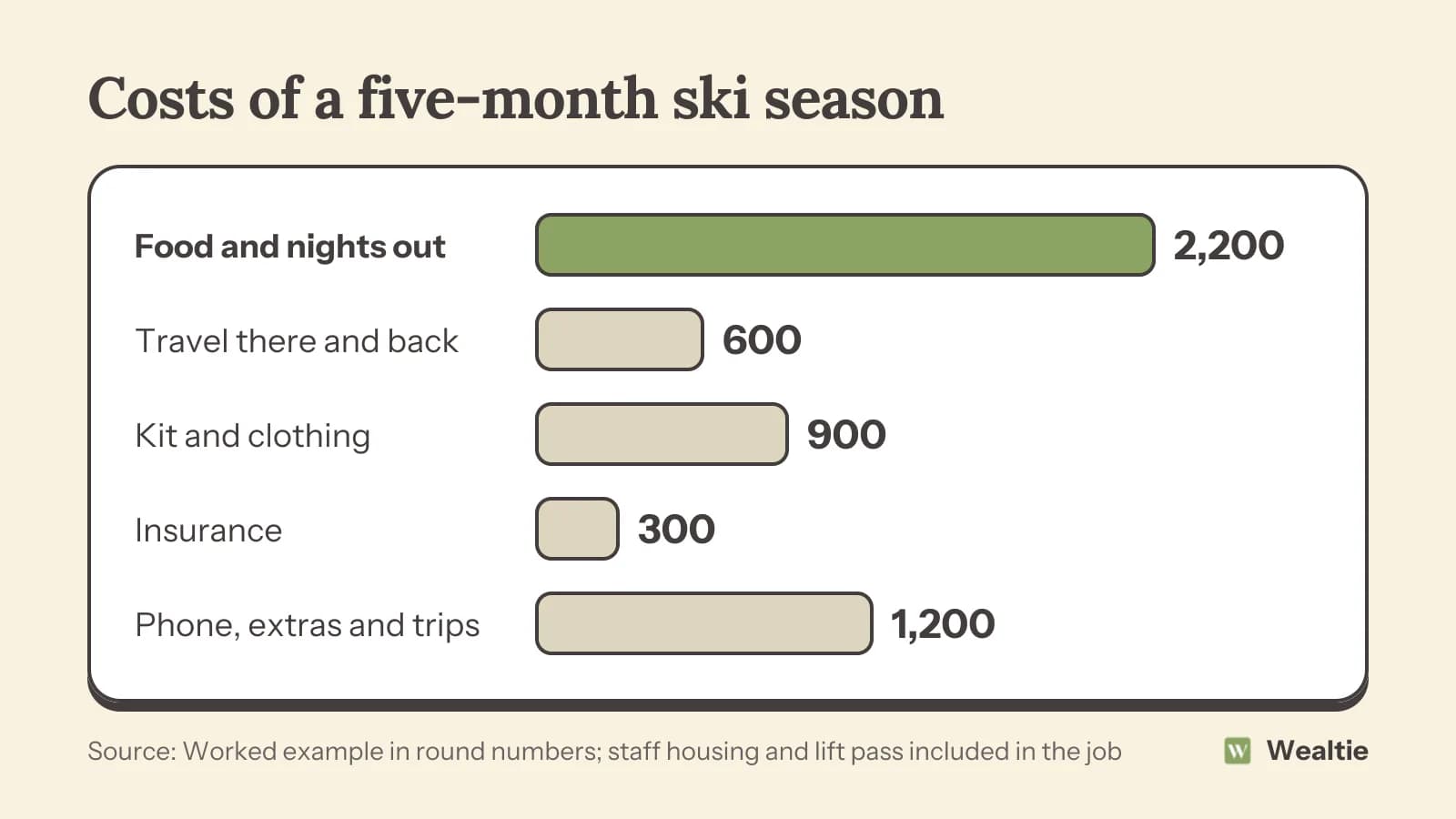
The season earns 6,000 and costs 5,200, leaving 800. Without a job that includes housing and a lift pass, those two items alone could cost more than the wages, so the job package matters enormously.
What should you look for in a ski season job?
Accommodation included
Staff housing is often shared and basic, but it saves the biggest cost. Resort rents can be very high.
A lift pass
A season pass can be expensive to buy yourself. Jobs that include one save a lot.
Meals
Chalet and hotel jobs sometimes include some meals, which cuts food costs.
Time to ski
Check your hours and days off, since that's why most people do a season.
Work rights
Make sure you're allowed to work in the country, and understand any visa or permit costs. Rules vary a lot.
Where does the money go?
Food and nights out
Resort prices for food and drinks are high, and après-ski is part of the culture. This is often the biggest cost and the easiest to overspend on.
Kit
Skis or a snowboard, boots, a helmet and warm clothing add up. Buying second-hand or renting for the season can save a lot.
Insurance
Winter sports insurance that covers working abroad and off-piste skiing, if relevant, is essential. Is travel insurance worth it? covers what to look for.
Trips and extras
Days off in nearby resorts, phone bills and occasional treats add up over five months.
How do you save money during a season?
Cook at home
Cooking in staff accommodation instead of eating out saves the most.
Set a weekly spending limit
Deciding how much you'll spend each week on food, drinks and fun keeps the season sustainable.
Buy kit second-hand
End-of-season sales and second-hand shops in resorts are full of good kit.
Earn tips
Many resort jobs come with tips, which can boost income if you save them.
Watch exchange rates
If you're paid in a different currency from your savings at home, track both. How to use multiple currencies in Wealtie shows how.
How much should you save before you go?
Having savings before you leave covers kit, travel, deposits and the first weeks before your first pay. A buffer for emergencies, like an injury or losing your job, is important too. How to budget for a gap year and the working holiday budget cover similar planning.
How does income vary over the season?
Income can be uneven, with tips higher in busy weeks and lower at the start and end of the season. How to budget with seasonal income covers smoothing uneven pay.
Think about what you want from the season before you choose a job. Some people want to ski every day and accept a low-paid job with lots of free time. Others want to save money and take a busier role with better pay or tips. Being clear about your priority helps you choose a job and resort that fit your budget. Smaller, less famous resorts often have lower prices for food and drinks, which can make a big difference over five months.
Keep track of your money from the first week. It's easy to spend heavily at the start, when everything is new and exciting, and run short later in the season. A simple weekly check of what you've spent and what's left keeps you on track.
Plan for the end of the season too. Travel home, last-minute gifts and the gap before your next job all cost money. Keeping a little aside from each pay packet means you finish the season on a high rather than worrying about money.
Finally, remember that experiences are part of the value. Many seasonaires come home with modest savings but new skills, friendships and memories, which is worth planning for as long as you avoid debt.
How can Wealtie help on a ski season?
Wealtie supports multiple currencies, so you can track wages in one currency and savings in another. Logging spending in expense categories like food, nights out and kit shows where your wages go each month.
Questions people ask
In a worked example, a five-month season with housing and a lift pass included cost about 5,200, against 6,000 in wages.
Some people do, mainly by choosing jobs with housing and a lift pass, cooking at home and limiting nights out.
Look for staff accommodation, a lift pass, some meals, time to ski and the right to work in the country.
Winter sports insurance that covers working abroad and the activities you'll do, including off-piste if relevant.
This article is general information, not financial, tax or legal advice. Your situation is your own; check the numbers that apply to you before you act on them.