Multi-currency & travel: Monthly rental vs hotel: what's cheaper for a long stay?
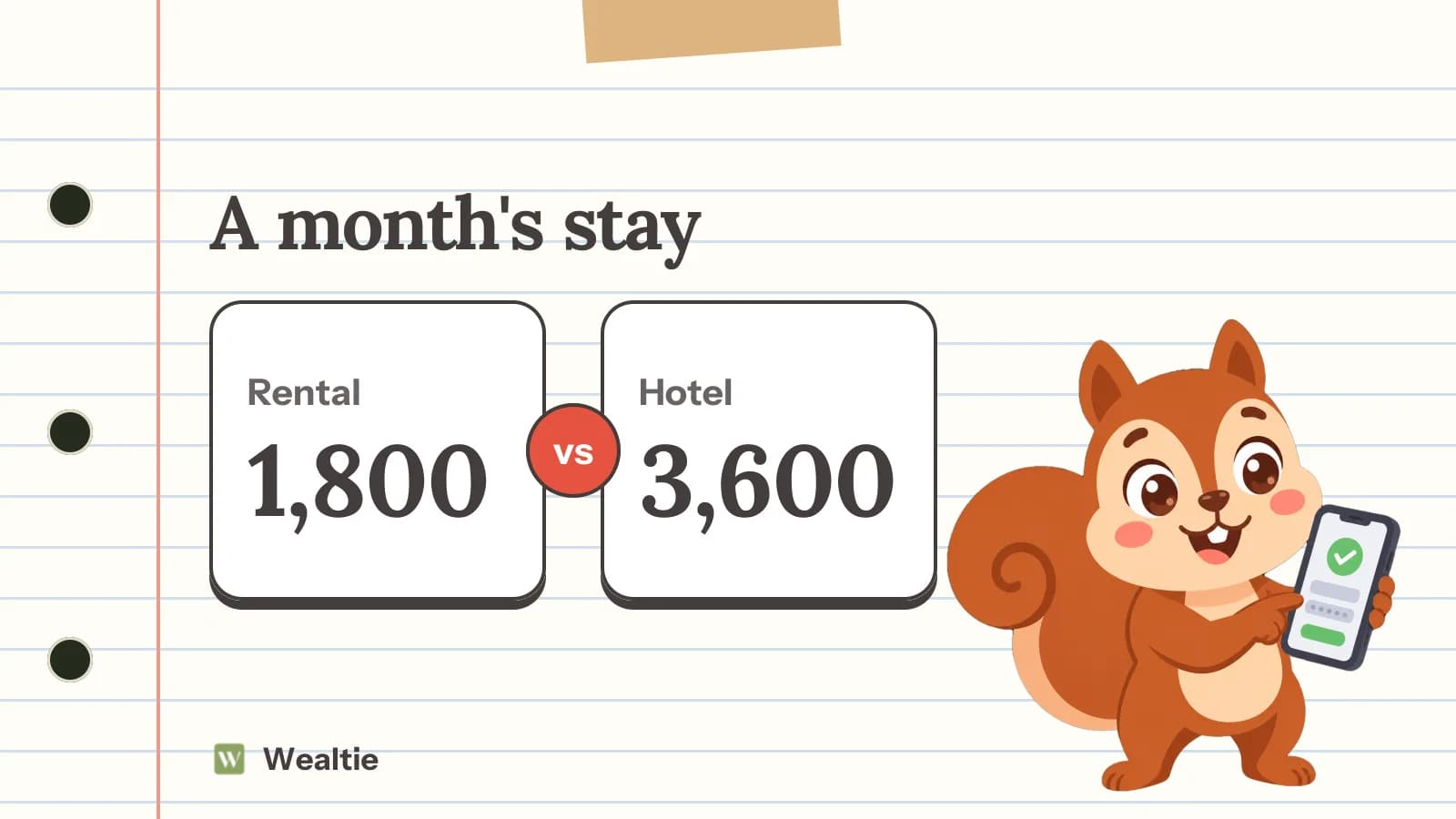
In the monthly rental vs hotel choice, a furnished monthly rental usually costs far less than a hotel for stays longer than a couple of weeks. In a worked example, a month in a rental costs 1,800, against 3,600 in a hotel.
 By Wealtie Team · 3 min read
Key takeaways
- For stays longer than a couple of weeks, a monthly rental is usually much cheaper than a hotel.
- A kitchen and washing machine save money on food and laundry.
- Many rentals offer weekly and monthly discounts.
- Hotels can still win for short stays or when work pays.
Monthly rental vs hotel: which is cheaper?
When you need somewhere to stay for a few weeks or months, perhaps for a work contract, a relocation, renovations at home or an extended trip, the choice often comes down to a hotel or a furnished rental. Hotels are easy and flexible, but nightly rates add up quickly over a long stay. Monthly rentals usually cost much less and give you a kitchen, more space and a washing machine.
Here's a worked example of a month in a mid-priced city, in round numbers that work in any currency:
| Option | Cost for a month |
|---|---|
| Furnished monthly rental | 1,800 |
| Serviced apartment | 2,700 |
| Hotel at 120 a night | 3,600 |
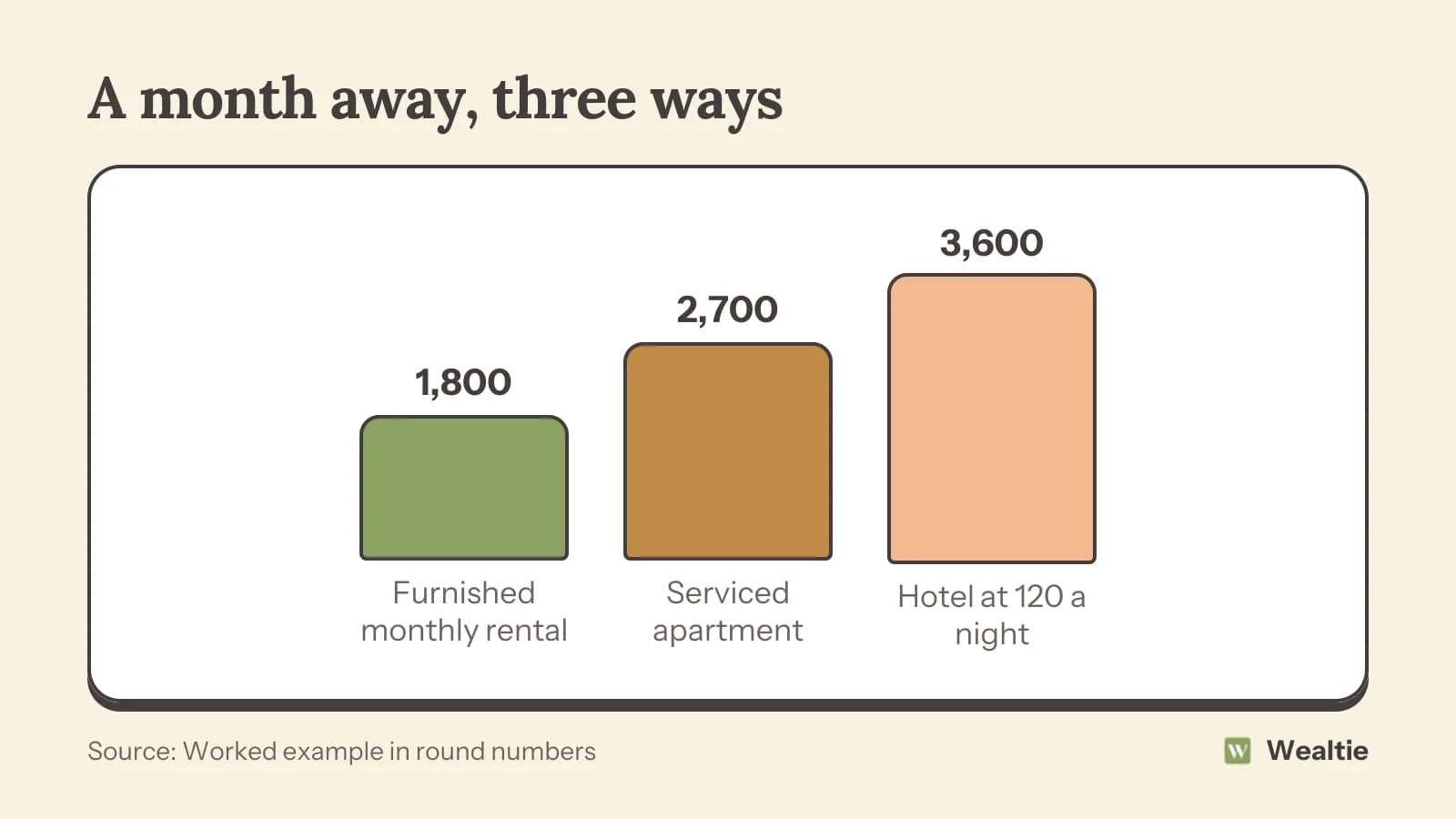
The rental costs half as much as the hotel. A serviced apartment, which offers hotel-style cleaning with a kitchen, sits in between. Prices vary a lot by city and season, so compare options for your dates.
How do food and laundry change the sums?
A kitchen makes a big difference over a long stay. If eating out costs around 40 a day and cooking most meals brings that to 20, you save about 600 over a month. A washing machine avoids hotel laundry charges or trips to a laundrette. These everyday savings often add up to as much as the difference in accommodation price. How to set a daily travel budget covers working out costs per day.
When is a monthly rental better?
Stays of a few weeks or more
Many rentals offer weekly and monthly discounts, which make longer stays much cheaper per night.
Relocations
When you're moving for a job, a rental gives you a base while you look for a permanent home. How to plan a relocation budget covers the costs of moving for work.
Working remotely
More space, a desk and reliable internet make a rental better for working. The digital nomad budget covers living and working in different places.
Families
Separate bedrooms and a kitchen make longer stays much easier for families than a hotel room.
When is a hotel better?
Short stays
For a few nights, hotels are often simpler, and some rentals charge cleaning fees that make short stays expensive.
When your employer pays
If work covers the cost, the convenience of a hotel may matter more than the price.
When you need services
Daily cleaning, a reception desk and on-site facilities can be worth paying for in some situations.
Flexibility
Hotels usually make it easier to leave early or change dates. Rentals often have stricter cancellation terms.
How do you find a good monthly rental?
Ask for monthly rates
Many hosts and agencies offer lower rates for long stays, even if they're not advertised. Ask.
Check what's included
Confirm that utilities, internet, cleaning and bedding are included, and check for extra fees.
Read reviews and check the location
A cheap rental far from where you need to be can cost more in transport.
Use safe payment methods
Be wary of listings that ask for payment outside a booking platform or by bank transfer before you've seen the property. Rental scams are common.
What about serviced apartments?
Serviced apartments combine a kitchen and living space with hotel-style services like cleaning and a front desk. They suit people who want more comfort than a rental and more space than a hotel. How to save money on hotels and how to save money on holiday rentals cover getting better rates on both.
Think about the extra costs that come with each option. Rentals may charge a cleaning fee, a security deposit and sometimes utilities or a booking fee. Hotels may add local taxes, parking, breakfast and laundry charges. Adding everything up for your dates gives a fair comparison, and it's often the rental that wins by a wide margin once stays pass a couple of weeks.
If you're relocating for work, ask your employer whether they'll cover temporary accommodation and how much. Some offer a set amount, which may go further in a rental than a hotel, leaving more money for other moving costs. Others have arrangements with serviced apartment providers at discounted rates.
Location matters as much as price. A cheaper rental far from your office or the places you need to go can cost more in transport and time. Checking the commute or travel time before booking helps avoid a false saving.
Finally, keep receipts for accommodation and related costs. If your stay is for work, you may be able to claim some costs back from your employer or as a business expense.
How can Wealtie help you track a long stay?
Log accommodation, food and transport in their own expense categories, and set a budget for the stay. If you're paying in another currency, Wealtie supports multiple currencies, so you can see your costs in one place.
Questions people ask
Usually, for stays longer than a couple of weeks. In a worked example, a month in a rental cost 1,800, against 3,600 in a hotel.
In a worked example, cooking most meals instead of eating out saved about 600 over a month.
Hotels are often better for short stays, when your employer pays or when you need daily services and flexible dates.
Ask hosts for monthly rates, check what's included, read reviews, consider the location and pay through safe methods.
This article is general information, not financial, tax or legal advice. Your situation is your own; check the numbers that apply to you before you act on them.