Income & freelancing: How to budget seasonal income so the off-season is already paid for
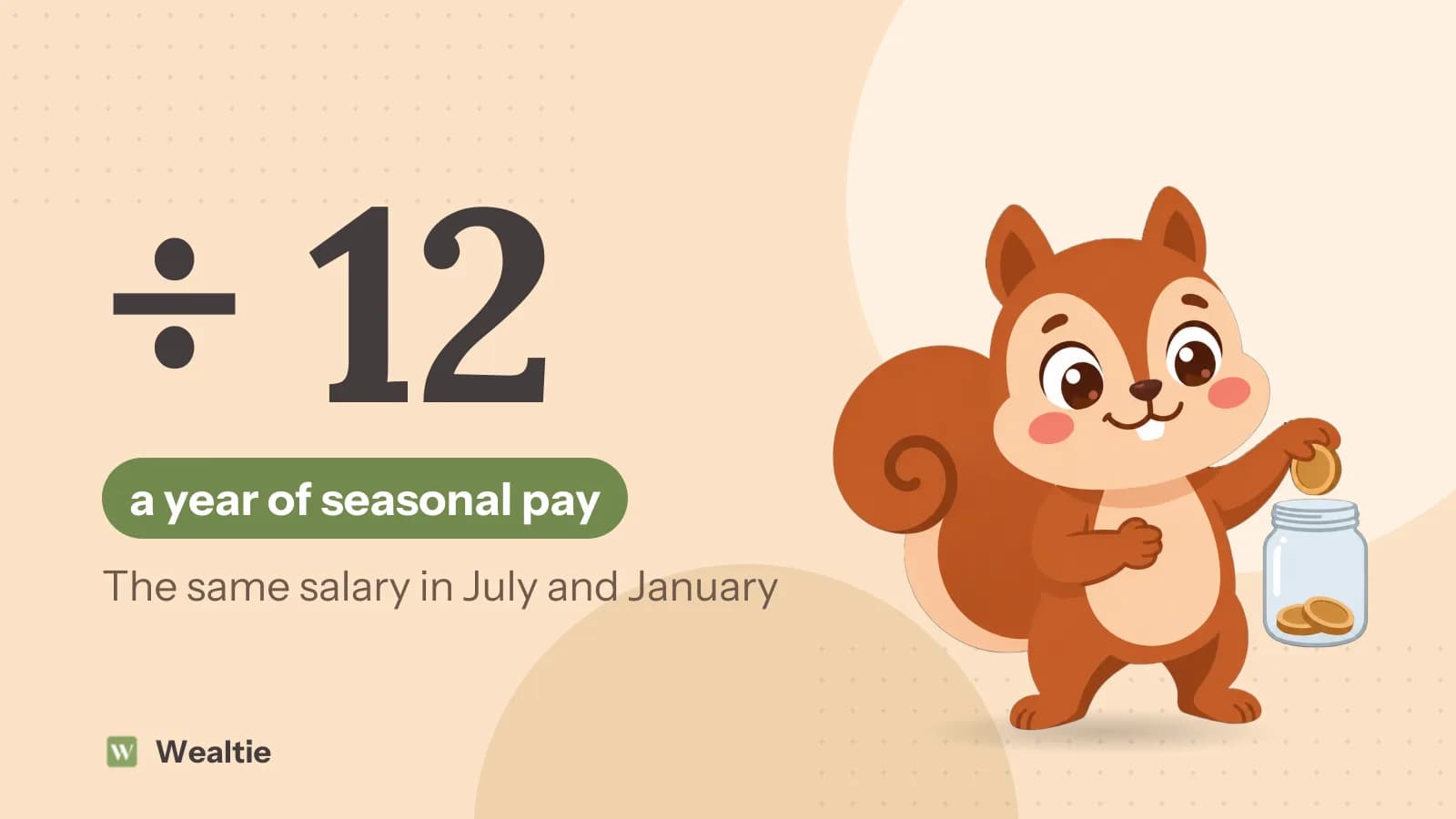
To budget seasonal income, add up what you expect to earn in the whole year, divide it by twelve, and pay yourself that amount every month from a holding account. Busy months fill the account; quiet months draw it down. The off-season is then already paid for before it starts.
 By Wealtie Team · 3 min read
Key takeaways
- Budget on the year, not the month: add up a year's expected income and divide by twelve.
- Pay all seasonal income into a holding account, and pay yourself a fixed monthly amount from it.
- Plan the off-season first: list its months and costs before you spend anything from the busy season.
- Set aside tax from each payment as it arrives, if none is taken out.
- Use the first season to learn your real numbers, and set a cautious monthly amount until you have them.
How do you budget seasonal income?
Budget on the year, not the month.
Seasonal work, like tourism, farming, ski resorts, retail at Christmas, or construction, pays well for part of the year and little or nothing for the rest. A monthly budget built on a busy month breaks the moment the season ends. One built on the year works all year:
- Add up what you expect to earn over twelve months.
- Divide by twelve. That's your monthly salary.
- Pay all income into a holding account.
- Pay yourself the monthly salary from it, every month, busy or quiet.
The busy months fill the holding account. The quiet months draw it down. If the numbers are right, it reaches zero just as the next season starts.
What does that look like in numbers?
Here's a worked example in round numbers, the same in any currency:
| Months | Income per month | Months × income |
|---|---|---|
| 4 busy months | 4,500 | 18,000 |
| 2 shoulder months | 1,500 | 3,000 |
| 6 quiet months | 500 | 3,000 |
| Year | 24,000 |
24,000 divided by twelve is 2,000 a month. In each busy month, 2,500 stays in the holding account; by the end of the season it holds 10,000. Each shoulder month draws 500 from it, and each quiet month 1,500. After the six quiet months, it's back to zero, and the next season begins.
Your budget is then built on 2,000 a month, and it's the same in July as in January.
Why plan the off-season first?
Because it's the part that goes wrong. Spending feels easy when a 4,500 month arrives, and the quiet months feel a long way off.
Before the season starts, write down the off-season months and what they'll cost: rent, bills, food, insurance, any travel home. That total has to be in the holding account by the time the work stops. Anything you'd like to spend from a good season comes after it's covered.
How do you handle the costs of the season itself?
Count them separately from the monthly salary. Seasonal work often brings its own costs: travel to the job, seasonal housing, work clothes or equipment, meals on long shifts. Paid from the busy months' income before anything goes to the holding account, they don't distort the year's numbers.
Watch for free accommodation or meals that come with some seasonal jobs. They lower your costs during the season, but the off-season budget still needs your normal rent and food, so plan it from what life costs when the job's over.
What if this is your first season?
Be cautious, and give yourself a starting buffer.
Without last year's figures, estimate low and set your monthly salary a little under what you expect. You can raise it once the season is going well; cutting it in the middle of the off-season is much harder. If your year starts in the quiet months rather than the busy ones, you'll also need savings to cover the gap until the first season's pay arrives.
After a full year, you'll have real numbers. How to measure income stability turns twelve months of pay into the figures you need to set the next year's salary properly.
What about tax?
If no tax is taken out of your pay, set it aside from each payment as it arrives, in a separate account, before anything goes to the holding account. Big seasonal months can also push more of your income into higher tax brackets; check how your country taxes it. How much to set aside for taxes when you're self-employed has worked examples for US and UK rates.
Should you work in the off-season too?
If you can, yes, but don't count on it until it's confirmed. Treat off-season work as a bonus: it can go to savings, or lower the monthly amount you need to draw from the holding account. If it falls through, the plan still works.
Keep an emergency fund separate from the holding account. The holding account covers the off-season you know is coming; the emergency fund covers the things you don't.
How do you keep the plan running?
In Wealtie, add the holding account to your accounts, log all seasonal income into it, and move your monthly salary to your everyday account as a transfer. Set the salary transfer as a recurring transaction, and set a monthly income goal for the salary amount. The irregular income budget guide covers the same method for other kinds of uneven pay, and how to pay yourself a salary when self-employed explains adjusting the salary in good and bad years.
Questions people ask
Add up your expected income for the whole year, divide by twelve, and pay yourself that amount monthly from a holding account. Busy months top the account up; quiet months draw it down.
Everything above your monthly amount. If the year's income divided by twelve is 2,000 and a busy month pays 4,500, 2,500 stays in the holding account for the off-season.
Use last year's total, or a cautious estimate, and set your monthly amount a little below it. Raise it once the season is going well, rather than starting high.
Yes, separate from the holding account. The holding account covers the off-season you know is coming; the emergency fund covers the surprises.
Often, and even part-time work makes the off-season easier. Count it as a bonus rather than relying on it until it's confirmed.
This article is general information, not financial, tax or legal advice. Your situation is your own; check the numbers that apply to you before you act on them.