Multi-currency & travel: How to plan a cycling holiday budget
A cycling holiday budget depends on whether you bring your own bike, how you carry luggage and where you stay. In a worked example, a self-guided week costs 900, against 1,600 for a guided tour.
 By Wealtie Team · 3 min read

Key takeaways
- A cycling holiday budget depends on bike hire, luggage and accommodation.
- Self-guided trips cost much less than guided tours.
- Bringing your own bike can save hire fees but adds transport costs.
- Staying in guesthouses and eating local food keeps costs down.
What goes into a cycling holiday budget?
A cycling holiday lets you explore a region slowly, covering more ground than walking but seeing more than from a car. Trips range from gentle routes between villages to challenging mountain rides. A cycling holiday budget depends on whether you bring your own bike or hire one, whether you join a guided tour or plan it yourself, how your luggage gets from place to place and where you stay.
Here's a worked example of a self-guided week, in round numbers that work in any currency:
| Cost | Amount |
|---|---|
| Accommodation, 6 nights | 420 |
| Bike hire | 150 |
| Food and drinks | 210 |
| Luggage transfers | 80 |
| Travel and extras | 40 |
| Total | 900 |
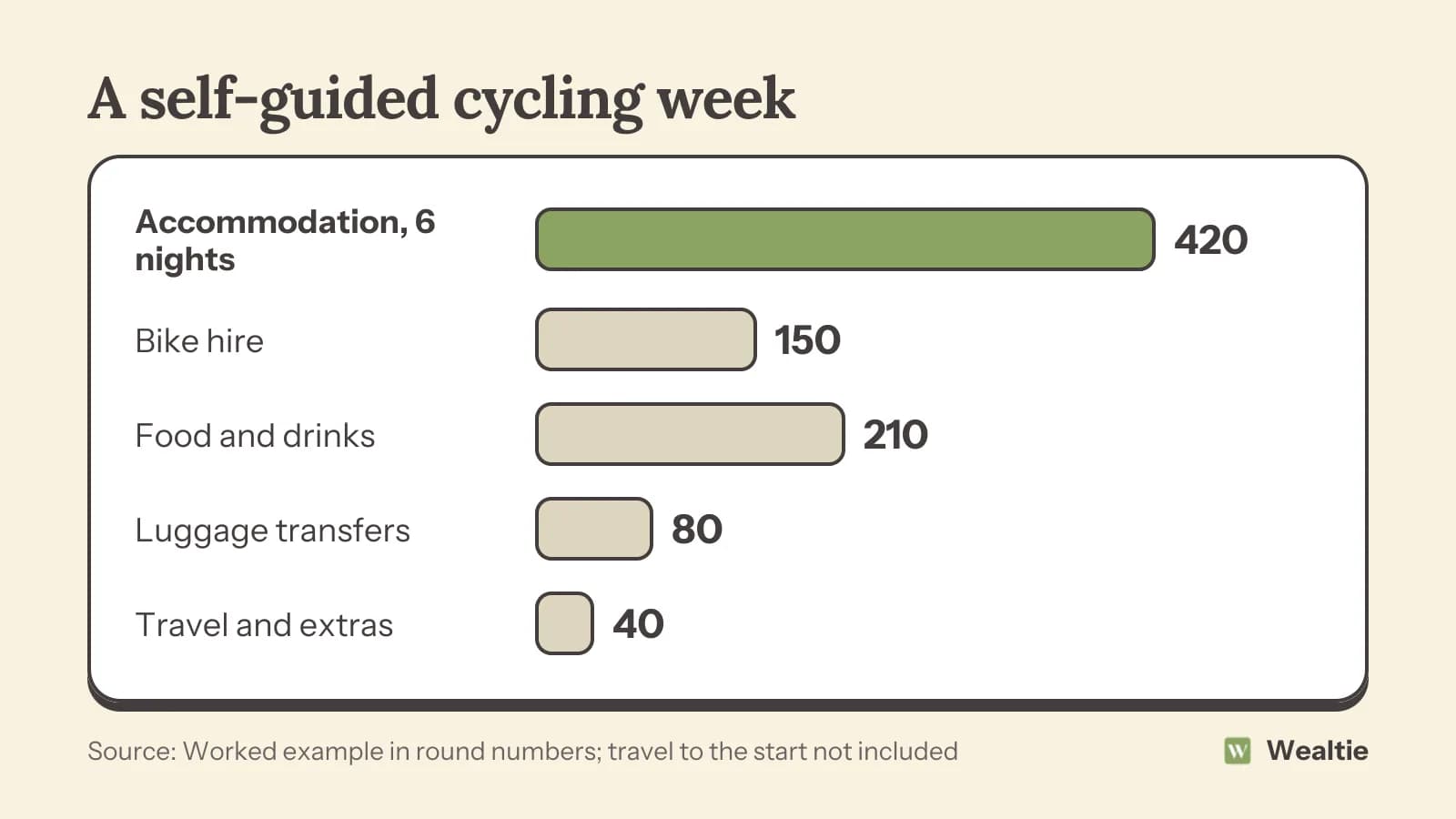
A self-guided week costs about 900, not including travel to the start. A guided tour with a leader, support vehicle, hotels and some meals might cost around 1,600. Camping or hostels can bring the cost down further.
Should you go guided or self-guided?
Guided tours
A guide leads the group, a support vehicle carries luggage and helps with breakdowns, and accommodation and many meals are included. It's easy and sociable but costs more.
Self-guided tours
A company books accommodation, provides routes and transfers luggage, but you ride on your own. It's a good middle option.
Fully independent
You plan everything yourself. It's the cheapest option but takes more organising.
Should you bring your own bike?
Bringing your bike
Your own bike is comfortable and familiar, and saves hire fees. Transporting it by plane or train can cost extra and needs a bike bag or box.
Hiring a bike
Hiring avoids transport hassle and lets you choose a bike suited to the terrain, like an e-bike for hilly areas. Hire costs add up over a week.
How do you save on a cycling holiday?
Go self-guided or independent
Planning your own route and booking your own accommodation saves the most.
Stay in guesthouses, hostels or campsites
Simple accommodation costs much less than hotels. How to plan a camping trip budget covers camping costs.
Carry your own luggage
Panniers on your bike avoid luggage transfer fees, though they make riding harder.
Eat locally
Picnics from markets and local cafés cost less than restaurants.
Travel by train
Reaching the start by train can be cheaper and easier with a bike than flying. How to budget a rail pass trip covers rail travel.
Travel off-peak
Spring and autumn often have lower prices and cooler riding weather.
What else should you budget for?
Travel insurance that covers cycling, repairs and spare parts, and a daily allowance for snacks and drinks are easy to forget. Is travel insurance worth it? covers what to check, and how to set a daily travel budget covers planning day-to-day spending. If you cycle at home, the cost of cycling covers the bike itself.
Choose a route that matches your fitness. A route that's too hard can mean taxis, extra nights or a hired e-bike to finish, all of which add cost and stress. Many tour companies grade routes by difficulty, and riding a few long days at home before you go helps you choose wisely. Flat routes along rivers and coasts are popular for beginners, while mountain routes suit experienced riders.
E-bikes have made cycling holidays possible for many more people. They cost more to hire but let you ride longer distances and tackle hills without exhausting yourself. If you're travelling with someone fitter, an e-bike can help you keep pace and enjoy the trip together.
Pack light and practical. Padded shorts, a waterproof jacket, a basic repair kit and a lock are essentials. Buying these before you go is usually cheaper than buying them in a tourist area.
Check how your bike or hire bike is insured. Some travel insurance policies cover cycling equipment, while others exclude it or limit the amount. Bike hire companies may offer damage cover for a small fee.
Finally, leave room in the budget for rest days and treats. A day off the bike to explore a town, or a special meal at the end of the trip, makes the holiday more enjoyable.
Many regions have well-signed cycle routes with maps available free online or from tourist offices, which makes planning an independent trip easier and cheaper. Downloading routes to your phone before you go means you won't need to pay for a guide or extra data abroad.
Keep receipts and a running total during the trip, so you know how close you are to your budget each evening.
How can Wealtie help you plan the trip?
Set a budget for the holiday and log accommodation, hire and food in their own expense categories. Wealtie supports multiple currencies, so you can track spending abroad alongside your home currency.
Questions people ask
In a worked example, a self-guided week cost about 900, while a guided tour cost about 1,600.
It saves hire fees, but transporting a bike by plane or train can cost extra. Compare both for your trip.
A company books accommodation, provides routes and moves your luggage, but you ride on your own.
Plan it yourself, stay in guesthouses or campsites, carry your own luggage, eat locally and travel off-peak.
This article is general information, not financial, tax or legal advice. Your situation is your own; check the numbers that apply to you before you act on them.