Budgeting: Septic tank emptying cost and how to budget for it
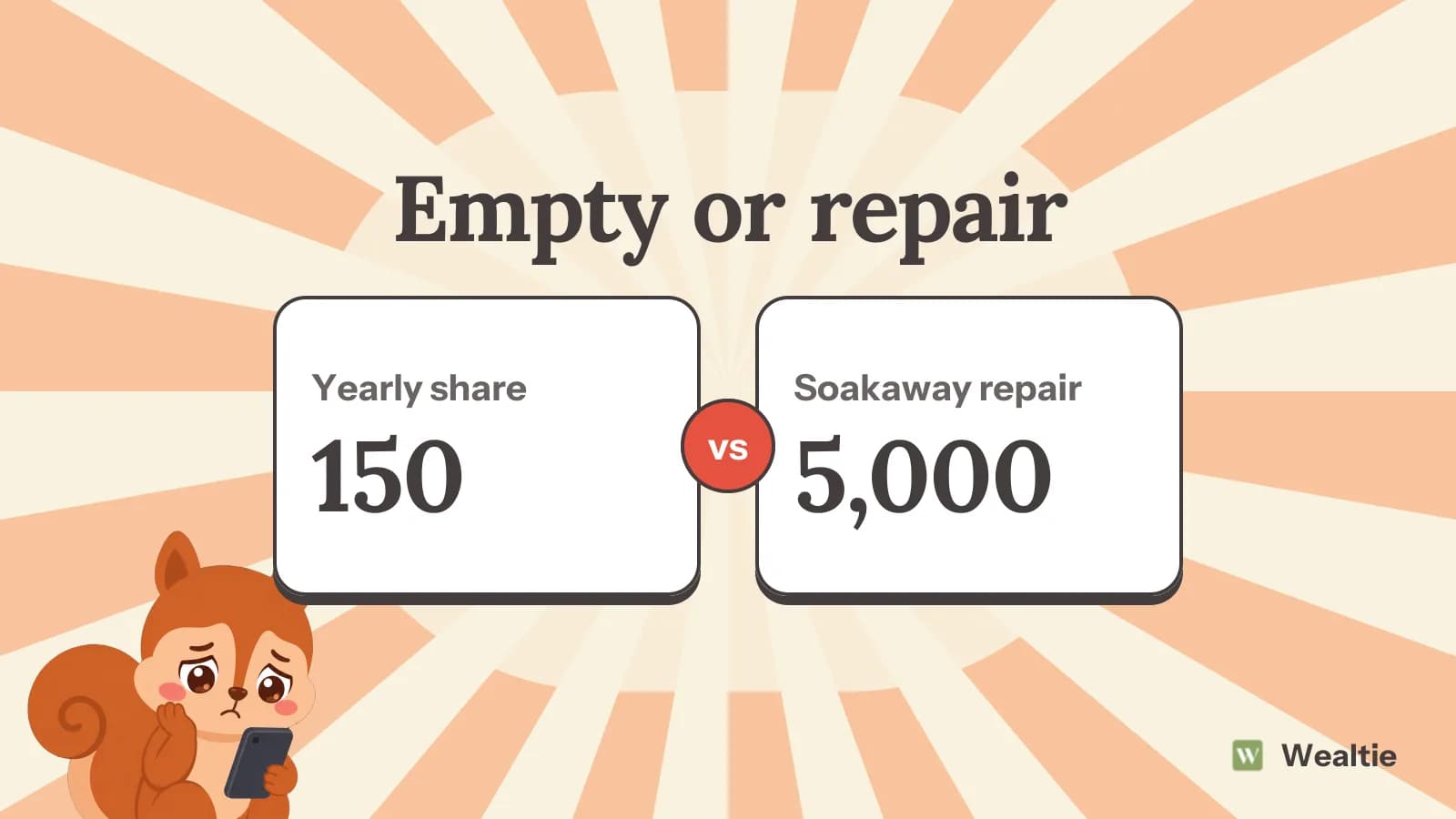
Septic tank emptying cost is a regular expense for homes not connected to mains drainage, and skipping it can lead to much bigger repair bills. In a worked example, emptying every two years costs about 150 a year.
 By Wealtie Team · 3 min read
Key takeaways
- Septic tank emptying cost is a regular expense for homes off mains drainage.
- Most tanks need emptying every one to three years.
- Skipping emptying can damage the soakaway, which is expensive to fix.
- Careful use of drains helps the system last longer.
What is the septic tank emptying cost?
Many homes in rural areas aren't connected to mains sewers and instead use a septic tank, which collects and treats waste water on the property. Solids settle in the tank and need pumping out regularly by a specialist company. Septic tank emptying cost depends on the size of the tank, how easy it is to reach and where you live.
In round numbers that work in any currency, emptying a typical household tank might cost around 300. If it needs doing every two years, that works out at about 150 a year. Here's a worked example comparing regular care with the cost of a major repair:
| Cost | Amount |
|---|---|
| Emptying, per year | 150 |
| Inspection, per year | 50 |
| Soakaway repair | 5,000 |
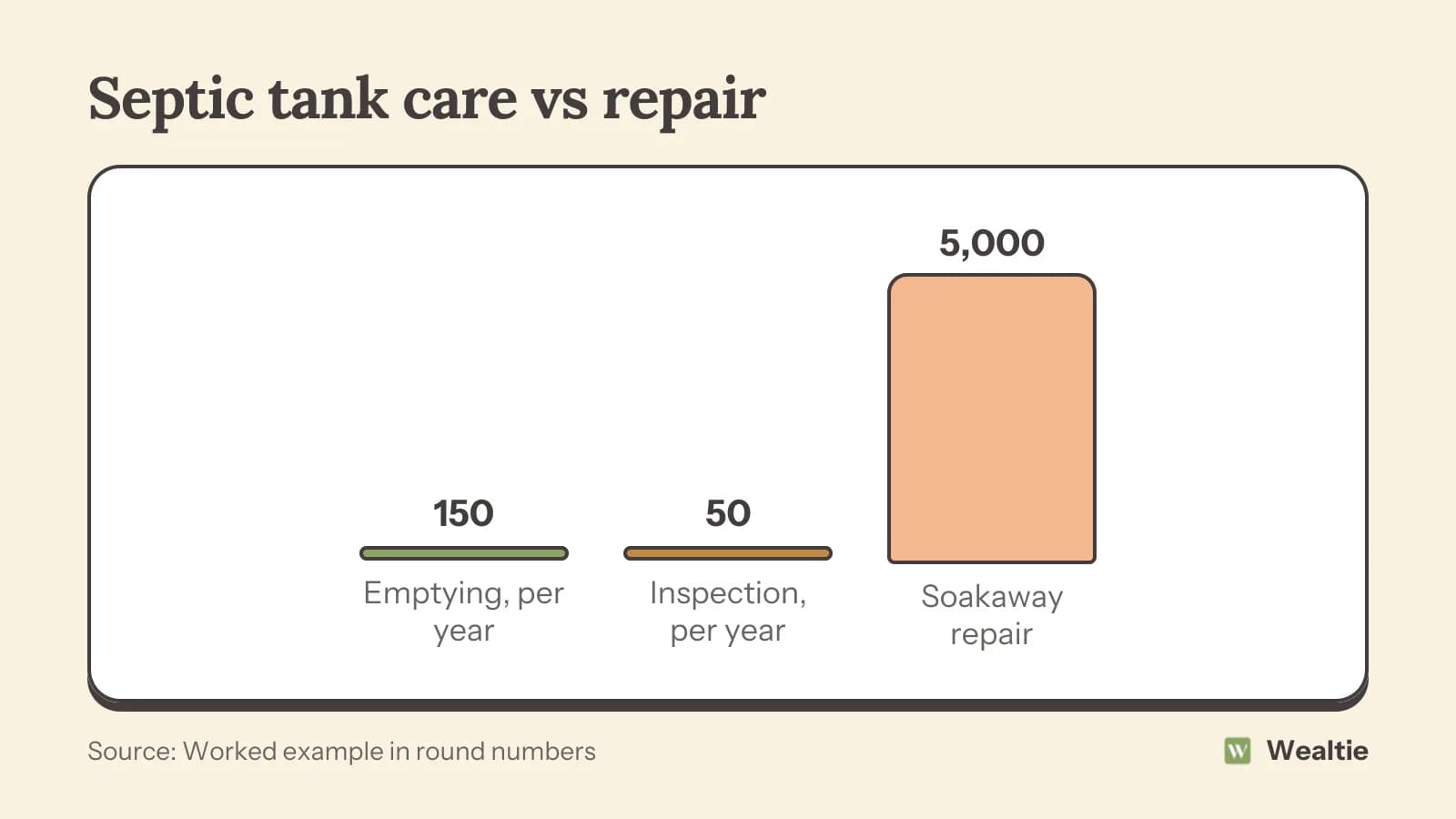
Regular emptying and a quick inspection cost around 200 a year. If the tank is left too long, solids can wash into the soakaway or drainage field, blocking it. Repairing or replacing a soakaway can cost thousands, which is why regular emptying is so much cheaper in the long run.
How often does a septic tank need emptying?
Most tanks need emptying every one to three years, depending on the size of the tank and how many people live in the home. A larger household fills the tank faster. Signs that it needs emptying include slow drains, gurgling pipes, bad smells and wet or unusually green patches of grass near the tank or drainage area. Your emptying company can suggest a schedule based on your tank.
What else does a septic system need?
Regular inspections
A quick check of the tank, pipes and drainage area can catch problems early.
Careful use of drains
Avoid flushing wipes, nappies, fats, oils and harsh chemicals, which can block the system or kill the bacteria that treat the waste.
Watching water use
Spreading laundry across the week and fixing leaks reduces the load on the system. How to save money on your water bill has tips that help here too.
Following local rules
In some places, septic systems must meet standards or be registered. Check what applies where you live.
What should buyers know?
If you're buying a home with a septic tank, ask when it was last emptied and whether it meets local rules. A survey of the system can reveal problems that could be expensive to fix. The upfront costs of buying a home covers other checks to budget for, and first-year homeowner costs covers jobs new owners often overlook.
How do you keep costs down?
Empty on a schedule
Regular emptying avoids emergency call-outs and damage.
Compare companies
Prices vary, so get a few quotes and ask what's included.
Share a visit with neighbours
If several nearby homes have tanks, booking the same day can sometimes lower the price.
Look after the system
Careful use of drains is the cheapest way to make a septic system last.
How do you budget for it?
Since emptying happens every year or two, it's easy to forget until it's due. Saving a small amount each month in a sinking fund or including it in a home maintenance budget means the cost is ready when needed.
Keep a record of every emptying, inspection and repair, including the date, the company and anything they noticed. It helps you plan the next visit, spot problems early and shows buyers the system has been looked after if you sell. Some companies offer a regular emptying contract, which can be cheaper and means you never forget.
Planting near the drainage area needs care too. Trees and large shrubs can send roots into pipes and soakaways, causing blockages that are expensive to clear. Grass is usually the best cover for a drainage field, and keeping vehicles and heavy loads off it avoids crushing pipes.
If you're planning an extension or more bedrooms, check whether your septic tank is big enough for the extra people. An overloaded system fills faster and is more likely to fail, so upgrading may need to be part of the project budget.
Finally, talk to neighbours with similar systems. They often know reliable local companies and fair prices, and may be happy to share a visit to save on call-out costs.
Some councils and water companies publish guidance on septic tanks, including lists of licensed emptying firms, which is a good place to start.
How can Wealtie help you plan it?
Add septic tank emptying as a recurring transaction on its schedule, and log inspections and repairs in a home expense category. Seeing it in your budget keeps it from being forgotten.
Questions people ask
In a worked example, emptying a typical household tank cost about 300, or around 150 a year if done every two years.
Most tanks need emptying every one to three years, depending on the tank size and how many people live in the home.
Solids can block the soakaway or drainage field, which can cost thousands to repair.
Avoid wipes, nappies, fats, oils and harsh chemicals, which can block the system or harm the bacteria that treat waste.
This article is general information, not financial, tax or legal advice. Your situation is your own; check the numbers that apply to you before you act on them.