Saving: The upfront costs of buying a home, beyond the deposit
The upfront costs of buying a home go well beyond the deposit, with legal fees, surveys, property taxes, mortgage fees and moving all due around completion. In a worked example, buying a 250,000 home costs about 9,000 on top of the deposit.
 By Wealtie Team · 3 min read

Key takeaways
- The upfront costs of buying a home include legal fees, surveys, taxes, mortgage fees and moving.
- In a worked example, buying a 250,000 home costs about 9,000 on top of the deposit.
- Property taxes vary hugely by country and price, so check the rules early.
- Save for these costs alongside your deposit, so you don't have to shrink the deposit at the last minute.
What are the upfront costs of buying a home?
They're everything you pay to complete the purchase, apart from the deposit itself. Many first-time buyers focus entirely on saving the deposit, then discover a long list of other costs due at the same time: legal fees, surveys, taxes on the purchase, mortgage fees and moving. Together, they can add up to several thousand. Knowing the upfront costs of buying a home early means you can save for them alongside the deposit. It also helps you compare homes at different prices, since some costs rise with the price.
The costs vary a lot between countries, regions and property prices, so check the rules and typical fees where you're buying.
How much do the extra costs add up to?
Here's a worked example for buying a 250,000 home, in round numbers that work in any currency:
| Cost | Amount |
|---|---|
| Property taxes on the purchase | 4,000 |
| Legal fees | 1,500 |
| Mortgage fees | 1,000 |
| Moving | 1,000 |
| Survey | 600 |
| Setting up the home | 900 |
| Total | 9,000 |
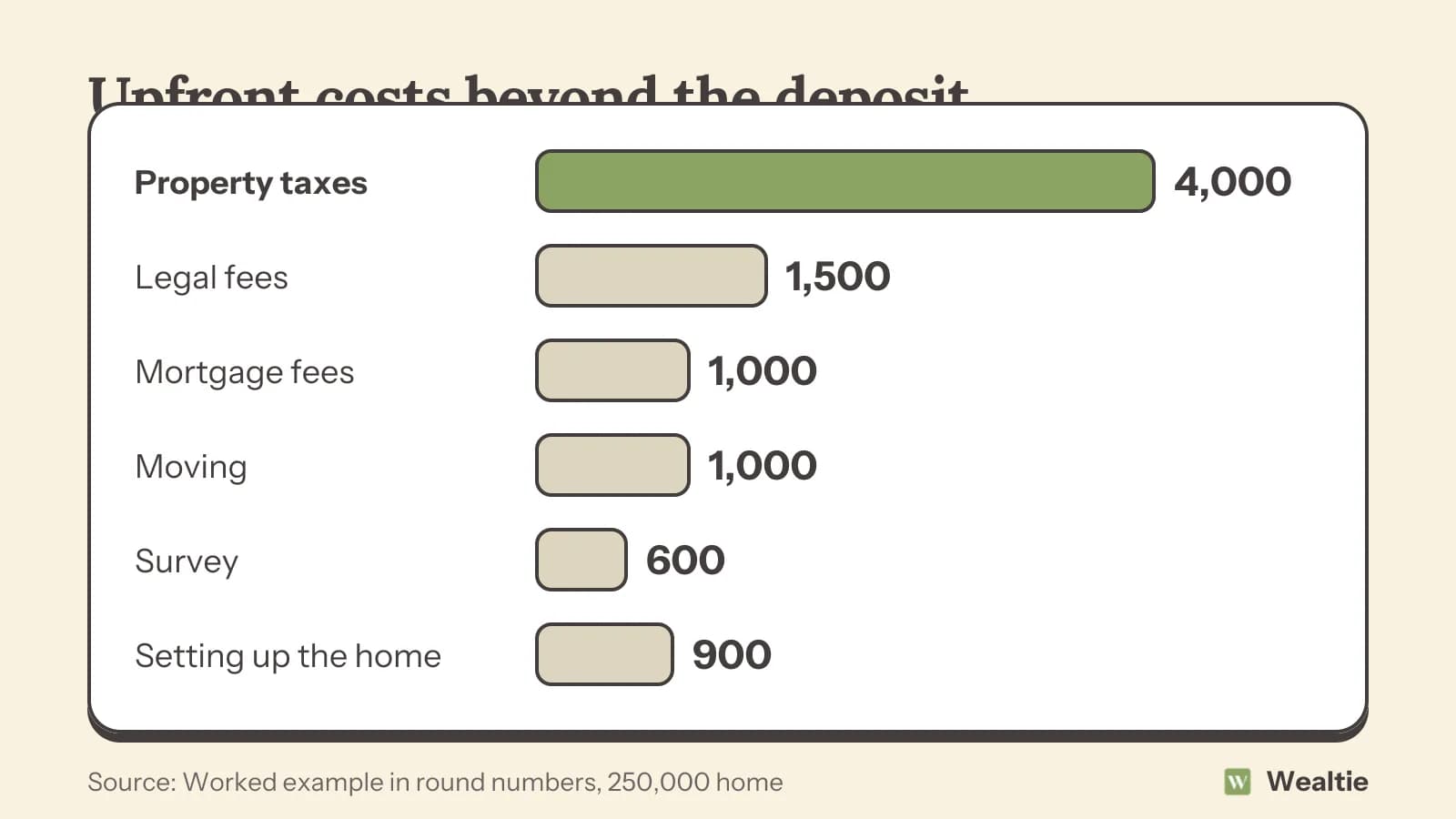
In this example, the buyer needs about 9,000 on top of the deposit. In some places, property taxes are much higher or lower, and first-time buyers may get reliefs, which can change the total a lot.
What are the main costs?
Property taxes
Many countries charge a tax or duty when you buy a property, often based on the price. It can be the biggest single upfront cost. Some places have reductions for first-time buyers or lower-priced homes. Check the current rules early, since they can change.
Legal fees
A solicitor, notary or conveyancer handles the legal side: checking the property, searches, contracts and transferring ownership. Fees vary, and there are often extra charges for searches and registration. Get several quotes and ask what's included. A cheap quote that adds extras later can end up costing more than a higher fixed fee.
Surveys and valuations
A lender usually carries out a valuation, sometimes for a fee. A more detailed survey, which you choose, checks the condition of the home. It costs more but can uncover problems that save you far more, or help you negotiate the price.
Mortgage fees
Some mortgages charge arrangement or booking fees, and brokers may charge for their service. Sometimes fees can be added to the loan, but that means paying interest on them. Compare deals on total cost, not just the interest rate. A broker can help, but check how they're paid and whether they look at the whole market.
What about moving and setting up?
Removals, van hire, packing materials and time off work all cost money. Once you're in, you may need furniture, appliances, curtains, tools and small repairs. Setting aside a few hundred for the first weeks avoids putting these on a credit card. Many new owners also need basic tools, a ladder and cleaning supplies they never needed as renters. The first-year homeowner costs covers what comes after you move in.
How do you save for the upfront costs?
Add them to your deposit target from the start. If your deposit goal is 25,000 and the extra costs are about 9,000, your real target is 34,000. Saving for both together stops you having to shrink the deposit at the last minute, which could mean a worse mortgage rate. How to save money for a house has a step-by-step plan.
Keep a buffer
Something unexpected often comes up during a purchase, like an extra search, a higher valuation fee or a delay that means paying rent for longer. A buffer of a few hundred gives you breathing room. Keeping it separate from the deposit savings makes it clear what's available if something comes up.
Timing the payments
Not every cost is paid on the same day. Surveys and valuations are often paid early, legal fees and taxes around completion, and moving costs on the day. Writing down when each one falls due helps you keep enough money available at each stage, without dipping into the deposit.
How do you keep the costs down?
Compare quotes for legal work and surveys, check whether you qualify for first-time buyer reliefs, and look at mortgage deals with lower fees. Moving yourself with help from friends, or choosing a quieter day for removals, saves money. Setting a price that leaves room for all of this matters as much as the deposit, and rent or buy a house covers the bigger decision.
How do you track house-buying costs in Wealtie?
Add a savings account for your deposit and buying costs, and move money into it each month as a transfer, which isn't counted as spending. As fees are paid, log them in a home buying line in your expense categories, so you can see the full cost of the purchase. A limit in the budget tracker keeps everyday spending steady while you save.
Questions people ask
Property taxes, legal fees, surveys, mortgage fees, moving and setting up the home, on top of the deposit.
In a worked example, about 9,000 for a 250,000 home. Costs vary a lot by country and price.
In some places, first-time buyers get reliefs on property taxes. Check the current rules where you're buying.
Sometimes, but you'll pay interest on them, so compare the total cost.
This article is general information, not financial, tax or legal advice. Your situation is your own; check the numbers that apply to you before you act on them.