Budgeting: How to save money as a single parent on one income
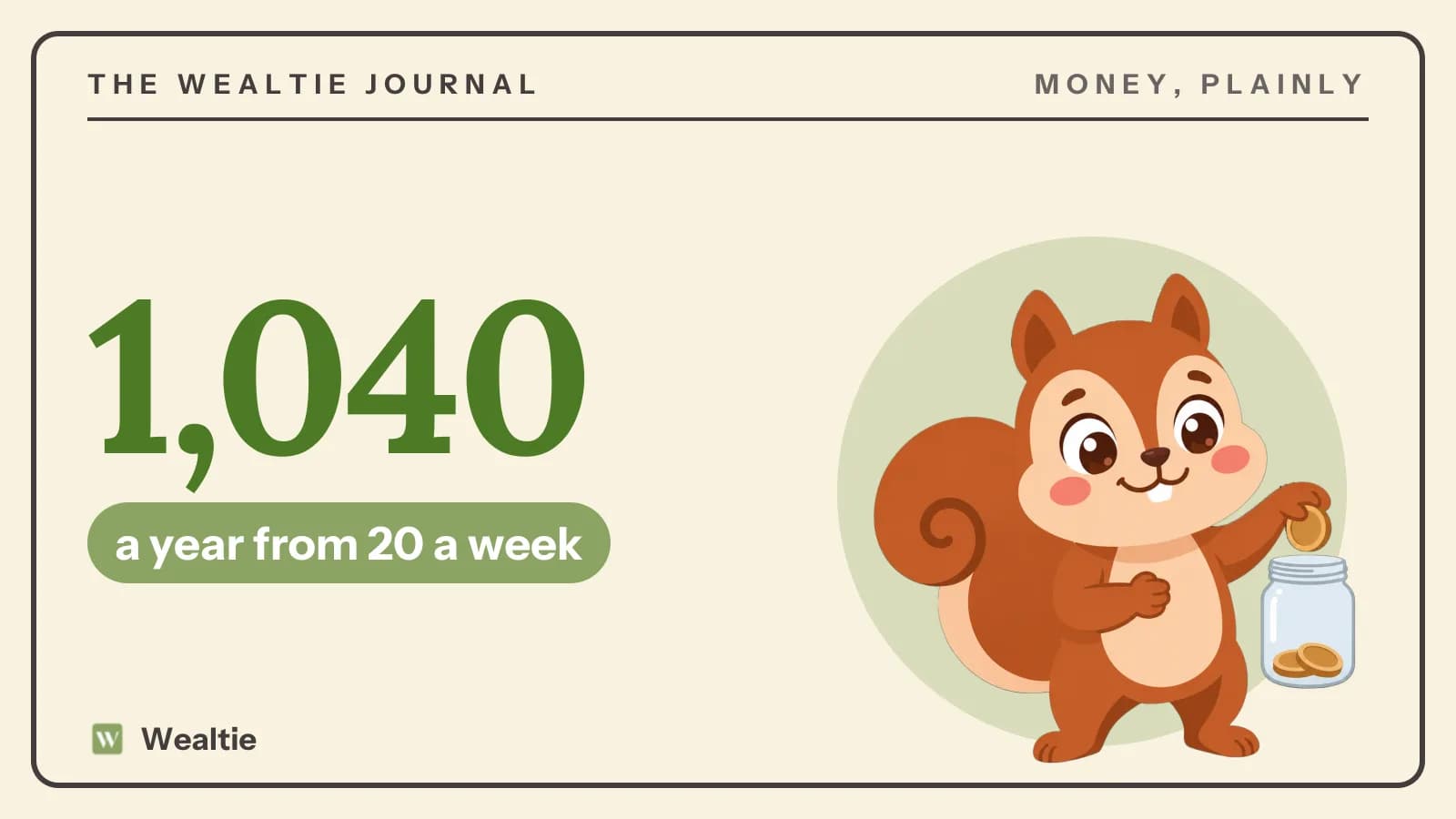
To save money as a single parent, start by claiming every benefit and discount you're entitled to, then protect housing and childcare, cut the biggest flexible costs, and build a small cushion. Even 20 a week saved becomes over 1,000 in a year.
 By Wealtie Team · 3 min read
Key takeaways
- Start by checking every benefit, discount and support scheme you're entitled to, since many go unclaimed.
- Housing and childcare are usually the largest costs, so they're where the biggest savings or support often lie.
- Saving 20 a week builds over 1,000 in a year, enough to cover many small emergencies.
- Child maintenance, if it applies, should be treated as income and planned for, not assumed.
How do you save money as a single parent?
Make sure you're getting all the support you're entitled to, then look at the biggest costs first. Single parents often carry the same costs as a two-parent household on one income, so there's less room for error. A plan, and a small cushion, make a real difference, and the steps below are in the order that usually helps most.
What support might you be entitled to?
Probably more than you're receiving. Depending on where you live, there may be:
- Payments for children, or a top-up for low or single incomes
- Help with childcare costs
- A discount on local or council tax for single adults
- Free school meals and help with uniforms or trips
- Social tariffs for phone, broadband, energy and water
- Help with housing costs
Many families don't claim what they're entitled to. A benefits calculator from your government or a reputable charity takes a few minutes. Check again whenever your hours, income or household changes.
How should you handle child maintenance?
As income, but cautiously. If you receive maintenance, add it to your budget, but don't plan your essential bills around it if it's unreliable. Paying rent from your own income and using maintenance for children's extras or savings means a late payment doesn't put your housing at risk.
If payments are late or missing, there are often official services that can help arrange or collect them.
Which costs should you look at first?
The largest ones. For most single parents, that's housing and childcare.
For childcare, check whether you're getting all the help available, whether different hours or a different provider would cost less, and whether family or a childcare swap with another parent could cover some days. The family budget has more on childcare costs.
Ask your employer about flexible hours, which can lower childcare costs without changing your pay. For housing, a cheaper home might not be realistic, but check that you're getting any discounts on local taxes and help with housing costs you're entitled to.
Where else can you save?
Food and everyday costs. Plan meals for the week, cook in batches, and buy own-brand. How to save money on groceries has a worked approach. Look at children's costs too: second-hand clothes and toys, swaps with other parents, and free activities like libraries, parks and community events.
For bills, check social tariffs and switch where you can. How to negotiate bills shows how.
How do you build a cushion on one income?
Start small and automate it. Even 20 a week is 1,040 a year, which covers a broken washing machine or a school trip without borrowing. Keep it separate from your everyday account, so it isn't spent by accident, and name it after what it's for, like "Kids emergencies", which makes it easier to leave alone.
When a lump sum comes in, like a tax refund or back-paid benefits, put part of it into the cushion. How to build an emergency fund has the steps.
How do you keep the budget manageable?
Keep it simple. One monthly budget with a few categories is enough. Check it once a week, perhaps on a Sunday evening when the children are in bed. A short, regular check is easier to keep up than a long monthly one. Involving older children in simple choices, like the weekly meal plan, helps them understand money and eases the load.
Plan for the predictable spikes, like birthdays, school holidays and Christmas, with a small monthly amount set aside. What is a sinking fund explains how.
What if you're struggling?
Talk to someone early. If bills are piling up, contact the companies before you miss payments, since many have hardship options. Free debt advice from a non-profit can help you sort out priorities. Housing and energy come first.
Ask for help from family, friends or community groups where it's available. Many single parents find that sharing childcare or meals with others eases both money and time.
How do you budget as a single parent in Wealtie?
Set your monthly limit in the budget tracker based on your reliable income, and Budget Health warns you mid-month if your pace would take you over. Add a separate account for your cushion and move money into it as a transfer, which isn't counted as spending. The income tracker can show maintenance and benefits separately from your pay.
Questions people ask
Claim every benefit and discount you're entitled to, focus on housing and childcare costs, plan meals, and save a small amount each week, even 20.
Often child payments, childcare help, local tax discounts, free school meals and social tariffs for bills, depending on where you live.
Yes, as income, but don't rely on it for essential bills if it's unreliable. Use it for extras or savings where you can.
Whatever you can manage reliably, even 20 a week. That's over 1,000 a year, enough for many small emergencies.
This article is general information, not financial, tax or legal advice. Your situation is your own; check the numbers that apply to you before you act on them.



