Income & freelancing: How much to save before going freelance: a runway you can trust
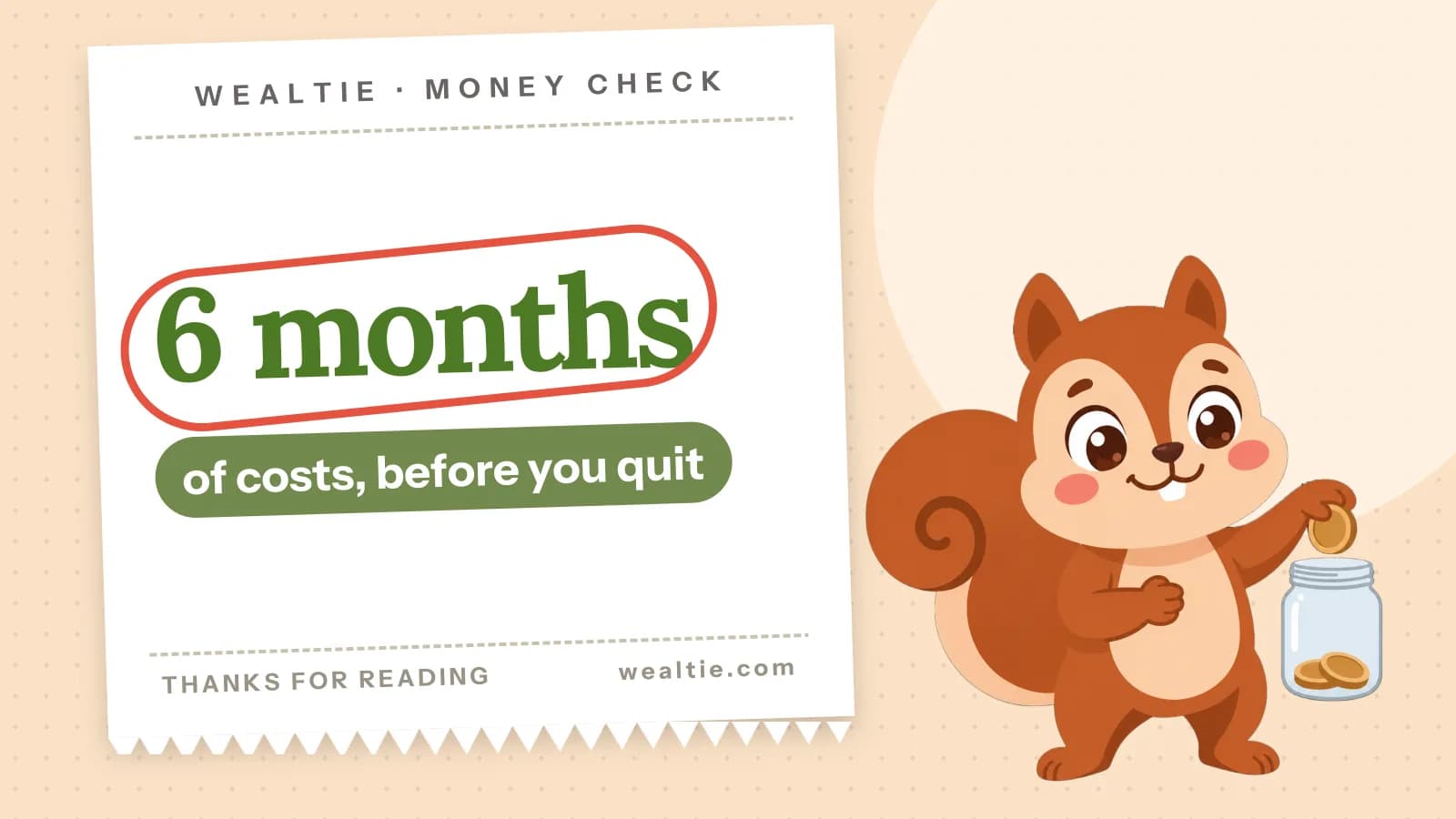
How much to save before going freelance is usually six months of personal costs plus setup money and a cushion for slow-paying clients. On costs of 2,200 a month, that comes to about 16,000.
 By Wealtie Team · 3 min read
Key takeaways
- Save about six months of personal costs before you leave a job to freelance, because work and payments take time to arrive.
- On costs of 2,200 a month, that's 13,200, and with setup costs and a payment-gap cushion the total is about 16,000.
- Clients often pay weeks after the work, so your first income can arrive two or three months after you start.
- Line up a first client or two before you quit, so the runway is a safety net and not the plan.
How much should you save before going freelance?
About six months of personal costs, plus what you'll need to set up and a cushion for slow payments. Income from freelancing rarely starts on day one, and when it does start, it doesn't arrive evenly.
What goes into the total?
Here's a worked example in round numbers that work in any currency:
| Line | Amount |
|---|---|
| Personal costs: rent, bills, food, transport, insurance | 2,200 a month |
| Six months of them | 13,200 |
| Setup: laptop, software, website, insurance | 1,500 |
| Cushion for clients who pay late | 1,300 |
| Total | 16,000 |
Your personal costs should be your real minimum, not what you spend in a comfortable month. A bare bones budget helps you find that number.
Keep your emergency fund separate from this, or count part of the runway as your emergency fund. Either works, as long as you don't count the same money twice.
Why six months?
Because the first months are slow, and the money comes later than the work. Finding clients takes time. Then you invoice at the end of the job, and the client might pay 30 or 60 days after that. Starting in January could mean the first payment arrives in March or April.
Six months gives you time for that delay and a few quiet weeks. If you've already got clients lined up, three or four months might be enough. If your field's competitive or the work comes in large, infrequent projects, more is safer.
What costs do new freelancers forget?
The ones an employer used to cover:
- Health or income protection insurance
- Pension contributions
- Professional insurance, if your work needs it
- Software and subscriptions you used at work for free
- An accountant, at least for your first tax return
- Tax on your first year's profit, which may be due in one go
In countries where health cover comes through work, sort that first. Tax is the biggest one. Set aside a share of every payment from the first invoice. How much to set aside for taxes goes through the rates.
How long will it take to save?
Divide the total by what you can put away each month. Saving 800 a month, 16,000 takes 20 months. At 1,300, it's about a year.
If the timeline feels too long, look at what you could earn in the first months. A part-time contract, or your current employer as a first client, can cut the runway you need. Some people agree this when they hand in their notice, since the employer keeps access to their knowledge while it hires.
Speed it up by cutting costs now. Every reduction in your monthly costs helps twice: you save faster, and the target shrinks because six months of costs is smaller. Moving to a cheaper flat before you go freelance can make a big difference.
Should you start before you quit?
If you can, yes. Taking on a client or two in the evenings or at weekends tells you whether there's demand, what you can charge, and how much you'll enjoy it. It also means your first income's arriving before your salary stops.
Check your employment contract first. Some don't allow outside work, or limit work for competitors.
Some people go part-time at their job before leaving it entirely. That's often the gentlest way to make the switch.
What rate do you need?
Enough to cover your costs, tax and time off. How to set your freelance rate works it out from scratch. Expect it to be much higher than your old hourly pay, because you're now covering holidays, pension and the hours you can't bill.
What should you do in the first months?
Pay yourself a fixed monthly amount from your business account, even when a big payment lands. That keeps your personal budget steady and stretches your runway. Paying yourself a salary has the steps.
Check your runway each month: what's left, divided by your monthly costs. If it's dropping faster than you expected, decide early whether to cut costs, raise rates or pick up part-time work. What to do when a client pays late helps with chasing payments. Review the whole plan after three months and again at six, with your monthly costs written at the top so you're always comparing against the real number.
How do you track your runway in Wealtie?
Add your runway savings as their own account and draw your monthly salary from it as a transfer, which isn't counted as spending. Your net worth tracker shows what's left, and a monthly income goal in the income tracker shows how close client payments are to your target.
Questions people ask
About six months of personal costs, plus setup costs and a cushion for late payments. On costs of 2,200 a month, that's around 16,000.
Often 30 to 60 days after you invoice, and invoicing usually happens after the work is done. Your first payment can arrive two or three months after you start.
Ideally not until you've tested demand with a client or two on the side, or gone part-time first. Check your contract allows outside work.
Insurance, pension, software, an accountant and tax on the first year's profit, which may be due in one payment.
This article is general information, not financial, tax or legal advice. Your situation is your own; check the numbers that apply to you before you act on them.