Income & freelancing: Getting paid in a foreign currency as a freelancer: what it costs
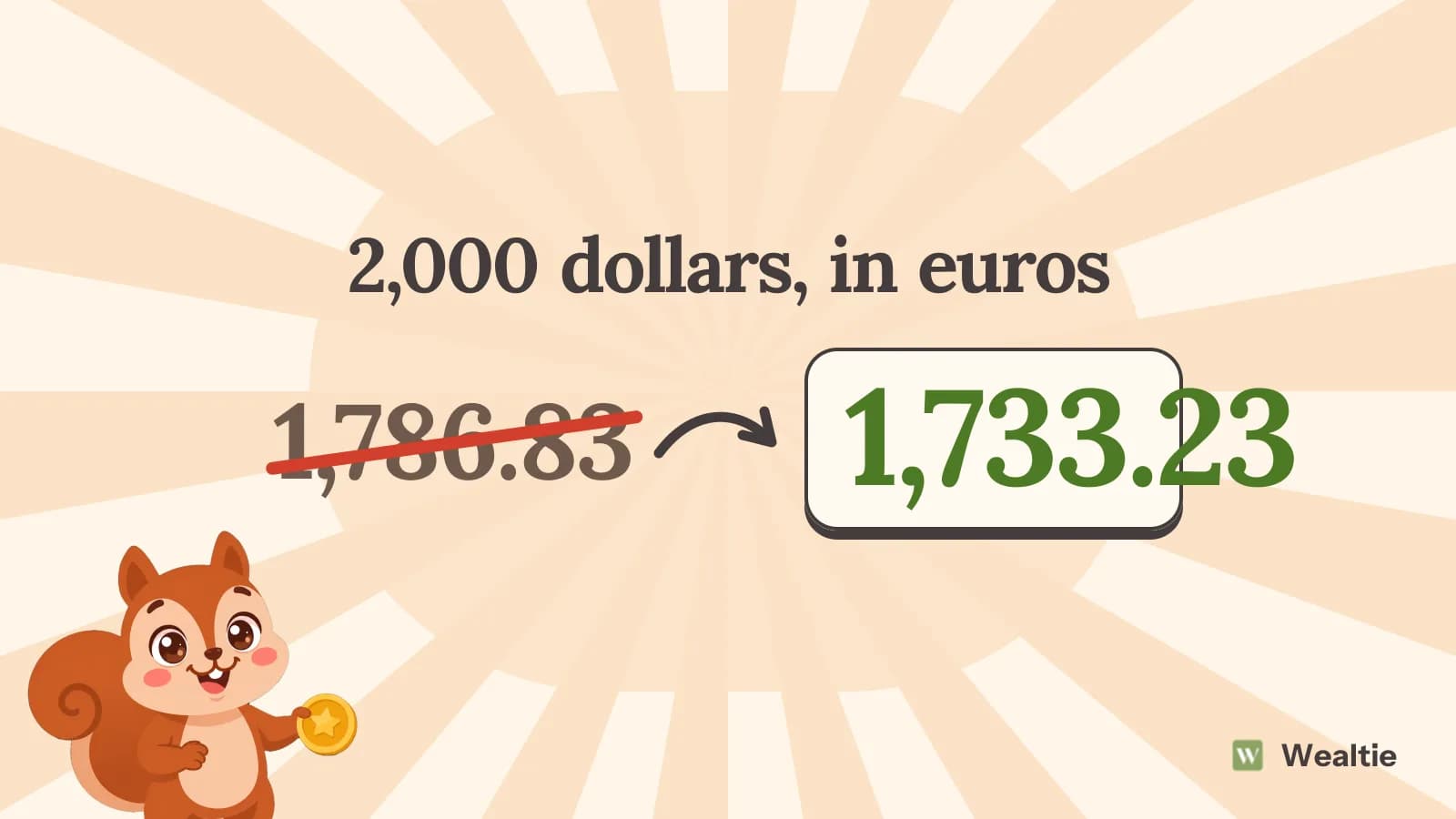
When you get paid in foreign currency as a freelancer, the exchange rate and conversion fees decide what you keep. At the ECB's 9 November 2026 rate, a 2,000-dollar invoice was worth 1,786.83 euros before fees, and a 3% conversion margin took about 54 of that.
 By Wealtie Team · 3 min read
Key takeaways
- When you invoice in a client's currency, you carry the exchange risk, and when you invoice in your own, the client does.
- At the ECB's 9 November 2026 rate of 1.1193, 2,000 dollars was worth 1,786.83 euros before fees.
- A 3% conversion margin would take about 54 euros of that, against about 9 at a 0.5% margin.
- Budget on a slightly worse rate than today's, so a move in the rate doesn't leave you short.
What happens when you get paid in foreign currency?
Someone converts the money from the client's currency into yours, and that conversion has a rate and usually a fee. Between the invoice and the payment, the rate can move too. So the amount you invoiced isn't quite the amount you'll keep. Payment platforms often convert automatically unless you choose otherwise, so check the settings.
How much do conversion costs take?
It depends on the service. Here's a 2,000-dollar invoice for a freelancer who spends euros. On 9 November 2026 the ECB reference rate was 1.1193, so 2,000 dollars was worth 1,786.83 euros before any cost. The margins below are examples.
| How it's converted | Margin | You receive |
|---|---|---|
| At the reference rate, no cost | 0 | 1,786.83 |
| Low-cost service | 0.5% | 1,777.90 |
| Bank or platform with a wider margin | 3% | 1,733.23 |
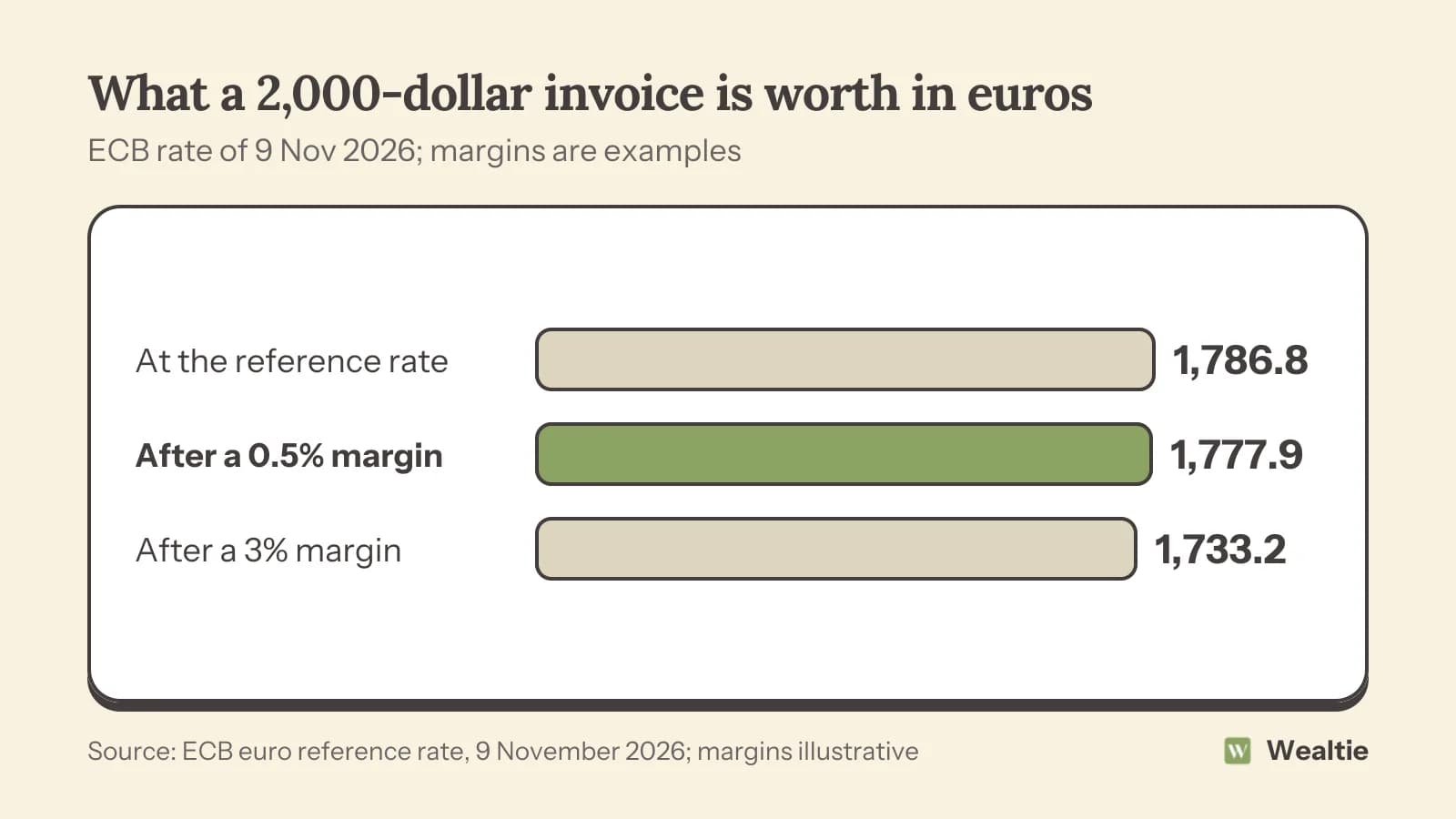
To see your own cost, take the euros you received and divide by the dollars invoiced, then compare that with the reference rate on the payment date. The difference between the two services above is about 45 euros on one invoice. Over a year of monthly invoices, that's more than 500.
Should you invoice in your currency or the client's?
Whoever's currency is on the invoice, the other side carries the exchange risk. If you invoice in dollars, you take the risk that the dollar falls before you convert. If you invoice in euros, the client takes it.
Many clients prefer to pay in their own currency, and invoicing in it can make you easier to hire. If you do, build a small margin into your rate to cover rate movements and conversion costs. Some freelancers quote in the client's currency and review the rate every six months. If you've got leverage, or the client's used to paying abroad, invoicing in your own currency gives you a predictable income.
How do you keep conversion costs down?
Compare what arrives, not the fee. A service that advertises no fee can hide its cost in the rate. A few options to consider:
- A multi-currency account that lets you hold the client's currency and convert when you choose
- A payment service with a low margin
- Asking clients to pay by bank transfer instead of through a platform that charges both sides
If a client pays through a platform, check what the platform charges you on top of the conversion. Check the receiving side too. Some banks charge a fee to receive an international payment. How to send money abroad cheaply explains how to compare.
When should you convert?
When you need the money, in most cases. Nobody can reliably predict where a rate's heading. Holding foreign currency in the hope that it rises is a bet, and it can go the other way.
If you've got regular costs in the client's currency, like software priced in dollars, paying them from a dollar balance avoids converting twice. A practical approach is to convert enough each month to cover your costs and tax, and keep the rest in the client's currency only if you have costs in it too. Is a higher exchange rate better explains which way a rate move helps or hurts you.
How do you budget for a foreign-currency income?
Budget on a rate a little worse than today's. If the rate's 1.1193 now, plan as though it were 1.20. At that rate, 2,000 dollars is 1,666.67 euros. If the real figure's higher, the difference goes to savings. If the rate moves against you, your budget still holds.
Keep a buffer of at least a month's costs in your own currency, so you're never forced to convert at a bad moment. Tracking spending in two currencies covers how to keep the records straight.
What about tax?
You'll usually need to report income in your own currency, using the rate your tax authority accepts. Keep a record of each payment, the date and the amount received in your currency. Check your tax authority's guidance, since the rules on which rate to use vary.
How do you track foreign income in Wealtie?
Add an account in the currency you're paid in, and log each payment there as income. Each account keeps its own currency, and your totals are converted into a display currency at each day's rate. Each transaction's converted at the rate for its own date, so last month's income doesn't drift when the rate changes. The multi-currency budget app covers 68 currencies on the Free plan, and the income tracker shows the month against your goal.
Questions people ask
Invoicing in your own currency gives you a predictable income and moves the exchange risk to the client. Invoicing in theirs can make you easier to hire, so build a margin into the rate.
About 54 euros on 2,000 dollars at a 3% conversion margin, or about 9 at 0.5%, plus any fixed fees.
Usually when you need it, converting enough for costs and tax each month. Holding currency to wait for a better rate is a bet.
Budget on a rate slightly worse than today's, and keep a buffer of a month's costs in your own currency.
Sources
- Euro foreign exchange reference rates · European Central Bank · checked 9 November 2026
This article is general information, not financial, tax or legal advice. Your situation is your own; check the numbers that apply to you before you act on them.