Budgeting: Is a robot vacuum worth it? Cost, time saved and limits
Is a robot vacuum worth it? It can be if you have mostly hard floors, pets or little time, since it keeps floors tidy between proper cleans, and in a worked example one costing 250 works out at about 2 a week over three years with parts.
 By Wealtie Team · 3 min read

Key takeaways
- A robot vacuum can be worth it for hard floors, pets and busy households.
- In a worked example, it costs about 2 a week over three years including parts.
- It keeps floors tidy but doesn't replace a deep clean.
- Brushes, filters and batteries add to the cost over time.
Is a robot vacuum worth it?
For some households, yes. A robot vacuum runs on its own, cleaning floors on a schedule while you're out or busy. It's best at keeping hard floors and low carpets tidy day to day: picking up crumbs, dust and pet hair before they build up. It doesn't replace a proper vacuum for stairs, corners, sofas and deep cleaning, but it can mean you do those jobs less often.
The value depends on your home and how much you value your time. A flat with hard floors and a shedding pet is the ideal case. A house with thick rugs, lots of clutter and many stairs gets far less benefit.
It's worth thinking about the time it saves as much as the money. If a robot vacuum saves you twenty minutes of vacuuming a few times a week, that's hours a month back for other things. For busy households, that time can be worth more than the price of the machine. For people who don't mind vacuuming, or do it quickly, the case is weaker.
What does a robot vacuum cost over time?
Here's a worked example over three years, in round numbers that work in any currency:
| Item | Cost |
|---|---|
| Robot vacuum | 250 |
| Brushes and filters | 40 |
| Replacement battery | 30 |
| Total | 320 |
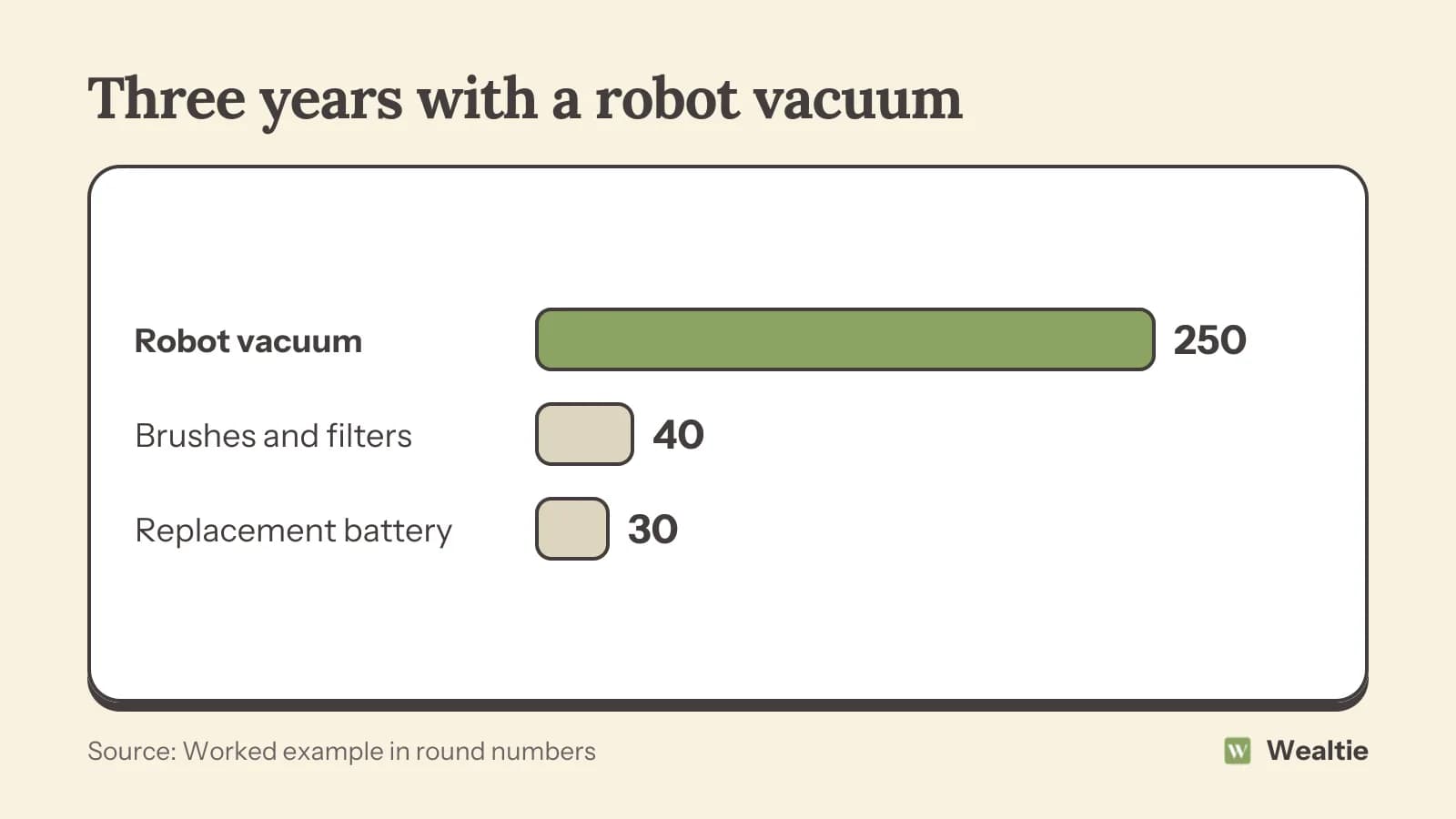
That's about 2 a week over three years. Compare that with paying a cleaner, or with the time you'd spend vacuuming. Is a cleaner worth it? covers the paid-help option.
What does a robot vacuum do well?
Daily tidying
Running every day or every few days, it stops dust and crumbs building up, so floors look cleaner more often.
Pet hair
Households with pets often find a robot vacuum keeps hair under control between deeper cleans.
Hard floors
Wood, tiles and laminate are where robot vacuums work best. They handle low carpets too, though thick rugs can be a challenge.
What are the limits?
Robot vacuums struggle with stairs, tight corners and high-pile carpets. They can get stuck on cables, socks and toys, so floors need clearing first. Their bins are small and need emptying often, unless you pay more for a self-emptying base. They don't clean sofas, curtains or cars, so you'll still need a regular vacuum. Some people find they spend as much time rescuing the robot as they would vacuuming.
The layout of your home matters too. Open-plan spaces with few rooms are easier for a robot to cover than homes with lots of doors, thresholds and small rooms. If you have several floors, you'll need to carry it between them or buy more than one. Watching a few demonstrations of how a model handles rugs, door sills and furniture legs gives a good idea of whether it will cope with your home before you spend anything.
Noise is worth a thought too. Most people schedule the robot to run while they're out, which works well for a household out at work all day, but less well if someone is home most of the time.
What hidden costs come with a robot vacuum?
Brushes and filters wear out and need replacing every few months. Batteries lose capacity after a couple of years. Self-emptying bases need bags. Mopping models need pads and cleaning solution. Repairs can be expensive, since parts are specific to each model. Some apps push subscriptions or extra features. Check how easy it is to buy parts for a model before choosing it. Popular models often have cheaper third-party brushes and filters, which keep running costs down.
How can you get one for less?
Buy last year's model, which is often much cheaper. Skip features you don't need, like mopping or self-emptying bases, if your home doesn't need them. Look for refurbished models from reputable sellers. Be wary of extended warranties, which often aren't worth the cost. Is an extended warranty worth it? covers when to say no, and how to save money on electronics has more tips.
Work out the cost per use
A robot vacuum used every day costs very little per clean. One that sits in a corner because the floors are always cluttered is a poor buy. Cost per use explains this way of comparing. How to save money on household essentials covers other cleaning costs.
How do you track household gadgets in Wealtie?
Keep household purchases in their own expense categories and set a budget for them, so gadgets and replacement parts fit into your plan.
Questions people ask
It can be for homes with hard floors, pets or little time. In a worked example, it costs about 2 a week over three years including parts.
Not fully. It keeps floors tidy, but you'll still need a regular vacuum for stairs, corners and furniture.
Replacement brushes, filters and batteries, plus bags or pads for some models.
Choose last year's model, skip features you won't use and look for refurbished models from reputable sellers.
This article is general information, not financial, tax or legal advice. Your situation is your own; check the numbers that apply to you before you act on them.