Budgeting: When to remortgage, and what it costs
Knowing when to remortgage matters, because the best time is usually before your current deal ends, so you don't drop onto a higher variable rate. In a worked example, a new deal saves 120 a month after 1,000 of fees, paying back in under nine months.
 By Wealtie Team · 3 min read
Key takeaways
- The best time to remortgage is usually before your current deal ends.
- In a worked example, a new deal saves 120 a month after 1,000 of fees, paying back in under nine months.
- Check early repayment charges before switching mid-deal.
- Compare deals on total cost over the fixed period, including fees.
When to remortgage
Usually a few months before your current deal ends. Many mortgages start with a fixed or discounted rate for a set period, then move to a lender's standard variable rate, which is often higher. If you don't arrange a new deal in time, your monthly payment can rise sharply. Knowing when to remortgage, and what it costs, helps you keep your housing costs under control. Setting a reminder six months before your deal ends gives you time to compare without rushing.
Mortgage products and rules vary between countries, so check how deals work where you live. A mortgage broker or adviser can help.
How much can remortgaging save?
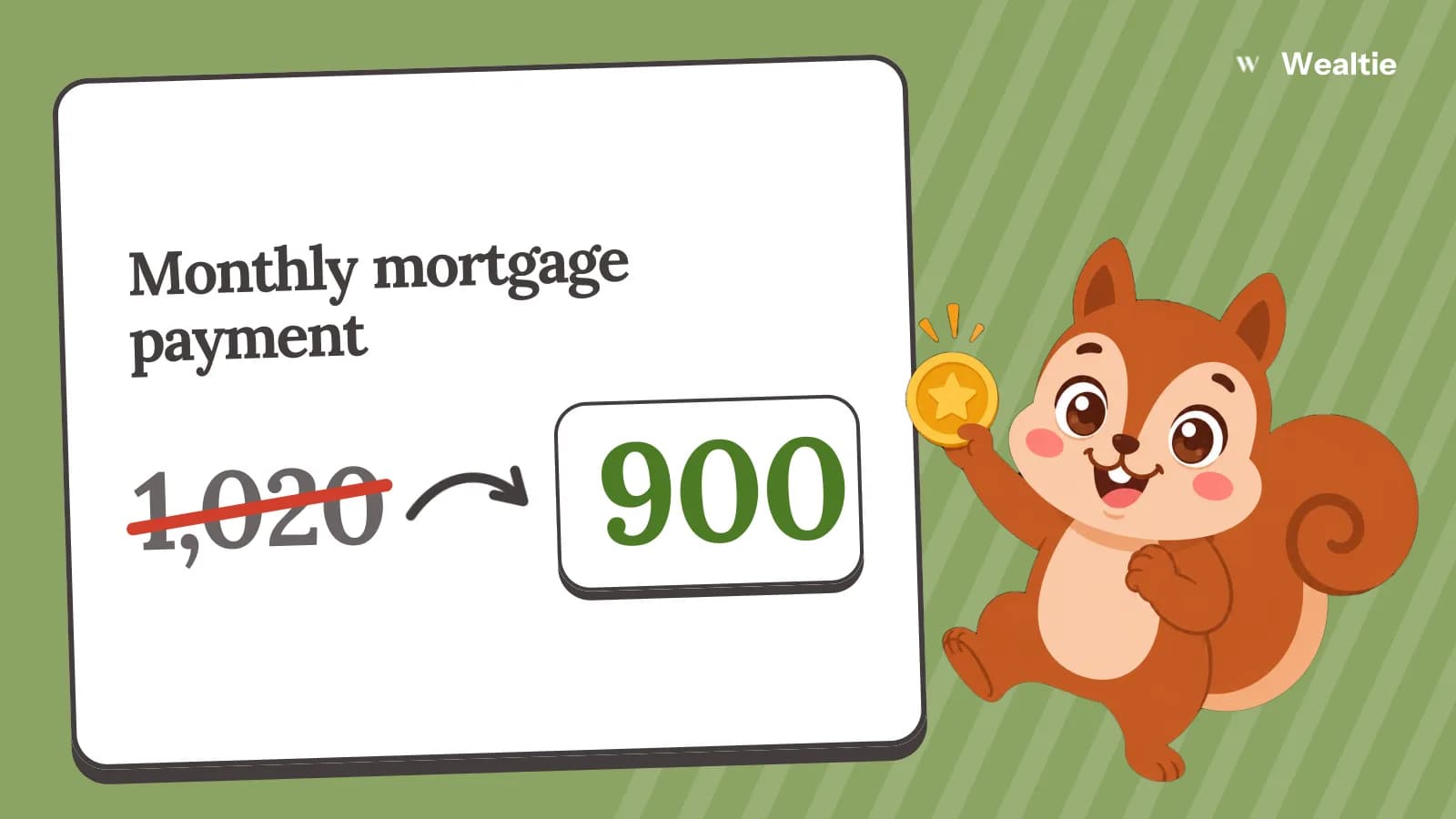
Here's a worked example, in round numbers that work in any currency:
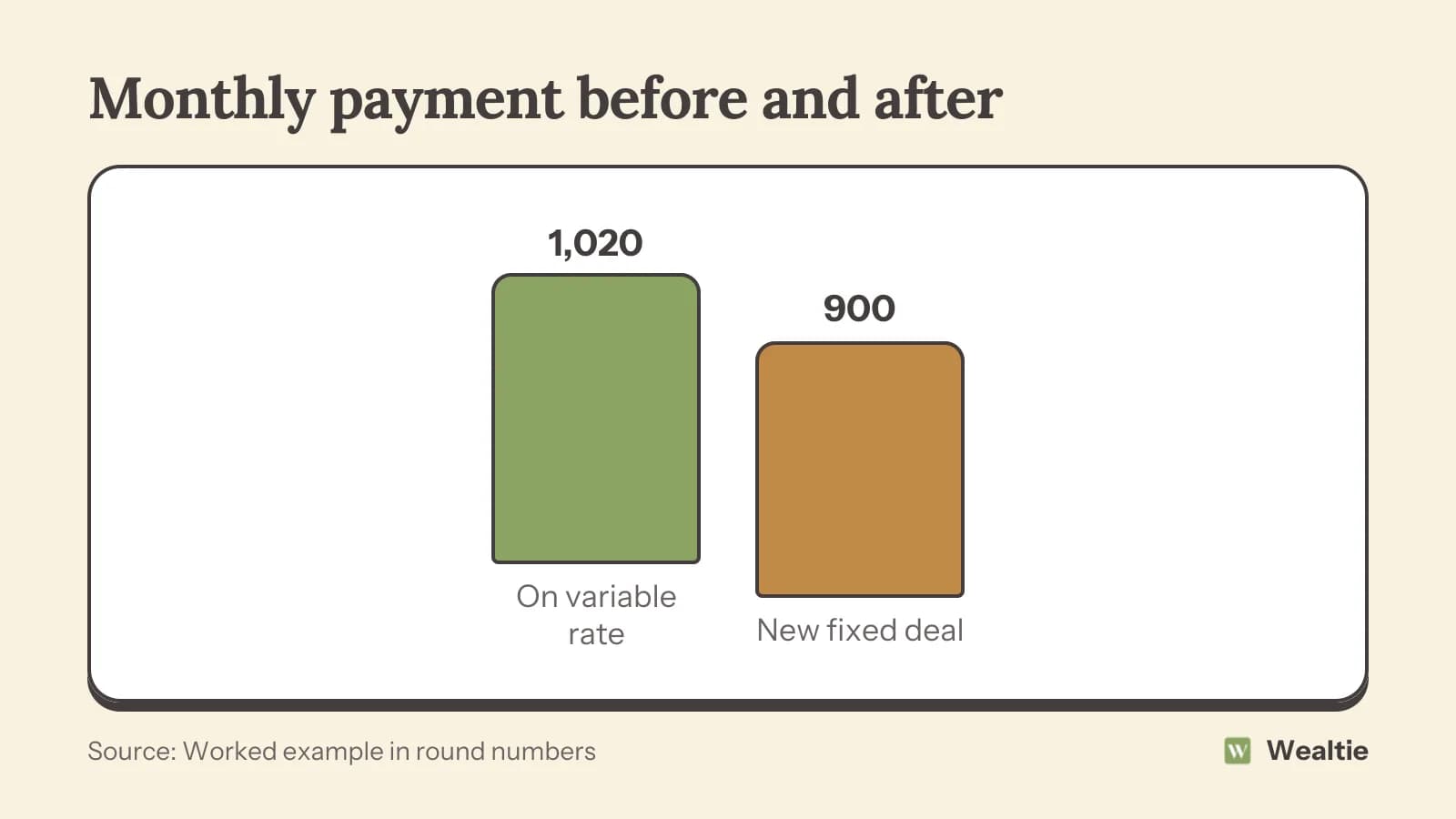
In this example, moving from the variable rate to a new fixed deal cuts the monthly payment from 1,020 to 900, saving 120 a month. If the new deal costs 1,000 in fees, the saving pays for them in under nine months. Over a two-year deal, the household is about 1,880 better off. Your own figures depend on your balance, rates and fees. On a small balance, a deal with no fees is often better value even with a slightly higher rate.
What are the costs of remortgaging?
Common costs include:
- Arrangement or product fees for the new deal
- Valuation fees, though some lenders offer them free
- Legal fees, often covered by the lender for remortgages
- Broker fees, if you use a broker who charges
- Early repayment charges, if you leave your current deal before it ends
Some deals have no fees but slightly higher rates. Compare the total cost over the deal, not just the rate. Adding fees to the loan spreads them out but adds interest, so paying upfront is usually cheaper if you can.
Early repayment charges
Leaving a fixed deal early often triggers a charge, which can be large. Check your mortgage terms before switching mid-deal. Many lenders let you secure a new deal several months before your current one ends, so you can switch without a charge.
What's the difference between remortgaging and switching with your lender?
Remortgaging usually means moving to a new lender. Switching to a new deal with your current lender, sometimes called a product transfer, is often simpler, with fewer checks and lower costs. Compare both: your current lender may not offer the best rate, but a switch can still be worthwhile if the costs are lower. If your circumstances have changed, like lower income or new debts, staying with your lender can avoid fresh affordability checks.
How do you compare deals?
Look at the total cost over the deal period, including fees. A lower rate with high fees can cost more than a slightly higher rate with no fees, especially on a smaller balance. Also consider how long you want to fix for, whether you might move or overpay, and any flexibility the deal offers. Should you pay off your mortgage early covers overpayments.
Other reasons to remortgage
Some people remortgage to release money for home improvements, to consolidate debt or to change the length of their mortgage. Borrowing more against your home has risks, so think carefully and get advice. Moving debts onto a mortgage can mean paying them off over many more years. That can lower monthly payments but raise the total you pay in interest.
Using a broker
A mortgage broker can compare deals across many lenders and handle the paperwork. Some are paid by the lender, others charge a fee. Ask how they're paid and how much of the market they search, so you can judge whether their advice is worth it.
How does remortgaging fit your budget?
A lower payment frees money each month. Decide what it's for: overpaying the mortgage, building savings or covering other costs. If rates have risen and your payment will go up, plan for it before your deal ends by reviewing your budget. Building a small buffer in the months before helps absorb any increase. The first-year homeowner costs covers housing costs more broadly.
How do you track your mortgage in Wealtie?
Set up your mortgage payment as a recurring transaction with the bill tracker, and update the amount when your new deal starts. Add your mortgage as an account so your net worth reflects what you owe. Track housing costs in your expense categories to see the effect of any change.
Questions people ask
Usually a few months before your current deal ends, so you don't move onto a higher variable rate.
Costs can include arrangement, valuation, legal and broker fees, plus early repayment charges if you leave a deal early.
Often, if the saving covers the fees. In a worked example, saving 120 a month pays back 1,000 of fees in under nine months.
Compare both. Switching with your lender is often simpler and cheaper, but may not offer the best rate.
This article is general information, not financial, tax or legal advice. Your situation is your own; check the numbers that apply to you before you act on them.