Budgeting: How to set up bills when you move into a new home
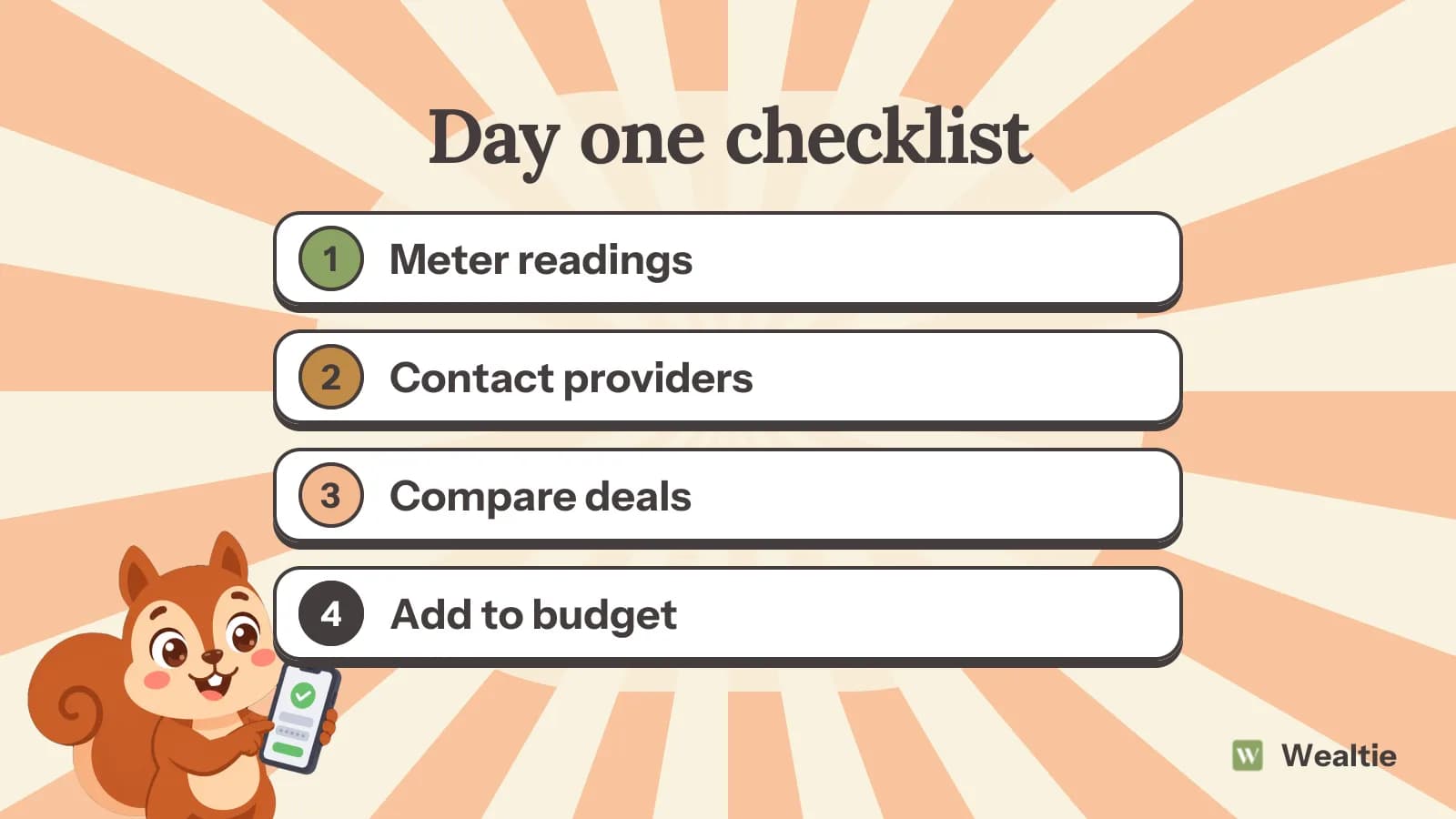
To set up bills when you move into a new home, take meter readings on day one, contact each provider, compare deals rather than accepting defaults and add every bill to your budget. In a worked example, a new home's bills come to about 450 a month.
 By Wealtie Team · 3 min read
Key takeaways
- To set up bills when you move, take meter readings on day one and contact each provider.
- In a worked example, a new home's bills come to about 450 a month.
- Don't accept default energy tariffs; compare deals for the new home.
- Order internet early, since installation can take weeks.
How do you set up bills when you move?
Start on the day you get the keys. Moving into a new home means setting up energy, water, internet, local taxes and insurance, often all at once. It's easy to let these slide while you unpack, but the first few weeks are when mistakes, like paying for someone else's usage, are most likely. If you don't act quickly, you might be placed on expensive default tariffs, pay for the previous occupant's usage or go without internet for weeks. A simple checklist makes it easy to set up bills when you move and keep your budget accurate from the first month.
Bill names and providers vary between countries, but the steps are similar. Doing it in the first week, while you're unpacking, avoids surprises later.
What bills will you need to set up?
Here's a worked example of monthly bills in a new home, in round numbers that work in any currency:
| Bill | Monthly amount |
|---|---|
| Local or council tax | 150 |
| Energy | 130 |
| Water | 40 |
| TV and streaming | 40 |
| Internet | 35 |
| Insurance | 30 |
| Phone | 25 |
| Total | 450 |
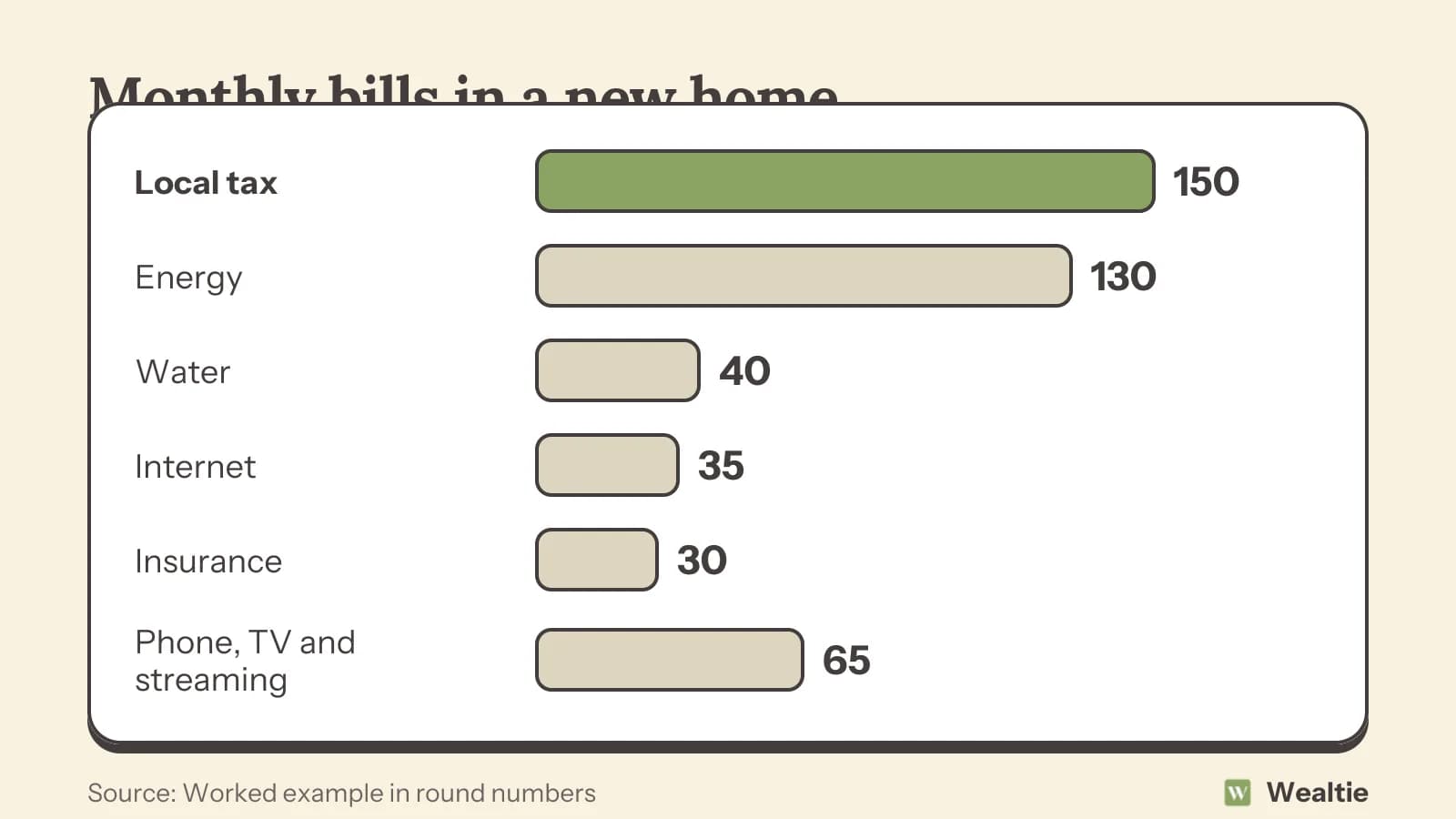
Your own bills depend on the size of the home, where you live and the deals you choose. Asking the previous occupants or landlord what bills usually cost gives you a useful estimate.
What should you do on day one?
Take meter readings
Photograph the energy and water meters when you arrive, with the date. This means you only pay for what you use, not what the previous occupant used. Send the readings to the suppliers. Keep the photos until your first bill arrives, so you can check it's correct.
Find out who supplies the home
Ask the previous occupant, landlord or agent which companies supply energy and water. If you're unsure, there are usually ways to look up the supplier for your address.
Check smoke and carbon monoxide alarms
Not a bill, but worth doing on day one for safety. Find the stopcock and fuse box too, so you know where they are in an emergency.
How do you set up each bill?
- Energy: contact the current supplier to open an account, then compare deals. You're often placed on a default tariff that's more expensive. How to save money on your electric bill has tips.
- Water: register with the local water company.
- Internet: order early, since installation can take a few weeks. Compare deals rather than moving your old contract automatically. How to save money on your internet bill covers choosing a plan.
- Local taxes: register with the local authority. Ask about discounts, like those for single occupants, where available.
- Insurance: arrange home or contents insurance from the day you move in.
- TV licence or subscriptions: update or set up as needed.
If you're sharing
If you live with housemates, agree how bills will be split and whose name each one goes in before setting them up. How to split utilities with roommates covers fair ways to share. Setting up a joint account or app for shared bills makes paying them simpler.
Check for discounts
Some homes qualify for discounts on local taxes or water, like single-occupant reductions or help for lower incomes. Energy suppliers sometimes offer support for vulnerable customers. Asking each provider what's available when you set up the account takes a few minutes and can save a lot over a year.
How do you avoid paying twice?
Tell your old providers your moving date, give final meter readings and cancel or move services. Check your final bills and ask for refunds of any credit. Redirect post for a few months so nothing is missed. Update your address with your bank, employer and other important contacts.
How do you build a realistic budget for the new home?
Add every bill to your budget, along with yearly costs like insurance divided by twelve. Bills in a new home can differ a lot from your old one, especially energy, which depends on the home's size and insulation. Check your first few bills against your estimate and adjust. Energy bills can be higher in winter, so plan for the whole year, not just the first month. How to organise your bills helps you keep track of due dates, and the first-year homeowner costs covers costs beyond bills if you've bought.
How do you track new bills in Wealtie?
Set up each bill as a recurring transaction with the bill tracker, so they log themselves on the due date and you can see your monthly total. Track them in your expense categories, and set a monthly limit in the budget tracker based on your new costs.
Questions people ask
Take meter readings on day one, contact each provider, compare deals and add every bill to your budget.
Ask the previous occupant, landlord or agent, or look up the supplier for your address.
Installation can take a few weeks, so order as early as you can.
Take dated meter readings when you move in and send them to the suppliers.
This article is general information, not financial, tax or legal advice. Your situation is your own; check the numbers that apply to you before you act on them.