Budgeting: How to save money on household essentials you buy every month
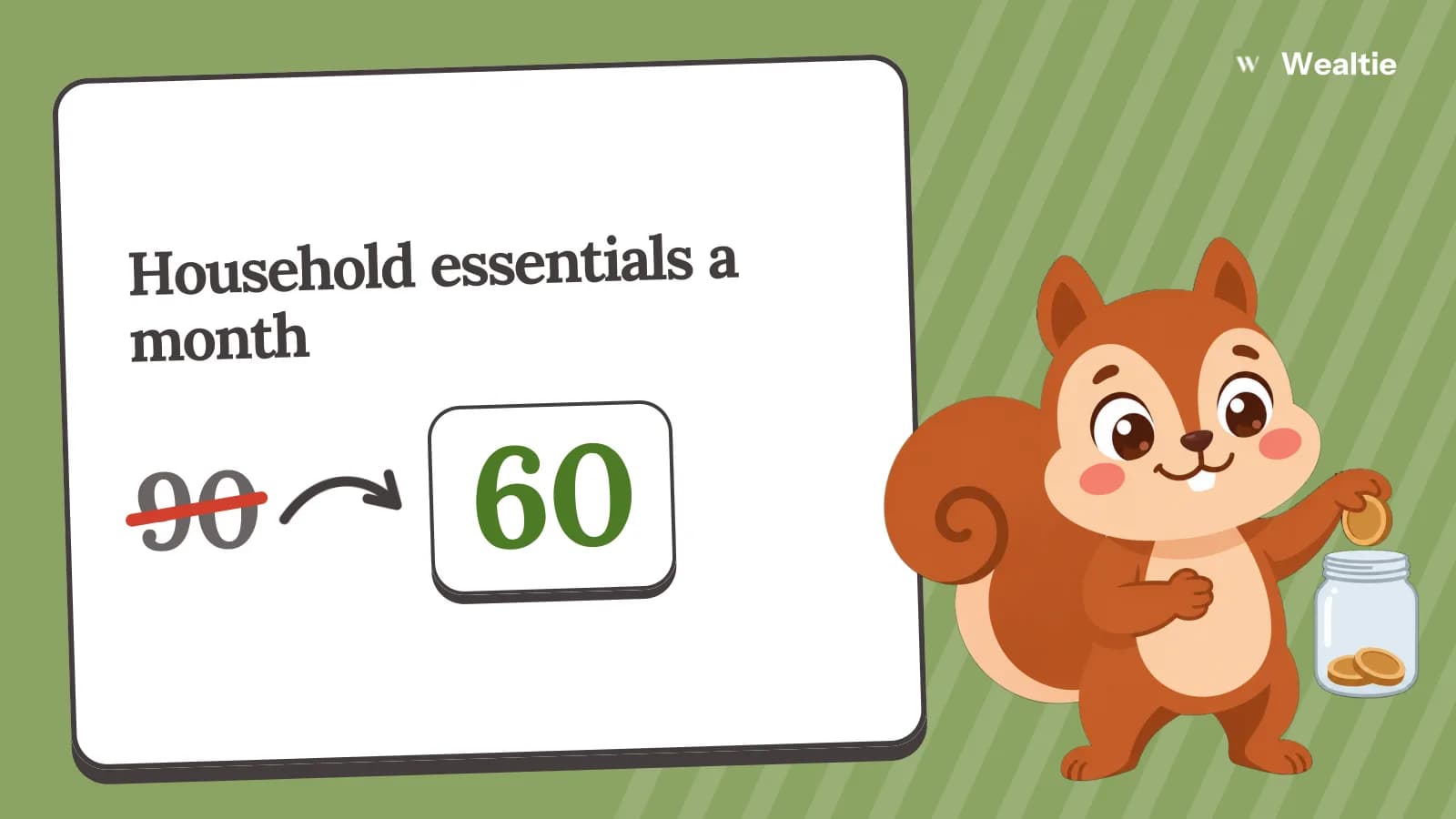
To save money on household essentials, track what you buy for a month, switch to own-brand for the basics, buy the things you use most in bulk, and stop buying duplicates. In a worked example, that cuts 90 a month to 60.
 By Wealtie Team · 3 min read
Key takeaways
- Household essentials like toiletries, cleaning products and paper goods are small purchases that add up to a regular monthly cost.
- In a worked example, switching to own-brand, buying in bulk and stopping duplicates cuts 90 a month to 60.
- Keeping a simple list of what you have stops you buying things you already own.
- Buy in bulk only things you use reliably and have space to store.
How do you save money on household essentials?
Find out what you spend, then change the habits that cost the most. Toiletries, cleaning products, toilet roll, bin bags and washing powder are small purchases, so they rarely get looked at. Together they can be a noticeable monthly cost, and a few changes bring it down without making daily life worse. If you want a quick estimate first, last month's bank statements will show the shops you buy them from.
How much do you spend now?
Track it for a month, including things bought at a pharmacy or discount shop, which are easy to miss. Separate household essentials from food on your receipts, or give them their own category. Here's a worked example in round numbers that work in any currency:
| Item | Before | After |
|---|---|---|
| Toiletries | 40 | 28 |
| Cleaning products | 25 | 15 |
| Paper goods and bin bags | 25 | 17 |
| Total | 90 | 60 |
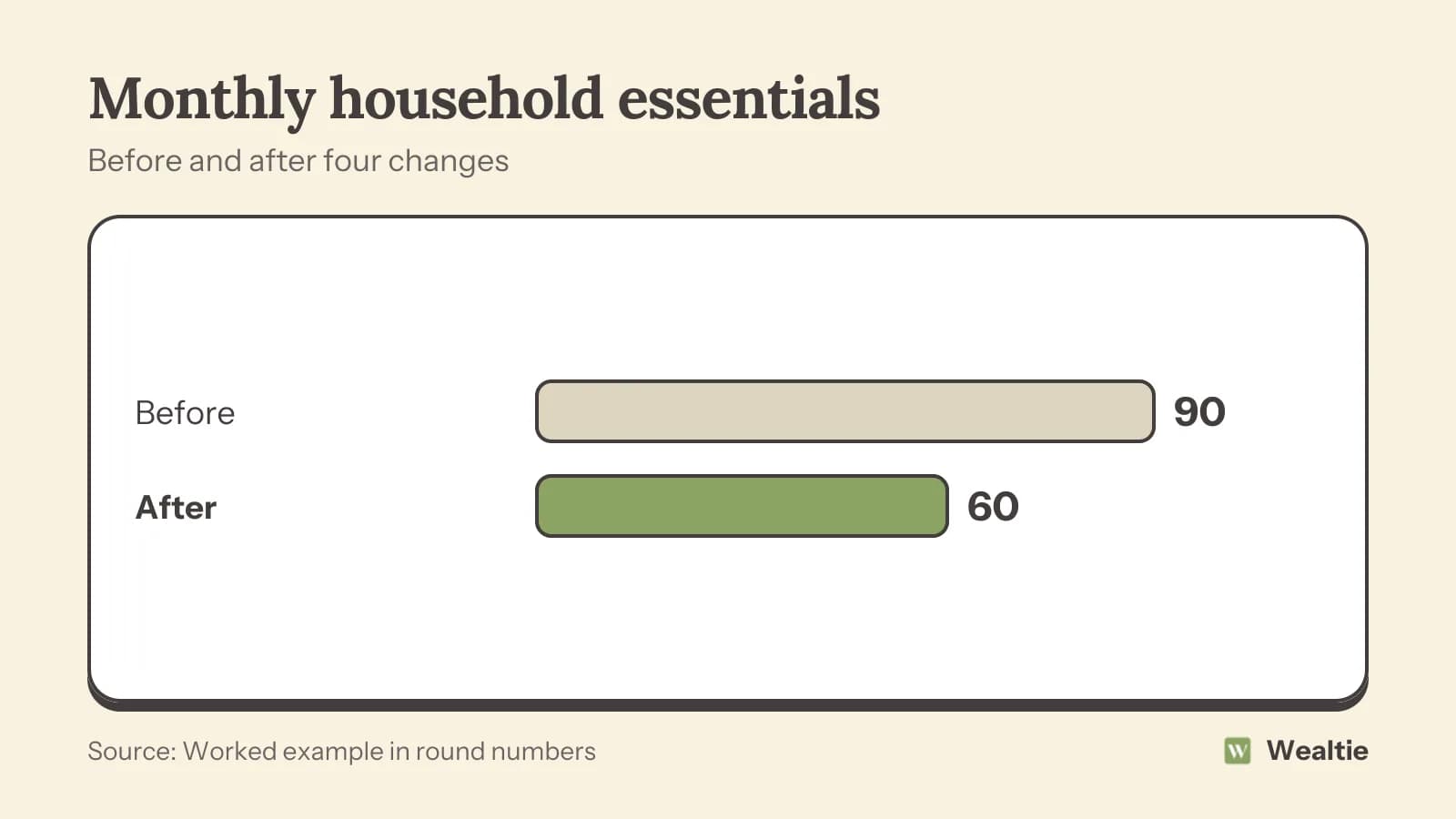
That's 30 a month, or 360 a year, from things most people don't think about. Once you know your own monthly figure, set it as a target and check it again after three months to see whether the changes stuck.
Where does the saving come from?
Four changes, in this example:
- Own-brand basics: supermarket own-brand toilet roll, washing-up liquid, cotton pads and similar items often do the same job for less.
- Bulk for what you use most: washing powder, toilet roll and bin bags are cheaper per use in larger packs, if you've got room to store them.
- Fewer products: a general-purpose cleaner can replace several specialist sprays for most jobs.
- No duplicates: knowing what's in the cupboard stops you buying a fourth bottle of shampoo.
Refill packs for hand soap and cleaning sprays cost less than new bottles each time, and you keep the dispensers. For laundry, using the right dose and a lower temperature makes detergent go further. Keep the branded versions of the few things where you can tell the difference and care. That's usually a small list.
Is buying in bulk always cheaper?
Not always. Check the price per unit, per wash or per sheet, which most shelf labels show. A bigger pack can cost more per unit than a smaller one on offer.
If you haven't got room, split a bulk pack with a friend or neighbour, so you both get the lower price. Bulk only works for things you use reliably and won't go off. A huge pack of something you rarely use ties up money and cupboard space. It also tends to get used faster, because there's plenty of it, so measure out detergent and other products rather than guessing.
How do you stop buying things you already have?
Keep a simple list on your phone of the household items you use regularly, and update it when something's running low. Check the cupboard before you shop, especially for toiletries, which often get bought on impulse.
Use up what you have before trying new products, since a cupboard of half-used bottles is money sitting idle. Store spares in one place. If extra toothpaste is spread across three cupboards, nobody knows it's there.
Where should you buy them?
Supermarkets are convenient, but discount shops and pharmacies can be cheaper for some items, particularly toiletries. Compare prices for the five things you buy most often, and buy those wherever they're cheapest. You don't need to shop around for everything. Offers on household items come round regularly, so when something you always use is on a good deal, buy two or three, not ten.
Online subscriptions for regular items can be convenient, but check the price against the shop and cancel if they arrive faster than you use them. How to cut subscription costs applies here too.
What about sharing costs with flatmates?
Agree how shared household items are bought, so one person isn't always paying for the toilet roll. A small monthly kitty or taking turns works well. Agree on brands too if anyone has strong preferences, so the kitty doesn't end up paying for expensive picks. Splitting groceries with roommates has systems for sharing costs fairly.
How do you track household essentials in Wealtie?
Give them their own line in your expense categories, separate from groceries, so you can see what they cost each month. Give the category a share of your monthly limit in the budget tracker, and you'll see if it starts to creep up. How to save money on groceries covers the food side of the shop.
Questions people ask
Switch to own-brand for basics, buy what you use most in bulk, use fewer specialist products and check what you have before shopping.
Often, but not always. Check the price per unit and only buy in bulk things you use reliably and can store.
Track a month to find your figure. A worked example drops from 90 to 60 a month with a few changes.
For many basics, like toilet roll and washing-up liquid, they do the same job for less. Keep the branded version of the few items where you notice a difference.
This article is general information, not financial, tax or legal advice. Your situation is your own; check the numbers that apply to you before you act on them.