Saving: How to build a car repair fund so a breakdown isn't a crisis
A car repair fund is money you set aside each month for servicing, tyres and the repairs you can't predict. In a worked example, about 90 a month covers a year of servicing, a set of tyres every few years and a repair cushion.
 By Wealtie Team · 3 min read
Key takeaways
- A car repair fund covers servicing, wear items like tyres and brakes, and unexpected repairs.
- In a worked example, about 90 a month covers a yearly service, tyres every few years and a repair cushion.
- Older cars usually need more set aside, while newer ones may be covered partly by a warranty.
- Keep the fund separate from your emergency fund, since car repairs are a cost you can expect.
What is a car repair fund?
Money you set aside every month so car costs don't land on one month's budget. It covers the things you know are coming, like servicing and tyres, and leaves a cushion for the repairs you don't see coming.
Without one, a 600 repair goes on a credit card and takes months to pay off. With one, it comes out of a pot you've been filling all along.
How much should you save for car repairs?
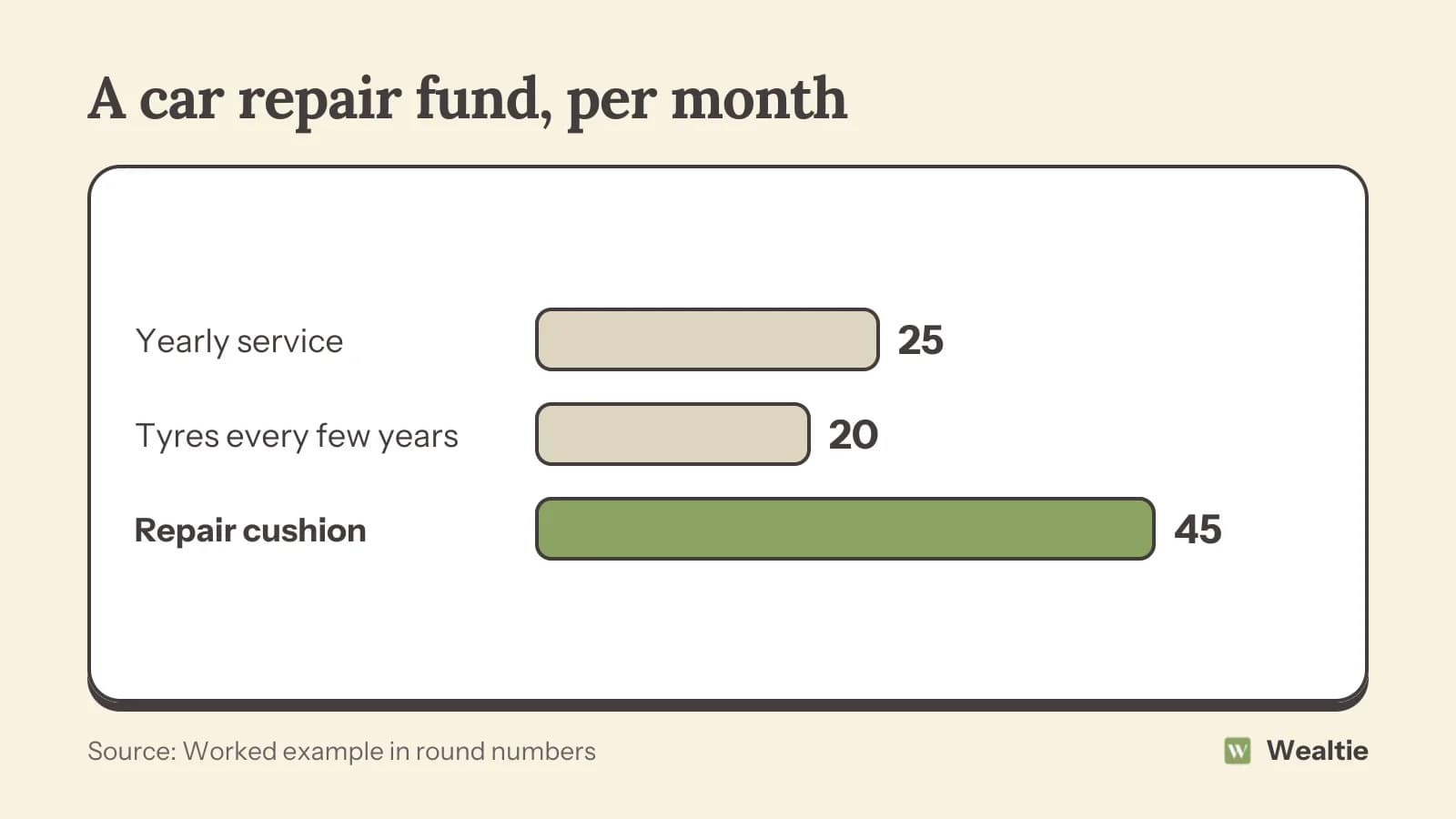
Add up what you expect over a year and divide by 12. Here's a worked example in round numbers that work in any currency:
| Line | Yearly cost | Per month |
|---|---|---|
| Yearly service | 300 | 25 |
| Tyres, 480 every two years | 240 | 20 |
| Repair cushion | 540 | 45 |
| Total | 1,080 | 90 |
Your own numbers depend on the car, how far you drive and local prices. To find your figure, go through the last two years of car spending: servicing, tyres, inspections and repairs. Divide the total by 24 for a monthly amount. If you've got no history, the car's handbook lists the service schedule, and a garage can quote the next few jobs.
How does the car's age change it?
Older cars usually cost more to keep running. As a rough guide:
| Car | What to expect |
|---|---|
| New, under warranty | Servicing and tyres; most repairs covered |
| A few years old | Brakes, tyres, battery start to come up |
| Older, high mileage | Bigger repairs more likely; save more |
Warranties usually cover defects, not wear, so tyres, brakes and wipers are still yours to pay for. For an older car, keep a list of what's been replaced and when. It helps you predict the next job, and it's useful when you sell.
If your car's older, raise the repair cushion. If a big job is likely, like a timing belt or clutch, save for that specifically.
What about insurance and road tax?
Those are predictable yearly bills, not repairs. If your car needs a yearly inspection, like an MOT in the UK, add that too, along with the repairs it tends to turn up. Booking it a few weeks early gives you time to get quotes if something fails, and breakdown cover is worth comparing at renewal. Put them in the same pot or a separate one, but count them. How to budget for annual expenses covers yearly bills, and how to save money on car insurance helps bring that one down.
Where should you keep the money?
In a separate savings pot that you can reach quickly. Keep it apart from your emergency fund. A car repair is a cost you can expect to have every year, while an emergency fund is for things like losing your job. What counts as an emergency has a test.
Aim to keep at least one big repair's worth in the pot, say 600 to 1,000, so a clutch or gearbox job doesn't empty it. If the pot runs low after a big repair, raise the monthly amount for a while until it's back to where it was.
When is a repair not worth it?
When the repair costs more than the car's worth, or when the car's needing big repairs every few months. Compare the repair with the cost of a replacement and what the car would sell for. Get the car's value from a few listings for the same model, age and mileage, not from what you paid. Then ask whether the repair would keep it reliable for another year or two.
If you're replacing the car, the repair fund becomes the start of a deposit. How much car can I afford and should you lease or buy a car help with the next step.
How can you keep repair costs down?
Keep up with servicing, check tyre pressure monthly and deal with warning lights early. Small problems caught early usually cost less than the bigger ones they turn into. Get a second quote for anything large, and ask whether a part can be repaired instead of replaced.
Find an independent garage you trust before you need one, since main dealers often charge more for the same job once a car's out of warranty. Learn the easy jobs: topping up washer fluid and oil, checking tyre tread and replacing wiper blades.
How do you track a car fund in Wealtie?
Add the car fund as its own account and move the monthly amount into it as a transfer, which isn't counted as spending. Log servicing and repairs as expenses in a Car category, and your expense categories show what the car costs over a year. Your net worth tracker shows the fund's balance.
Questions people ask
Add up a year of servicing, tyres and a repair cushion, then divide by 12. A worked example comes to about 90 a month.
It's better to have a separate car fund, since repairs are expected costs. Keep the emergency fund for things you couldn't see coming.
Usually, yes. Older and high-mileage cars are more likely to need bigger repairs, so raise the monthly amount.
When it costs more than the car's worth, or when big repairs keep coming. Compare it with the cost of replacing the car.
This article is general information, not financial, tax or legal advice. Your situation is your own; check the numbers that apply to you before you act on them.