Budgeting: Is renters insurance worth it? What it covers and costs
Is renters insurance worth it? For most tenants, yes, since a policy costing around 80 a year can replace thousands of belongings after a theft, fire or leak.
 By Wealtie Team · 3 min read
Key takeaways
- Renters insurance is worth it for most tenants because it's cheap and belongings add up.
- Your landlord's insurance covers the building, not your belongings.
- Add up what it would cost to replace everything to choose the right cover.
- Check excesses, single-item limits and whether you need cover outside the home.
Is renters insurance worth it?
Renters insurance, often called contents insurance for tenants, covers your belongings if they're stolen, damaged or destroyed, for example by a fire, flood or burst pipe. Many tenants assume their landlord's insurance covers them, but a landlord's policy usually only covers the building and the landlord's own fixtures and furniture. Your clothes, laptop, phone, bike and other belongings are your responsibility.
Most tenants underestimate how much their belongings are worth. Here's a worked example of what it would cost to replace everything in a one-bedroom flat, in round numbers that work in any currency:
| Belongings | Replacement cost |
|---|---|
| Electronics | 2,500 |
| Clothes and shoes | 2,000 |
| Furniture and bedding | 1,800 |
| Kitchen items | 900 |
| Other belongings | 800 |
| Total | 8,000 |
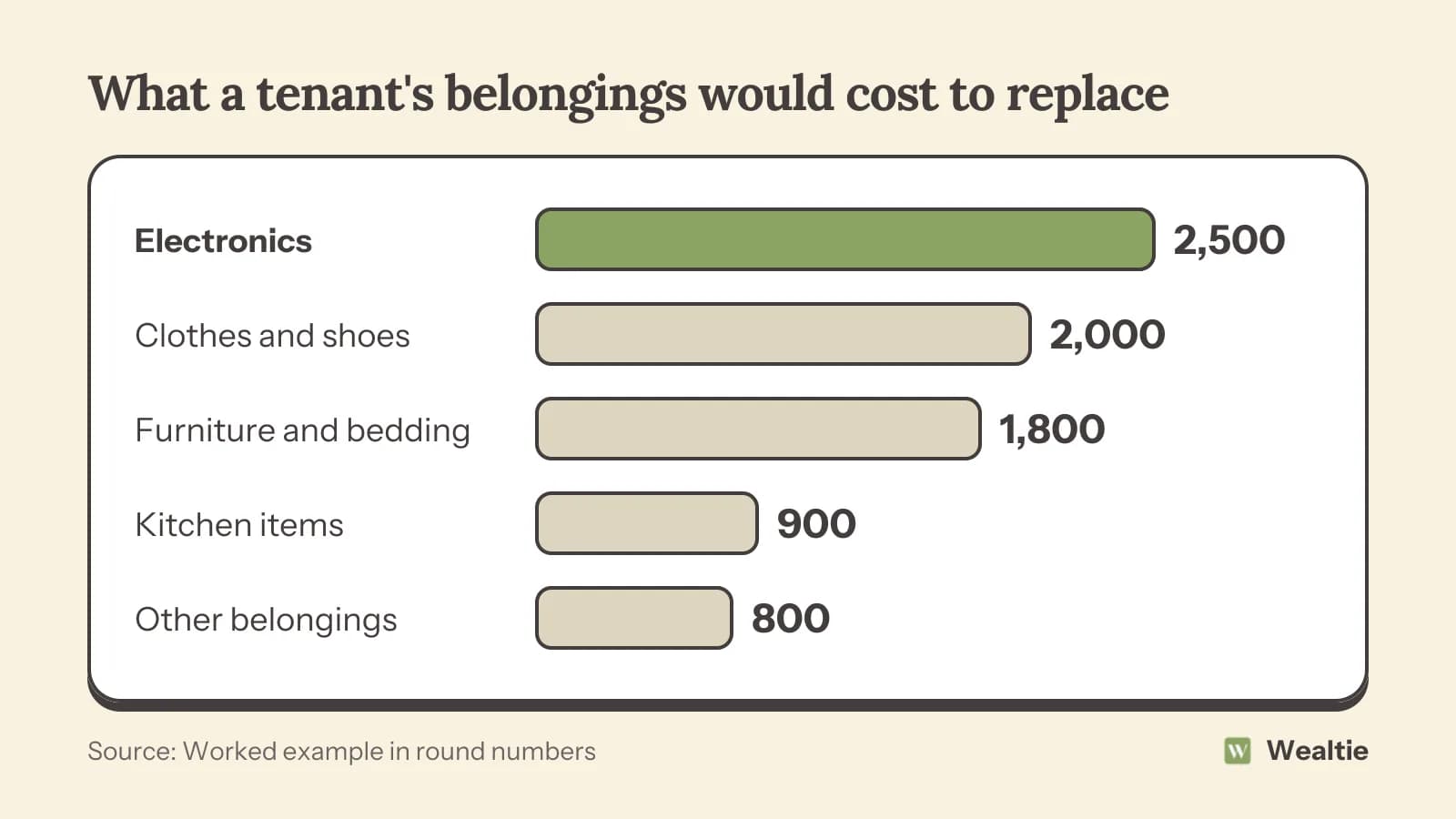
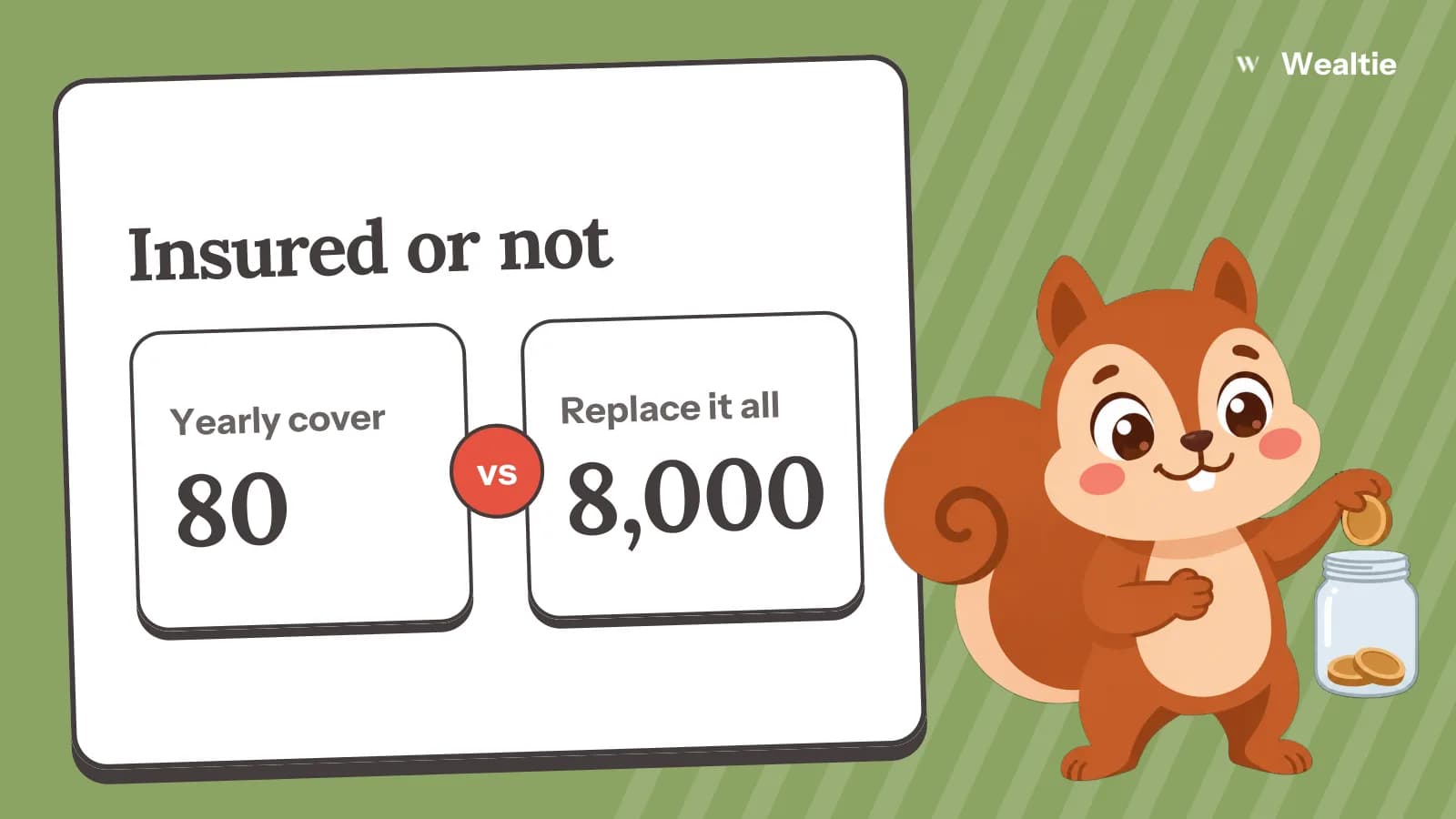
Replacing everything would cost about 8,000. A policy to cover that might cost around 80 a year, depending on where you live, the level of cover and your excess. For most people, that's a small price for protection against a loss they couldn't easily afford.
What does renters insurance usually cover?
Theft
If your home is broken into, the policy pays to replace stolen items, minus any excess.
Fire, flood and water damage
Damage from fire, storms or a burst pipe can ruin furniture, clothes and electronics. A policy covers replacing them.
Accidental damage
Some policies include or offer optional cover for accidents, like spilling a drink on a laptop.
Belongings outside the home
Optional cover can protect items you carry with you, like phones, laptops and bikes, while you're out.
Liability
Some policies cover you if you accidentally damage the landlord's property, like a carpet or fitted kitchen, or injure someone.
What isn't usually covered?
Wear and tear, damage you cause on purpose, items stolen when doors or windows were left open and very valuable items above a single-item limit are common exclusions. If you own expensive jewellery, bikes or electronics, check the limits and list them on the policy.
How do you choose the right cover?
Add up your belongings
Go room by room and estimate what it would cost to replace everything new. That total is the amount of cover you need.
Check single-item limits
Many policies limit how much they'll pay for one item unless it's listed separately.
Choose a sensible excess
A higher excess lowers the premium, but you'll pay more if you claim. Choose an amount you could afford.
Decide on extras
Accidental damage and cover outside the home cost extra. Add them only if you'd use them.
How do you pay less for renters insurance?
Compare quotes
Prices for the same cover vary between insurers. Comparison sites help.
Check existing cover
Some bank accounts, credit cards or phone contracts include cover for gadgets. Avoid paying twice. Is an extended warranty worth it? covers similar cover for gadgets.
Improve security
Good locks, a smoke alarm and a safe area for bikes can lower premiums.
Pay yearly
Paying in one go is often cheaper than monthly instalments.
Review at renewal
Prices often rise at renewal. How to save money on home insurance covers getting a better deal.
Is it worth it if you have few belongings?
If you own very little, or could replace everything from savings, you might decide insurance isn't needed. But most people find their belongings add up to more than they'd expect, and an emergency fund that could replace everything at once is rare. Renters insurance is usually one of the cheapest ways to protect yourself. Which insurance do you need? covers how it fits with other policies.
Keep a simple record of what you own. Photos or a short video of each room, plus receipts for expensive items, make claims much quicker and help prove what you had. Storing them in cloud storage or email means they're safe even if your home is damaged. Updating the record when you buy something valuable takes a minute and can make a big difference if you ever need to claim.
If you share a home, check whether each person needs their own policy. Some insurers cover a whole household, but many only cover the belongings of the people named on the policy. Housemates who aren't family usually need separate cover, while couples can often share one policy.
Remember to update your policy when you move. Your new home may have different security, a different postcode risk or more belongings, all of which can change the price and the cover you need.
How can Wealtie help you track insurance costs?
Add your renters insurance as a recurring transaction in Wealtie and log it in an insurance expense category. Seeing all your policies together makes renewal time easier and helps you spot cover you're paying for twice.
Questions people ask
For most tenants, yes. In a worked example, a policy costing about 80 a year covered belongings worth 8,000.
Usually not. A landlord's policy covers the building and their own items, not your clothes, electronics or furniture.
Policies usually cover theft, fire and water damage, and can add accidental damage, belongings outside the home and liability.
Add up what it would cost to replace all your belongings new, and check single-item limits for expensive things.
This article is general information, not financial, tax or legal advice. Your situation is your own; check the numbers that apply to you before you act on them.